
Affiliate disclosure: this article contains affiliate links. As an Amazon Associate, UsefulVitamins.com earns from qualifying purchases at no extra cost to you.
Do CoQ10 and blood pressure pills actually interact?
Sort of, but not in the way most people picture. There is no metabolic fight here. CoQ10 (coenzyme Q10, sold as ubiquinone or the more absorbable ubiquinol) does not block, speed up, or chemically tangle with ACE inhibitors, ARBs, beta-blockers, calcium channel blockers, or diuretics. No interaction checker flags a pharmacokinetic clash for that group.
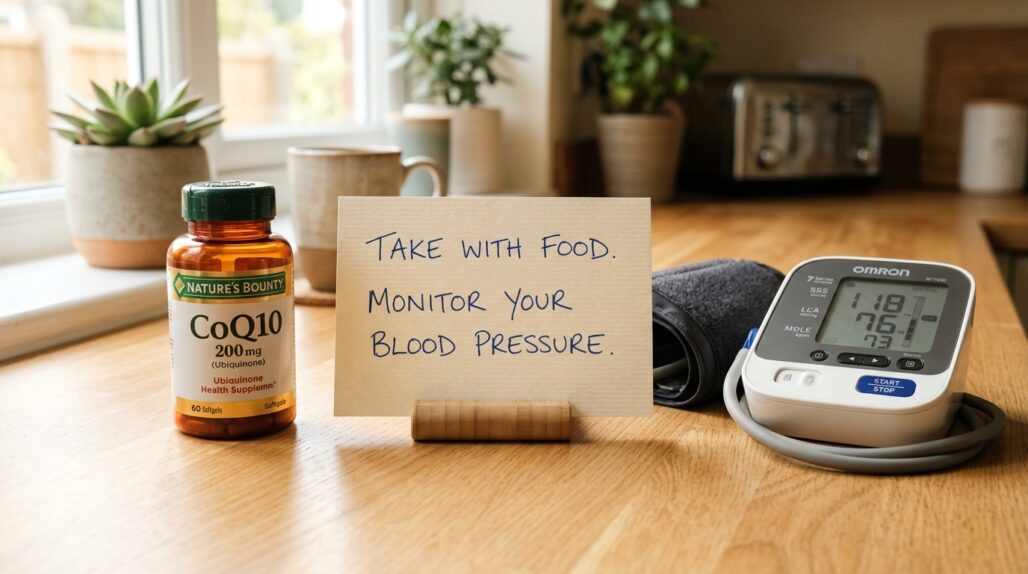
The honest concern is a different one. CoQ10 has a small, much-debated ability to lower blood pressure by itself. Your medication already lowers blood pressure. Point two things in the same direction and, in theory, they can add up. So the question is not "will this hurt my drug" but "could the two together drop my pressure a little further than planned."
For most people on a steady dose, the answer is "barely, if at all." But "barely" is not "never," which is why this lands as a caution rather than a flat yes. You want your prescriber to know, and you want to watch your readings for a couple of weeks.
One thing to set aside right away: this is not the CoQ10-and-warfarin question. Blood pressure drugs are not blood thinners. CoQ10 plus warfarin is a separate pairing with its own real concern, which we cover in our guide on taking CoQ10 with warfarin.
The mechanism: why the effect is additive, not chemical
CoQ10 sits in your mitochondria and helps cells make energy. It also turns up in the lining of your blood vessels, and that is where the blood pressure story starts. The proposed effect runs through better endothelial function and a small easing of vascular resistance. If it nudges pressure down, it does so in the same direction your medication already pushes.
That makes any combined effect pharmacodynamic and additive, not a metabolic interaction. Spacing the doses by hours does nothing, because the two are not competing for absorption in your gut. They meet downstream, in your circulation.
Now, how big is CoQ10's own blood pressure effect? Here is where you should be skeptical, because the evidence is genuinely mixed.
The strongest single source is the 2016 Cochrane review on coenzyme Q10 for primary hypertension (Ho MJ and colleagues). It pooled just two randomized trials and 50 patients, graded the evidence moderate-quality, and found no clinically significant change: systolic blood pressure fell about 3.68 mmHg, but the confidence interval ran from -8.86 to +1.49, crossing zero. Diastolic moved about 2.03 mmHg with a confidence interval that also crossed zero. The authors concluded CoQ10 does not have a clinically meaningful effect on blood pressure. The National Center for Complementary and Integrative Health echoes this, saying the available evidence suggests CoQ10 probably does not have a meaningful effect on blood pressure.
Some newer meta-analyses in people with diabetes or other cardiometabolic conditions report a small but statistically real systolic drop, roughly 4 to 5 mmHg at doses around 100 to 200 mg a day. Those populations may be more responsive. Either way, if there is an effect, it is small, and it shows up more in some people than others.
So why bother flagging it? Because "small on average" can still matter for the person whose pressure is already running low-normal, who is being newly titrated, or who is stacking several BP-lowering things at once. The average is not the individual.
On the evidence: the additive mechanism is reasonable and the interaction is real in principle, but its size is small and contested. Treat it as worth monitoring, not worth worrying over.
A footnote that actually cuts the other way: statins lower the body's own circulating CoQ10, because they block an enzyme step shared with CoQ10 synthesis. Many people on blood pressure regimens also take a statin. That is partly why some clinicians are relaxed about, or even welcome, a CoQ10 supplement in these patients. In that case the supplement often helps rather than works against you.
The practical rule: monitor, do not space
Because this is additive and not absorptive, there is no clever timing trick. So here is the plain version of what to do.
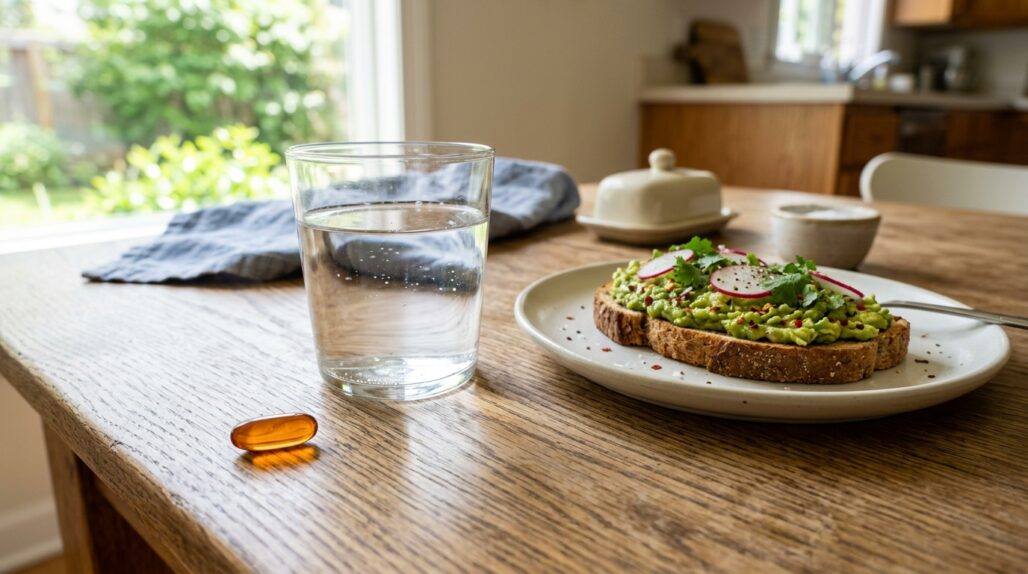
Take CoQ10 with a fatty meal. It is fat-soluble, so a meal that contains some fat improves how much you absorb. Time of day does not matter for the interaction. Many people take it with breakfast or dinner simply to remember it.
Tell your prescriber or pharmacist before you start. This is the part people skip and should not. A thirty-second mention at your next visit, or a quick pharmacy phone call, covers it.
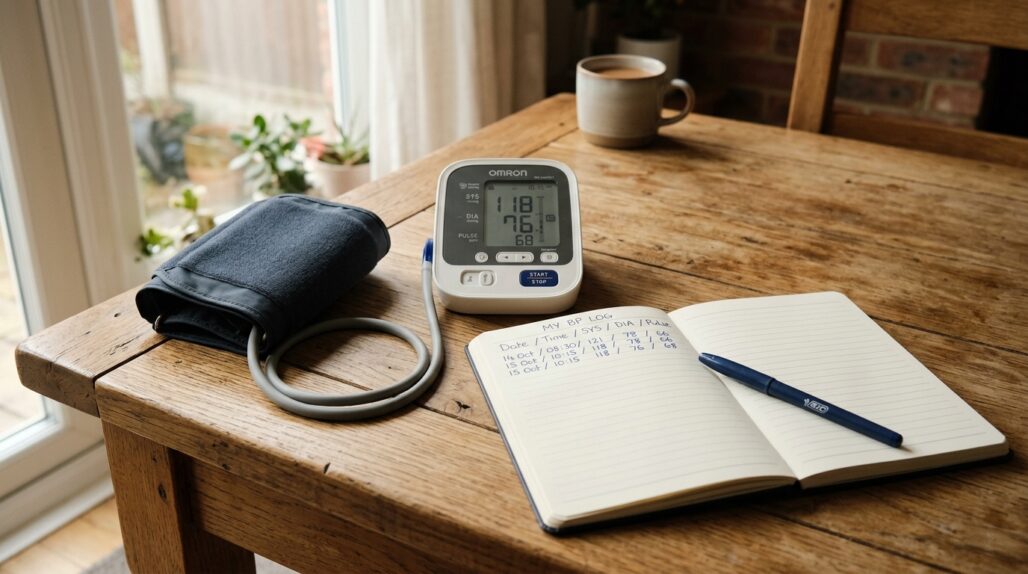
Check your home blood pressure for the first one to two weeks. A reading or two a day, seated, at roughly the same times, is enough to catch a meaningful downward drift. Recheck again after any change to your medication dose, since that is when your baseline shifts.
Do not change, skip, or stop your blood pressure medication on your own based on supplement readings or on how you feel. Only your prescriber adjusts the drug. CoQ10 is not a replacement for it and is not a "natural alternative." If your pressure looks good, that is your medication working, and the supplement is riding alongside it.
Who needs to be most careful here:
- People whose blood pressure is already well controlled or being freshly titrated, where a small extra dip is more noticeable.
- Older adults and anyone prone to dizziness on standing (orthostatic drops).
- Anyone stacking several BP-lowering agents at once, including magnesium or fish oil, where the small effects can pile up.
- Warfarin users – not for the BP reason, but because CoQ10 is structurally close to vitamin K and the Drugs.com professional monograph on CoQ10 and warfarin notes it may reduce warfarin’s effect and warrants INR monitoring. If you take both a BP drug and warfarin, the warfarin question matters more than the BP one.
What to actually do: the safe way to take it
If your prescriber is fine with it, taking CoQ10 alongside blood pressure medication is straightforward. Pick a well-absorbed form, take it with food, and watch your numbers for the first couple of weeks. That is the whole routine.


As an Amazon Associate, UsefulVitamins.com earns from qualifying purchases at no extra cost to you.
Some links below are affiliate links. If you buy through them we may earn a small commission, at no extra cost to you. We only list options that fit the safe approach above; we never earn anything from your prescription.
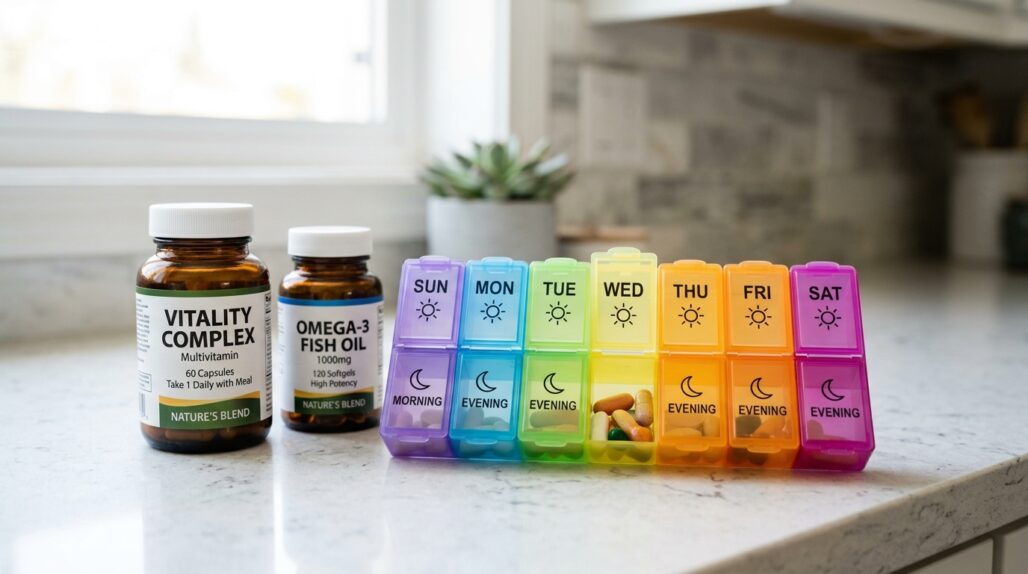
A few buying notes. Ubiquinol is the reduced, more bioavailable form and tends to absorb better, which is why a 100 mg ubiquinol softgel is a sensible default; plain ubiquinone works too and usually costs less. If you are weighing the two forms and dose, our CoQ10 vs ubiquinol calculator helps you compare, and our roundup of the best CoQ10 supplements covers third-party-tested picks. A simple seven-day AM/PM organizer is not about spacing the interaction (there is nothing to space), it just keeps a daily with-food habit honest and stops you doubling up. Expect to pay somewhere around $20 to $35 for a month of a quality ubiquinol as of writing; check the current price, since it moves.
The cleanest way to keep surprises out of your stack is simple. Log every prescription and every supplement in one place, so any overlap gets flagged before you add something new. StackMyMed (our own free app) is built for exactly this: scan your CoQ10 bottle and your blood pressure prescription, and it surfaces the additive-effect note as something to ask your pharmacist about. It does not diagnose you or decide anything; it just points at what to raise. If an app is not your thing, the low-tech version works just as well: write your full list of medicines and supplements on paper and show it to your pharmacist at the counter. Either way, the decision stays with the human who knows your chart.
This is still an education page, not a prescription change. The supplement informs the conversation, but your prescriber runs the regimen.
At-a-glance: CoQ10 plus blood pressure medication
| Question | Answer |
|---|---|
| Do they interact? | No chemical clash. A small, contested additive blood-pressure-lowering effect is the only real consideration. |
| How do I take them? | Together is fine. CoQ10 with a fatty meal, any time of day. No spacing needed. |
| Who should be careful? | Well-controlled or newly titrated patients, older adults, people stacking several BP-lowering agents, and warfarin users (separate INR concern). |
| When do I call a doctor? | Persistent dizziness, faintness on standing, unusual fatigue, or low home BP readings after starting CoQ10. |
Related pairs and the wider question
CoQ10 is not the only supplement that quietly nudges blood pressure. The same additive logic applies to a few others people commonly add to a heart-health routine, so it is worth knowing the pattern rather than memorizing one pair.
Magnesium can relax blood vessels and shave a couple of points off blood pressure, which is why it shows up on the "who is most at risk" list when stacked with BP drugs and with CoQ10. Fish oil lowers pressure a modest 2 to 3 mmHg at higher doses through similar vascular effects. None of these is dangerous on its own at sensible doses, but two or three together, on top of medication, is where a person can drift lower than their prescriber planned. If you are on an ACE inhibitor or ARB and trying to sort out which add-ons make sense, our notes on supplements for ACE inhibitor and ARB users walk through the same disclose-and-monitor logic. The fix is the same every time: tell your prescriber what you take, watch your readings for a couple of weeks, and let the prescriber, not the supplement, set the drug dose.
The warfarin pairing deserves its own mention because it breaks the pattern. There, CoQ10's resemblance to vitamin K means it can blunt the anticoagulant rather than add to it, which is a clotting risk, not a blood pressure one. If you take warfarin, that is the conversation to have first.
FAQ
Does CoQ10 lower blood pressure? Maybe a little, and the evidence is mixed. The 2016 Cochrane review found no clinically significant change, while some newer studies in people with diabetes report a small drop of about 4 to 5 mmHg. If it works for you, the effect is modest, not a replacement for treatment.
Do I need to take CoQ10 and my BP pill at different times? No. The effect is additive in your bloodstream, not a competition for absorption, so spacing the doses by hours changes nothing. Take CoQ10 with a fatty meal whenever suits you.
Can CoQ10 replace my blood pressure medication? No. It is not a substitute for a prescription and should never be used as a “natural alternative.” If your readings look good, that is your medication doing its job. Do not stop or reduce a prescribed drug on your own.
I take a statin and a BP drug. Is CoQ10 a problem? Statins lower your body’s own CoQ10, which is one reason some clinicians are comfortable with a supplement here. The BP-additive note still applies, so mention it and monitor, but the pairing is often considered complementary.
What if I also take warfarin? That is a more important conversation than the blood pressure one. CoQ10 is structurally similar to vitamin K and may reduce warfarin’s effect; the professional guidance is to check your INR closely if you start or stop it. Clear it with your prescriber first.
What dose is reasonable? Studies on blood pressure commonly use 100 to 200 mg a day. Start at the lower end, take it with food, and there is no need to mega-dose. More is not better here.
The bottom line
CoQ10 and blood pressure medication do not chemically clash, and the pairing is usually well tolerated. The reason it earns a caution rather than a clean yes is the small, contested chance that CoQ10's own mild blood-pressure-lowering effect adds to your drug's. There is no spacing trick, because the effect is additive, not absorptive. Take it with a fatty meal, tell your prescriber, monitor your home readings for the first week or two, and never adjust the prescription yourself. Watch for persistent dizziness, faintness on standing, unusual fatigue, or low readings, and call your doctor if they show up.
The simplest safeguard is to keep one combined list of everything you take and put it in front of your pharmacist before you add anything new.
This article is for education and is not medical advice. It does not replace guidance from your doctor or pharmacist, and nothing here is a reason to start, stop, or change a prescribed medication. Talk to a qualified clinician about your own situation.
Reviewed by the UsefulVitamins Editorial Team.
