
If you're looking into astragalus for immune support, the honest answer is: it can be useful for specific immune contexts — particularly as an adjunct in hepatitis B management and modest common-cold prevention — but the TA-65 "telomerase longevity" claims that dominate wellness marketing are substantially overhyped relative to the evidence. This article breaks down what astragalus polysaccharides (APS) actually do, where the RCT evidence is strongest, where it is weak or missing, and why the autoimmune contraindication is the most important thing you need to read before purchasing anything. You will also get the specific drug interaction profile, including the immunosuppressant contraindication that makes astragalus off-limits for organ transplant recipients.
Affiliate disclosure: this article contains affiliate links. As an Amazon Associate, UsefulVitamins.com earns from qualifying purchases at no extra cost to you.
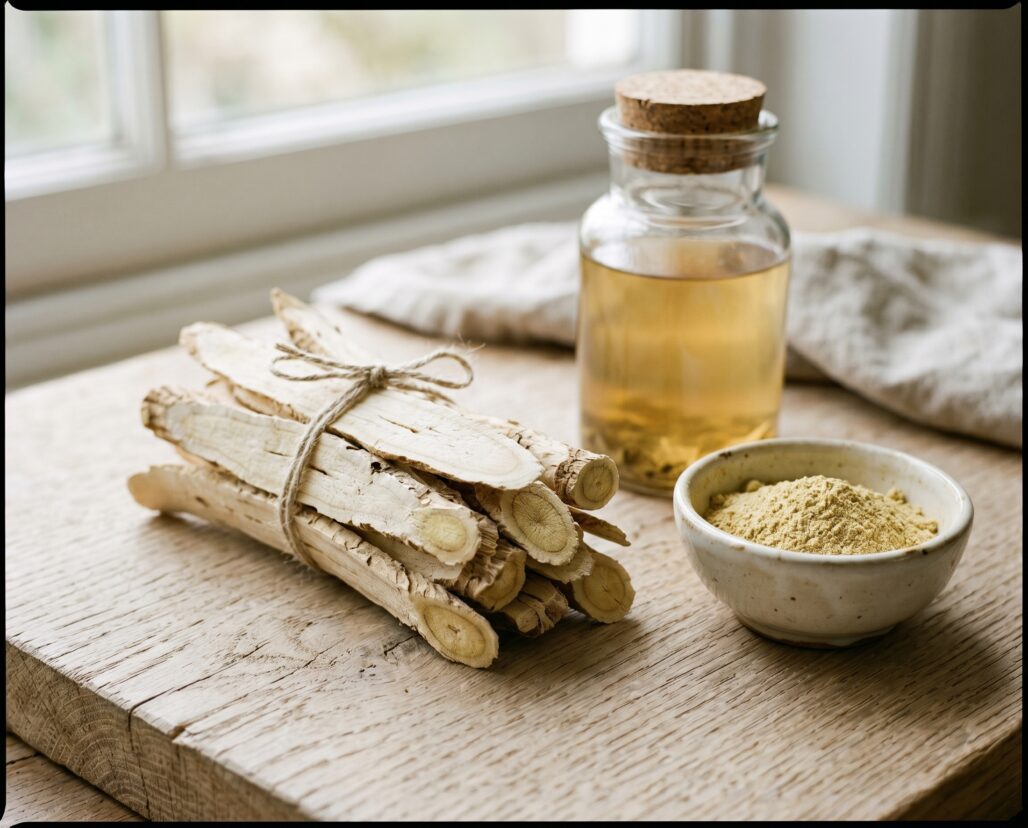
Summary / Quick Answer: does astragalus support immune function?
Astragalus membranaceus has meaningful RCT-level evidence for immune modulation in certain clinical populations — hepatitis B patients and people prone to recurrent upper respiratory infections — but the longevity and general "immune-boosting" marketing for most products goes well beyond what published human trials have established.
- Best for: Adults with recurrent mild upper respiratory infections who want a traditionally-grounded, evidence-adjacent herbal adjunct; hepatitis B patients discussing complementary options with a hepatologist; people without autoimmune conditions or immunosuppressant prescriptions who have reviewed the interaction profile
- Not ideal for: Anyone with lupus, multiple sclerosis, rheumatoid arthritis, Hashimoto's thyroiditis, or any other autoimmune condition — astragalus is an immunostimulant and can worsen autoimmune activity; organ transplant recipients on tacrolimus or cyclosporine (direct contraindication); people on anticoagulant therapy or hypoglycemic medications without prescriber oversight
- What to look at before buying: Whether the product is standardized to a specific astragalus polysaccharide (APS) percentage; whether the vendor distinguishes root extract from whole root powder; whether you have any of the contraindicated conditions listed above
- Decision shortcut: If a brand leads with TA-65 telomere longevity claims for standard astragalus root products, that framing misrepresents the evidence — TA-65 is a proprietary cycloastragenol isolate priced well above typical astragalus supplements, and the telomerase activation data in humans is preliminary at best
What you'll find in this guide
- What astragalus is and where the active compounds come from
- What the RCT evidence actually shows
- The TA-65 / cycloastragenol question
- Who it is for and who should avoid it
- Dosing context from clinical studies
- Side effects and drug interactions, including the autoimmune contraindication
- Product picks
- Frequently asked questions
What astragalus is, and where the active compounds come from {#what-astragalus-is}
Astragalus membranaceus (also classified as Astragalus propinquus), known in Traditional Chinese Medicine as Huang Qi, is a perennial leguminous herb native to northern China. The root has been used in TCM for over 2,000 years as a "qi tonic," categorized as a primary adaptogen for building defensive energy and supporting vitality. That traditional framing is historical context, not clinical evidence — but it does point toward where the modern research interest came from.
The two primary compound families researchers have focused on are:
- Astragalus polysaccharides (APS): The main standardization metric. APS fractions have been studied for immune-cell activation, natural killer (NK) cell enhancement, and macrophage stimulation in both cell culture and animal models. APS content varies significantly between root powder products and standardized extracts.
- Astragalosides (saponins): A family of triterpenoid glycosides. Astragaloside IV is the parent compound of cycloastragenol (the active metabolite behind TA-65), studied for potential telomerase activation. Astragalosides also contribute to some of the anti-inflammatory activity observed in animal studies.
- Flavonoids (including calycosin, formononetin): Phytoestrogen-active compounds with documented antioxidant activity in cell cultures.
Think of APS content the way you'd think about beta-glucan content in medicinal mushrooms: a product labeled "astragalus root powder" without a stated APS percentage is giving you no usable information about the standardized active fraction. Buying astragalus root powder without APS disclosure is like buying olive oil labeled "Mediterranean blend" — the label tells you everything except whether what's inside meets the concentration that human trials actually used.
Actionable takeaway: When evaluating astragalus products, look for explicit APS standardization on the label. A product with "40% astragalus polysaccharides" from a third-party-tested supplier is a different product from "500mg astragalus root powder." Most RCTs used standardized extracts or injectable APS preparations — not bulk root powder.
What the RCT evidence actually shows {#what-the-research-shows}
The strongest human evidence for astragalus falls into two areas: hepatitis B virus (HBV) management and upper respiratory infection prevention. Both bodies of literature are worth examining directly.
Hepatitis B: the most consistent human signal
Several RCTs have examined astragalus-based preparations as adjuncts to standard antiviral treatment for chronic hepatitis B. A 2013 systematic review and meta-analysis published in the Journal of Viral Hepatitis (Duan et al., 2013, PMID 23301856) analyzed 19 RCTs involving patients with chronic HBV infection who received astragalus-based Chinese herbal injections or decoctions alongside interferon therapy. The pooled analysis found improved HBV DNA negative conversion rates and ALT normalization rates compared to interferon alone. Effect sizes were meaningful but the review flagged high heterogeneity between studies and variable risk of bias — these are important caveats, not dismissals. The data suggest adjunct benefit, not standalone antiviral activity.
A 2009 RCT (Mao et al., 2009, PMID 19569945) in 60 patients with chronic hepatitis B found that astragalus polysaccharide injection alongside conventional treatment produced higher rates of hepatitis B surface antigen seroconversion at 24 weeks versus conventional treatment alone. This is a specific, mechanistically plausible result: APS enhances Th1 immune response, which is deficient in chronic HBV infection. That mechanistic coherence is part of why hepatitis B is the area where astragalus evidence holds up best.
Common cold prevention: modest, real signals
A 2013 randomized, placebo-controlled trial (Li et al., 2013, PMID 23796645) involving adults with recurrent upper respiratory tract infections found that 8 weeks of oral astragalus extract supplementation reduced the frequency of self-reported URIs versus placebo. The sample was modest (n=47), the outcome was self-reported (a limitation), and a single trial is not strong evidence. But it is one of the few placebo-controlled designs testing oral astragalus in a healthy-adult-adjacent population.
The NCCIH fact sheet on astragalus summarizes the immune-support evidence as "preliminary" and notes that most trials have significant methodological limitations. That is an accurate characterization. Preliminary does not mean negative — it means the evidence base is insufficient to draw firm conclusions, and should be read as such.
What the animal and in vitro evidence shows
APS has been studied extensively in rodent models for NK cell activation, macrophage stimulation, and cytokine modulation. A 2004 review in International Immunopharmacology (Shao et al., 2004, PMID 14967447) summarized animal studies showing APS-mediated enhancement of both innate and adaptive immune responses. In cell cultures, APS fractions activate TLR4 (toll-like receptor 4) signaling, which triggers macrophage responses. These are plausible mechanisms — they tell us how APS could work, not that it does work in humans at oral doses.
Actionable takeaway: For hepatitis B patients discussing complementary options, the meta-analytic evidence for astragalus as an adjunct to standard antiviral care is more substantive than for most herbals in this category. For healthy adults seeking general immune enhancement, the evidence is preliminary and does not support the confident "immune-boosting" claims on most product labels.
The TA-65 and cycloastragenol question {#ta65-question}
TA-65 is a proprietary supplement containing cycloastragenol, a metabolite derived from astragaloside IV. Geron Corporation and TA Sciences have promoted cycloastragenol as a telomerase activator based on in vitro and cell-culture work showing that the compound can activate human telomerase reverse transcriptase (hTERT) and lengthen telomeres in certain cell lines.
The human evidence is thin. A 2010 study in Rejuvenation Research (Harley et al., 2010, PMID 20822369) — funded by TA Sciences — found that TA-65 supplementation over one year was associated with a reduced percentage of short telomeres in a small, uncontrolled observational cohort (n=117). There was no placebo control, and the funding source creates a direct conflict of interest. A subsequent randomized, double-blind, placebo-controlled trial (Salvador et al., 2016, PMID 26768661) found no statistically significant effect on telomere length at 12 months in a healthy older adult population (n=97). The conflicted observational result did not replicate in the controlled design.
The critical framing most wellness marketers omit: cycloastragenol is not the same as standard astragalus root extract. TA-65 is priced at several hundred dollars per month. Standard astragalus polysaccharide products at ten to forty dollars per bottle contain astragaloside IV at amounts that may or may not produce meaningful cycloastragenol concentrations in vivo — that conversion has not been studied in humans. Representing a standard astragalus supplement as having the telomere benefits researched under TA-65 is not supported by the evidence chain.
But traditional use is not the same as RCT evidence, and neither is "derived from the same plant" the same as "has the same pharmacology."
Who astragalus is for, and who should skip it {#who-its-for}
Reasonable fit: Adults with a history of frequent mild upper respiratory infections who want to trial an evidence-adjacent supplement with low toxicity in the absence of contraindications; hepatitis B patients with hepatologist guidance for complementary care; people interested in TCM-aligned immune tonics who have reviewed the interaction profile carefully.
Skip if:
- You have any autoimmune condition — lupus (SLE), multiple sclerosis, rheumatoid arthritis, Hashimoto's thyroiditis, inflammatory bowel disease, psoriasis, or similar. Astragalus is an immunostimulant; stimulating immune activity in a system already attacking the body's own tissue is mechanistically problematic. The Memorial Sloan Kettering integrative herbs database explicitly flags this risk.
- You are an organ transplant recipient on immunosuppressant medications. This is a direct contraindication, not a soft warning. Astragalus's immune-enhancing activity works against the suppression that prevents transplant rejection.
- You are on warfarin, heparin, or other anticoagulants — astragalus has shown antiplatelet activity in animal studies and may increase bleeding risk.
- You are taking hypoglycemic medications (insulin, metformin, sulfonylureas) — astragalus has demonstrated blood-glucose-lowering activity in animal and preliminary human data, creating a risk of additive hypoglycemia.
- You are taking chemotherapy or targeted cancer therapies — consult your oncologist before adding any immunomodulatory herb. Some evidence suggests APS may have adjunct benefit in oncology; other evidence suggests potential interference with specific therapies. This requires prescriber-level judgment, not supplement-label reading.
- You are pregnant or breastfeeding — safety data for astragalus in pregnancy are insufficient for any recommendation.
Dosing context from clinical studies {#dosing-context}
Standard astragalus RCTs have used oral doses ranging from 9 to 30 grams of dried root equivalent daily in decoction form, or 250 to 500mg of standardized extract (typically 40% polysaccharides) two to four times daily. Most hepatitis B trials used injected APS preparations that are not directly comparable to oral supplement dosing. The Li 2013 URI prevention trial used 1,000mg of a standardized root extract daily for 8 weeks.
The NCCIH astragalus overview notes that dosing is not standardized and that the clinical trial data do not support a definitive oral dosing recommendation. Most trials ran 8 to 12 weeks; longer-duration human safety data are limited.
One important pharmacological note: astragalus appears to have a biphasic immune effect in some animal models, where lower doses enhance immune activity and higher doses may produce immunosuppressive effects. Whether this biphasic pattern applies in humans at typical supplement doses is not established. It is a flag that "more astragalus is automatically more immune support" is not a safe assumption.
Side effects and drug interactions {#side-effects-interactions}
Reported adverse effects
In clinical trials at the doses and durations studied, astragalus has been generally well-tolerated. Gastrointestinal effects (mild nausea, loose stool) have been the most commonly reported adverse events, and were generally transient. No serious adverse events directly attributable to standardized astragalus extract have been documented in published RCTs. However, absence of evidence from limited trials is not a clean safety guarantee, particularly for long-term use.
Drug interactions (CRITICAL — read before purchasing)
The interaction profile for astragalus is clinically significant and requires explicit enumeration:
| Interaction | Severity | Mechanism |
|---|---|---|
| Immunosuppressants (tacrolimus, cyclosporine, mycophenolate, azathioprine) | Contraindicated | Astragalus stimulates the immune pathways these drugs suppress; can precipitate organ rejection |
| Anticoagulants / antiplatelets (warfarin, heparin, aspirin, clopidogrel) | High — prescriber oversight required | Additive antiplatelet activity; may increase bleeding risk and alter INR |
| Hypoglycemic medications (insulin, metformin, sulfonylureas, GLP-1 agonists) | Moderate — monitor blood glucose | Additive glucose-lowering effect documented in animal models; human data limited but risk is real |
| Chemotherapy / targeted oncology agents | Requires oncologist consultation | Evidence of both potential adjunct benefit and potential interference depending on agent; cannot be generalized |
| Antihypertensives | Low to moderate | Some in vitro data suggest mild vasodilatory activity; additive hypotension possible |
Per Memorial Sloan Kettering's integrative medicine herbs database, the immunosuppressant contraindication is the most critical clinical warning. This database is written for oncology patients and their care teams — it is not a natural-products marketing source, and its warning on this point should be taken seriously.
Autoimmune conditions — the most important contraindication to understand
The autoimmune contraindication deserves a standalone paragraph because it is so frequently ignored in wellness content. Autoimmune diseases involve an immune system that has misdirected its activity against the body's own tissue. Lupus, MS, rheumatoid arthritis, and Hashimoto's are not diseases of a weak immune system — they are diseases of immune dysregulation. Adding an immunostimulant to that context has the potential to intensify autoimmune flares. There is limited direct human RCT evidence quantifying this risk for astragalus specifically, but the mechanistic logic and the pattern across other immunostimulant herbs is consistent enough that this is not a theoretical concern to dismiss.
Pregnancy and breastfeeding
Safety data for astragalus in pregnancy are insufficient for any recommendation. Traditional TCM texts have used astragalus during pregnancy for specific indications, but those contexts are not equivalent to supplementing healthy adults with standardized extract. Avoid during pregnancy and breastfeeding.
Actionable takeaway: If you take any immunosuppressant, anticoagulant, or diabetes medication, the conversation about astragalus starts with your prescribing physician, not with a supplement label. The interaction risks are specific and real.
Product picks {#product-picks}
Three established astragalus products with reasonable market track records are listed below. None of these have published independent third-party testing specifically for APS content in recent reports accessible to this review; standardization claims rely on manufacturer disclosure.
When comparing astragalus products, the hierarchy of quality signals is: (1) explicit APS percentage on label, (2) third-party testing certification for potency and contaminants, (3) root extract vs whole root powder, (4) concentration per capsule vs label dose. A product with 500mg of standardized 40% APS extract is a different proposition from 500mg of whole root powder with no standardization data.
As an Amazon Associate, I earn from qualifying purchases. Product recommendations are based on real reviews and independent research.
Frequently asked questions {#faq}
Can I take astragalus every day?
Most URI-prevention trials used daily dosing for 8 to 12 weeks. Longer-duration human safety data are limited. If you have an autoimmune condition or take any of the medications listed in the interactions table above, daily use is contraindicated without prescriber oversight. For otherwise healthy adults, the available evidence suggests short-course use (8 to 12 weeks) is more appropriate than indefinite daily supplementation until longer-term data exist.
Is astragalus safe for autoimmune conditions?
No. This is the most common and most serious error in astragalus marketing. Astragalus is an immunostimulant. Autoimmune conditions involve an immune system that is already overactive in specific ways. Adding immune stimulation to autoimmune conditions — including lupus, MS, rheumatoid arthritis, Hashimoto's, psoriasis, and inflammatory bowel disease — carries a real risk of worsening disease activity. The Memorial Sloan Kettering integrative herbs database flags this explicitly.
Does astragalus boost testosterone or growth hormone?
No credible human RCT evidence supports testosterone or growth hormone claims for astragalus. Some in vitro studies have found effects on gonadotropin signaling pathways in cell cultures; none of this has been demonstrated in controlled human trials. These claims originate primarily from supplement marketing, not published research.
How does standard astragalus relate to TA-65?
TA-65 is a proprietary supplement containing cycloastragenol, a compound derived from astragaloside IV in astragalus root. Standard astragalus supplements are not the same product. The telomerase activation research behind TA-65 used the proprietary isolate at a specific dose in a company-funded study that did not replicate in a subsequent placebo-controlled trial. Treating standard astragalus as equivalent to TA-65 for telomere-length purposes is not supported by the evidence.
How long before astragalus works for immune support?
The Li 2013 URI prevention trial ran for 8 weeks. The hepatitis B adjunct trials ran 12 to 24 weeks. Immune-function changes in the human data, where they were measured, became apparent at 8 weeks at the earliest. There is no evidence supporting meaningful immune benefit in 1 to 2 weeks.
Is astragalus root powder or extract better?
Standardized extract with a stated APS percentage is preferable for anyone trying to replicate the dosing ranges from published trials. Whole root powder without standardization data offers no way to know whether the APS content matches what clinical studies used. The RCTs that produced the hepatitis B and URI findings did not use unstandardized root powder at typical supplement doses.
Can astragalus be taken with vitamins C or D?
There are no documented interactions between astragalus and vitamin C or vitamin D at typical supplement doses. This is a low-concern combination for most people. Ensure any potential interactions with your prescription medications are cleared first, as described in the interactions section above.
Conclusion: the bottom line on astragalus for immune support
Astragalus membranaceus (Huang Qi) has 2,000 years of TCM use and a meaningful modern research record — primarily for immune modulation in hepatitis B patients and modest common-cold prevention. Those are real and specific signals, not vague wellness marketing. But the popular framing around "immune boosting" for healthy adults overstates what current RCTs have established, and the TA-65 telomerase marketing is substantially disconnected from what standard astragalus products deliver.
The more important issue for most readers is the safety profile: astragalus is an immunostimulant, and that classification has real consequences for specific populations. Autoimmune conditions and immunosuppressant prescriptions are not soft caveats — they are contraindications backed by mechanistic reasoning and institutional warnings from sources like Memorial Sloan Kettering.
For Consideration with prescriber guidance:
- Hepatitis B patients asking about complementary care have the strongest evidence base to discuss with their hepatologist
- Otherwise healthy adults with frequent URIs considering a short (8 to 12 week) trial should review the interaction profile carefully first
Next steps:
- If you want to understand the full immune-adaptogen landscape before choosing, read The Complete Guide to Adaptogens: What the Research Actually Shows in 2026 for context on how astragalus compares to other evidence-based options
- If you are specifically comparing immune-focused mushroom options, see Chaga for Immune Support: What the In Vitro Hype Doesn't Translate To in Humans and Turkey Tail for Immune Support: The Evidence Behind the PSK / PSP Research
- If you are on any prescription medication, read Adaptogens and Medications: The Complete Interaction Reference before purchasing any astragalus product
Related reading
- The Complete Guide to Adaptogens: What the Research Actually Shows in 2026
- Chaga for Immune Support: What the In Vitro Hype Doesn't Translate To in Humans
- Turkey Tail for Immune Support: The Evidence Behind the PSK / PSP Research
- Adaptogens and Medications: The Complete Interaction Reference
This article is for informational purposes and not medical advice. Astragalus is an immunostimulant that is contraindicated for people with autoimmune conditions (including lupus, multiple sclerosis, rheumatoid arthritis, and Hashimoto's thyroiditis) and for organ transplant recipients on immunosuppressant medications. It may also interact with anticoagulants, diabetes medications, and chemotherapy agents. Consult a licensed physician before starting astragalus, particularly if you are pregnant, nursing, taking prescription medications, or managing a chronic or autoimmune condition.
As an Amazon Associate, I earn from qualifying purchases. Product recommendations are based on real reviews and independent research.
This article is for informational purposes and not medical advice. Herbal adaptogens, even traditional ones, can interact with thyroid medication, antidepressants, anticoagulants, immunosuppressants, blood-pressure drugs, and more. Consult a licensed physician before starting any adaptogen, particularly if you are pregnant, nursing, taking prescription medications, or managing a chronic condition.
