
Affiliate disclosure: this article contains affiliate links. As an Amazon Associate, UsefulVitamins.com earns from qualifying purchases at no extra cost to you.
Why thin skin and leaky capillaries leave you bruising
A bruise is blood that has escaped a broken vessel and pooled under the skin. The NHS explains that bruises form when small blood vessels under the skin are damaged, and how big the mark gets depends on how many vessels tear and how much they leak before they seal.
Some people need a real knock to bruise. Others find purple marks they cannot explain. The difference usually comes down to two things: how sturdy the capillary walls are, and how thin and unsupported the surrounding skin has become.
Capillary walls are held together by collagen and a web of connective tissue. When that scaffolding is weak, the same bump that would do nothing on sturdy skin breaks vessels and lets blood seep out. This is a fragility-and-collagen story, which is why it responds to different nutrients than the visible thread veins covered on our guide to supplements for spider veins, where the issue is vein-wall tone rather than skin support.
Aging makes this worse on its own. Skin thins, the fat padding under it shrinks, and sun-damaged forearms and shins lose the cushioning that used to protect vessels. That pattern, often called senile purpura, is common and mostly harmless, but it is genuinely a capillary-fragility problem that some supplements have been tested against.
The honest framing up front: supplements can firm up fragile vessels and replace a missing nutrient, and that helps some people bruise less. They will not make a body that bruises normally bruise even less, and they do nothing for a bruise you already have.
The 3 best supplements for easy bruising, ranked
Here is the short version before the detail. The picks are ranked by how directly the evidence ties them to bruising and capillary fragility, not by marketing.
| Supplement | Evidence | Typical dose | Best for |
|---|---|---|---|
| Vitamin C (buffered or liposomal) | Strong for deficiency-driven bruising; weak if you are already replete | 500 mg once or twice daily with food | Low-fruit diets, smokers, heavy drinkers, older skin |
| Citrus bioflavonoid complex | One human RCT in senile purpura; modest but real | Often paired with vitamin C; follow label, twice daily | Older adults with arm and shin purpura |
| Rutin | Mechanistic plus small or older human data; weakest of the three | 250 to 500 mg daily | Adding to a vitamin C and flavonoid stack |


As an Amazon Associate, UsefulVitamins.com earns from qualifying purchases at no extra cost to you.
Some links here are affiliate links. If you buy through them we may earn a small commission at no extra cost to you, and it never changes which picks we rank or how we grade the evidence.
1. Vitamin C – the one with a real mechanism behind it
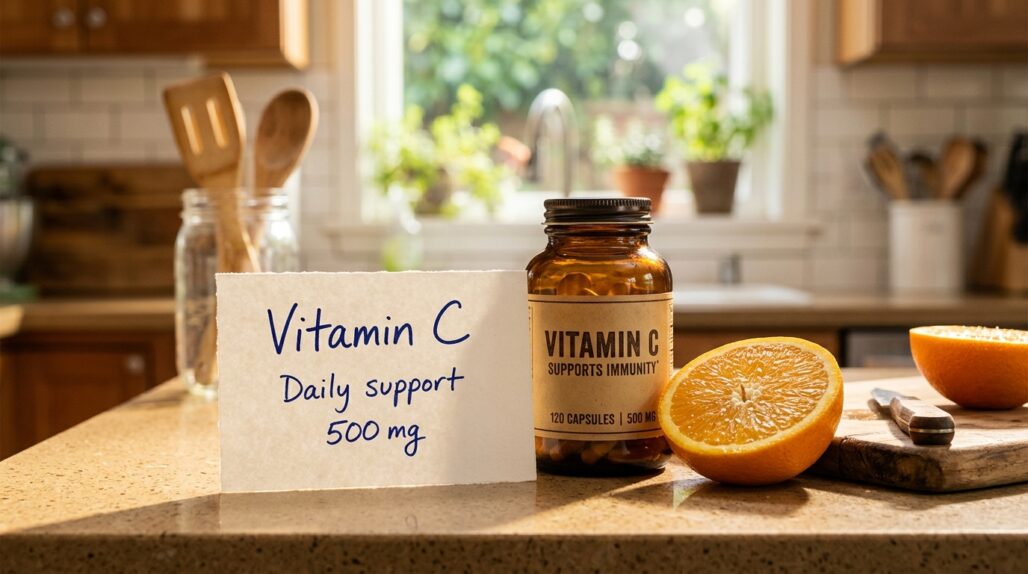
Vitamin C earns the top spot because it does something measurable to the actual problem. Your body needs it to hydroxylate proline in procollagen, the step that lets collagen form a stable triple helix. StatPearls describes how, without enough vitamin C, that collagen cannot form properly, capillary walls lose integrity, and blood seeps into the tissue. Easy bruising and pinpoint bleeding are textbook signs.
The evidence is strongest at the deficiency end. A published case described a patient with extensive unexplained bruising whose clotting tests were all normal but whose vitamin C was severely low; on 500 mg twice daily, the bruising and petechiae cleared within weeks. That is real, but note the limit: it shows vitamin C fixing bruising caused by a shortfall, not boosting an already-normal person.
Evidence grade: strong for low vitamin C status, weak otherwise. If your diet is short on fruit and veg, or you smoke or drink heavily, you are the likely responder. If you already eat plenty of produce, do not expect much.
Dose: Around 500 mg once or twice daily with food works and stays well under the 2,000 mg adult upper limit set by the NIH. Megadoses do not firm vessels faster and can cause stomach upset or, in some people, kidney stones. A buffered or liposomal form is gentler on the gut. For the food-versus-supplement tradeoff and why form matters, see our complete guide to vitamin C.
Who it suits: Anyone with a thin produce intake, older adults with fragile forearm skin, and people pairing it with the bioflavonoids below.
2. Citrus bioflavonoids – the pick with an actual trial
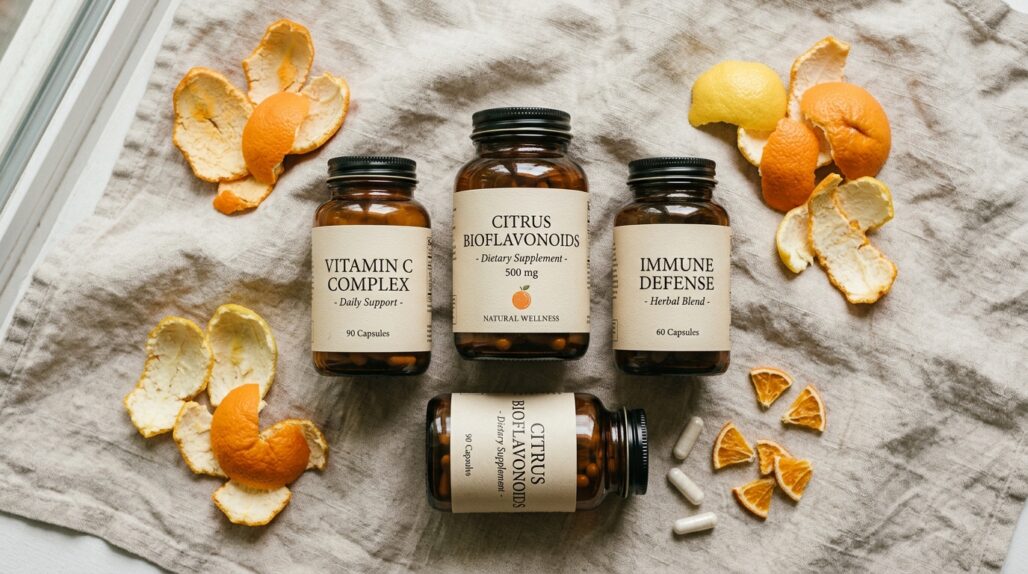
Bioflavonoids are the plant compounds that ride alongside vitamin C in citrus, and they are the second pick because one decent human trial points the right way. In a randomized, placebo-controlled, double-blind study published in the Journal of Drugs in Dermatology in 2011, 70 older adults with senile purpura took a citrus bioflavonoid blend or placebo twice daily for six weeks. The treatment group cut purpura lesions by about 50 percent from baseline; the placebo group slightly worsened, and no side effects were reported.
Read that result fairly. It is a single, fairly small, six-week trial in one specific group: older people with arm and shin purpura. It is encouraging and it is human data, which beats a pile of animal studies, but it is not a large body of replicated evidence.
Evidence grade: modest. One supportive human RCT in a narrow population. Bioflavonoids are also thought to work with vitamin C, which is why most products and most older research pair them. Our explainer on vitamin C and bioflavonoid absorption covers why the two are usually sold together.
Dose: Bioflavonoids are typically taken twice daily, often inside a vitamin C formula, so follow the product label rather than chasing a fixed milligram target. The trial used a proprietary blend, so an exact universal dose does not exist.
Who it suits: Older adults who recognize the senile-purpura pattern of soft bruises on the backs of the hands and forearms.
3. Rutin – plausible, but the thinnest evidence
Rutin is a specific bioflavonoid, and it is last because the human evidence is the weakest of the three. The mechanism is reasonable: rutin appears to reduce capillary permeability and stabilize vessel walls, and there is an older line of research on its effect on capillary fragility and permeability. Most of the impressive numbers, though, come from lab and animal work or from small studies on venous symptoms rather than bruising itself. Rutin also has fairly low oral bioavailability.
Evidence grade: weak for bruising specifically. Plausible mechanism, limited and dated human data. Use it as a supporting player in a vitamin C and bioflavonoid stack, not as a standalone fix, and do not expect it to do heavy lifting on its own.
Dose: 250 to 500 mg daily is common. It overlaps with the broader flavonoid family, so if you are also looking at related compounds our rundown of quercetin supplements is a useful companion, since quercetin and rutin are chemically close cousins.
Who it suits: People already taking vitamin C and bioflavonoids who want to add one more vessel-supporting flavonoid. Skip it if you are pregnant, breastfeeding, or on a blood thinner unless a clinician signs off.
The free fix most people skip: audit what is thinning your blood
Before you spend a cent, look at what you are already taking. A large share of new, unexplained bruising is not a vitamin problem at all. It is a side effect.
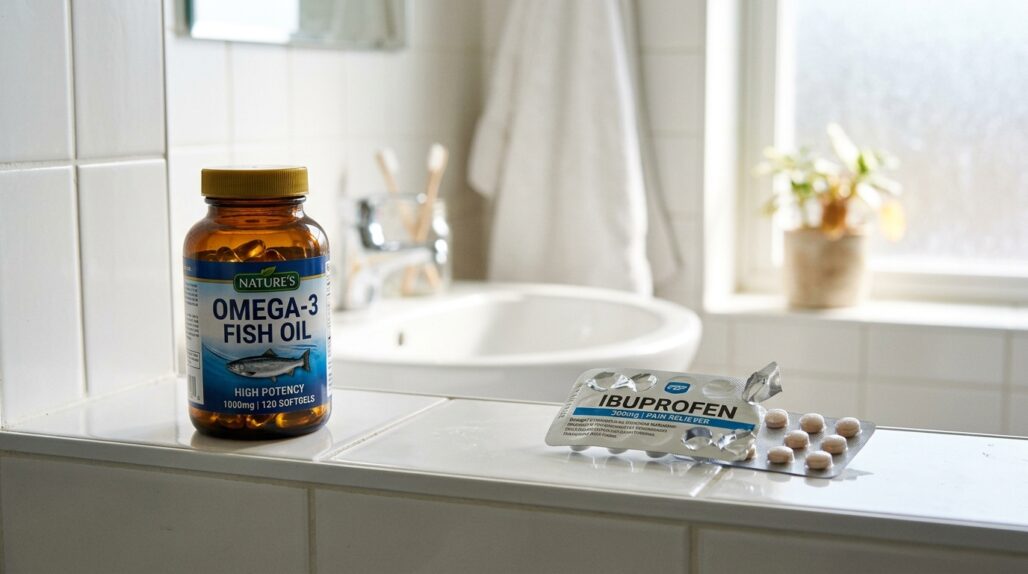
The NHS notes that anticoagulants, NSAIDs, anti-platelet drugs and a heavy alcohol habit all make people bruise more easily. Several everyday things quietly thin the blood or weaken clotting:
- Fish oil in higher doses has a mild blood-thinning effect.
- Aspirin and other NSAIDs like ibuprofen reduce platelet stickiness.
- Alcohol, especially regular heavy use, both thins blood and depletes the nutrients your vessels need.
- Some supplements such as high-dose vitamin E, ginkgo and garlic extracts can add to the effect.
None of these are villains, and you should not stop a prescribed medicine on your own. But if the bruising started after you added a fish oil or began taking daily ibuprofen, that timing is worth noticing and worth raising with your pharmacist or doctor.
The other free moves are simple. Protect the thin skin on your arms and shins from sun damage, since chronic sun exposure is a major reason older skin bruises. Eat the nutrients directly: citrus, peppers, berries and leafy greens deliver vitamin C, flavonoids and vitamin K together, which is cheaper and better absorbed than a pill. And go easy on the alcohol.
What does not work, and common mistakes
A few things to skip. Arnica gels and "bruise creams" may slightly speed how fast a bruise you already have fades, but they do nothing to make your vessels sturdier, so they do not belong in a prevention plan. Collagen and biotin powders are marketed for skin, but there is no good evidence they reduce bruising, which is a capillary-and-blood issue, not a beauty one.
The biggest mistake is megadosing vitamin C and expecting more to mean better. Past the point of replacing a shortfall, extra grams just leave in your urine and can upset your stomach. Pick a sensible dose and give it a few weeks.
When to see a doctor about bruising
This is the part that matters most. Easy bruising is usually harmless, but it can be the first visible sign of something that needs proper testing, so do not treat these signs with supplements.
See a doctor if you have:
- Sudden, unexplained bruising with no injury you can remember, or bruises that keep appearing.
- Large or frequent bruises that seem out of proportion to any knock.
- Bruising alongside bleeding gums, frequent nosebleeds, or blood in urine or stool, which together can point to a platelet or clotting problem.
- Bruising while on a blood thinner such as warfarin or apixaban; that needs your prescriber, not a supplement aisle.
- Bruising with fatigue, fever, or unexplained weight loss, which warrants prompt bloodwork.
These patterns can signal a clotting, platelet, or liver problem, and a simple blood test usually sorts out whether it is anything serious. If you are pregnant, on any anticoagulant, or take regular NSAIDs, run any new supplement past a clinician before you start, because the bioflavonoid family can interact with blood thinners.
FAQ
Will supplements get rid of a bruise I already have? No. Once blood has leaked into the tissue, supplements cannot speed its reabsorption in any meaningful way. They target prevention by firming the vessel walls over weeks, so the goal is fewer future bruises, not faster fading of the current one.
How long before I notice fewer bruises? If a vitamin C shortfall was the cause, case reports show improvement within a few weeks. For bioflavonoids the trial ran six weeks. Give any of these at least a month before deciding whether it is helping.
Do I need vitamin C plus bioflavonoids, or just one? They are usually paired because they are thought to work together and because they naturally occur together in citrus. Vitamin C has the stronger mechanism, so if you buy one thing, start there. A combined product is a reasonable single purchase.
Is rutin safe to take every day? For most healthy adults it is well tolerated, with only occasional mild side effects like headache or stomach upset. Avoid it if you are pregnant, breastfeeding, have kidney disease, or take a blood thinner unless your doctor approves.
Could my fish oil be making me bruise? It can contribute. Fish oil has a mild blood-thinning effect, especially at higher doses, and it stacks with aspirin, NSAIDs and alcohol. If bruising started after you added it, mention it to your pharmacist rather than quietly stopping a dose your doctor wanted you on.
Is easy bruising as you get older something to worry about? Usually not. Thinner skin and sun damage make older arms and shins bruise more, and that is common and benign. It becomes a concern when bruises appear with no cause, come with other bleeding, or pair with fatigue or weight loss.
The bottom line
If you bruise more easily than you should, start with vitamin C at around 500 mg a day, ideally alongside citrus bioflavonoids, and be honest about your expectations: this helps most when a low-collagen or low-vitamin-C state is driving fragile capillaries, and it works over weeks, not overnight. Bioflavonoids have one supportive human trial behind them, and rutin is more hopeful than proven.
The free fix is the one not to skip. Review your fish oil, aspirin, NSAID and alcohol use, protect thin skin from the sun, and eat your vitamin C and flavonoids from real food. And if bruises show up without a cause, come with other bleeding, or appear while you are on a blood thinner, see a doctor for bloodwork before you reach for a supplement.
This article is for general information and is not medical advice. Talk to a doctor or pharmacist before starting a supplement, especially if you are pregnant, take a blood thinner, or use regular pain relievers.
Reviewed by the UsefulVitamins Editorial Team.
