
Affiliate disclosure: this article contains affiliate links. As an Amazon Associate, UsefulVitamins.com earns from qualifying purchases at no extra cost to you.
A flickering lower eyelid is one of those symptoms that feels alarming and is almost always harmless. The medical name is benign eyelid myokymia, and most of the time it shows up after a stressful, under-slept, over-caffeinated stretch and fades within hours or days.
Supplements get a lot of credit for stopping it. The honest version: the evidence is thin, the twitch usually resolves on its own, and the cheapest fixes work better than anything you can buy. Still, a couple of nutrients are worth a try if you twitch often, and one of them is genuinely low-risk. Here is what holds up.
Why your eyelid keeps twitching
The twitch comes from the small orbicularis oculi muscle around your eye firing on its own in tiny, repetitive bursts. It is a problem of nerve and muscle excitability, not a problem with the eye itself.
According to the StatPearls clinical reference on eyelid myokymia, the usual triggers are fatigue, stress, caffeine, alcohol, and physical strain. Nothing is structurally wrong. The nerve signaling to that muscle has just become a little trigger-happy, and the things that ramp it up are the things that ramp up your whole nervous system.
That mechanism is why minerals come into the conversation. Magnesium, potassium, calcium, and sodium all govern how easily a nerve and muscle membrane fires. When the magnesium side of that balance runs low, membranes get twitchier, and the most classic signs of magnesium shortfall are exactly this kind of neuromuscular hyperexcitability.
Here is the catch worth saying out loud. A 2024 study that measured blood electrolytes in people with eyelid twitching versus people without found no significant difference in magnesium, potassium, calcium, or sodium between the two groups. What the same study did find was a strong link to screen time: the twitch group averaged nearly 7 hours of screens a day versus under 5 for controls. So if you are reaching for a mineral first, set your expectations accordingly. The trigger that tracks best with eye twitching is your habits, not your bloodwork.
The 4 triggers to cut before you buy anything
Before spending a cent, deal with the four things that cause most twitches:
- Caffeine. The most common single driver. Try dropping to one cup, or cutting it entirely for a week.
- Sleep debt. Twitches love a few short nights in a row. A couple of full nights often ends it.
- Stress. The same arousal that tightens your shoulders makes the eyelid jumpy.
- Screen strain. Long unbroken screen sessions are the trigger with the strongest data behind them.
If the twitch clears when you fix these, you have your answer and you do not need a supplement at all.

The 3 supplements worth considering (ranked honestly)
A quick note on grading. None of these has a clean randomized trial showing it stops eyelid twitching specifically. The case for each rests on the nutrient's role in nerve and muscle signaling, plus deficiency studies. That is weaker than a direct trial, and the ranking reflects it.


As an Amazon Associate, UsefulVitamins.com earns from qualifying purchases at no extra cost to you.
UsefulVitamins may earn a commission from links below, at no extra cost to you. It does not change which picks make the list.
| Supplement | Evidence | Typical dose | Best for |
|---|---|---|---|
| Magnesium glycinate | Indirect but reasonable – clear role in membrane excitability; no twitch-specific RCT | 200-400mg elemental at night | Frequent twitchers, poor sleep, low-magnesium diet |
| Vitamin B12 (methylcobalamin) | Weak for twitching; matters only if you are deficient | 1000mcg daily | Vegans, over-60s, metformin or acid-blocker users |
| Potassium (food first) | Weak – normal-range potassium not linked to benign twitch | Diet first; OTC tablets capped near 99mg | People short on produce, heavy sweaters |
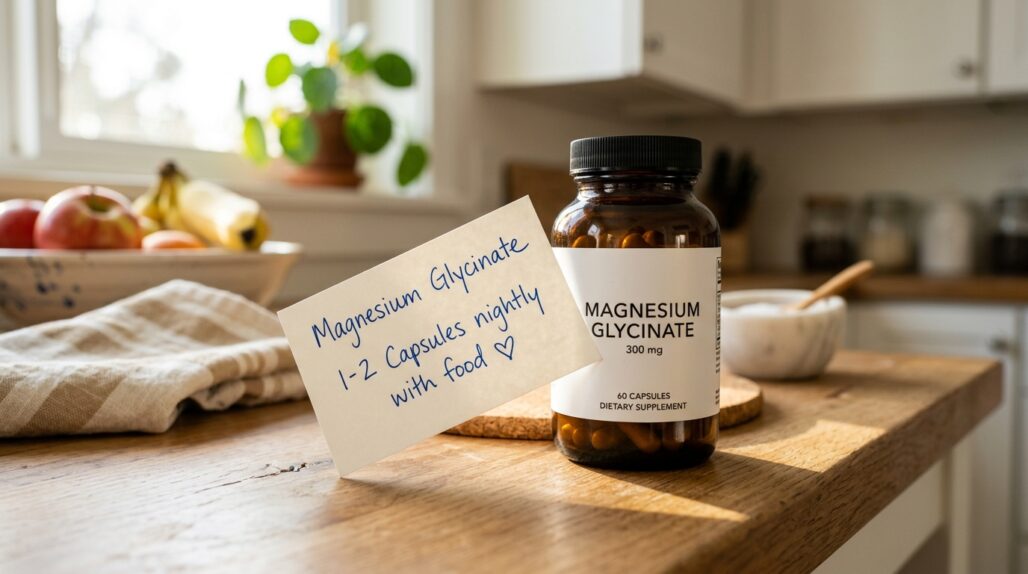
1. Magnesium glycinate (the top pick)
Magnesium is the one with a believable mechanism. It acts as a natural membrane stabilizer and helps control the calcium and potassium channels that decide how easily a muscle fires. The NIH Office of Dietary Supplements notes that the early signs of low magnesium include muscle cramps and neuromuscular hyperexcitability – the same family your eyelid is in.
Glycinate is the form I would pick at night. It is gentle on the gut and less likely to send you running to the bathroom than citrate or oxide. A useful read on choosing the right form is our complete guide to magnesium, and if you want the cramp-and-twitch angle specifically, see our roundup of the best magnesium for muscle cramps.
Dose: around 200-400mg of elemental magnesium in the evening. Keep supplemental magnesium under 350mg per day unless a doctor says otherwise, because the upper limit for the supplement form is set at that level and diarrhea is the side effect that defines it. Who it suits: anyone who twitches often, sleeps poorly, or eats few greens, nuts, and whole grains. Realistic timeline: if it helps, you usually notice over a few days to a couple of weeks, not in an hour.
2. Vitamin B12 (methylcobalamin)
B12 keeps the insulation around your nerves intact, and a real deficiency can cause tingling, numbness, and abnormal nerve conduction. That is the logic for trying it. The honest limit: the trials behind methylcobalamin are mostly in diabetic peripheral neuropathy, not eyelid twitching, and most people who twitch are not B12 deficient.
So this is a conditional pick. It earns a place only if you have a reason to be low: a vegan or vegetarian diet, age over 60, long-term metformin, or long-term acid-blocking medication. If that is you, our guide to the best B12 supplements covers forms and dosing.
Dose: 1000mcg of methylcobalamin daily is a standard, well-tolerated maintenance amount. Who it suits: the at-risk groups above; less useful if your diet already includes meat, eggs, or dairy. One caution: if you buy a B-complex for this, check the B6 number. Vitamin B6 can cause the very sensory nerve symptoms you are worried about at high long-term doses, and the US upper limit sits at 100mg per day. Skip B-complexes packing 50mg or more of B6.
3. Potassium (and why food beats a pill)
Potassium sets the resting voltage of every nerve and muscle cell, so on paper it belongs in this list. In practice, the case for supplementing it for a benign eyelid twitch is weak. The 2024 study above found no potassium difference in twitchers, and most twitching happens at perfectly normal potassium levels.
There is also a safety reason to go food-first. Over-the-counter potassium tablets in the US are capped near 99mg, a fraction of the daily adequate intake of 2,600mg for women and 3,400mg for men set by the NIH potassium fact sheet. Higher-dose potassium is restricted because too much can raise blood potassium dangerously, especially if your kidneys are not perfect or you take ACE inhibitors or potassium-sparing diuretics.
Better move: get it from food. A banana, a baked potato with skin, beans, leafy greens, yogurt, and salmon all beat a 99mg pill. If you want a balanced approach for heavy sweating or low-produce diets, an electrolyte blend can help; see our notes on the best electrolyte supplements. Who it suits: people who barely eat fruit and vegetables, or sweat heavily in training. Skip the high-dose pills unless a doctor prescribes them.
The free fix that works better than any of these
If you only do one thing, do this. The cheapest, best-supported plan for a twitching eyelid costs nothing:
- Cut caffeine for a week, or drop to a single morning cup.
- Sleep. Aim for two or three full nights in a row.
- Hydrate through the day – mild dehydration nudges minerals around.
- Use the 20-20-20 rule: every 20 minutes of screen work, look 20 feet away for 20 seconds.
- Warm compress. A warm washcloth held gently over the closed eye for a few minutes can relax the muscle and ease dryness that makes the eye feel worse.
Most twitches answer to this within days. If yours does, you have saved your money and found the actual cause.

When to see a doctor
A benign eyelid twitch involves one eyelid, comes and goes, and settles on its own. Get it checked if the picture changes. Based on the clinical guidance on eyelid myokymia, see a doctor or eye specialist if:
- the twitching spreads to half your face or pulls at your cheek and mouth
- the spasm forces the eye fully shut with each contraction
- it lasts more than a few weeks without easing
- it comes with drooping, redness, swelling, double vision, or facial weakness
Those patterns can point to blepharospasm, hemifacial spasm, or, rarely, a nerve problem – and that is a clinical question, not a supplement question. Do not start or stop any prescription on your own.
FAQ
How long does a normal eye twitch last? Usually seconds to hours, sometimes a few days. Some cases come and go over a couple of weeks before fading. Anything running longer than that deserves a check.
Which magnesium is best for eye twitching? Magnesium glycinate is the easiest on the stomach and a sensible choice at night. Citrate works too but is more likely to loosen your bowels at higher doses.
Can low potassium cause eyelid twitching? A true deficiency can cause muscle problems, but most eyelid twitches happen at normal potassium levels, and studies have not linked the two. Get potassium from food rather than high-dose pills.
Will B12 stop my eye from twitching? Only if you were actually low on B12 to begin with. If your diet covers it and you are under 60, B12 is unlikely to be the answer.
Is caffeine really the cause? For a lot of people, yes. Caffeine, short sleep, stress, and long screen sessions are the classic four triggers, and cutting them often ends the twitch faster than any supplement.
Should I worry about an eye twitch? Almost never if it is one eyelid that comes and goes. Worry if it spreads across your face, closes the eye, lasts weeks, or comes with weakness – then see a doctor.

The bottom line
For a twitching eyelid, magnesium glycinate is the supplement with the most believable case, taken at around 200-400mg of elemental magnesium in the evening. B12 helps only if you are deficient, and potassium is better handled at the dinner table than in a pill bottle.
Be realistic. The strongest evidence points at your habits, not your nutrient levels, so cut the caffeine, sleep, hydrate, and give your eyes screen breaks before you blame your diet. If the twitch spreads, forces the eye shut, or drags on for weeks, that is your cue to see a doctor rather than buy another bottle.
This article is for general information and is not medical advice. Talk to a qualified clinician before starting a supplement, especially if you are pregnant, take prescription medication such as blood thinners or blood-pressure drugs, or have a kidney condition.
Reviewed by the UsefulVitamins Editorial Team.
