

Affiliate disclosure: this article contains affiliate links. As an Amazon Associate, UsefulVitamins.com earns from qualifying purchases at no extra cost to you.
If you have searched for the best urolithin A supplements, you have probably already read that this gut-derived metabolite triggers mitochondrial quality control and that a Swiss company called Amazentis sells the trial-tested form for around $150 a month under the name Mitopure.
Quick Answer: which urolithin A supplements are worth the money?
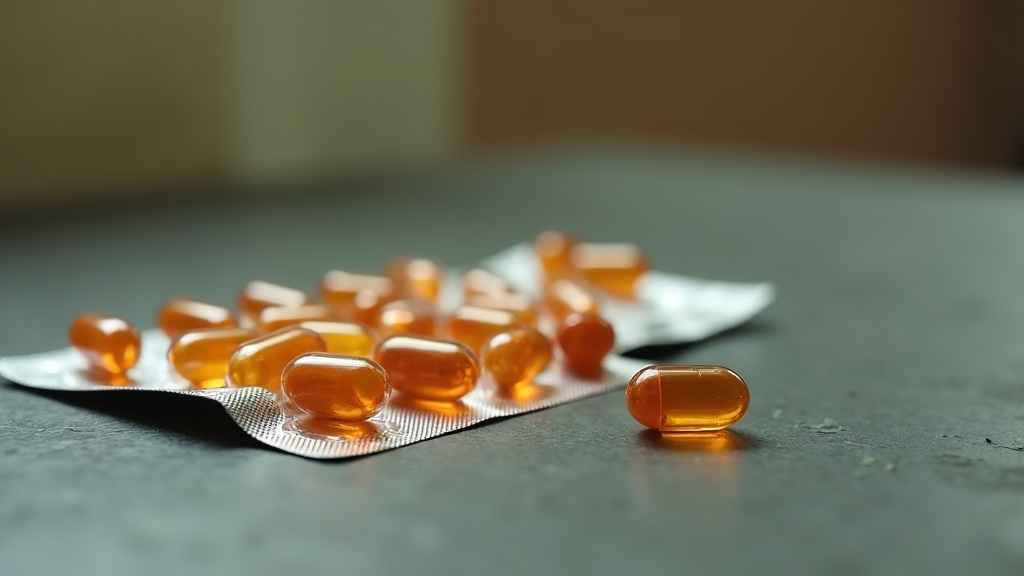
The 2 to 3 we would actually start with:
- Mitopure (Amazentis) or Timeline Nutrition Mitopure, 500 to 1,000 mg/day. The trial-tested postbiotic urolithin A, the form every published RCT has used. Expensive but the only product where the dose on the bottle matches the dose in the published evidence.
- Generic urolithin A capsules at 500 mg/day, ONLY if the brand publishes a third-party assay and lists postbiotic UA, not "pomegranate extract standardized to ellagitannins." This is a small minority of the Amazon listings.
- Food-form ellagitannins (pomegranate, walnuts, raspberries, strawberries) plus a 4-week trial run if you do not know whether you are a urolithin producer. About 30 to 40% of adults convert ellagitannins to urolithin A natively; the rest get little or nothing from food.
Who should NOT start with these: anyone on active cancer treatment, anyone pregnant or nursing, and anyone with severe kidney or liver disease should defer to their clinician, because urolithin A pharmacokinetics in those populations are not characterized. Frail older adults using UA as a substitute for resistance training are misreading the trial signal: the muscle strength effect in the Liu trial was modest and was on top of, not instead of, baseline activity.
What to do FIRST: before paying for any branded UA, check whether you already make urolithin A from food. The cheap version is to eat 100 g of pomegranate arils or a handful of walnuts daily for two weeks, then a commercial urolithin urine metabolite panel from a research-grade lab. If you are a high producer, the supplement adds less than the marketing suggests.
What urolithin A actually is, briefly
Urolithin A (UA) is not a vitamin, a mineral, or a plant compound you eat. It is a postbiotic: a small molecule that gut bacteria produce when they ferment ellagitannins from pomegranate, walnuts, raspberries, strawberries, and certain teas. The dietary precursors do not act directly. They are converted in the colon by specific bacterial strains (notably Gordonibacter species) into urolithins, of which urolithin A is the most metabolically active.
The catch is that only roughly 30 to 40% of adults harbor the gut microbiota to produce meaningful UA from food, a finding nailed down by Tomas-Barberan and colleagues who classified people into urolithin metabotype A (UA producers), B (mixed), and 0 (non-producers). If you are a metabotype 0 person eating pomegranate, you are getting the polyphenol parent compounds and not much of the active metabolite. This is the gap that direct UA supplementation is built to close.
Mechanistically, UA is a mitophagy inducer. Mitophagy is the cellular housekeeping process that tags damaged mitochondria with ubiquitin via the PINK1/Parkin pathway and routes them to autophagosomes for degradation. When mitophagy declines with age, dysfunctional mitochondria accumulate, mitochondrial dynamics shift toward fission without quality control, and muscle and neuronal tissues show measurable bioenergetic decline. The D'Amico narrative review walks through the molecular detail in clean fashion. UA is not anti-aging in the FDA-recognized sense, and the human endpoints studied so far are mitochondrial biomarkers and modest muscle strength signals, not lifespan.
Strong evidence: the three published Mitopure trials

Andreux 2019 (first-in-human, n=60)
Why it helps. This was the trial that established UA could be safely dosed in humans and that oral UA produced detectable plasma concentrations matching the levels effective in preclinical models. Until this study, the open question was whether oral UA was bioavailable at all without the gut conversion step.
What the trials show. Andreux et al. 2019 randomized 60 older adults to placebo or UA at 250, 500, 1,000, or 2,000 mg/day for 4 weeks. The headline result: UA was safe across all doses, and mitochondrial and acylcarnitine biomarkers shifted in a direction consistent with improved mitochondrial fatty acid oxidation, dose-dependently. No clinical endpoint was tested; this was a phase-1-style safety and biomarker study.
Dose used in trials. 500 to 1,000 mg/day was the active range that produced biomarker change without diminishing returns. Higher doses did not add proportional effect.
Form to look for. Mitopure (Amazentis), the postbiotic UA formulation used in the trial. The study did not test generic UA from third-party suppliers, and the chemistry of supplement-grade UA is not interchangeable with the trial material on assay.
Skip if you are looking for a clinical outcome from a 4-week regimen. This trial showed mitochondrial biomarker movement, not muscle, cognitive, or longevity outcomes.
Actionable takeaway: Andreux 2019 is the trial that earns UA the right to be a category at all. It proved safety and pharmacokinetics. It did not prove anything clinical.
Singh 2022 (muscle endurance, n=66, 4 months)
Why it helps. Mechanistically, the strongest case for UA is in tissues that depend on high mitochondrial throughput, and skeletal muscle is the most accessible such tissue to measure in humans. The animal data from Ryu et al. 2016 showed rodents on UA had improved muscle function and that C. elegans lived modestly longer.
What the trials show. Singh et al. 2022 in Cell Reports Medicine randomized 66 middle-aged adults to 500 mg or 1,000 mg/day of Mitopure UA or placebo for 4 months. Mitochondrial gene expression in muscle biopsies and plasma acylcarnitine profiles shifted in the UA arms. Muscle endurance during repeated knee-extension testing improved by a modest but statistically detectable margin compared to placebo. The trial did not show changes in maximal strength or in functional outcomes like gait speed.
Dose used in trials. 500 mg/day was sufficient for biomarker change; 1,000 mg/day did not produce proportionally larger effects on the muscle endpoint.
Form to look for. Mitopure postbiotic UA again. Singh's group is closely tied to Amazentis; that is a disclosure, not a disqualifier, but it means the muscle endurance signal has not been independently replicated by a research group without commercial ties.
Skip if you are looking for performance gains comparable to creatine. The Singh effect size was modest and on a niche endurance task.
Liu 2022 (muscle strength, n=88, 4 months)
Why it helps. The Liu trial moved the endpoint from biomarker and endurance task to a more clinically interpretable outcome: maximal voluntary contraction in the leg extensors. This is closer to the kind of measure clinicians actually use when they evaluate sarcopenia risk.
What the trials show. Liu et al. 2022 in JAMA Network Open randomized 88 older adults to placebo or 1,000 mg/day Mitopure UA for 4 months. The UA group showed approximately a 12% improvement in leg extensor strength versus placebo, alongside continued mitochondrial biomarker movement. As with Singh, the effect was modest and emerged on top of normal background activity, not as a replacement for resistance training.
Dose used in trials. 1,000 mg/day. The 500 mg arm was not included in this trial.
Form to look for. Mitopure. Liu et al. were funded by Amazentis, which is disclosed in the publication.
Skip if you have access to a supervised resistance training program. The strength effect of progressive resistance training in older adults typically dwarfs the UA signal. UA is potentially an addition to training, not an alternative.
Actionable takeaway: Liu 2022 is the cleanest clinical signal in the category and the strongest reason a 60-year-old with sarcopenia risk and disposable income might justify Mitopure. It is still one trial, in one population, funded by the maker. Independent replication is the next thing the field needs.
Moderate evidence: the parts of the story that are mostly animal
The preclinical literature on UA is broader than the human file. Ryu et al. 2016 reported UA extended C. elegans lifespan by roughly 45% and improved rodent muscle function in age-matched comparisons. Subsequent animal work has explored UA in models of cognitive aging, immune senescence, and cardiac mitochondrial dysfunction. None of those endpoints are in published human RCTs at the time of writing.
Mechanism translates partially across species. Mitophagy is a conserved process and PINK1/Parkin signaling looks similar in human and rodent cells, so the molecular case for trying UA in cognitive and cardiometabolic aging is reasonable. The honest framing is that this is mechanism plus mouse data plus three small Mitopure trials, not a translational story that has been validated across endpoints. Anyone buying UA for "brain longevity" is reading farther ahead of the evidence than the evidence will yet carry them.
Popular but evidence-thin: generic Amazon UA and pomegranate extracts
A search for "urolithin A" on Amazon returns dozens of bottles at $20 to $50 for 30 to 60 capsules. Two patterns are common, and both are problems.
Pattern 1: under-dosed UA. Generic UA capsules often list 250 mg per capsule with a "take one daily" instruction. The Singh trial used 500 to 1,000 mg/day; the Liu trial used 1,000 mg/day. A 250 mg/day dose is a quarter of the strongest trial dose and a half of the lower-arm Singh dose. The marketing language ("mitochondrial support") does not flag the gap.
Pattern 2: pomegranate extract relabeled as UA. Several bottles list "pomegranate extract standardized to 40% ellagitannins" or "punicalagins" and describe themselves as a urolithin A supplement. These are not UA. They are the dietary precursors. If you are a urolithin metabotype 0 individual (the majority of adults), these capsules will not produce meaningful UA. They are a polyphenol product mis-marketed as a postbiotic product.
If you want to try generic UA rather than Mitopure, the only defensible version is a brand that publishes its third-party certificate of analysis, lists postbiotic urolithin A explicitly (not ellagitannins), and dosed at 500 mg or higher per serving. That short list is much shorter than the Amazon catalog.
What to look for when buying
| Question | What to check |
|---|---|
| Is the ingredient labeled as urolithin A (postbiotic), not pomegranate or ellagitannins? | The bottle must say "urolithin A" with milligrams; ellagitannin extracts are precursors, not UA |
| What is the per-serving dose vs the trial dose? | 500 to 1,000 mg/day matches the published trials; 250 mg/day is half or less |
| Is there a third-party certificate of analysis? | ConsumerLab spotlight, USP Verified, or a brand-published CoA from a recognized lab |
| Is the formulation Mitopure-licensed? | Mitopure (Amazentis) and Timeline Nutrition Mitopure use the trial-tested material; other brands may not |
| Is there a published clinical trial on this specific formulation? | The three RCTs to date all used Mitopure; generic UA chemistry has not been independently validated against trial material |
For our broader brand-vetting framework see how we review supplements.
When supplements are not enough
Defer the urolithin A purchase and prioritize a clinician visit if:
- Unexplained muscle weakness, fatigue, or sarcopenia signs appeared suddenly in adulthood; rule out thyroid, vitamin D, anemia, statin myopathy, and inflammatory myositis before assuming a mitophagy story
- You are on active cancer treatment or are immunocompromised, where UA pharmacokinetics are not characterized
- You are pregnant, nursing, or planning pregnancy; there is no safety data for UA in these populations
- You have moderate to severe kidney or liver disease; metabolism and clearance of postbiotic UA are not characterized in these populations
- You are framing UA as an alternative to resistance training in older adulthood; the trial signal is modest and additive, not replacement-level
The real question is not "which urolithin A supplement is best", it is "am I a UA producer already, and am I willing to pay Mitopure prices for a modest biomarker and muscle signal in a category with three published trials."
FAQ
Is Mitopure the only urolithin A worth taking?
At the time of writing, Mitopure is the only formulation with published human RCTs (Andreux 2019, Singh 2022, Liu 2022). Generic UA may be chemically identical in principle but has not been independently tested against trial material on assay or human pharmacokinetics. If you want to match the trial evidence, you buy Mitopure or a Mitopure-licensed product like Timeline Nutrition.
Why is Mitopure so expensive?
Postbiotic UA is produced via a proprietary microbial fermentation process by Amazentis, and Mitopure is a patent-protected ingredient. The roughly $150 a month price reflects the IP, the manufacturing cost, and the trial program behind the brand. Generic UA from contract manufacturers in Asia is cheaper but is not the trial material.
Can I just eat pomegranates and walnuts instead?
Roughly 30 to 40% of adults convert ellagitannins to UA natively and can. The other 60 to 70% get the polyphenol parents and not much active metabolite. Without a urolithin metabotype test, you do not know which group you are in. A 2-week food trial followed by a urine urolithin panel is the cheap way to find out.
Does urolithin A extend lifespan in humans?
Unknown. The lifespan data is in C. elegans (the Ryu 2016 paper). Human trials so far have measured mitochondrial biomarkers and muscle outcomes over 4 months, not all-cause mortality or healthspan over years. Calling UA an anti-aging compound in humans is ahead of the evidence.
How long does it take to see an effect?
The trial endpoints emerged at the 4-month mark on muscle outcomes and earlier on mitochondrial biomarkers. A reasonable personal trial is 3 to 4 months at the trial dose, with attention to how you feel rather than a hard endpoint.
Conclusion: the bottom line on best urolithin A supplements
The honest summary: urolithin A has a real and biologically interesting mechanism (mitophagy via PINK1/Parkin), three small human RCTs showing mitochondrial biomarker improvement and a modest muscle strength signal, and one trial-tested formulation (Mitopure) that all of the published evidence has used. Generic UA on Amazon is usually under-dosed or is a pomegranate extract pretending to be a postbiotic. Most adults who eat pomegranates and walnuts do not produce meaningful UA natively, which is the real gap supplementation fills, but only for those willing to pay Mitopure prices for a biomarker and modest muscle signal rather than a clinical outcome.
Next steps:
- Decide whether you are a urolithin producer before spending: a 2-week food trial followed by a urine urolithin metabotype panel is the cheap pre-purchase test
- If you are not a producer and want to try the trial dose, buy Mitopure or Timeline Nutrition Mitopure at 500 to 1,000 mg/day for a 3 to 4-month personal trial
- For a wider longevity-driven framing of mitochondrial and muscle aging, see our best supplements for longevity 2026 roundup; if your real complaint is fatigue rather than sarcopenia, start with our best supplements for chronic fatigue piece, and see Maria Rodriguez's author page for related mechanism coverage
Reviewed by Maria Rodriguez, MS Nutrition Science, focused on cognitive and mood biochemistry.
This article is for informational purposes and not medical advice. Urolithin A pharmacokinetics in pregnancy, nursing, active cancer treatment, and advanced kidney or liver disease are not characterized in the published literature. Consult a licensed physician before starting any supplement protocol, particularly if you are managing a chronic condition, taking prescription medications, or considering UA as part of a sarcopenia or longevity strategy.
Top picks on Amazon
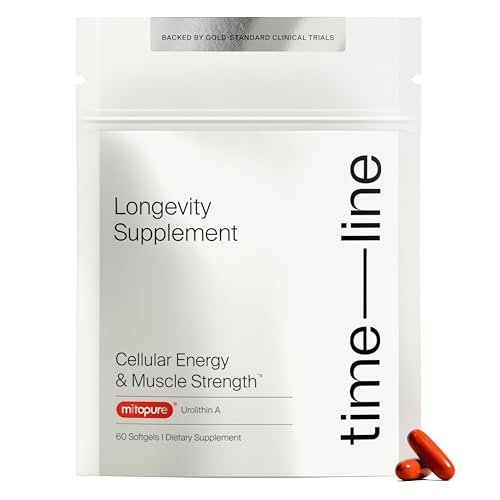
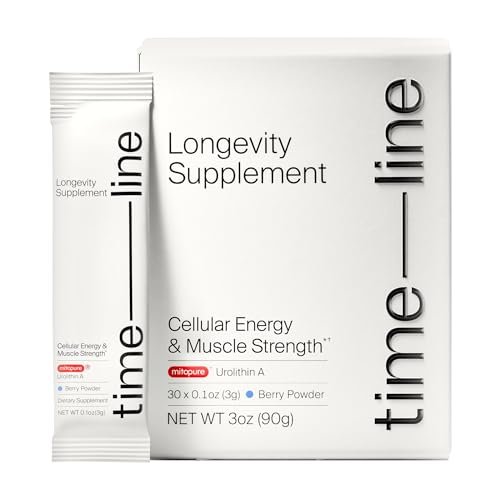
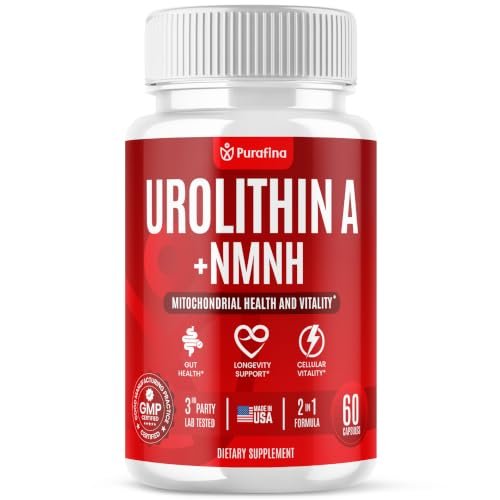
As an Amazon Associate, I earn from qualifying purchases. Product recommendations are based on real reviews and independent research.
