
Bremelanotide is one of only a handful of FDA-approved peptide drugs that a licensed physician can actually prescribe in the United States today — and almost everything sold online as "PT-141" is a compounded version that is not the same product. That distinction matters enormously, because it is the difference between a therapy tested in over a thousand women across two rigorously controlled Phase 3 clinical trials and a liquid drawn up in a compounding facility that may or may not contain what the label says. This article is a close look at the drug that cleared FDA review: what it is, how it works in the brain, what the RECONNECT trial data actually showed, and what the prescribing information requires doctors to discuss with any patient considering it. If you want the wider peptide-for-libido landscape, the peptides for libido overview covers that territory. This article focuses entirely on bremelanotide.

Summary / Quick Answer
Bremelanotide (brand name Vyleesi) is an FDA-approved melanocortin receptor agonist indicated specifically for acquired, generalized hypoactive sexual desire disorder (HSDD) in premenopausal women. It is self-administered as a 1.75 mg subcutaneous injection on demand before sexual activity, no more than once per 24 hours and no more than eight times per month.
- Who it is for: Premenopausal women with a physician-confirmed diagnosis of acquired, generalized HSDD — not men, not postmenopausal women, not situational low desire.
- How it works: Agonism at melanocortin receptors MC4R and MC1R in the central nervous system, modulating dopaminergic pathways involved in desire rather than acting on genital blood flow.
- What the trials showed: Statistically significant improvements in desire and decreases in distress in the two Phase 3 RECONNECT studies across a 1,202-patient integrated population.
- What the label requires: Cardiovascular screening before prescribing; contraindicated in uncontrolled hypertension and known cardiovascular disease; contraindicated in pregnancy.
- What compounded PT-141 is not: The FDA-approved product. Compounded versions have not cleared the New Drug Application process and lack the safety and potency verification of Vyleesi.
What Bremelanotide Is: A Cyclic Peptide With a Specific Brain Target
Bremelanotide is a synthetic, cyclic heptapeptide — a chain of seven amino acids folded into a ring structure. Its cyclic architecture gives it greater metabolic stability than a linear peptide of comparable size, which is why it survives subcutaneous injection long enough to reach the central nervous system. The ring structure was derived from the naturally occurring hormone alpha-melanocyte-stimulating hormone (alpha-MSH), which activates the melanocortin receptor family.
That lineage is worth understanding because it explains both the mechanism and some of the side effects. Alpha-MSH acts on five different melanocortin receptor subtypes (MC1R through MC5R), which are distributed across the brain, skin, adrenal glands, and peripheral tissues. Bremelanotide is not selective for a single subtype — it activates several, but the therapeutic effect on desire is attributed primarily to MC4R activation in the brain. The skin-related side effect of focal hyperpigmentation comes from MC1R activation, which is also why it is more pronounced in people with darker skin tones who have higher baseline melanin production. The two effects come from the same pharmacological action hitting different tissue targets.
If you want to understand where bremelanotide fits in the broader category of peptide-based medicine, the what are peptides article covers the biochemistry without the marketing layer.
How Bremelanotide Got FDA Approval
Palatin Technologies originally studied an early intranasal formulation under the research name PT-141 in the early 2000s. That version was dropped partly because of blood pressure concerns at higher nasal doses. Palatin reformulated as a subcutaneous injection at a dose where the blood pressure effect was transient and manageable, then partnered with AMAG Pharmaceuticals to complete the Phase 3 program and the NDA submission.
The FDA approved Vyleesi on June 21, 2019, under NDA 210557 — only the second drug of any kind approved for female sexual dysfunction after flibanserin/Addyi (2015), and the only one designed as an on-demand rather than daily therapy. AMAG later licensed commercial rights to Cosette Pharmaceuticals; the full prescribing information is available on DailyMed at the Cosette Pharmaceuticals Vyleesi label.
RECONNECT Phase 3 Trial Data
The evidence base for bremelanotide rests on two identically designed, randomized, double-blind, placebo-controlled Phase 3 trials conducted under the RECONNECT program (NCT02333071 and NCT02338960). An integrated analysis incorporating 1,202 participants is the primary reference for efficacy claims, and a prespecified subgroup analysis published in the Journal of Women's Health (PMID 35230162, Simon et al., 2022) confirmed that results held across multiple demographic subgroups including age, weight, BMI, and hormonal contraceptive use status.
Study population: Premenopausal women with a physician-confirmed diagnosis of acquired, generalized HSDD of at least six months duration. Acquired means desire was normal at some prior point; generalized means the reduced desire occurred across situations and partners, not in a specific relationship context only.
Treatment protocol: Participants self-administered 1.75 mg bremelanotide or placebo subcutaneously via autoinjector as needed before anticipated sexual activity for 24 weeks.
Primary endpoints: Changes from baseline in the Female Sexual Function Index (FSFI) desire domain score and the Female Sexual Distress Scale-Desire/Arousal/Orgasm Item 13 (FSDS-DAO Item 13) distress score.
Efficacy results: Bremelanotide produced statistically significant improvements in desire scores and statistically significant reductions in distress scores compared to placebo across both studies. The integrated subgroup analysis (Simon et al., 2022) confirmed these results held "regardless of hormonal contraceptive use" and across varying HSDD duration and comorbid arousal status, with statistical significance achieved at p less than 0.05 for most subgroup comparisons.
Skepticism note: A critical review published in the Journal of Sex Research (PMID 36809187, Spielmans and Ellefson, 2024) characterized the benefit as "statistically modest" and raised questions about the clinical meaningfulness of the observed point differences on the FSFI and FSDS-DAO scales. That critique reflects a genuine debate in the field: statistical significance in patient-reported outcome trials does not always translate directly to what patients experience as a meaningful improvement. The FDA's standard for approval weighs both the statistical evidence and the clinical context, and the agency concluded the benefit-risk profile was acceptable for the indicated population. Prospective patients should discuss effect-size expectations directly with their prescribing physician — the drug works in a real sense, but it does not work dramatically for every user.
The RECONNECT Exit Study (Koochaki, Revicki et al., Journal of Women's Health, 2021) added qualitative texture. Among 242 participants completing exit surveys, bremelanotide-treated women reported increased desire and improved quality of sexual activities versus placebo recipients — confirming the direction of effect aligned with what participants actually noticed.
A Phase 2b responder analysis (PMID 31277966, Althof et al., Journal of Sexual Medicine, 2019) had previously established clinically meaningful threshold differences on the FSFI and FSDS-DAO using receiver operating characteristic methodology, providing the calibration reference points used in RECONNECT power calculations.
How Bremelanotide Works: MC4R, MC1R, and the Dopamine Connection
The prescribing information acknowledges that the exact mechanism by which bremelanotide improves HSDD is not fully understood — the honest position for any drug acting on complex CNS circuitry. What is understood is the receptor-level pharmacology.
Bremelanotide binds to melanocortin receptors MC4R and MC1R. MC4R is expressed broadly in the hypothalamus and limbic regions; its activation in those areas has been linked in preclinical research to pro-sexual behavioral effects across multiple mammalian species. Critically, this is a brain-based mechanism, upstream of and separate from the peripheral vasodilatory action of PDE5 inhibitors like sildenafil. Bremelanotide is not increasing genital blood flow. It appears to be modulating the motivation signal that generates interest in sexual activity in the first place.
The dopamine connection follows directly: melanocortin signaling in the mesolimbic pathway interacts with dopaminergic transmission. The mesolimbic system is the brain's primary reward and motivation architecture. The working hypothesis is that MC4R agonism enhances dopaminergic tone in limbic areas involved in sexual motivation — which is why the drug can theoretically help with desire even in women without a concurrent genital arousal problem.
MC1R activation drives the pigmentation side effect. MC1R sits on melanocytes and stimulates melanin synthesis. At the approved dosing frequency (no more than eight injections per month), focal hyperpigmentation occurred in approximately 1% of participants in clinical trials. At daily dosing far above the approved schedule, the rate was 38%. The dose-frequency dependence is the mechanism: staying within the prescribing information is the primary control.
Side Effects, Blood Pressure, and the Boxed Warning Structure
The prescribing information for Vyleesi does not carry a traditional boxed warning, but it does contain several warnings and precautions that a prescribing physician must address before initiating therapy. Understanding these is essential context for any YMYL discussion of the drug.
Nausea: The most common and clinically significant adverse effect. In the Phase 3 trials, nausea occurred in 40% of bremelanotide-treated participants compared to 1.3% on placebo — a stark difference that reflects the drug's CNS activity. Vomiting occurred in 4.8% of treated participants versus 0.2% placebo. The nausea is most severe with the first injection and typically attenuates with subsequent doses. The prescribing information notes that pre-treatment with ondansetron (a common antiemetic) did not meaningfully prevent nausea, which means the effect is not simply a histamine-mediated gastrointestinal reflex — it likely involves central melanocortin receptor activity in the brainstem. Patients should be counseled to administer the first dose when they do not have commitments requiring full alertness.
Blood pressure: Bremelanotide produces transient increases in blood pressure: approximately 6 mmHg systolic and 3 mmHg diastolic, peaking 2-4 hours after injection and resolving within 12 hours. Ambulatory blood pressure monitoring data across the clinical trial program confirmed this pattern. For a healthy premenopausal woman with well-controlled blood pressure, a 6 mmHg transient rise is clinically manageable. For a woman with uncontrolled hypertension or known cardiovascular disease, it is not. This is why the prescribing information lists both as absolute contraindications: do not use bremelanotide in women with uncontrolled hypertension or known cardiovascular disease. Physicians are expected to assess cardiovascular status before initiating therapy.
Flushing and headache: Flushing occurred in 20.3% of bremelanotide-treated participants versus 0.3% on placebo. Headache occurred in 11.3% versus 1.9%. Injection site reactions occurred in 13.2% versus 8.4%.
Hyperpigmentation: Focal darkening of the face, breasts, or gums was observed at the approved dosing frequency in approximately 1% of participants. Higher rates occurred with daily dosing in studies that exceeded the approved dose schedule. Resolution after stopping treatment was not confirmed in all cases. The risk is higher in individuals with darker baseline skin tones due to greater baseline MC1R sensitivity in melanocytes.
Pregnancy: Bremelanotide is contraindicated in pregnancy. Animal studies demonstrated fetal harm at exposures approximately 16 times the human clinical dose in dogs and developmental delays at exposures approximately 125 times the human clinical dose in mice. Seven human pregnancies were reported in the clinical trials, with no major anomalies observed, but the dataset is far too small to characterize human teratogenic risk. Women of reproductive potential must use effective contraception during treatment and must discontinue immediately if pregnancy occurs or is suspected.
Dose limits to respect: The approved dose is 1.75 mg subcutaneously, no more than one dose per 24 hours, and no more than eight doses per month. These are not suggestions. Exceeding them increases the risk of hyperpigmentation and likely increases all other adverse effects without proportional therapeutic benefit. If the drug produces no improvement after eight weeks of use within the approved frequency, discontinuation is recommended.
Compounded "PT-141": What It Is and Why It Is Not Vyleesi
PT-141 is the research name bremelanotide carried in early clinical development. When that name entered public circulation in the 2000s, compounding pharmacies began producing PT-141 preparations — often lyophilized powder in vials — years before FDA approval and continuing after it.
Compounded PT-141 is not equivalent to FDA-approved Vyleesi for three concrete reasons. First, the approval belongs to a specific product manufactured to validated specifications and dispensed in a calibrated autoinjector. A compounding pharmacy producing bremelanotide from bulk drug substance has not submitted an NDA and has not proven its version matches the studied drug's pharmacokinetic or safety profile. The dose in a compounded vial may be accurate, high, or low — no regulatory mechanism requires batch-level verification comparable to NDA standards.
Second, the FDA has documented real enforcement consequences. A July 2019 FDA warning letter to Promise Pharmacy cited bremelanotide among sterile drug products manufactured in insanitary conditions — a documented action issued the same month the drug received approval.
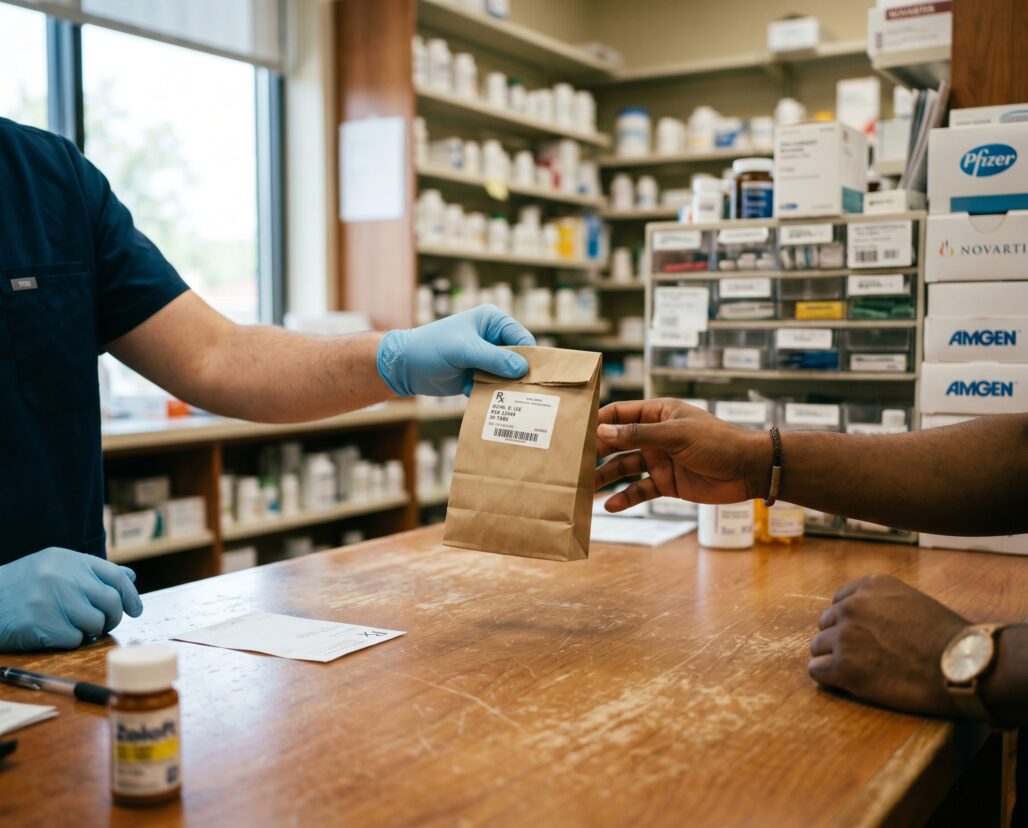
Third, the FDA has been explicit that compounded bremelanotide is not FDA-approved, is not interchangeable with Vyleesi, and should not be treated as equivalent. Any vendor offering PT-141 without requiring a physician's prescription routed through a licensed US pharmacy is operating outside the regulatory framework that makes the drug's safety profile meaningful. That is a compliance signal, not a convenience feature.
Frequently Asked Questions
Is bremelanotide approved for men? No. The prescribing information does not include a male indication. Early research investigated bremelanotide for erectile dysfunction, but that development path was not carried to approval. The Phase 3 trials enrolled premenopausal women only.
Is it approved for postmenopausal women? No. The approved indication is specific to premenopausal women. Postmenopausal women were excluded from the RECONNECT trials, so the safety and efficacy data does not extend to that population.
Can it be used daily? No. The label is explicit: no more than one dose per 24 hours, no more than eight doses per month. It is an on-demand therapy. Daily dosing dramatically increases hyperpigmentation risk and has not been studied for efficacy.
Does pre-treating with nausea medication help? The prescribing information notes that ondansetron pre-treatment did not meaningfully reduce nausea incidence. The effect appears to involve central melanocortin receptor activity rather than a straightforward gastrointestinal reflex. Patients should plan first-use around a low-commitment schedule.
What happens if a patient gets pregnant while using it? Discontinue immediately and contact a physician. Bremelanotide is contraindicated in pregnancy. Effective contraception is required throughout treatment.
Does insurance cover Vyleesi? Coverage varies substantially and has been inconsistent across plans. Patients should verify coverage and prior-authorization requirements with their insurer before starting.
Tracking a protocol like this? Our companion app, StackMyMed, lets you log doses, schedule them, and check interactions across everything you take — alongside, never instead of, your clinician’s guidance.
Conclusion
Bremelanotide/Vyleesi is the clearest example in the peptide space of a compound that completed the full clinical development gauntlet: two Phase 3 randomized controlled trials, a 1,202-patient integrated analysis, a well-characterized adverse effect profile, and an FDA approval based on a complete NDA package. The FDA-approved peptides overview sets this in the context of the broader approved peptide landscape.
The drug has real limitations. It works for a specific population under a specific definition of a specific condition. Nausea hits about four out of ten users. It cannot be used in pregnancy or in women with uncontrolled hypertension. Its benefit is statistically established but described by reviewers as modest on average. These are legitimate medical trade-offs that belong in a physician conversation, not a vendor checkout form.
What the approval of Vyleesi does not do is validate the grey-market PT-141 trade. If anything, FDA approval makes the grey-market problem more visible — because it creates a standard that compounded vials can be measured against and found lacking. No medical or safety justification exists for sourcing bremelanotide outside a licensed pharmacy fulfilling a physician's prescription.
If you are a premenopausal woman experiencing significant distress from low desire and your physician is discussing bremelanotide, the conversation should cover cardiovascular screening, the nausea profile, the dose limits, the pregnancy contraindication, and realistic expectations about effect size. That is the correct framework.
This article is for informational purposes and not medical advice. Peptides, especially those marketed for therapeutic use, can interact with medications and health conditions. Consult a licensed physician before starting any supplement, particularly if you are pregnant, nursing, taking prescription medications, or managing a chronic condition.
