
If you're asking whether lion's mane (Hericium erinaceus) is safe to take, the honest answer is: for most healthy adults, yes — but the side-effect profile is not zero, and a few specific groups face real risks. This guide covers what the clinical trials actually reported as adverse events (mostly mild GI symptoms), the case reports that flag allergic reactions and one severe respiratory incident, the pharmacology behind lion's mane's anticoagulant signal, and which medications genuinely require a conversation with your prescriber before you add this mushroom to your routine. You'll also get a clear-eyed look at the mycelium-on-grain quality problem as a safety issue, not just a potency question.
Summary / Quick Answer: is lion's mane safe?
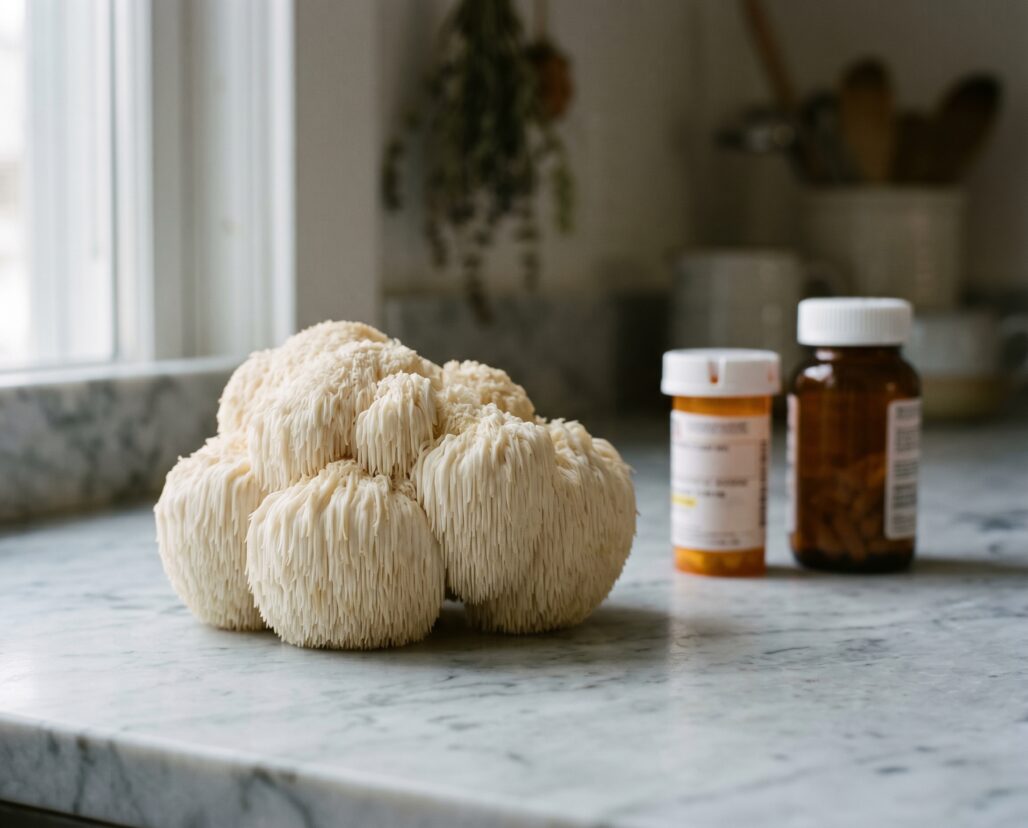
Lion's mane is generally well-tolerated in clinical trial populations at typical supplement doses, with the most common adverse events being mild, transient GI symptoms — but allergy risk, platelet interaction, and product-quality concerns mean it is not universally risk-free.
- Best for: Healthy adults with no active immunosuppression, no anticoagulant therapy, and no known mushroom allergy who have purchased a fruiting-body extract with a verified heavy-metal COA.
- Not ideal for: Anyone on warfarin, apixaban, rivaroxaban, aspirin therapy, or antiplatelet drugs; people with mushroom or mold allergies; those on tacrolimus, cyclosporine, or other immunosuppressants; people who are pregnant or breastfeeding.
- What to check before buying: Fruiting body (not mycelium-on-grain), third-party heavy-metal panel on the COA, beta-glucan percentage disclosed.
- Decision shortcut: If the label says "lion's mane mycelium" without a heavy-metal COA and without disclosing polysaccharide content, the risk-benefit calculation changes — you're taking on quality risk with uncertain benefit.
What you'll find in this guide
- Adverse events from clinical trials
- Allergic reactions: skin, respiratory, occupational data
- The anticoagulant and antiplatelet signal
- Mycelium-on-grain as a safety issue
- Drug interactions
- Who should skip lion's mane
- Pregnancy and breastfeeding
- FAQ
The actual adverse events from clinical trials {#clinical-trial-adverse-events}
The foundational human safety data on lion's mane comes from two small Japanese RCTs that are regularly cited in safety summaries.
In a 2009 double-blind RCT (Mori et al., PMID 18844328), 30 older adults with mild cognitive impairment took 3 g/day of dried lion's mane powder for 16 weeks. The authors reported "laboratory tests showed no adverse effect of yamabushitake." Liver enzymes and kidney markers held normal throughout. A 2010 RCT (Nagano et al., PMID 20834180) in 30 menopausal women and a 2019 parallel-group study (Saitsu et al., PMID 31413233) across 12 weeks of fruiting-body supplementation each reported no significant adverse events and normal liver function. A 2022 study (Dolan et al., PMID 36582308) giving 24 college-age participants 10 g/day for 4 weeks also found no adverse events and steady metabolic markers.
Aggregating across the trial record, a 2025 systematic review (Geng et al., PMID 40959699) covering five RCTs noted "potential side effects include stomach discomfort, headache, and allergic reactions," while a 2024 review (PMID 38289992) confirmed side effects were "limited to mild abdominal discomfort and diarrhea" and that lion's mane "has not been linked to serum enzyme elevations during therapy nor to episodes of clinically apparent liver injury."
Actionable takeaway: The clinical-trial safety signal for lion's mane is genuinely mild at 3–5 g/day of fruiting-body powder. GI symptoms are the only consistently reported adverse event. Liver toxicity has not appeared in any published trial.
Allergic reactions: skin, respiratory, and occupational data {#allergic-reactions}
The GI picture is reassuring. The allergy picture is more complicated, and it matters more than most buyers realize.
Occupational contact dermatitis
A 1999 case report (Maes et al., PMID 10344494) published in Contact Dermatitis documented occupational allergic contact dermatitis in a worker who handled fresh White Pom Pom (Hericium erinaceum) mushroom regularly. This is patch-test-confirmed sensitization from occupational exposure to raw mushroom — not from a capsule supplement. But it establishes that H. erinaceus contains contact allergens capable of causing sensitization in susceptible individuals.
Acute respiratory distress (severe case report)
A 2003 case report (Kawagishi et al., PMID 14714963) described a 63-year-old man who developed severe acute respiratory failure with bilateral lung infiltration after consuming lion's mane extract. A lymphocyte stimulation test showed "strong reactivity against extract formulation of Hericium erinaceum." He required mechanical ventilation and recovered after steroid pulse therapy. The authors flagged this as the first documented case linking a commercialized lion's mane extract to acute respiratory distress syndrome.
This is a single case report — the lowest rung of evidence — and cannot establish incidence. But the mechanism (immune-mediated hypersensitivity response) is biologically plausible given beta-glucan's immune-stimulating properties.
Anaphylaxis (one case)
A 2024 literature review (PMID 38141002) noted one case of anaphylaxis after consumption of fresh lion's mane mushroom. Again, a single case — but anaphylaxis to a culinary mushroom, even a rare event, is clinically meaningful for anyone with a history of mushroom or mold allergy.
Actionable takeaway: If you have any known allergy to mushrooms, mold, or fungi, lion's mane is a supplement to approach with caution and medical supervision — not a casual add-on. The real-world risk for most people is low, but the severity of anaphylaxis makes the precaution non-negotiable.
The anticoagulant and antiplatelet signal {#anticoagulant-signal}
Lion's mane contains hericenone B, an active compound isolated from the fruiting body. A 2010 laboratory study (Kawagishi et al., PMID 20637576) demonstrated that hericenone B selectively inhibited collagen-induced platelet aggregation in both rabbit and human platelets. The mechanism involves blockade of the integrin alpha-2/beta-1 signaling pathway — essentially disrupting one of the collagen-triggered cascades that leads platelets to clump together.
Platelets have multiple activation triggers, and hericenone B turns down one of them. In isolation, that may not be clinically significant in a healthy person. Stacked with warfarin, apixaban, rivaroxaban, or daily low-dose aspirin, the signal becomes worth taking seriously.
This is not an RCT showing bleeding events in humans on anticoagulants — no such trial exists. It is a pharmacological mechanism in human platelets that plausibly amplifies bleeding risk. The absence of documented case reports of bleeding complications from this interaction does not mean the interaction cannot occur; it likely means the combination has not been formally studied.
The glucose-lowering signal carries a similar character: a 2020 in vitro study (PMID 32738392) identified five compounds in lion's mane fruiting bodies that strongly inhibited alpha-glucosidase (IC50 values under 20 µM), an enzyme targeted by diabetes medications like acarbose and miglitol. In vitro enzyme inhibition does not equal clinical hypoglycemia, but the mechanistic overlap is enough to warrant monitoring blood sugar more carefully if you start lion's mane alongside any glucose-lowering prescription.
Mycelium-on-grain as a safety issue {#mycelium-grain-safety}
The fruiting-body-versus-mycelium debate is usually framed as a potency question: fruiting bodies contain more hericenones and beta-glucans, mycelium-on-grain products are diluted with starch and grain fillers. That framing misses a safety dimension.
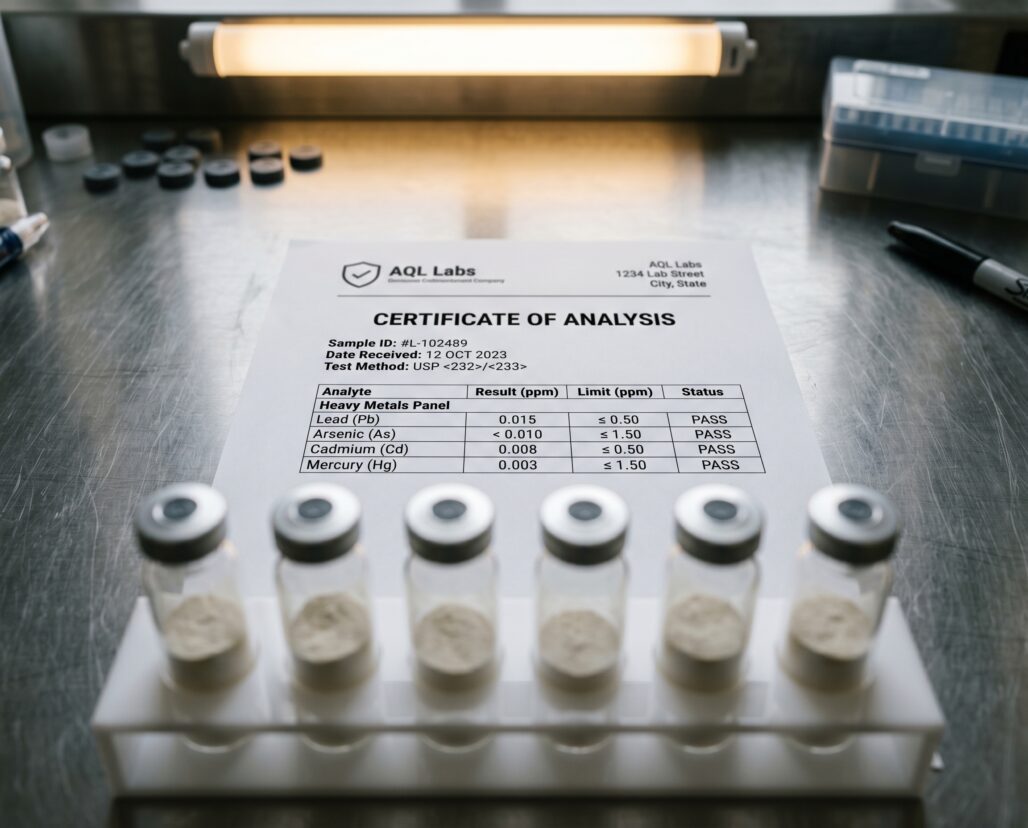
When lion's mane mycelium is cultivated on grain substrates (oats, brown rice, wheat berries), the final product is a blend of mycelium and substrate. Products not subjected to third-party heavy-metal testing can carry contaminants absorbed by the grain during cultivation. ConsumerLab's lion's mane product review has tested commercial lion's mane for lead, arsenic, cadmium, and mercury — and heavy-metal screening is not a standard practice across the industry.
There is a second quality concern: grain substrate means gluten-containing residue is possible in mycelium-on-grain products. A product marketed simply as "lion's mane capsules" without substrate disclosure may not be safe for people with celiac disease or wheat allergy.
Standardized to X% beta-glucan from a verified fruiting-body extract is meaningful. "Lion's mane mycelium powder" with no COA tells you almost nothing useful about what you're taking.
Actionable takeaway: Request the Certificate of Analysis before purchasing any lion's mane supplement. A COA that shows only an in-house test is less reassuring than one from an ISO-accredited third-party lab. Heavy-metal results should be visible for lead, arsenic, cadmium, and mercury.
Drug interactions: the full list {#drug-interactions}
Per Memorial Sloan Kettering's integrative herbs database, lion's mane may interact with medications, and patients should disclose use to their healthcare providers.
| Medication class | Specific drugs | Interaction signal | Evidence level |
|---|---|---|---|
| Anticoagulants | Warfarin, apixaban, rivaroxaban, dabigatran | Additive antiplatelet effect via hericenone B (PMID 20637576); theoretical additive bleeding risk | In vitro human platelets |
| Antiplatelet drugs | Aspirin, clopidogrel, ticagrelor | Same hericenone B mechanism; stacking two antiplatelet signals | In vitro human platelets |
| Diabetes medications | Acarbose, metformin, sulfonylureas, insulin | Alpha-glucosidase inhibition signal (PMID 32738392); theoretical additive glucose lowering | In vitro enzyme assay |
| Immunosuppressants | Tacrolimus, cyclosporine, mycophenolate, biologics | Beta-glucan immune stimulation may theoretically antagonize immunosuppression | Mechanistic/theoretical |
| No known interaction documented | SSRIs, thyroid meds, statins | No established pharmacological overlap as of 2026 | No data |
Three notes on the table:
Anticoagulants/antiplatelets are the most pharmacologically grounded concern. If you take warfarin, increase INR monitoring frequency when starting or stopping lion's mane. DOACs (apixaban, rivaroxaban) have no equivalent monitoring test — making the unknown risk harder to manage. Discuss with your prescriber first.
Immunosuppressants: The concern is theoretical, not documented in human cases. Beta-glucans activate macrophages; for organ transplant recipients or patients on biologics, stacking an immune-stimulating supplement against an immunosuppressive regimen is a risk that warrants medical supervision.
Diabetes medications: In vitro glucose-lowering signal is not confirmed in clinical trials, but extra blood-sugar monitoring in the first weeks of lion's mane use is a sensible precaution if you take any glucose-lowering prescription.
Who should skip lion's mane {#who-should-skip}
Skip entirely if: you have a confirmed mushroom or mold allergy; you take warfarin, a DOAC, or any antiplatelet drug without prescriber sign-off; you are on immunosuppressants for organ transplant or autoimmune disease; or you are a food-industry worker who already develops dermatitis from raw mushroom handling.
Proceed with monitoring if: you take any glucose-lowering medication (track blood sugar in the first 2–4 weeks); or you have a personal or family history of allergic conditions (start at 500 mg/day and watch for itching, rash, or GI distress before increasing).
Pregnancy and breastfeeding {#pregnancy}
No human studies have examined lion's mane in pregnant or breastfeeding women. The clinical trials enrolled adults aged 50+ or menopausal women — neither population overlaps with pregnancy. The absence of data is not evidence of safety. Because lion's mane has documented immune-modulating and platelet-affecting pharmacological activity, the precautionary position is clear: avoid during pregnancy and breastfeeding unless a physician who knows your specific supplement and situation has directed otherwise.
Frequently asked questions {#faq}
Can lion's mane cause stomach upset?
Yes, and this is the most consistently reported adverse event in the published clinical trials. In the Mori 2009 RCT (n=30, 3 g/day for 16 weeks), abdominal discomfort and mild diarrhea were noted. Taking lion's mane with food rather than on an empty stomach may reduce GI symptoms, though no trial has compared timing directly.
Is lion's mane safe to take daily?
In the published trials, daily dosing for 4–16 weeks showed no liver toxicity and only mild GI adverse events. No long-term human safety data (beyond 16 weeks) exist. Animal toxicology studies up to 13 weeks at high doses showed no organ damage in rats, but those findings cannot be directly extrapolated to decades of human daily use.
Can lion's mane cause itching or a rash?
Skin reactions have been reported — occupational contact dermatitis from raw mushroom handling (PMID 10344494) and skin rash mentioned in the MSK integrative herbs database. If you develop itching or a rash after starting lion's mane, stop use and consult a physician to distinguish allergic contact dermatitis from a systemic allergic response.
Does lion's mane affect blood thinners?
The hericenone B in lion's mane fruiting bodies inhibited collagen-induced platelet aggregation in human platelets in a 2010 laboratory study (PMID 20637576). No human bleeding trial exists, but the pharmacological mechanism is real. If you take warfarin, aspirin, or any anticoagulant, discuss lion's mane with your prescriber before starting.
Is mycelium-on-grain lion's mane safe?
It may be, but the quality risks are higher: potential grain residue (gluten risk for celiac patients), less rigorous heavy-metal testing, and uncertain active-compound content. Fruiting-body extracts with a third-party COA represent a more verifiable risk profile.
Can lion's mane cause headaches?
Headache was listed as a potential side effect in the 2025 systematic review (PMID 40959699), though the authors noted it was commonly unreported across studies. No clinical trial has documented headache as a statistically significant adverse event at standard doses.
What dose is considered safe?
In the Mori 2009 RCT, the dose was 3 g/day (four 250 mg tablets three times daily) for 16 weeks with no significant adverse events. The Dolan 2022 study used 10 g/day in muffin form for 4 weeks with no adverse events. Doses above 10 g/day have not been evaluated in human trials.
Conclusion: the bottom line on lion's mane side effects
Lion's mane has a favorable safety record in the clinical trials published to date: mild GI upset is the main documented adverse event, liver toxicity has not appeared, and most participants in published studies tolerated it without incident. But "generally well-tolerated in trials" is not the same as "safe for everyone."
Three specific concerns justify more than a casual read-the-label approach. First, the platelet aggregation signal from hericenone B is pharmacologically real and creates an unquantified bleeding risk for anyone on anticoagulant or antiplatelet therapy. Second, allergic reactions up to and including anaphylaxis have been documented in case reports, making lion's mane genuinely contraindicated for people with confirmed mushroom or mold allergy. Third, the mycelium-on-grain quality problem is a safety issue, not just a potency one — products without a third-party heavy-metal COA carry contamination risk that fruiting-body extracts with proper documentation do not.
For healthy adults with no drug interactions and no allergy history, lion's mane at 3–5 g/day of a verified fruiting-body extract is a reasonable addition to a supplement routine. For anyone in the risk groups above, the conversation starts with your prescriber, not with a supplement label.
Next steps:
- Review the complete evidence picture on lion's mane benefits and mechanisms in Lion's Mane Mushroom: The Honest Guide to Hericium erinaceus and Cognitive Effects.
- Compare the side-effect and interaction profiles across the major adaptogens in the Adaptogens Side Effects Master List: What Each Herb Can and Cannot Do.
- Understand why the fruiting body vs mycelium debate matters for both potency and safety in Lion's Mane Fruiting Body vs Mycelium: Which Form Actually Works?.
This article is for informational purposes and not medical advice. Herbal adaptogens — even traditional ones — can interact with thyroid medication, antidepressants, anticoagulants, immunosuppressants, blood-pressure drugs, and more. Consult a licensed physician before starting any adaptogen, particularly if you are pregnant, nursing, taking prescription medications, or managing a chronic condition.
