
If you're comparing Seed DS-01 to Visbiome because you want the "best" probiotic, the honest answer is: it depends entirely on why you need one. These two products solve different problems for different people, and picking the wrong one is a real possibility at both price points. This article breaks down the cost math, the clinical evidence behind each product, and the specific use cases where one clearly outperforms the other. You'll also get a practical framework for deciding whether either product makes sense for you at all — or whether a $15 Culturelle from Amazon covers the same ground.
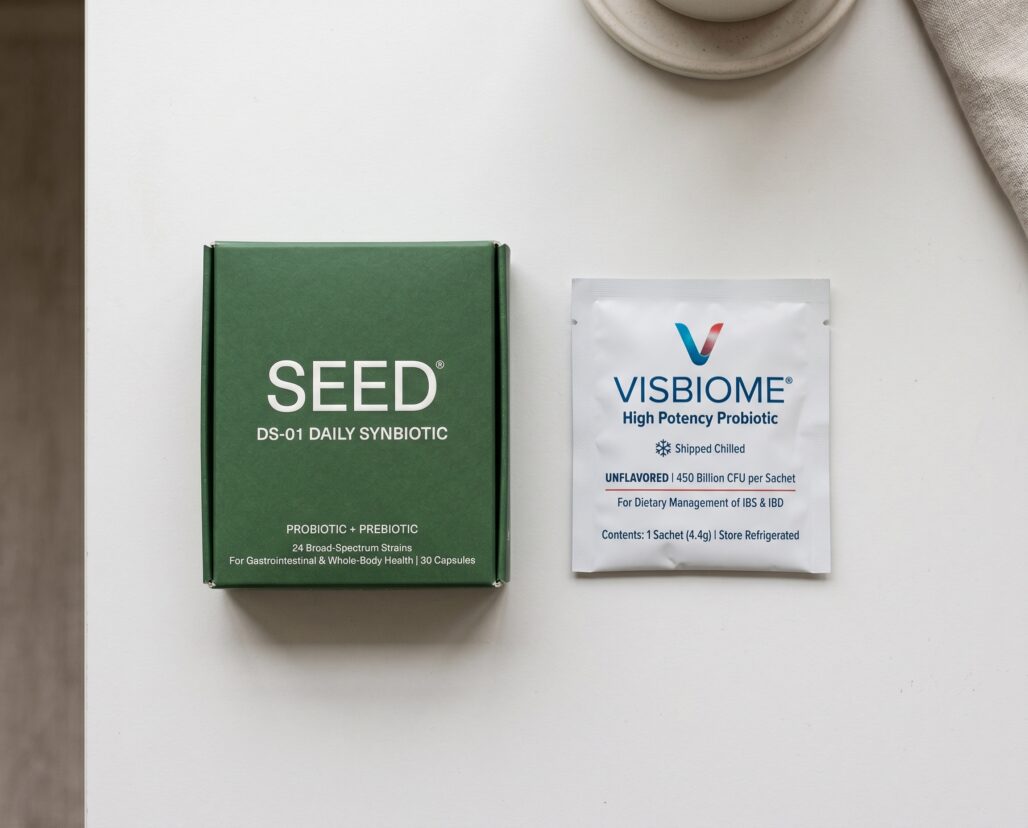
Affiliate disclosure: this article contains affiliate links. As an Amazon Associate, UsefulVitamins.com earns from qualifying purchases at no extra cost to you.
Quick Answer: Seed DS-01 vs Visbiome
Seed wins for: healthy adults seeking a daily probiotic with strong branding, shelf-stable storage, and an easy subscription to manage.
Visbiome wins for: people with IBS, ulcerative colitis, pouchitis, or those who have been prescribed VSL#3 by a gastroenterologist.
Not ideal for Seed: anyone with a specific clinical GI diagnosis who needs documented RCT evidence to back their probiotic.
Not ideal for Visbiome: anyone who travels frequently, wants the convenience of no refrigeration, or has no clinical indication for a high-potency medical-grade formula.
Decision shortcut: If a GI specialist hasn't pointed you toward the VSL#3 formula, Seed is the more practical choice — with the caveat that a cheaper Amazon multi-strain may do the same job for general gut support.
Side-by-Side Comparison
| Feature | Seed DS-01 | Visbiome |
|---|---|---|
| Monthly cost | $49.99/mo (sub) / $60 single | |
| Number of strains | 24 strains | 8 strains |
| CFU/AFU at expiration | 53.6 billion AFU | 450 billion CFU per packet |
| Refrigeration required | No — shelf-stable | Yes — must stay refrigerated |
| Clinically studied formulation | No published RCTs on this specific blend | 30+ peer-reviewed studies on VSL#3 formulation |
| Third-party tested | Proprietary ViaCap claim; limited external validation | Pharmaceutical-grade manufacturing |
| Primary use case | General gut health, daily wellness | IBS, ulcerative colitis, pouchitis (medical-grade) |
| Subscription model | Monthly auto-ship, in-app cancel | One-time purchase available; no forced subscription |
Price: Who Pays More, and Why
Seed DS-01 runs $49.99 per month on subscription, or $60 for a one-time purchase. Annualized, that's $600 per year on the subscription plan.
Visbiome costs roughly $2.30 to $3.00 per packet for the 30-packet High Potency box, putting the monthly cost at $70 to $90 per month — or $840 to $1,080 per year. Visbiome is the more expensive product by 40 to 80 percent, despite being the medical-grade formulation rather than the consumer lifestyle brand.
That pricing inversion is worth sitting with. Visbiome costs more because it carries a different kind of product: one with documented pharmaceutical-grade manufacturing, clinical trial participation, and a strain composition that has been used in published RCTs. You're not paying for packaging or a direct-to-consumer brand narrative. You're paying for the specificity of a formulation that gastroenterologists have actually prescribed.
The CFU difference is dramatic on paper: 450 billion CFU (Visbiome) versus 53.6 billion AFU (Seed). But CFU count alone is not a useful quality signal. "More bacteria" does not automatically mean "more colonization" or "better clinical outcome." The relevant question is whether the strains in the product have demonstrated efficacy at the doses studied. Visbiome's VSL#3 strains have that data. Seed's 24-strain blend does not.
Actionable takeaway: If you're healthy and spending $600 per year on a general wellness probiotic, you should know that Culturelle Digestive Daily Probiotic costs roughly $18 per month on Amazon — a 3.3x savings for LGG, one of the most studied probiotic strains in the world.
Ingredient Quality and Clinical Evidence
Seed DS-01: 24 Strains, Strong Marketing, Limited Trial Data
Seed's DS-01 formula contains 24 strains across two layers: an outer probiotic layer (23.9 billion AFU) and an inner synbiotic layer that adds prebiotic substrate. The ViaCap delivery system is a nested capsule designed to protect bacteria through stomach acid — a plausible engineering approach, but one without published comparative bioavailability data against standard enteric coatings.
The 24-strain breadth sounds impressive. The real question is whether any of those strains, at those doses, have been tested in published RCTs. The answer is: not as a combined formula. Individual strains included in DS-01 (such as Bifidobacterium longum and Lactobacillus acidophilus) have been studied in other contexts, but Seed has not published or registered a clinical trial evaluating DS-01 as the intervention. The company's science communication is sophisticated and well-cited — but it cites studies on individual strains, not on the product you're buying.
The AFU metric (Active Fluorescent Units) is Seed's preferred measurement over CFU (Colony Forming Units). AFU measures bacterial viability using flow cytometry. It's a legitimate measurement method. It's also one that makes cross-brand comparisons harder, which is convenient for Seed and less convenient for you.
Visbiome: 8 Strains, 30+ Published RCTs
Visbiome uses the same 8-strain combination originally studied as VSL#3: four Lactobacillus strains (acidophilus, plantarum, paracasei, bulgaricus), three Bifidobacterium strains (longum, breve, infantis), and Streptococcus thermophilus. This formulation has a documented clinical record:
- IBS with bloating: Kim et al. (2003) — a randomized trial showing VSL#3 reduced flatulence scores in IBS patients vs placebo.
- Ulcerative colitis remission maintenance: Sood et al. (2009) — a double-blind RCT (n=147) where VSL#3 significantly increased remission rates vs placebo at 12 weeks.
- Pouchitis prevention: Mimura et al. (2004) — a trial showing VSL#3 maintained remission in chronic pouchitis where antibiotics failed.
These are the kinds of studies that inform actual clinical decisions. Gastroenterologists prescribing VSL#3 are pointing patients toward this specific strain combination at this specific dose. Visbiome's freeze-dried, refrigerated manufacturing preserves CFU count through expiration — refrigeration is a constraint, but it's also a quality signal for this dose level.
Eight strains with clinical RCT backing is more useful than 24 strains without it. More strains are not always more useful.
Actionable takeaway: If you see a probiotic brand cite "studies" without naming them, that's a tell. Ask which studies, on which strains, at what doses. Visbiome can answer that question directly. Seed, for its DS-01 blend specifically, cannot.
Who Should Buy Which Product
Seed: The Daily Lifestyle Probiotic
Seed is designed for generally healthy adults who want gut support as part of a broader wellness routine. The branding is sophisticated, the packaging is minimal, and the shelf-stable format makes it easy to maintain without a dedicated fridge shelf. There's no clinical diagnosis required, no prescription involved, and no cold chain to manage.
If you're buying a probiotic because you feel like you "should" — because of general digestive discomfort, interest in the gut-brain axis, or you've read about the microbiome — Seed is a coherent choice. It's expensive relative to Amazon multi-strain alternatives, but it's positioned as a premium daily supplement, not a therapeutic intervention.
The real question isn't whether Seed is good. It's whether you need a $50/month probiotic at all. Most people with no specific GI diagnosis do not.
Visbiome: The Clinical Use Case
Visbiome is the right product for a narrow but important population: people with IBS, ulcerative colitis, pouchitis, or significant post-antibiotic dysbiosis. If a gastroenterologist has mentioned VSL#3, Visbiome is the consumer-available formulation of that same strain combination. The refrigeration requirement is not optional. The dose — 450 billion CFU — is not incidental. It reflects what the published trials actually used.
Most readers landing on this comparison do not have a clinical indication for Visbiome. But if you do, that changes the calculation completely. A general wellness probiotic is not a substitute for a medical-grade formulation when you have a specific diagnosed condition.
Cancel Policy and Practical Logistics
Seed: Subscription management is handled in-app. Seed allows cancellation through their member portal without requiring a phone call or email — a meaningful improvement over many DTC brands. No refrigeration needed; the ViaCap format is shelf-stable for travel. That said, it is a subscription commitment with monthly billing. You're on the hook for each cycle unless you actively cancel before the next charge date.
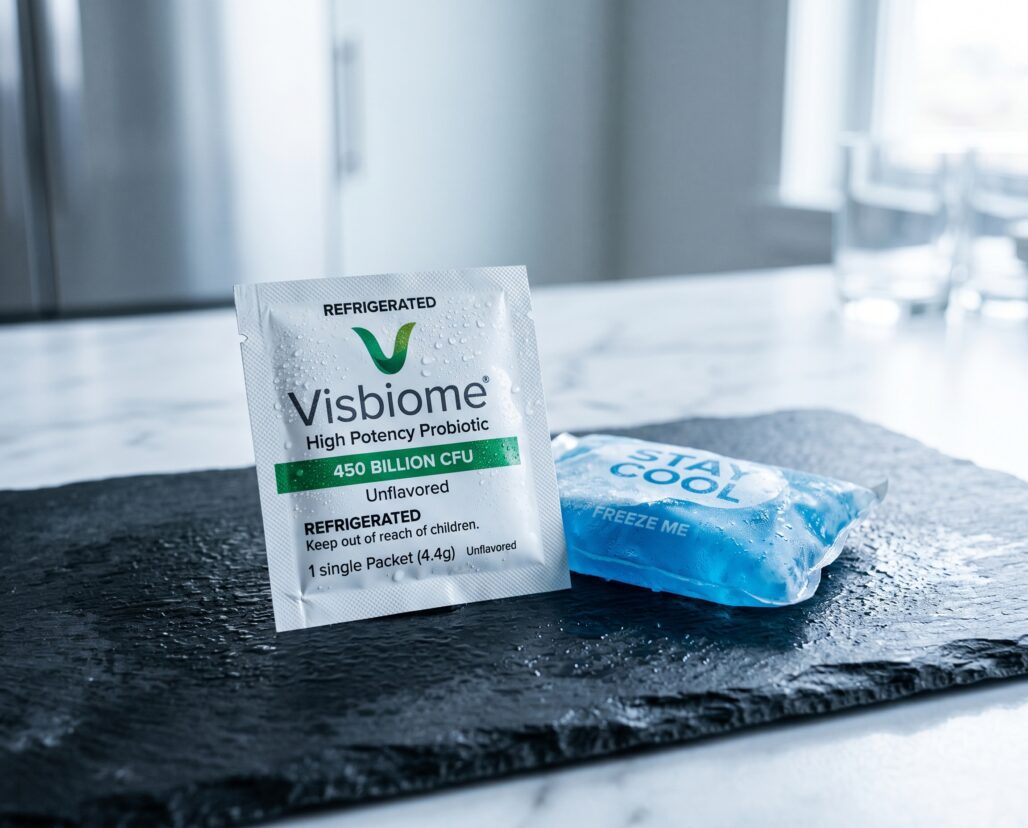
Visbiome: No subscription required. You can buy a 30-packet box as a one-time purchase from Visbiome.com or through select retailers. The practical constraint is refrigeration: Visbiome packets ship cold and must be kept refrigerated after delivery. Traveling with Visbiome requires planning. For short trips, packets can tolerate brief temperature exposure, but this is a real logistical consideration that Seed simply does not have.

Verdict: Seed DS-01 vs Visbiome
Here's the honest breakdown.
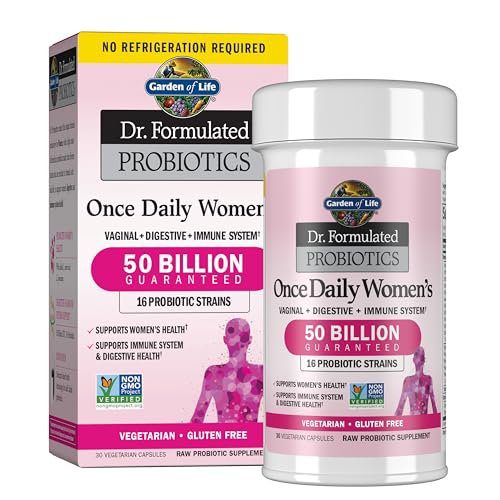
If you want a daily probiotic for general gut health with no specific clinical indication, Seed is the more practical choice between these two. The shelf-stable format, the in-app cancel process, and the credible (if not clinically validated) formulation make it a defensible $50/month spend — if you've decided you want a premium probiotic. The better question to ask first is whether Culturelle ($18/mo) or Garden of Life Dr. Formulated Probiotics (~$25/mo) would serve the same purpose. For most healthy adults, they would.
If you have IBS, ulcerative colitis, pouchitis, or post-antibiotic gut disruption that a doctor is helping you manage — Visbiome, full stop. The VSL#3 clinical record is real, the dose is meaningful, and the strain combination has been tested on people with your specific diagnosis. Do not substitute Seed for Visbiome in a clinical context.
For most readers, the right answer to "Seed vs Visbiome" is: neither — start with a well-studied single-strain probiotic at a reasonable price point, evaluate whether you notice a difference over 60 days, and escalate to Visbiome only if a specialist recommends the VSL#3 formula.
Amazon Top Picks



Seed.com — $49.99/mo direct. Affiliate link pending.
For a full breakdown of Seed DS-01 on its own merits, see our in-depth Seed DS-01 review: is it worth $50 a month?. If you want to see what Seed alternatives look like on Amazon before committing to any subscription, Seed probiotic alternatives on Amazon covers the closest single-purchase equivalents. And if GLP-1 medications are part of your GI picture, the best probiotics for GLP-1 GI issues addresses the specific disruptions that semaglutide and tirzepatide introduce.
Internal links
For 2026 pricing across DTC supplement subscriptions and their Amazon equivalents, see our DTC supplement pricing reference.
As an Amazon Associate, I earn from qualifying purchases. Product recommendations are based on real reviews and independent research.
Settled on one? StackMyMed (our companion app) lets you scan the label and log it into your routine, then watches for overlaps and interactions across your whole cabinet.
Conclusion: the bottom line on Seed DS-01 vs Visbiome
Visbiome is the more expensive product. It is also the more clinically defensible product — for the specific population it was designed for. Seed is the more practical product for general daily use, and it carries a real premium over what Amazon multi-strain alternatives cost for the same general-wellness application.
The category error most buyers make is treating "more potent" as a proxy for "better for me." 450 billion CFU is more than 53.6 billion AFU. It's not, however, more useful unless you have a clinical indication for that dose and strain combination.
Next steps:
- If a GI doctor has mentioned VSL#3, buy Visbiome, not Seed
- If you're healthy and exploring probiotics for the first time, start with Culturelle LGG for 60 days before spending $50/month on Seed
- If you've read our full Seed DS-01 review and decided Seed fits your routine, the subscription is manageable — just know the in-app cancel process before your second charge
This article is for informational purposes and not medical advice. Probiotics — especially medical-grade formulations like Visbiome — can interact with medications and health conditions. Consult a licensed physician or gastroenterologist before starting any probiotic supplement, particularly if you are managing IBS, IBD, or another chronic GI condition, are pregnant or nursing, or are taking immunosuppressant medications.
As an Amazon Associate, I earn from qualifying purchases. Product recommendations are based on real reviews and independent research.
Editorial independence note: UV earns affiliate commissions from Amazon and (selectively) from DTC brand affiliate programs. Commissions never determine our recommendations — top picks are chosen first; affiliate links are added second. Read our full methodology and editorial independence policy →
Frequently asked questions
Should I choose Seed DS-01 or Visbiome?
It depends on why you need a probiotic. Seed DS-01 suits healthy adults wanting a shelf-stable daily probiotic with easy branding and simple subscription management. Visbiome suits people with a diagnosed GI condition such as IBS, ulcerative colitis, or pouchitis who need documented RCT evidence behind the formula.
Is Visbiome the same as VSL#3?
Visbiome uses the same high-potency 8-strain formulation that was originally sold as VSL#3, the version backed by 30+ peer-reviewed studies. It delivers about 450 billion CFU per packet, requires refrigeration, and is generally reserved for specific clinical GI indications rather than general daily wellness.
Do I need Seed or Visbiome if I have no gut condition?
Probably not. If a GI specialist has not pointed you toward the VSL#3 formula, Seed is the more practical of the two — but for general gut support a cheaper Amazon multi-strain such as a $15 Culturelle may cover the same ground. Match the product to a genuine indication rather than to branding.
