
Why a GLP-1 changes the supplement picture
GLP-1 medications like semaglutide (Ozempic, Wegovy) and tirzepatide (Mounjaro, Zepbound) work partly by slowing how fast your stomach empties. That is a feature, not a bug: it is one reason you feel full longer and eat less. But a slower stomach also changes how some pills and powders sit and how they move through you.
The FDA label for Ozempic notes that the drug delays gastric emptying and "has the potential to impact the absorption of concomitantly administered oral medications," and it advises caution and closer monitoring for medications with a narrow safety window, per the FDA prescribing information for semaglutide. The clinical trials did not find a meaningful problem with the medications they tested, so this is about being careful, not alarmed.
The practical takeaway is simple. A GLP-1 does not mean you have to clear out your cabinet. It means a short review with your pharmacist before you start is well worth the time, and a handful of supplements deserve a closer look.
Build one list first (the part that does all the work)
Everything below is easier if you start from a single, honest list. You can do this with a pen and the back of an envelope.
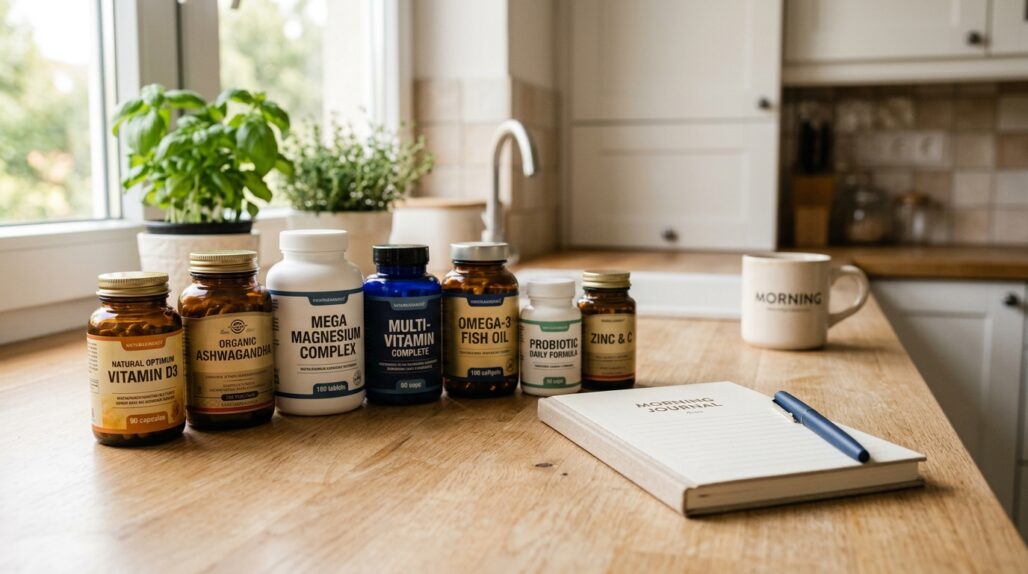
- Pull every bottle you actually take, including the ones you take "sometimes." Line them up on the counter.
- For each one, write the product name, the active ingredient, the dose, and how often you take it. Copy the numbers straight off the label so you are not guessing.
- Note when you take it – morning, with food, at bedtime.
- Add a short note for anything you take for blood sugar, blood pressure, or thinning the blood, since those are the categories your pharmacist will care about most.
Here is a blank template you can copy by hand. Keep it to one page so it is easy to hand over.
| Supplement or med | Active ingredient and dose | When you take it | Flag to ask about? |
|---|---|---|---|
| Example: multivitamin | Iron 18 mg, plus others | Morning with breakfast | Yes – iron, stomach-heavy |
| _______________ | _______________ | _______________ | _______________ |
| _______________ | _______________ | _______________ | _______________ |
That one page is the thing you bring to your start-date conversation. Once it exists, the rest is just deciding which rows to circle.
The stomach-heavy pills worth a closer look
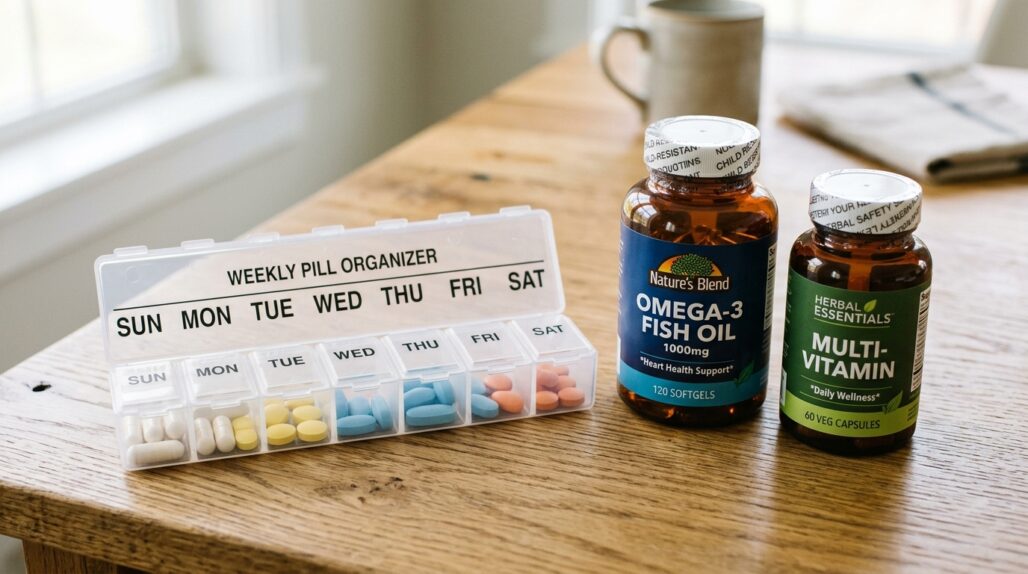
Because a GLP-1 slows your stomach, supplements that are already hard on the gut can feel harder. The two that come up most are iron and high-dose magnesium oxide.
Oral iron is famous for this. Across studies, constipation, nausea, and diarrhea are the most common complaints, and gastrointestinal upset is reported by a large share of people who take it. Add a slower stomach on top, and a dose that was tolerable before may sit uncomfortably. That does not mean iron is off-limits; if a clinician put you on it for low iron, it stays unless they say otherwise.
Magnesium is the other one. The form matters here. Magnesium oxide is poorly absorbed and is one of the forms most likely to loosen stools, and the NIH Office of Dietary Supplements magnesium fact sheet sets the upper limit for supplemental magnesium at 350 mg a day for adults, with diarrhea as the effect that defines that ceiling. On a GLP-1, your gut is already in a different rhythm, so a high-dose magnesium pill can tip you one way or the other.
What to do with these is a timing-and-form question, not a stop-everything question. Your pharmacist may suggest a gentler form, a smaller dose, or taking it at a different time. That is exactly the kind of small adjustment worth raising before your first injection rather than after a rough week.
Blood-sugar-lowering herbs: a pharmacist conversation, not a solo stop
This is the category to slow down on. Supplements marketed for blood sugar – berberine, chromium, and cinnamon – can nudge glucose downward. On their own, in a person not taking other glucose-lowering drugs, that effect is usually modest. The concern is stacking.
A systematic review and meta-analysis of berberine in type 2 diabetes found measurable reductions in fasting glucose and HbA1c. GLP-1 medications also lower blood sugar, and many people on them also take metformin, a sulfonylurea, or insulin. Pile a glucose-lowering herb on top of two or three glucose-lowering drugs and the risk that matters is hypoglycemia – blood sugar dropping too low.
This is not something to sort out by yourself. Whether berberine or chromium stays, goes, or gets a dose check depends on your other medications and your numbers, and that is a decision for the person who manages your diabetes care. If you take any blood-sugar medication, circle these on your list and make them the first thing you bring up.
Fiber, fullness, and the "natural Ozempic" pile
A slower stomach already means more fullness and, for many people, more constipation. Bulky fiber supplements interact with that.
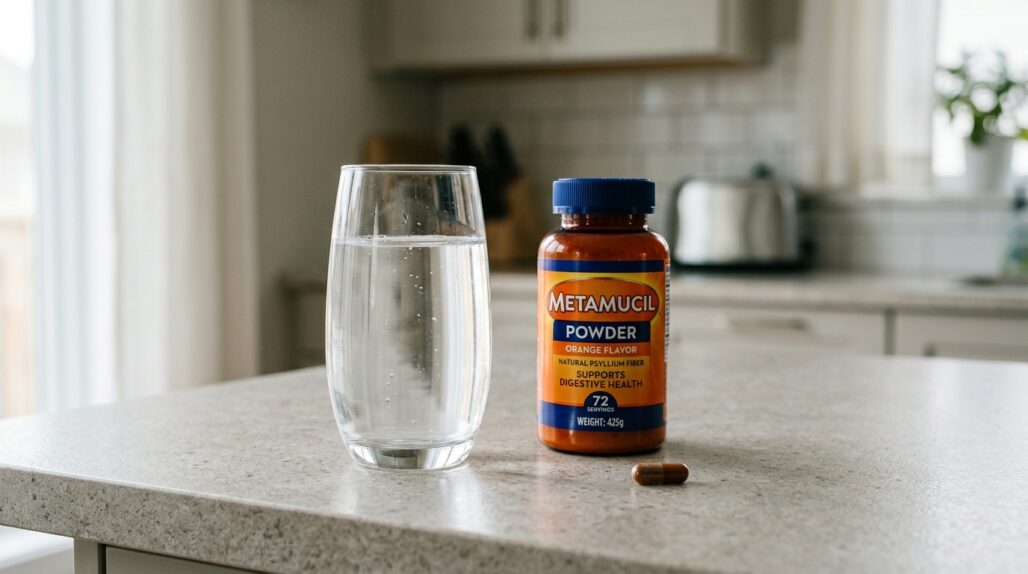
Psyllium and similar fibers form a gel that slows gastric emptying further and adds bulk to stool. That can help with constipation, but only with enough water; taken dry or with too little fluid, fiber can leave you bloated and uncomfortable, which a slow GLP-1 stomach does not need. If you use a fiber supplement, the usual advice is to start low, build up over a couple of weeks, and take each dose with a full glass of water.
There is also the "natural Ozempic" shelf – berberine and similar products sold as if they do what the injection does. They do not. As UCLA Health explains about berberine, the label is marketing, and the real-world effect on weight is small compared with a prescription GLP-1. Once you are on the actual medication, a redundant "natural" version often adds cost and a possible interaction without adding benefit. Again: worth flagging, not worth quietly dropping a clinician-recommended product over.
| Supplement type | Why it can matter on a GLP-1 | What to do |
|---|---|---|
| Iron, high-dose magnesium oxide | Already hard on the stomach; slower emptying can make GI symptoms worse | Ask about form, dose, or timing – do not stop iron a clinician prescribed |
| Berberine, chromium, cinnamon | Lower blood sugar; can add to diabetes meds and raise hypoglycemia risk | Flag before starting, especially if you take any diabetes medication |
| Psyllium and bulk fiber | Slows emptying more; can bloat without enough water | Start low, build slowly, take with a full glass of water |
| “Natural Ozempic” blends | Often redundant once on the drug; possible interactions | Mention it and ask whether it still has a job |
Keep the list current, then bring it in
The work above only helps if your list reflects what you actually take on your start date, not what you took six months ago. People add and drop supplements without noticing, so a quick once-a-week glance keeps it honest. A paper template taped inside a cabinet door or a note on your phone both do the job.
If you would rather not retype it each time, a free app we make, StackMyMed, lets you scan in each bottle so everything sits in one view and flags the ones worth raising with your pharmacist before your first dose; the pharmacist still makes the call on any interaction, and a written sheet works just as well if you prefer paper. Either way, the goal is the same: walk into your start-date conversation with the full picture instead of trying to remember every bottle on the spot.
For the next layer of detail, our guides on which supplements to avoid with Ozempic and supplements that may pair well with it go deeper, and the GLP-1 timing schedule around meals and your injection covers the day-to-day "when do I take what" question.
FAQ
Do I have to stop all my supplements before starting a GLP-1? No. Most people keep most of what they take. The point is a short review with your pharmacist or prescriber so the few that matter – stomach-heavy pills, blood-sugar herbs, bulky fiber – get a closer look before your first dose.
Will my supplements stop working because my stomach is slower? For most products, no meaningful change is expected. The FDA label notes the drug can affect how oral medications are absorbed and advises caution mainly for drugs with a narrow safety window, which is why timing questions are best answered by a pharmacist who knows your full list.
Is it safe to take berberine with a GLP-1? That depends on your other medications. Berberine can lower blood sugar, so combined with a GLP-1 and a diabetes medication it may raise the risk of going too low. Bring it up before starting rather than deciding on your own.
Can I keep taking my iron and magnesium? Often yes, sometimes with a tweak. If a GLP-1 makes them sit harder, your pharmacist might suggest a gentler form, a lower dose, or different timing. Do not stop an iron supplement a clinician prescribed without asking them first.
Should I take fiber to help with constipation on a GLP-1? Many people do, but go slowly and drink plenty of water with it, since fiber adds bulk and a GLP-1 already slows things down. If constipation is severe or lasts, that is worth a call to your prescriber rather than more fiber.
What is the single most useful thing to do before my start date? Make one written list of every supplement and dose, circle anything for blood sugar or anything stomach-heavy, and review it with your pharmacist. That one page prevents most of the guesswork.
The bottom line
Starting a GLP-1 is a good moment to take stock of your supplements, not to panic about them. The medication slows your stomach, so a small set of products – iron and high-dose magnesium oxide, blood-sugar herbs like berberine, and bulky fiber – are worth a second look, and the "natural Ozempic" pile is usually redundant once you are on the real thing.
The one action that matters: write down everything you take and review it with your pharmacist or prescriber before your first dose. Nothing here should be stopped on your own. Bring the full list, ask the questions, and let the professional make the medical calls.
This article is for general information and is not medical advice. It is not a substitute for guidance from your own pharmacist or doctor, who can account for your full medication list and health history. Do not start, stop, or change any prescription or supplement based on this page alone.
StackMyMed is made by UsefulVitamins. It helps you organize your list and flag things to discuss with a pharmacist or doctor; it is not a diagnosis or treatment tool and does not replace professional medical advice.
Reviewed by the UsefulVitamins Editorial Team.
