
Most people searching for the best selenium supplements want one thing: a safe, well-absorbed dose from a brand that actually matches its label. This article breaks down which forms absorb best, what dose makes sense for most adults, and which product types fit different goals (thyroid support, budget picks, or clean-label options). You’ll also learn how to avoid the most common mistake with selenium – taking “a little extra” for too long and accidentally creeping toward toxicity.
Affiliate disclosure: this article contains affiliate links. As an Amazon Associate, UsefulVitamins.com earns from qualifying purchases at no extra cost to you.
Summary / Quick Answer
The best selenium supplements are typically L-selenomethionine products in the 100-200 mcg range from brands that use third-party testing and good manufacturing practices.
Quick picks by need (what to look for):
- Best absorbed form: L-selenomethionine (often listed as “selenomethionine”)
- Most common effective dose: 200 mcg per day (often used in thyroid-focused studies)
- More conservative daily option: 100 mcg (especially if you eat selenium-rich foods)
- Best value: simple formulas with 200 mcg per capsule and verified quality testing
- Best for sensitive users: allergen-free, yeast-free, minimal excipients
Fast safety rule: Aim to stay under 400 mcg/day total from food + supplements unless a clinician is monitoring you, based on the tolerable upper intake level described by the NIH Office of Dietary Supplements fact sheet on selenium.
Best Selenium Supplements: What to Buy (and Why)
If selenium were a “quiet helper,” it would be the behind-the-scenes mineral that keeps key enzymes working – especially those tied to antioxidant defense and thyroid hormone metabolism. The tricky part is that you need very little, and the gap between “helpful” and “too much” is smaller than many people realize.
The short list of what matters most
When comparing products, prioritize these factors in this order:
- Form: L-selenomethionine is typically the most bioavailable form used in supplements.
- Dose: 100-200 mcg per day fits most supplement use cases.
- Verification: third-party testing or strong quality controls (GMP, CGMP, NSF, USP-style standards).
- Simplicity: fewer fillers can be easier on digestion and easier to audit.
Health reviewers consistently highlight selenomethionine as a top choice for absorption and reliability, including the roundups from Healthline’s selenium supplement guide and Medical News Today’s comparison of selenium supplements.
Comparison table: top options by “type”
Below is a practical way to think about “best,” depending on what you value most.
| Best for… | What to look for on the label | Typical dose | Notes |
|---|---|---|---|
| Absorption-focused | “L-selenomethionine” or “selenomethionine” | 200 mcg | Commonly used in research and clinical practice |
| Budget + simplicity | 200 mcg, single-ingredient formula | 200 mcg | Often lowest cost per serving |
| Allergen-sensitive | Yeast-free, gluten-free, dairy-free | 100-200 mcg | Helpful if yeast-based products bother you |
| Multi-mineral approach | Selenium included with zinc, iodine, etc. | 40-100 mcg | Can reduce risk of overshooting total intake |
| Thyroid-support stack | Selenium + complementary nutrients | varies | Best chosen based on labs and symptoms |
Buying tip that prevents 80% of regret
Before you buy, decide whether you want a standalone selenium or a multi. People often forget selenium is already inside multivitamins, thyroid formulas, and “antioxidant blends.” If you stack them, total intake can climb fast.
If you’re unsure how to judge labels and testing claims, use this guide to Supplement Quality Indicators before you commit to a bottle.
Selenium Dosage, Safety, and Timing (Without Overdoing It)
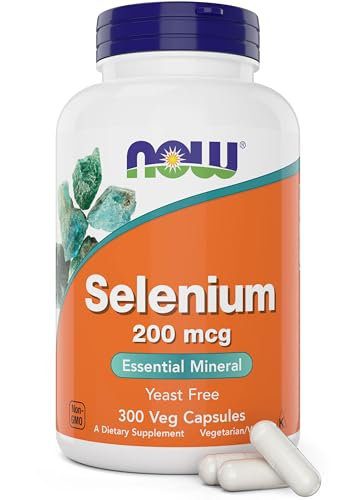
Now Foods Selenium 200mcg Capsules, 300 Count – L Selenomethionine Mineral Supplement for Women & Men – Veg Caps, Non-GMO, Vegan Friendly, Yeast-Free
This NOW Foods Selenium supplement delivers 200 mcg of L-selenomethionine per capsule in a yeast-free formula, suitable for both women and men. It comes in 300 vegetarian capsules that are non-GMO and vegan-friendly. The L-selenomethionine form supports good absorption as a key trace mineral.
Selenium is essential, but it’s not a “more is better” nutrient. Adults need micrograms, not milligrams. That’s why smart dosing is the difference between a helpful routine and an avoidable side effect.
What the science-based targets look like
According to the NIH Office of Dietary Supplements fact sheet on selenium:
- RDA for adults: 55 mcg/day
- Tolerable Upper Intake Level (UL): 400 mcg/day
Many supplements are formulated at 200 mcg per capsule, which is well above the RDA but still below the UL for most healthy adults when not combined with other selenium sources. That said, the UL is not a “goal.” It’s a ceiling.
Practical dosing guide (choose one lane)
Use this as a simple decision tool:
- 100 mcg/day: good “maintenance” dose if you eat eggs, seafood, meats, or grains regularly
- 200 mcg/day: common choice for targeted use (often thyroid-focused), especially if intake is low
- Avoid routinely exceeding 200 mcg/day unless a clinician has a clear reason and is monitoring labs
Here’s a quick “stack check” list to prevent accidental excess:
- Multivitamin (often 55-200 mcg)
- Thyroid support formula (often 100-200 mcg)
- Standalone selenium (often 200 mcg)
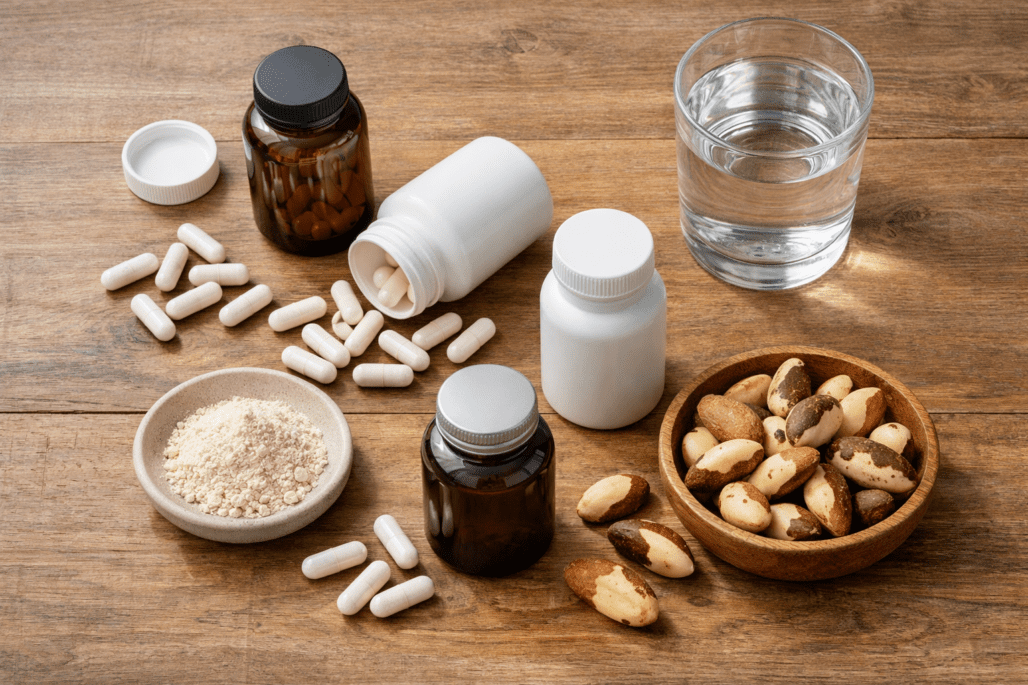
- Brazil nuts (can be very high, depending on nut and origin)
Timing: does it matter?
Selenium doesn’t require a complicated schedule, but a few habits make it easier to tolerate and stick with:
- Take with food to reduce nausea risk
- Take at the same time daily for consistency
- If you’re taking 200 mcg+ and feel off, try splitting the dose (morning and evening)
If you want a simple way to match supplements to meals and meds, try the Supplement Timing Optimizer to reduce guesswork.
Signs you may be getting too much
Chronic high intake can lead to selenosis. Watch for:
- Hair shedding or brittle hair
- Brittle nails
- Metallic taste or “garlic breath” odor
- Nausea or GI upset
If those show up, stop the supplement and talk with a clinician. The fix is often as simple as lowering total intake.
Selenium Benefits: What It Actually Does in the Body
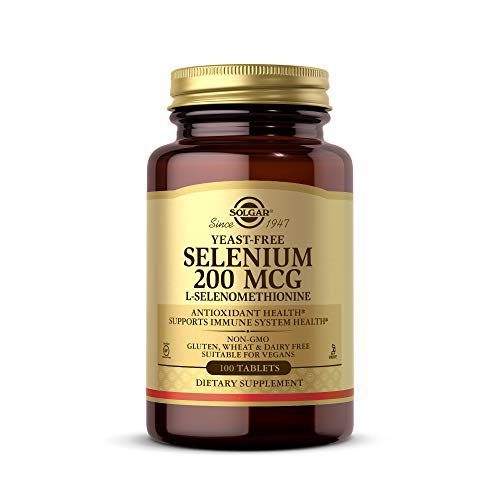
Solgar Yeast-Free Selenium 200 mcg, 250 Tablets – Supports Antioxidant & Immune System Health – Non-GMO, Vegan, Gluten Free, Dairy Free, Kosher – 250 Servings
Solgar’s yeast-free selenium supplement delivers 200 mcg of L-selenomethionine per tablet in a 250-tablet bottle, suitable for 250 servings. It avoids yeast unlike some other selenium formulas and is non-GMO, vegan, gluten-free, dairy-free, and kosher, making it a good pick for those with sensitivities. Take one tablet daily with a meal to support antioxidant activity via glutathione peroxidase.
Selenium’s main job is to help build selenoproteins – proteins that run critical processes like antioxidant defense and thyroid hormone metabolism. If that sounds abstract, think of selenium as a small part that helps “turn on” larger systems.
The benefits with the strongest biological rationale
Research and clinical references consistently describe selenium’s role in:
- Antioxidant defense: Selenium is part of enzymes like glutathione peroxidase that help manage oxidative stress.
- Thyroid hormone metabolism: Selenium-dependent enzymes help convert T4 to the more active T3 form.
- Immune function: Selenium participates in immune signaling and response.
- DNA synthesis and cellular protection: Selenium supports processes tied to cell maintenance.
For a science-grounded overview of selenium’s physiological roles, the NIH Office of Dietary Supplements fact sheet on selenium is a reliable reference.
Thyroid support: where selenium gets the most attention
People with Hashimoto’s thyroiditis often come across selenium because some studies suggest it may help reduce thyroid antibody levels in certain contexts. It’s not a cure, and results vary, but it’s one of the most discussed targeted uses.
If you’re building a thyroid-focused plan, it helps to think in systems:
- Selenium may support thyroid-related enzymes
- Iodine status matters
- Vitamin D, iron, and zinc frequently influence symptoms too
For a broader plan (beyond a single nutrient), see this guide on Thyroid Support Supplement.
What about skin and hair?
Selenium is involved in antioxidant systems that can influence skin and hair health indirectly. But hair loss is also a classic sign of too much selenium, which is why “hair support stacks” can backfire if they pile on multiple selenium sources.
If your goal is skin-first, consider a broader, safer approach using nutrients with clearer deficiency patterns and dosing ranges. This resource on Supplement For Skin can help you compare options without overloading trace minerals.
Visual checklist: “benefit claims” to treat cautiously
Not all selenium marketing matches evidence. Be careful with products promising:
- Guaranteed cancer prevention
- Rapid thyroid “reset”
- Fast immune “boosts” with high-dose selenium
More selenium does not automatically mean more benefit, especially when baseline intake is already adequate.
How to Choose the Right Form: Selenomethionine vs Selenite vs Yeast
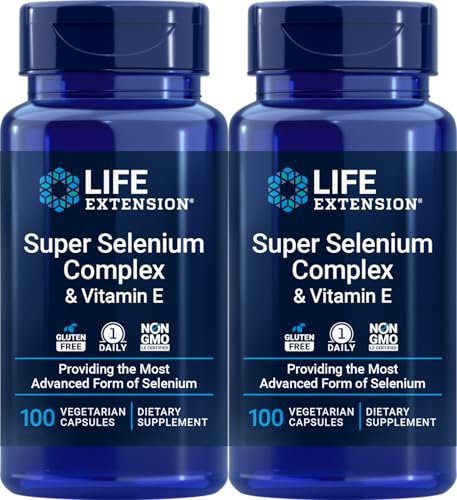
Life Extension Super Selenium Complex, 200 mcg – 3 Forms of Selenium, Vitamin E – Cellular Health & Longevity Support – Gluten-Free, Non-GMO, Vegetarian, 1 Daily – 100 Capsules
Life Extension Super Selenium Complex provides 200 mcg selenium from three forms—Se-Methyl L-Selenocysteine, L-selenomethionine, and sodium selenite—plus vitamin E in 100 vegetarian capsules, taken once daily. It’s gluten-free, non-GMO, and vegetarian, formulated for cellular health, healthy aging, thyroid support, and oxidative stress defense per the brand’s description. Lacks Amazon ASIN, ratings, price, or third-party testing info for a full recommendation.
Most people don’t fail with selenium because they pick the “wrong brand.” They fail because they pick a form that doesn’t match their goal, tolerance, or dietary pattern.
The three common forms, explained simply
Here’s how the main forms differ in practice:
| Form on label | What it is | Why people choose it | Watch-outs |
|---|---|---|---|
| L-selenomethionine | Organic form, selenium bound to an amino acid | Often considered highly absorbable and commonly used | Easy to overshoot if stacking products |
| Sodium selenite / selenate | Inorganic forms | Sometimes used in lower-cost formulas | Absorption and retention can differ from organic forms |
| Selenium yeast | Yeast grown in selenium-rich media | Can be effective and widely available | Avoid if yeast-sensitive or if you prefer yeast-free |
Many clinician and reviewer roundups favor selenomethionine for absorption and consistency, including the comparisons from Healthline’s selenium supplement guide and Medical News Today’s comparison of selenium supplements.
The “best form” depends on your context
Ask yourself these two questions:
- Do I need a standalone selenium, or do I already get it in a multi?
- Do I have sensitivities (yeast, fillers), or do I want the simplest label possible?
If you’re already taking a multivitamin, a lower-dose selenium (or none at all) may be the safer move. If you’re targeting a specific reason and your total intake is low, selenomethionine 100-200 mcg is often the most straightforward choice.
Visual: quick label audit (30 seconds in-store)
Use this mini-checklist when you’re holding the bottle:
- Dose per serving: 100 mcg or 200 mcg
- Form listed clearly: “selenomethionine” is easy to identify
- Testing/quality language: GMP/CGMP and third-party testing claims
- Allergen notes: yeast-free if you need it
- Serving size: 1 capsule is simpler than “2 capsules = 200 mcg”
If you want a deeper framework for judging quality claims (without getting lost in marketing), revisit Supplement Quality Indicators.

Stacking this with other supplements? Our companion app, StackMyMed, totals your real daily intake of each mineral and spaces anything that should not be taken together, with reminders for the right timing.
Conclusion: The Smart Way to Use Selenium Supplements
The best selenium supplements are usually simple: a well-tested product using L-selenomethionine, dosed around 100-200 mcg, chosen with your total intake in mind. Selenium can support antioxidant systems and thyroid hormone metabolism, but it’s also one of the easier nutrients to overdo if you stack a multi, a thyroid formula, and a standalone capsule.
A practical next step: add up selenium from everything you already take, then pick the lowest dose that fits your goal. For most people, that means 100 mcg if diet is solid, or 200 mcg for targeted use with a clear reason.
For related guidance, see Thyroid Support Supplement if thyroid health is your focus, and use the Supplement Timing Optimizer to make your routine easier to follow.
As an Amazon Associate, I earn from qualifying purchases. Product recommendations are based on real reviews and independent research.
