
Feeling “wired but tired” is one of the most common anxiety complaints, and it often comes with muscle tension, poor sleep, and a racing mind. If you’re searching for magnesium for anxiety, the short answer is: it may help reduce mild-to-moderate anxiety symptoms, especially if your intake is low, but the form, dose, and your baseline stress level matter. This article breaks down what clinical trials actually show, which magnesium types tend to be best tolerated, how long results usually take, and how to use magnesium safely alongside other anxiety supports.
Summary / Quick Answer
Magnesium for anxiety may help lower subjective anxiety and stress scores in people with mild-to-moderate symptoms, particularly when magnesium status is low.
Here’s the practical, evidence-based way to think about it:
- Best starting dose: 200-300 mg elemental magnesium daily, then adjust based on response and digestion
- Typical effective range in studies: ~248-500 mg elemental magnesium daily for 6-12 weeks
- Forms often preferred for tolerance: magnesium glycinate or magnesium chloride (generally easier on the stomach than oxide)
- When to take it: evening can be useful if anxiety overlaps with sleep trouble
- What to expect: many people notice changes in 2-6 weeks; bigger shifts may take 8-12 weeks
- Who should be cautious: kidney disease, or anyone taking medications that interact (check with a clinician)
If you want a broader plan beyond magnesium alone, see this site’s evidence-informed anxiety supplement protocol.
Magnesium for Anxiety: What the Research Actually Shows (and for Who)
A lot of people try magnesium because anxiety can feel physical – tight shoulders, jaw clenching, restless legs, shallow breathing. That’s not “all in your head.” Magnesium is involved in nerve signaling, muscle relaxation, and the stress response, so the idea is biologically plausible. The more important question is whether human trials back it up.
Overall, research suggests magnesium supplementation can reduce anxiety symptoms, but results vary based on study design, baseline magnesium status, and whether magnesium is combined with other ingredients.
What clinical trials report (real numbers, not hype)
Several randomized trials have found measurable improvements on standard anxiety scales:
- In a placebo-controlled trial using magnesium (as magnesium oxide) over 90 days, participants saw a greater reduction in anxiety scores than placebo on measures like the Hamilton Anxiety Rating Scale (HAM-A). The paper is available via a clinical review in Nutrients hosted on PubMed Central.
- In adults with mild-to-moderate symptoms, a trial in PLOS ONE using 248 mg elemental magnesium (as magnesium chloride) reported a meaningful improvement in GAD-7 anxiety scores compared with control. See the PLOS ONE randomized crossover trial.
When you translate this into everyday expectations, magnesium tends to help most when anxiety is “background loud” rather than severe and disabling. Think: persistent worry, stress reactivity, sleep disruption, and physical tension.
Who is most likely to benefit?
Magnesium isn’t a guaranteed anxiety fix. It’s more like correcting a missing piece that can make the nervous system easier to settle.
You may be a better candidate if you have:
- Low dietary intake (few nuts, legumes, whole grains, leafy greens)
- High stress periods (poor sleep, heavy training, intense workload)
- Frequent muscle cramps or tightness (not diagnostic, but a common clue)
- Symptoms that overlap with sleep problems (see magnesium for sleep)
Visual: Evidence snapshot (what studies tend to look like)
| What trials commonly test | Typical range |
|---|---|
| Participants | Mild-to-moderate anxiety or stress |
| Elemental magnesium dose | ~200-500 mg/day |
| Duration | 6-12 weeks (some up to 90 days) |
| Outcomes | GAD-7, HAM-A, VAS stress/anxiety, mood scales |
| Biggest limitation | Different forms, doses, and add-on ingredients |
Actionable takeaway: If your anxiety is mild-to-moderate, a 6- to 8-week magnesium trial is reasonable, but track symptoms so you can tell if it’s working.
How Magnesium May Calm the Nervous System (GABA, Glutamate, and Stress Signaling)
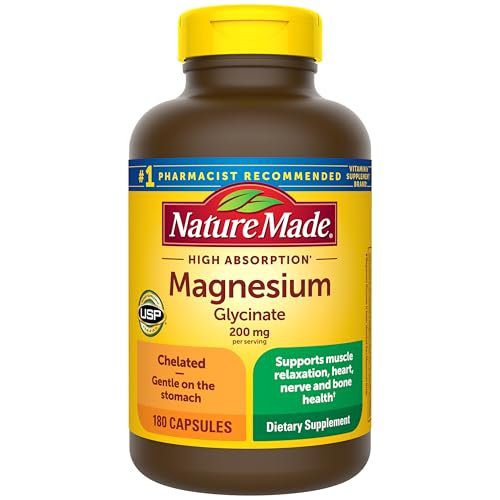
Nature Made Magnesium Glycinate 200 mg per serving, Magnesium Supplement for Muscle, Heart, Nerve and Bone Support, 180 Magnesium Bisglycinate Capsules, 90 Day Supply
Nature Made Magnesium Glycinate 200 mg per serving capsules deliver high absorption and stomach tolerance for muscle, heart, nerve and bone support, with 180 bisglycinate capsules providing a 90-day supply at 2 capsules daily. Users report calming effects for relaxation, sleep and anxiety alongside leg cramp relief, though some experience stomach upset or dizziness. Reliable chelated option from a trusted brand with solid reviews across retailers.
If you’ve ever wondered why anxiety can feel like your body won’t “downshift,” magnesium’s role starts to make sense. Your nervous system constantly balances excitatory signals (go) and inhibitory signals (slow down). Anxiety often tilts toward “go.”
Magnesium appears to support that balance in a few key ways, which is why it’s frequently discussed as a nutrient for stress resilience.
1) It may support inhibitory signaling (the “brake pedal”)
One reason magnesium is studied for anxiety is its relationship to GABA, a neurotransmitter associated with calm and sleepiness. While magnesium is not a sedative, it may help the brain maintain a healthier excitatory-inhibitory balance.
2) It may help buffer excitatory activity
Magnesium interacts with NMDA receptors involved in glutamate signaling (an excitatory pathway). When excitatory signaling runs hot, people often report feeling keyed up, restless, or unable to relax.
3) It may influence the stress response
Chronic stress can affect cortisol rhythms and sleep quality, and sleep loss itself can raise anxiety the next day. This is one reason magnesium is often discussed alongside sleep support. For practical sleep-focused strategies, the guide on magnesium for sleep is a useful next read.
For a clinician-facing overview of how magnesium is commonly positioned for anxiety support, see the Cleveland Clinic article on magnesium and anxiety.
Visual: “Why magnesium might help” map
| Anxiety driver | What people feel | Where magnesium may fit |
|---|---|---|
| High excitatory signaling | racing thoughts, restlessness | supports calmer signaling balance |
| Stress overload | irritability, tension, overwhelm | may support stress response |
| Sleep disruption | wired at night, tired daytime | may help sleep quality in some |
Actionable takeaway: Magnesium is most compelling when anxiety is paired with tension and sleep disruption, not just worry alone.

Best Magnesium Types for Anxiety: Glycinate vs Citrate vs Oxide vs Chloride
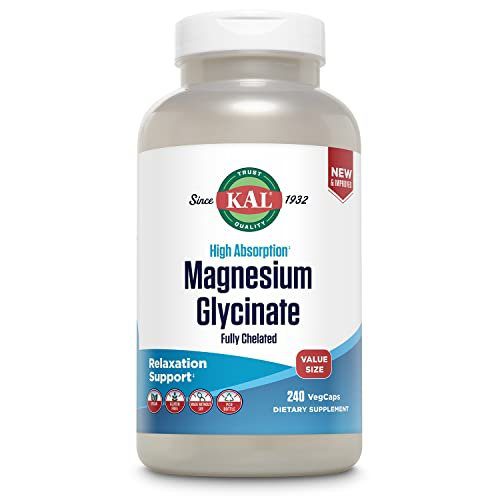
KAL Magnesium Glycinate, New & Improved Fully Chelated High Absorption Formula with BioPerine, Bisglycinate Chelate for Stress, Relaxation, Muscle & Bone Health Support, 60 Servings, 240 VegCaps
KAL Magnesium Glycinate 400mg earns strong 4.6-star ratings from over 2,500 Amazon reviews for its high-absorption chelated form that supports better sleep, reduced cramps, and anxiety relief without typical laxative effects. Reddit communities like r/supplements endorse it as a reliable, affordable option at ~$20 for 120 tablets, though large pill size is a minor drawback for some—ideal for those seeking a gentle, effective magnesium supplement.
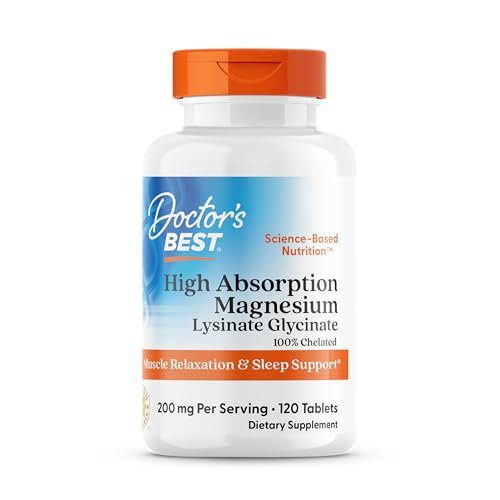
Doctor’s Best High Absorption Magnesium Glycinate Lysinate Supplement for Sleep Support – Chelated Magnesium Tablets for Women & Men, 200mg per Serving, Supports Calm & Relaxation, Vegan – 120 Count
Doctor’s Best High Absorption Magnesium Glycinate Lysinate tablets deliver 200mg per serving in a 100% chelated form that supports sleep, calm, and relaxation without GI upset, making it a solid pick for daily use by women and men. The vegan 120-count bottle uses TRAACS technology for better absorption than other magnesium types. Reviews highlight its reliability for muscle relaxation and reduced tension.
Standing in the supplement aisle, it’s easy to assume “magnesium is magnesium.” In reality, magnesium supplements differ by the compound they’re bound to, which affects how much elemental magnesium you get, how well it’s absorbed, and how likely it is to cause digestive side effects.
If your goal is anxiety support, choosing a form you can actually tolerate consistently matters as much as the dose.
Magnesium glycinate (often the easiest to tolerate)
Magnesium glycinate is magnesium bound to glycine, an amino acid. Many people choose it for:
- good tolerance (less likely to cause diarrhea than some forms)
- evening use, especially when anxiety overlaps with sleep issues
It’s not that glycinate is “magic,” it’s that it’s often easier to take daily without digestive blowback.
Magnesium chloride (used in a notable anxiety trial)
Magnesium chloride has been studied in adults with mild-to-moderate anxiety and depression symptoms, with meaningful improvements reported in the PLOS ONE randomized crossover trial. It can be effective, but some people find it more irritating to the stomach depending on the product.
Magnesium citrate (effective, but can be laxative)
Citrate is widely available and often well absorbed. The tradeoff is that citrate commonly loosens stools. For some people, that’s a benefit. For anxiety support, diarrhea is usually a dealbreaker because it makes consistent use hard.
Magnesium oxide (common, inexpensive, mixed absorption)
Oxide is popular because it’s cheap and provides a lot of elemental magnesium per pill, but it tends to be less absorbable for many people. Still, it has appeared in combination trials (sometimes with other ingredients) in anxiety research summaries such as the clinical review in Nutrients hosted on PubMed Central. Some people do fine with it – it’s just not usually the first choice for tolerance.
Visual: quick comparison table (choose based on your body)
| Form | Typical “best for” | Common downside |
|---|---|---|
| Glycinate | anxiety + sleep overlap, sensitive stomach | larger capsules, higher cost |
| Chloride | evidence-backed option, flexible dosing | taste or GI sensitivity in some |
| Citrate | constipation + magnesium repletion | looser stools |
| Oxide | budget option | lower absorption for many |
Actionable takeaway: If you’re unsure, start with glycinate (tolerance) or chloride (evidence in mild-to-moderate symptoms), and only use citrate if constipation is also a goal.
For a deeper breakdown of forms and dosing math, see magnesium benefits, types, and dosage.
How to Use Magnesium for Anxiety: Dose, Timing, and a Simple 6-Week Trial Plan

Solgar Magnesium Citrate, 120 Tablets – Promotes Healthy Bones – Supports Nerve & Muscle Function – Non GMO, Vegan, Gluten Free, Dairy Free, Kosher – 60 Servings, Standard Packaging
Solgar Magnesium Citrate is a well-tolerated citrate form in 120 tablets that fits the context of magnesium supplements for anxiety. It supports nerve and muscle function, which ties into anxiety relief, and promotes healthy bones. The product is Non GMO, vegan, gluten free, dairy free, kosher, with 60 servings.
Most people don’t fail magnesium because it “doesn’t work.” They fail it because they start too high, pick a form that upsets their stomach, or don’t track anything long enough to see a pattern.
A better approach is a short, structured trial.
Step 1: Pick a realistic dose you can stick with
A common, practical range for anxiety-focused use is:
- Start: 200-300 mg elemental magnesium per day
- Adjust: increase gradually if needed, often up to ~400-500 mg/day if tolerated
In research, doses around 248 mg elemental magnesium daily have shown symptom improvements in mild-to-moderate anxiety in the PLOS ONE randomized crossover trial. Higher-dose approaches have also been explored in broader mood research, including a 2023 paper in Frontiers in Psychiatry discussing magnesium and mental health outcomes.
If you’re prone to loose stools, stay at the lower end and consider splitting the dose.
Step 2: Time it to match your symptoms
- Evening dosing often makes sense if anxiety peaks at night or sleep is light.
- Split dosing (morning + evening) can reduce GI side effects and keep levels steadier.
If your main struggle is insomnia plus anxious rumination, pairing magnesium timing with sleep hygiene is smart. The guide on magnesium for sleep walks through practical timing and routines.
Step 3: Run a simple 6-week experiment (and track it)
Track 3 things once per day (takes 30 seconds):
- Anxiety level (0-10)
- Sleep quality (0-10)
- Muscle tension (0-10)
Then follow this schedule:
- Weeks 1-2: 200 mg elemental magnesium daily
- Weeks 3-6: 300-400 mg daily if tolerated and needed
If there’s no change by week 6, magnesium may not be your lever. At that point, consider a more complete plan using this site’s stress relief supplements guide.
Visual: quick “trial plan” checklist
| Week | What to do | What to watch |
|---|---|---|
| 1-2 | start low, consistent timing | stool changes, sleep |
| 3-4 | adjust dose if needed | anxiety rating trend |
| 5-6 | keep steady, no new supplements | overall pattern |
Actionable takeaway: Don’t change five things at once. A clean 6-week magnesium trial gives you a real answer.

Safety, Side Effects, and Common Myths (So You Don’t Waste Time)
Magnesium is generally well tolerated, but “natural” doesn’t mean risk-free. Most issues are avoidable with the right dose and a little planning.
Common side effects (and how to prevent them)
The most common downside is GI upset:
- loose stools or diarrhea (more common with citrate, higher doses)
- nausea or stomach discomfort (product-dependent)
How to reduce side effects:
- start low and increase slowly
- split doses (AM/PM)
- switch to glycinate if citrate irritates your gut
- take with food if needed
Who should talk to a clinician first
Magnesium supplements can be risky for people with reduced kidney function because magnesium is cleared through the kidneys.
Also check first if you:
- have kidney disease
- are pregnant or breastfeeding
- take medications that may interact (for example, some antibiotics or thyroid medications require spacing)
Myth 1: “All magnesium types work the same”
They don’t. Different forms vary in absorption and tolerance, and studies have used specific forms like magnesium chloride or magnesium oxide in controlled settings. The practical best form is usually the one you can take consistently without GI issues.
Myth 2: “Magnesium cures anxiety”
Magnesium may help reduce symptoms, especially mild-to-moderate anxiety, but it’s not a replacement for therapy, skills-based approaches, or prescribed medication when needed. If anxiety is severe, persistent, or paired with panic attacks or depression, professional support matters.
Myth 3: “If it’s not instant, it’s not working”
In studies, improvements often show up across weeks, not days. A broader overview of magnesium and anxiety research, including limitations like small sample sizes and mixed interventions, is summarized in the systematic review on magnesium and anxiety hosted on PubMed Central.
Visual: quick myth vs fact table
| Myth | Reality |
|---|---|
| Magnesium works immediately | many people need 2-6 weeks |
| More is always better | higher doses increase GI side effects |
| It replaces therapy | best as an add-on for many |
Actionable takeaway: Treat magnesium like a targeted nutrition intervention, not a cure-all.
Conclusion
Magnesium for anxiety is a reasonable, science-supported option for many people with mild-to-moderate symptoms, especially when stress, tension, and sleep problems cluster together. The best results usually come from choosing a tolerable form (often glycinate or chloride), starting with 200-300 mg elemental magnesium, and tracking changes for at least 6 weeks.
If you want to build a more complete routine, pair magnesium with the fundamentals in this site’s anxiety supplement protocol and consider evidence-backed add-ons from stress relief supplements. For readers exploring broader options, mushroom supplements for anxiety can also be a helpful next step.
As an Amazon Associate, I earn from qualifying purchases. Product recommendations are based on real reviews and independent research.
