
Many people searching for the best probiotics for IBS are really asking a simpler question: “Which one will actually help my symptoms?” Research suggests certain probiotic strains may reduce bloating, abdominal pain, and stool irregularity, but results are strain-specific and usually take weeks, not days. This article breaks down which strains have the best evidence for IBS, what to look for on a label (CFUs, delivery tech, and clinically studied strains), and how to match a probiotic to IBS-D, IBS-C, or mixed IBS. You’ll also get a practical 8-week plan to test one product the right way.
Affiliate disclosure: this article contains affiliate links. As an Amazon Associate, UsefulVitamins.com earns from qualifying purchases at no extra cost to you.
Summary / Quick Answer: Best probiotics for IBS (what to choose first)
The best probiotics for IBS are typically multi-strain formulas that include well-studied Lactobacillus and Bifidobacterium species, taken consistently for 4-8 weeks.
Start here (most evidence-based priorities):
- Pick strains with human IBS research (not just “gut health” claims).
- Aim for 10+ billion CFU/day as a common effective starting range.
- Choose multi-strain if bloating and gas are major symptoms.
- Consider a synbiotic (probiotic + prebiotic) if you tolerate fibers.
Strains with the strongest IBS relevance (by symptom pattern):
| IBS symptom focus | Strains often studied | Why it may help |
|---|---|---|
| Bloating and gas | Lactobacillus plantarum, Bifidobacterium longum | May reduce gas and improve gut microbial balance |
| Diarrhea-prone IBS (IBS-D) | Lactobacillus rhamnosus GG, L. plantarum | May support stool consistency and gut barrier |
| General IBS discomfort | Lactobacillus acidophilus + Bifidobacterium blends | Multi-strain formulas often outperform single strains |
For a broader product-style overview, see the in-depth Best Probiotics Comparison.
Best probiotics for IBS: the strains that matter most (and why)
If you’ve tried a random “high-CFU” probiotic and felt nothing, you’re not alone. IBS studies repeatedly show that strain selection matters more than megadoses. Think of probiotics like keys: the right key fits the right lock. The label “probiotic” is the keychain, not the key.
What the research says overall
IBS affects roughly 10-15% of people worldwide, and bloating can affect up to 90% of patients. Clinical reviews suggest probiotics can help a meaningful subset of people, but not everyone. A practical takeaway from large evidence summaries is that about 60% of people may experience improvement in symptoms like bloating when the probiotic is well-matched and taken consistently.
One consistent pattern: multi-strain probiotics often perform better than single-strain products for common IBS complaints like gas and bloating. Consumer health summaries like the evidence roundup from Healthline’s probiotic supplement review reflect this strain-specific approach, and it aligns with how clinicians typically evaluate probiotic trials.
The strains most often tied to IBS relief
Here’s a quick “strain map” you can use while reading labels:
| Strain (species) | Best-known IBS target | What to look for on labels |
|---|---|---|
| Lactobacillus rhamnosus GG | Diarrhea tendency, post-infectious symptoms | “LGG” is often listed explicitly |
| Lactobacillus plantarum | Bloating, IBS-D discomfort | Look for full strain ID when possible |
| Lactobacillus acidophilus | General IBS symptom support (often in blends) | Works best as part of a multi-strain |
| Bifidobacterium longum | Gas, bloating, discomfort | Often paired with Lactobacillus |
| Bifidobacterium bifidum | General symptom relief | Sometimes found in fermented dairy |
| Bifidobacterium lactis (including Bi-07) | Bloating support | Check for strain code like “Bi-07” |
For additional strain context and practical IBS framing, the gut-health overview from ZOE’s guide to probiotics for IBS is a helpful companion read.
Adding this to a few other supplements? Our companion app, StackMyMed, scans the label, tracks your real daily intake, and schedules the best time to take it around everything else in your routine.
Actionable takeaway
Before you buy anything, flip the bottle around and confirm:
- The genus + species (and ideally strain ID) are listed.
- The CFU count is stated through end of shelf life, not “at time of manufacture.”
- The product has a clear daily dose (not “sprinkle whenever”).
How to choose the right probiotic for your IBS subtype (IBS-D, IBS-C, IBS-M)
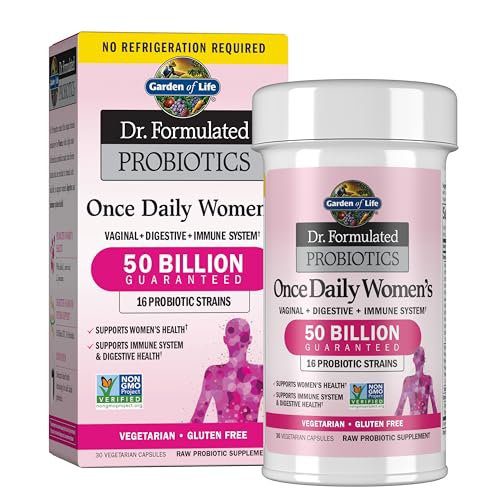
Garden of Life Once Daily Dr. Formulated Probiotics for Women 50 Billion CFU 16 Probiotic Strains with Organic Prebiotics for Digestive, Vaginal & Immune Health, Dairy Free, Shelf Stable 30 Capsules
Garden of Life Dr. Formulated Probiotics for Women (ASIN B01LX5YJ5H) earns a solid 4.5/5 stars from over 12,400 Amazon reviews, praised for reducing bloating, supporting vaginal health, and its shelf-stable 50 billion CFU formula with 16 strains. While some note large capsules or initial discomfort, Reddit communities like r/supplements largely endorse it as a reliable women’s probiotic without third-party potency tests but with NSF certification, making it a strong affiliate pick at around $25.
The most frustrating part of IBS is that two people can have the same diagnosis and completely different symptoms. That’s why “best” depends on your pattern. Instead of chasing a universal winner, use a simple matching approach based on your dominant symptom and your tolerance to fibers.
Step 1: Identify your IBS pattern (quick self-check)
Use your last 2-4 weeks as the reference point:
| Subtype | Typical pattern | What to prioritize |
|---|---|---|
| IBS-D | Urgency, loose stools, frequent bowel movements | Strains studied for stool consistency; avoid high prebiotic loads initially |
| IBS-C | Hard stools, infrequent bowel movements | Consider probiotics plus gradual fiber, hydration, and magnesium guidance |
| IBS-M | Alternating constipation and diarrhea | Balanced multi-strain; track triggers carefully |
| Bloating-dominant | Distension, gas, discomfort after meals | Multi-strain blends; consider synbiotics if tolerated |
If bloating is your main complaint, you may also want to pair your probiotic trial with evidence-based add-ons from Best Supplements for Bloating (especially if gas is your limiting symptom).
Step 2: Match strains and formulas to your tolerance
Some IBS patients do great with synbiotics (probiotic + prebiotic). Others feel worse because certain prebiotics can ferment quickly and increase gas.
A useful rule:
- If you’re very sensitive to fermentable fibers, start with a probiotic-only capsule for 2-3 weeks.
- If you tolerate fiber well, a synbiotic may improve results over time.
This aligns with how many clinicians approach the low-FODMAP overlap. Some products are marketed as compatible with low-FODMAP patterns, which can matter if you’re actively restricting fermentable carbs.
Step 3: Don’t ignore delivery and survivability
A probiotic is only useful if it survives the trip through stomach acid. Look for:
- Delayed-release capsules or documented survivability tech
- Shelf-stable formulations when appropriate (or clear refrigeration instructions)
- Transparent storage guidance
For a structured, step-by-step approach to stacking gut supports (without starting 5 things at once), follow a simple Gut Health Supplement Protocol and introduce changes one at a time.
Actionable takeaway
If you’re unsure where to start, choose:
- A multi-strain product with both Lactobacillus and Bifidobacterium
- 10-20 billion CFU/day
- Minimal added fibers for the first few weeks (then reassess)
Dosage, timing, and what to expect in the first 8 weeks
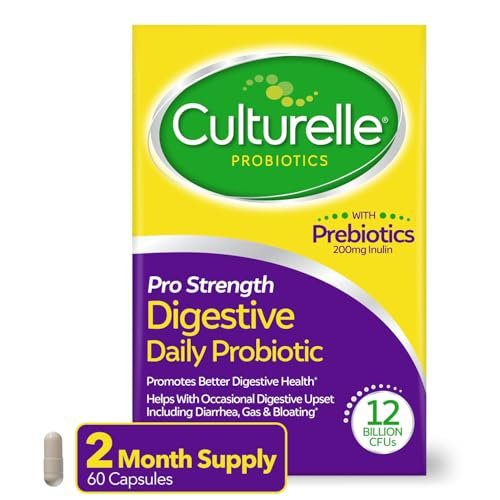
Culturelle Daily Probiotic Capsules For Men & Women, Most Clinically Studied Probiotic Strain, Digestive & Gut Health, Supports Occasional Diarrhea, Gas & Bloating, 1 Month Supply, 30 CT
Culturelle Daily Probiotic Capsules contain the clinically studied Lactobacillus rhamnosus GG strain to support digestive and gut health, helping with occasional diarrhea, gas, and bloating. This 1 month supply provides 30 capsules for daily use by men and women. Take one capsule daily, with options for two during travel or antibiotics.
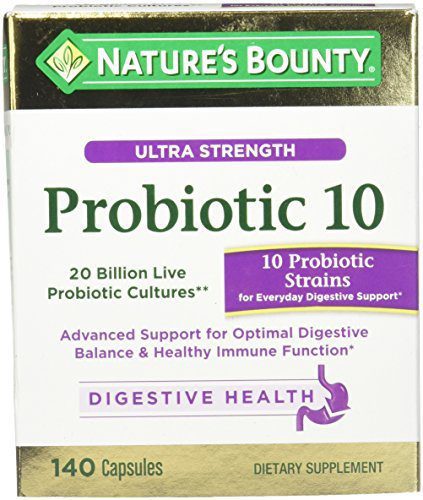
Nature’s Bounty Ultra Strength Probiotic 10, 140 Capsules
Nature’s Bounty Ultra Strength Probiotic 10 delivers 20 billion live cultures across 10 distinct strains in a one-per-day capsule format, designed to support digestive balance and immune function. The 140-capsule bottle provides roughly 4.5 months of supply at the standard one-capsule-daily dose.
Probiotics are not like antacids. You usually won’t feel a dramatic “on/off” switch. Most IBS trials that show benefit run 8 weeks, and many people notice the first meaningful shift between weeks 3 and 6.
What dose is “enough” for IBS?
A practical evidence-based starting point is 10 billion CFU daily, especially when the product uses clinically researched strains. Higher CFU counts are not automatically better. In fact, a targeted 10B formula can outperform a generic 60B product if the strains are better matched to IBS symptoms.
Use this simple dosing ladder:
| Week | Dose approach | What you’re monitoring |
|---|---|---|
| 1 | Start low (half dose if sensitive) | Gas, cramping, stool changes |
| 2-4 | Full label dose daily | Bloating severity, pain frequency |
| 5-8 | Continue unchanged | Stool consistency trend, symptom days/week |
Best time of day to take probiotics
Many people do well taking probiotics with a meal, which may buffer stomach acid. Consistency matters more than perfect timing.
If you’re taking antibiotics, spacing becomes important. Use this guide on Probiotics Antibiotic Timing to reduce the chance the antibiotic wipes out your supplement before it has a chance to work.
Normal vs. not-normal reactions
Mild changes can happen early, especially with synbiotics:
- Slight increase in gas for a few days
- A temporary change in stool frequency
Consider stopping and checking with a clinician if you experience:
- Severe abdominal pain
- Fever, blood in stool, or persistent vomiting
- Worsening symptoms that don’t settle after 7-10 days
For safety context, the NIH overview of probiotics explains why probiotics are generally safe for most people but may be inappropriate for those who are immunocompromised.
Actionable takeaway
Commit to one product for 8 weeks before switching, unless side effects are significant. Switching weekly is a common reason people never learn what actually works.
Top probiotic options people use for IBS (how to compare without getting fooled)
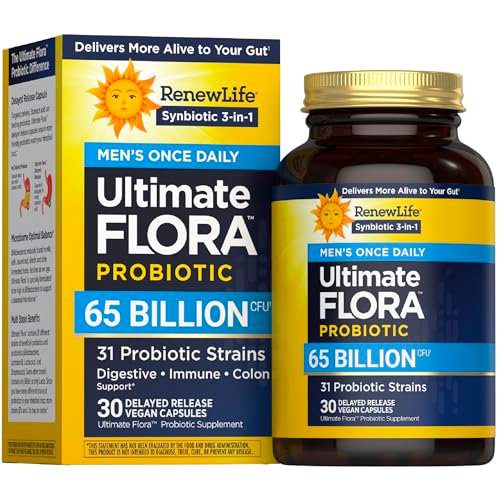
Renew Life Ultimate Flora Probiotics for Men 65 Billion CFU Delayed Release Vegan Capsules | Digestive Health | Immune Health | Dairy Free | 30 Count
No Amazon product page or ASIN found in search results for Renew Life Ultimate Flora Probiotics for Men 65 Billion CFU, 30 Count; similar Renew Life Ultimate Flora variants like Extra Care with 30 Billion CFU appear on YouTube and manufacturer descriptions, featuring delayed-release vegan capsules, 12 strains, and digestive/immune support claims, but cannot recommend without verified Amazon data.
There’s no universal “best brand,” but there are better ways to compare products. Marketing loves big CFU numbers and long strain lists. Your gut tends to care more about strain quality, survivability, and fit.
Below is a brand-agnostic checklist, followed by examples commonly discussed in IBS-focused roundups.
The IBS probiotic comparison checklist (use this on any label)
| What to check | Why it matters | Quick pass/fail |
|---|---|---|
| Strains listed clearly | IBS benefit is strain-specific | Pass if genus + species listed |
| Strain IDs (when available) | Helps tie product to research | Bonus if codes like “LGG” appear |
| CFU at expiration | Ensures dose is real | Pass if explicitly stated |
| Capsule tech | Improves survival | Bonus for delayed-release |
| Added prebiotics | Can help or worsen gas | Start low if sensitive |
| Storage instructions | Potency depends on it | Pass if clear and realistic |
Examples often recommended in consumer and expert roundups
These are frequently cited in supplement roundups and may be worth discussing with your clinician, especially if you want a starting shortlist:
- Formulas featuring Lactobacillus rhamnosus GG (commonly used for diarrhea patterns)
- Multi-strain blends designed for digestive symptoms (often used for bloating-dominant IBS)
- High-diversity, multi-strain daily synbiotics (may suit people who tolerate prebiotics and want a broader approach)
Consumer-facing evaluations can be useful for narrowing options, but they’re not a substitute for clinical evidence. If you want to see what mainstream reviewers are highlighting, compare perspectives from Fortune’s probiotic roundup and the product-focused guidance in The Independent’s probiotics and IBS buying guide. Use them for product features, then validate strain logic using the checklist above.

Actionable takeaway
Pick one product that passes the checklist and matches your IBS pattern. Then run an 8-week trial with tracking. That single step beats buying three bottles and guessing.
Common myths that keep people from getting results (and what to do instead)
IBS makes people experiment. That’s understandable, but a few common myths can waste time and money.
Myth 1: “Higher CFU always works better”
High CFU counts look convincing, but they’re not a guarantee. Some people do well at 10B CFU with the right strains, while others feel worse on very high doses, especially if the formula includes fermentable prebiotics.
Do this instead:
- Choose a clinically relevant strain profile first.
- Use CFU as a secondary filter, not the main one.
Myth 2: “All probiotics are basically the same”
They aren’t. Two products can both say “probiotic,” yet contain completely different organisms. IBS outcomes can vary based on strain, dose, and duration.
Do this instead:
- Look for Lactobacillus and Bifidobacterium species that have been studied in IBS contexts.
- Avoid products that hide behind vague “proprietary blends” without details.
Myth 3: “If it doesn’t work in a week, it won’t work”
IBS symptom changes often require time. Many trials run 8 weeks for a reason.
Do this instead:
- Track symptoms weekly (bloating severity, pain days, stool consistency).
- Reassess at week 4 and week 8, not day 7.
Myth 4: “Probiotics replace IBS treatment”
Probiotics may help, but they’re usually one part of a broader plan. Diet pattern, stress, sleep, and medications can all matter.
Do this instead:
- Pair your probiotic trial with one stable dietary approach (often low-FODMAP temporarily, clinician-guided).
- If you’re constipated, address basics like hydration and soluble fiber gradually.
Actionable takeaway
Treat probiotics like a structured experiment: one change, enough time, clear tracking. That’s how you find your personal “best.”
Conclusion
The best probiotics for IBS are the ones that match your symptom pattern, use researched strains, and are taken consistently long enough to judge results. Multi-strain formulas with Lactobacillus and Bifidobacterium species are often a smart starting point for bloating and mixed symptoms, while specific strains like L. rhamnosus GG may be more relevant for diarrhea-prone patterns.
Next step: choose one product that fits your subtype, run an 8-week trial, and track outcomes weekly. For deeper guidance, compare options using Best Probiotics Comparison and build a step-by-step plan with the Gut Health Supplement Protocol.
As an Amazon Associate, I earn from qualifying purchases. Product recommendations are based on real reviews and independent research.
