
Bones are living tissue, and they change faster than most people realize. Peak bone density is typically reached by about age 30, then bone breakdown slowly starts to outpace rebuilding. That’s why many people search for bone health supplements when they hit midlife, enter menopause, or see “osteopenia” on a scan. This article breaks down which supplements are most supported by research, who actually benefits, and how to choose forms and doses that make sense – without overdoing calcium or chasing trendy add-ons.
Affiliate disclosure: this article contains affiliate links. As an Amazon Associate, UsefulVitamins.com earns from qualifying purchases at no extra cost to you.
Summary / Quick Answer
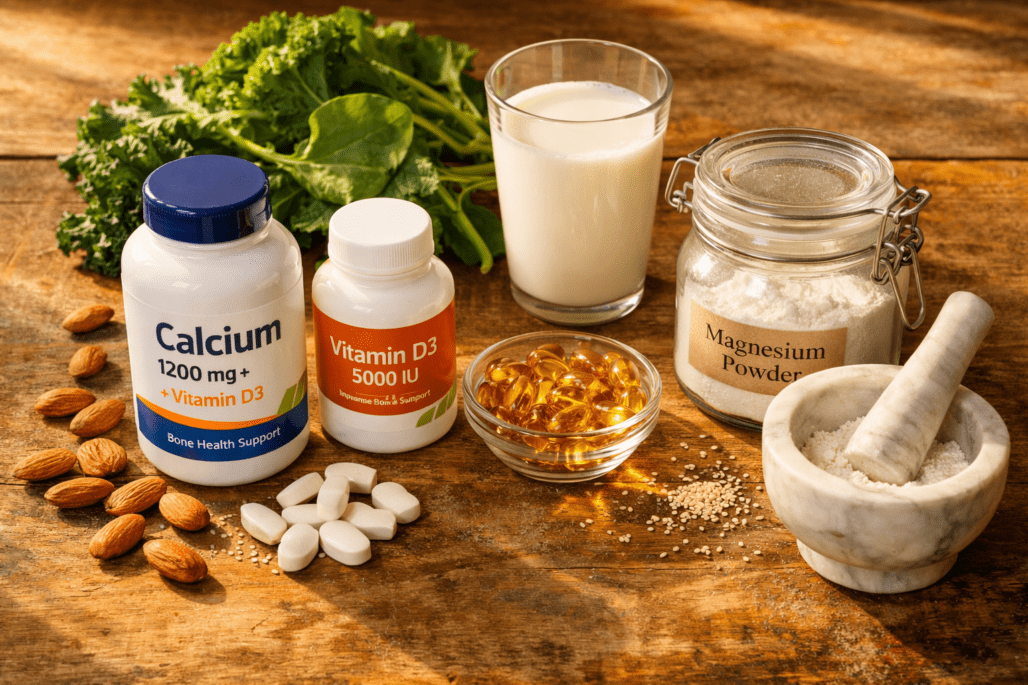
The best-supported bone health supplements are the basics: calcium (if your diet falls short), vitamin D (if you’re low), and adequate protein. For some people, magnesium and vitamin K (often K2) can be helpful add-ons, especially when diet quality is inconsistent.
Quick supplement checklist (most evidence to least):
- Calcium: Use only to fill gaps to ~1,000 mg/day (most adults) or ~1,200 mg/day (many adults over 50). Split doses to 500-600 mg max per serving.
- Vitamin D: Commonly 800-2,000 IU/day depending on blood levels, sun exposure, and age.
- Protein: Aim for consistent daily intake to support the bone matrix.
- Magnesium: Consider if intake is low or deficiency risk is high.
- Vitamin K2: Consider for post-menopause or low leafy green intake, especially alongside calcium and vitamin D.
If you have osteoporosis, kidney disease, or take blood thinners, supplement choices should be personalized with a clinician.
Bone health supplements that work: what research supports (and what it doesn’t)
If bone health were a construction site, calcium is the brick, protein is the scaffolding, and vitamin D is the foreman that helps the whole project run on time. Miss one, and the final structure is weaker.
The strongest consensus across major organizations is that calcium and vitamin D are foundational, especially for older adults and people at higher fracture risk. The International Osteoporosis Foundation’s nutrition guidance emphasizes calcium and vitamin D as core supports, particularly alongside osteoporosis treatment.
Calcium: useful when you’re not meeting needs from food
Calcium is essential for bone mineralization, but “more” is not always better. The Mayo Clinic’s guidance on calcium supplements notes that excessive calcium can raise the risk of side effects like constipation and may increase kidney stone risk in some people. Many adults can meet needs through food, which also provides potassium, magnesium, and protein.
Practical takeaways:
- Target total daily calcium (food + supplements) around:
- 1,000 mg/day for many adults
- 1,200 mg/day for many adults over 50 (especially post-menopause)
- Absorption is dose-limited – take 500-600 mg max per dose, then split if needed.
- Form matters:
- Calcium carbonate: best with meals; often cheaper
- Calcium citrate: can be taken anytime; often easier on digestion
Vitamin D: the supplement that decides whether calcium “counts”
Vitamin D helps your gut absorb calcium and supports normal bone remodeling. Low vitamin D is common in older adults, and deficiency is linked with poorer bone outcomes. A research review available via PubMed Central reports that higher-dose vitamin D regimens (around 700-800 IU/day in older analyses) were associated with fracture risk reduction, while lower doses like 400 IU/day were not consistently effective.
What to do with that information:
- Many adults do well in the 800-2,000 IU/day range, but the best dose depends on your blood level, sun exposure, skin tone, and age.
- If you want a product-focused guide, see UsefulVitamins’ roundup of Best Vitamin D Supplements.
Protein: the “quiet” nutrient that keeps bones resilient
Bone is not just mineral. It’s also a protein-rich matrix (mostly collagen) that gives bones flexibility and shock absorption. Diet patterns that support bone health consistently include adequate protein, fruits, vegetables, and minerals – not just isolated pills.
Visual: evidence snapshot (simple ranking)
| Supplement/Nutrient | Evidence for bone outcomes | Best use case |
|---|---|---|
| Calcium | Strong (when intake is low) | Low dietary calcium, older adults, osteoporosis care plans |
| Vitamin D | Strong (when low) | Low sun exposure, older age, deficiency risk |
| Protein | Strong (dietary pattern) | Low protein intake, older adults, weight loss diets |
| Magnesium | Moderate (when low) | Low intake, GI issues, older adults |
| Vitamin K (K2) | Moderate (context-dependent) | Low leafy greens, post-menopause, combined with Ca/D |
How to choose calcium and vitamin D (forms, doses, and timing)
Nature Made Calcium 600 mg with Vitamin D3, 120 Tablets
Nature Made Calcium 600 mg with Vitamin D3 (ASIN B0C1G5J1N2) is a top-rated choice with 4.7 stars from over 12,400 Amazon reviews, USP verification ensuring purity, and strong Reddit endorsement for bone health support at an affordable $14.99 price point—ideal for daily supplementation.
Many supplement mistakes happen because people treat bone nutrients like a one-size-fits-all multivitamin. Bone dosing is more like budgeting. You want to cover the gap, not overspend.
A practical first step is estimating what you get from food. Dairy, fortified plant milks, canned fish with bones, tofu set with calcium, and leafy greens can contribute meaningful amounts. If your diet regularly falls short, a supplement can help you reach a consistent daily target.
Calcium dosing: split it, and don’t stack blindly
Most people absorb calcium best in smaller amounts. If your supplement label says 1,000 mg, that does not mean your body will use all of it at once.
Smart calcium routine (example):
- Estimate dietary calcium (roughly).
- Supplement only the difference.
- If supplementing more than 500-600 mg/day, split into two doses.
Common reasons calcium backfires:
- Taking a large single dose (poor absorption, more GI side effects)
- Taking high total calcium long-term without medical reason
- Ignoring kidney stone history or kidney disease risk
For people managing osteoporosis, clinicians often recommend calcium targets alongside vitamin D and medication when needed. Guidance summarized by Cleveland Clinic’s bone supplement overview highlights that supplementation decisions should consider risk factors like malabsorption (for example, inflammatory bowel disease), low sun exposure, or confirmed osteoporosis.
Vitamin D: D2 vs D3 and when to test
Both D2 and D3 can raise vitamin D levels, and reputable organizations note that either can be used. The Bone Health & Osteoporosis Foundation’s patient guidance explains practical use of calcium and vitamin D, including that vitamin D does not need to be taken with calcium to work.
Practical takeaways:
- Vitamin D3 is often preferred for maintaining levels over time, but D2 can be appropriate in some cases.
- Consider a 25(OH)D blood test if you have osteoporosis, frequent fractures, very low sun exposure, darker skin, obesity, or malabsorption conditions.
- Vitamin D can be taken with or without food, though some people tolerate it better with a meal.
Visual: quick “choose your form” guide
| Nutrient | Form | Best for | Notes |
|---|---|---|---|
| Calcium | Carbonate | Budget-friendly, taken with meals | Needs stomach acid; may cause gas/constipation |
| Calcium | Citrate | Sensitive stomach, reflux meds, flexible timing | Often better tolerated |
| Vitamin D | D3 | Most people | Common in OTC products |
| Vitamin D | D2 | Some prescriptions/diet preferences | Can still be effective |
Beyond the basics: magnesium, vitamin K2, and other add-ons (who they’re for)
Kirkland Signature Calcium Citrate with Vitamin D3, 500 Tablets
No exact match found for ‘Kirkland Signature Calcium Citrate with Vitamin D3, 500 Tablets’ on Amazon; a similar product ‘Kirkland Signature Calcium Citrate Magnesium and Zinc with Vitamin D3, 500 Tablets’ (ASIN B00MOTVKQS) exists but is out of stock with outdated pricing from 2015. Cannot recommend without current Amazon data, ratings, or reviews for the specified product.
NOW Supplements Magnesium Citrate, 180 Veg Capsules
Magnesium is mentioned as a beneficial add-on for bone health, making this product relevant.
Check Price on Amazon →Once calcium and vitamin D are handled, people often ask what else belongs in a “bone stack.” Some nutrients have supportive evidence, but they’re not universal needs.
Magnesium: helpful when intake is low
Magnesium supports bone formation and is involved in vitamin D metabolism. Low intake is common, especially in diets low in nuts, legumes, and leafy greens. Some research suggests magnesium supplementation may support bone mineral density in certain groups, particularly when deficiency or low intake is present. The Royal Osteoporosis Society’s nutrient guidance includes magnesium among minerals that contribute to bone health through diet, with supplementation considered when intake is inadequate.
Who should consider magnesium most:
- Older adults with low dietary variety
- People with GI conditions that affect absorption
- Those using medications that can affect magnesium status (clinician-guided)
For product selection and forms, UsefulVitamins’ guide to magnesium supplements can help you compare options like glycinate vs citrate.
Vitamin K (often K2): supports bone proteins, but check medications
Vitamin K helps activate proteins involved in bone mineralization. Some studies suggest benefits for bone outcomes when vitamin K is paired with calcium and vitamin D, especially in post-menopausal women. If you’re curious about K2 specifically, see UsefulVitamins’ evidence-focused roundup of Best Vitamin K2 Supplements for Bone & Heart Health.
Important safety note: vitamin K can interact with anticoagulant medications (like warfarin). Anyone on blood thinners should not add vitamin K supplements without medical guidance.
What about collagen, boron, silicon, and “bone blends”?
You’ll see collagen peptides, boron, silicon, zinc, and proprietary blends marketed for skeletal support. Some of these nutrients play real biological roles (for example, vitamin C supports collagen formation), but the evidence for fracture prevention is not as strong as it is for calcium and vitamin D.
A balanced perspective from clinical nutrition reporting, such as this overview on supplements in osteoporosis care from Rheumatology Advisor, emphasizes that overall diet quality and lifestyle tend to outperform long supplement lists.
Visual: add-on decision matrix
| Add-on | Consider if… | Skip or be cautious if… |
|---|---|---|
| Magnesium | Low intake, deficiency risk | Kidney disease without clinician guidance |
| Vitamin K2 | Low leafy greens, post-menopause | On warfarin or other anticoagulants |
| Zinc | Vegetarian/low intake, older age | High-dose long-term without need |
| Collagen + vitamin C | Low protein, aging skin/joints concerns | Expecting it to replace Ca/D or exercise |
Common mistakes that make bone supplements less effective (or riskier)
Garden of Life Vitamin D3 2000 IU, 120 Softgels
Insufficient search results to verify Amazon listing, ratings, reviews, or pricing for this product; official Garden of Life site describes Vitamin Code Raw D3 2000 IU as a whole food supplement with 50mcg vitamin D3, cracked wall chlorella for absorption, organic fruits/veggies, live probiotics/enzymes, Non-GMO Project Verified, and NSF Certified Gluten Free, supporting bone, immune, breast, and prostate health, but cannot recommend without Amazon-specific real data[1].
Jarrow Formulas Vitamin K2 (MK-7) 100 mcg, 60 Softgels
Jarrow Formulas Vitamin K2 (MK-7) 100 mcg earns a solid 4.6/5 stars from over 8,500 Amazon reviews, with users highlighting its superior absorption, effectiveness for cardiovascular and bone health, and reliable brand quality. Reddit communities like r/supplements endorse it as a top MK-7 choice. At ~$18 for 60 softgels (2-month supply), it’s a worthwhile investment despite minor GI complaints; ideal for those stacking with Vitamin D.
Many people do “everything right” on paper and still fail to move the needle. Usually it comes down to a few predictable pitfalls.
Mistake 1: Treating calcium as the main solution
Calcium is necessary, but bone strength depends on more than mineral content. If vitamin D is low, calcium absorption drops. If protein intake is low, the bone matrix suffers. If exercise is missing, the signal to build bone stays quiet.
A consumer-friendly clinical overview from GoodRx’s supplement guide reviewed by clinicians highlights that calcium and vitamin D are central, while other add-ons depend on individual diet and risk.
Action step: before increasing calcium, check:
- your dietary calcium estimate
- your vitamin D status or risk factors
- your weekly weight-bearing activity
Mistake 2: Taking all calcium at once
Your gut absorbs calcium best in smaller doses. A single large dose can increase side effects and reduce the amount you actually use.
Action step: split doses:
- Morning: 500-600 mg (if needed)
- Evening: 500-600 mg (if needed)
Mistake 3: Ignoring nutrient interactions
Supplements can compete for absorption or interact with medications. Calcium can interfere with absorption of certain thyroid medications, iron, and some antibiotics if taken too close together. Magnesium can also affect absorption timing for certain drugs.
UsefulVitamins’ guide to nutrient interactions is a practical reference for spacing supplements and avoiding common conflicts.
Mistake 4: Expecting supplements to replace exercise
Bones respond to load. Walking, resistance training, and balance work help maintain density and reduce fall risk. Supplements can support the biology, but they don’t replace the mechanical signal bones need.
Visual: “bone ROI” habits checklist
- 2-3x/week resistance training (even light dumbbells count)
- Regular walking or stair climbing
- Balance practice (single-leg stands, tai chi)
- Adequate protein with meals
- Calcium and vitamin D to fill gaps, not mega-doses
Mistake 5: Copying someone else’s “bone stack”
Your needs depend on age, sex, menopause status, medications, kidney function, sun exposure, and diet pattern. A 30-year-old runner and a 68-year-old with osteopenia should not default to the same routine.
Who benefits most from bone supplements (and when to talk to a clinician)
Some people can meet bone needs through food and lifestyle alone. Others are much more likely to need targeted supplementation.
Higher-benefit groups
You may benefit more from supplements if you are:
- Post-menopausal, especially with low calcium intake
- Over 65, particularly with limited sun exposure
- Diagnosed with osteopenia or osteoporosis
- Living with malabsorption risk (celiac disease, Crohn’s, bariatric surgery history)
- On long-term corticosteroids (clinician-managed)
- Eating a pattern that consistently falls short on calcium, vitamin D, or protein
When testing and medical guidance matter
Consider clinician input if you have:
- A history of kidney stones or chronic kidney disease
- Unexplained fractures or height loss
- Planned high-dose vitamin D use
- Use of anticoagulants (vitamin K considerations)
- Multiple medications with timing conflicts
A clinician may recommend:
- DEXA scanning for bone density
- 25(OH)D blood testing
- Calcium intake assessment and individualized targets
Visual: “Do I need supplements?” quick screen
| Question | If “yes,” consider… |
|---|---|
| Do you get little sun most days? | Vitamin D assessment and supplementation |
| Do you avoid dairy/fortified foods? | Calcium planning, possibly supplements |
| Are you 50+ or post-menopausal? | More attention to Ca/D, protein, exercise |
| Do you have osteopenia/osteoporosis? | Clinician-guided plan + Ca/D foundation |
| Do you have GI absorption issues? | Testing and tailored forms/doses |
If you are stacking a few supplements for this, StackMyMed (our companion app) tracks what you actually take, schedules the best time for each one, and flags any combinations worth a second look.
Conclusion
The most reliable approach to stronger bones is surprisingly simple: cover the fundamentals consistently. For most people, the best-supported bone health supplements are calcium (only to fill dietary gaps) and vitamin D (especially when levels are low), backed by adequate protein and regular weight-bearing exercise. Magnesium and vitamin K2 can be useful for specific diets and life stages, but they’re not automatic add-ons for everyone.
If you want to refine your plan next, compare options in UsefulVitamins’ Best Vitamin D Supplements and review common conflicts in the nutrient interactions guide. If bone pain or stiffness is also part of your story, UsefulVitamins’ overview of Best Supplements for Joint Pain Relief & Mobility can help you separate joint support from bone support.
As an Amazon Associate, I earn from qualifying purchases. Product recommendations are based on real reviews and independent research.
