

Affiliate disclosure: this article contains affiliate links. As an Amazon Associate, UsefulVitamins.com earns from qualifying purchases at no extra cost to you.
Before you decide
Copper peptides, specifically GHK-Cu, a three-amino-acid complex with a bound copper ion, are a 50-year-old molecule having a new moment. Topical serums have moderate but real human data for wrinkle reduction and skin firmness. Injectable GHK-Cu bought online is a different product entirely, with no evidence base and active FDA concern. The short version: a $25 copper peptide serum is a reasonable skincare experiment. An online "research peptide" vial is not.
The short answer you came here for
This guide walks through what GHK-Cu actually is at the molecular level, the 50-year research trail from Dr. Loren Pickart's 1973 discovery through the 2016 nano-carrier RCT, what the evidence actually supports (and what it doesn't), and why the topical-vs-injectable distinction matters enormously. You'll also get the skincare-layering rules, copper peptides don't get along with vitamin C or strong acids in the same routine, so you can add GHK-Cu to a stack without neutralizing the products you're already using.
Summary / Quick answer: should you use copper peptides?
Topical GHK-Cu serums are a reasonable skincare experiment if your basics are in place (sunscreen, retinoid if tolerated, adequate moisture barrier). The evidence is moderate, not on the level of tretinoin, but better than most peptides.
- Best for: Adults 35+ with mild-to-moderate wrinkles or skin-firmness decline who've already established sunscreen and a retinoid routine. People post-dermatological procedures (laser, microneedling) where copper peptides have some wound-healing evidence.
- Not ideal for: Anyone without a sunscreen habit (the most impactful skincare step precedes every serum). Anyone considering injected copper peptides from online vendors, that's a different product with no evidence and active regulatory concern.
- What to look at before buying: Ingredient order on the label (GHK-Cu should appear before 1/3 down the list), concentration if stated (1–2% is typical), packaging (airtight, opaque, GHK-Cu is light-sensitive), and stack compatibility (don't pair with direct vitamin C or strong acids in the same moment).
- Decision shortcut: If you already have sunscreen and retinoid dialed in, add one peptide serum and test 8 weeks. If you don't yet, fix those first.
What you'll find in this guide
- What copper peptides (GHK-Cu) actually are
- What the research actually shows
- Topical vs injectable, the distinction that matters
- Who copper peptides are for (and who should skip)
- How to use copper peptide serums
- Side effects and red flags
- Light product picks for getting started
- Frequently asked questions
What copper peptides actually are
GHK-Cu is a three-amino-acid peptide, glycine, histidine, lysine, bound to a copper(II) ion. Total length: three residues. That makes it one of the shortest peptide signals used in skincare, right at the boundary where "short peptide" becomes "single-function signaling molecule."
The molecule was discovered in 1973 by Dr. Loren Pickart while studying blood-plasma differences between young and older donors. Pickart noticed that plasma from younger donors contained a factor that encouraged liver cells to behave more like younger liver cells, and eventually traced that factor to GHK. The copper binding came later, when subsequent work showed GHK's activity depended on complexing with copper ions that carry it into cells. The review by Pickart and Margolina (2018) consolidates the molecular history and documents that GHK-Cu modulates approximately 30% of the human genome's fibroblast expression patterns, an unusually broad signaling footprint for such a small molecule.
Think of it like a postcard. A full protein is a sealed shipping container that gets disassembled before anything inside becomes useful. A peptide this short is a postcard, small, specific, delivered largely intact. That's why GHK-Cu can meaningfully affect skin cell behavior at micromolar topical doses while a whole protein would need grams to have any effect at all.
Mechanistically, GHK-Cu in skin does several things in parallel: it stimulates collagen and elastin synthesis in fibroblasts, modulates matrix metalloproteinase (MMP) activity, the enzymes that break down extracellular matrix, and shifts the ratio of MMPs to TIMPs (the inhibitors) toward tissue building rather than tissue breakdown. A 2008 stratum corneum transport study (Mazurowska et al.) demonstrated GHK-Cu can move through the stratum corneum, the skin's top barrier layer, which gave the topical use case a mechanistic basis. A follow-up in vitro study (Hostynek et al. 2011) using human cadaver skin found copper retention in the stratum corneum reached 438× baseline after 48 hours of exposure, with about 2% of the topical dose penetrating through split-thickness skin to deeper compartments.
Actionable takeaway: GHK-Cu is genuinely small enough and genuinely penetrative enough that topical delivery has biological plausibility. That's the bar; the evidence-quality question comes next.
What the research actually shows
Let's line up the human evidence honestly. The strongest single clinical trial is a 2016 randomized double-blind placebo-controlled study (Badenhorst et al., summarized in Pickart and Margolina 2018) that compared topical GHK-Cu in a lipid nano-carrier to two controls, Matrixyl 3000 (a competing peptide complex) and a vehicle-only serum, in 40 women aged 40–65 over 8 weeks. The GHK-Cu arm reduced facial wrinkle volume by 31.6% versus Matrixyl (p=0.004) and by 55.8% versus the vehicle (p<0.001). Wrinkle depth dropped 32.8% versus vehicle (p=0.012). Alongside the in vivo measurements, the study documented increased collagen and elastin production and a favorable MMP/TIMP shift in parallel in vitro experiments.
That's the headline trial. It's meaningful, and it's also n=40 in a single study, bigger independent replications would strengthen the case. 'Revolutionary' is doing a lot of work in the marketing for copper peptides; the molecule is old, the social-media moment is new, and the evidence base is moderate rather than overwhelming.
The broader evidence picture combines smaller topical trials with mechanistic and animal data. Earlier human work documented improvements in photoaged skin firmness, skin density, and the appearance of fine lines with sustained topical application over 12–24 weeks. Mechanistic studies show GHK-Cu can stimulate dermal keratinocyte proliferation and upregulates decorin, a small proteoglycan involved in collagen fibril organization. Wound-healing applications have been studied in diabetic ulcers with some positive signal, though the evidence there is stronger in animal than human trials.
A 2025 consolidating review (PubMed 39963574) on topically applied GHK as an anti-wrinkle peptide summarizes the current state: moderate human evidence for wrinkle and firmness outcomes, strong mechanistic plausibility, but real formulation problems. GHK-Cu is light-sensitive, air-sensitive, and prone to losing its copper complex in the wrong vehicle, meaning a cheap serum in a clear bottle may be dead on arrival before it reaches your face.
Effect sizes are real but modest, roughly 20–30% improvement on measured skin parameters over 8–12 weeks of consistent use. Not tretinoin-level transformation. More like the difference between a good serum and a great one on the same person over a season.
Actionable takeaway: Expect a visible-but-modest effect over 8 weeks if you pair a well-formulated GHK-Cu serum with good sunscreen. Don't expect dramatic before-and-after transformation. The molecule is a supporting player, not a lead.
Topical vs injectable, the distinction that matters
Here's where the 2026 grey-market conversation goes sideways, and where this hub needs to be especially clear.
Topical GHK-Cu serums, the subject of essentially every clinical trial cited above, are regulated as cosmetics in the US and most of Europe. That regulatory category comes with real limits: cosmetics are regulated for safety (won't hurt you when used as directed) but not for efficacy (no requirement to prove they do what the label suggests). A $25 copper peptide serum from a reputable skincare brand is a reasonable skincare experiment with moderate evidence. It's also inherently low-stakes, the downside of "it didn't do much" is $25, not a hospital visit.
Injectable GHK-Cu, sold online via grey-market "research peptide" vendors for self-injection, is a different product in every meaningful sense. There are no published human clinical trials of injectable GHK-Cu at scale. The compounds sold this way are not quality-tested for identity, purity, or endotoxin content. The FDA has been progressively tightening enforcement on peptide compounding, including around GHK-Cu variants used for self-injection, and as of 2026 these products sit in a regulatory grey zone that swings unpredictably with each advisory panel review. (See the broader context in Peptides Explained.)
The TikTok/Instagram conversation that drove the 2026 copper-peptide moment has blurred the topical-injectable distinction deliberately, "copper peptides" sounds like one thing, and you can buy "copper peptides" topical or injectable, so the marketing implication is that they're interchangeable. They're not. A serum you put on your face and a solution someone on a forum is telling you to inject yourself with are in completely different regulatory categories, with completely different risk profiles, and completely different evidence bases.
The real question isn't whether copper peptides "work", it's which form you're asking about, and at what risk tier.
For the legal-sourcing question specifically, see Where to Buy Peptides Legally in 2026. For hair-loss claims around injectable GHK-Cu circulating on social media, see Copper Peptides for Hair Loss: Legit Treatment or TikTok Hype?.
Actionable takeaway: Topical copper peptide serum = reasonable skincare experiment with moderate evidence. Injectable GHK-Cu from a website = a skip. Those are not the same product.
Who copper peptides are for, and who should skip them
Strong fit:
- Adults 35+ with visible early skin-aging signs (fine lines, mild firmness decline) who already use sunscreen daily and have an established retinoid routine
- People recovering from dermatological procedures (laser resurfacing, microneedling, chemical peels) where copper peptides have some wound-healing evidence
- Anyone willing to run an 8-week consistent-use test before deciding
Skip if:
- You're not using sunscreen daily. Sunscreen does more per dollar for aging skin than any serum, fix that first.
- You already have a serum stack of 4+ actives. Adding copper peptides to a crowded routine often means worse product contact time and more irritation risk. More features are not always more useful.
- You're allergic to copper or have Wilson's disease. Rare, but genuine.
- Your skincare goal is treating acne or hyperpigmentation specifically, copper peptides aren't the right tool; retinoids, salicylic acid, or azelaic acid are better-supported.
- You're considering injectable GHK-Cu. That's a hard skip, full stop.
How to use copper peptide serums
Copper peptides aren't complicated to use, but they have specific compatibility rules that matter. Get these right and the serum can do its job. Get them wrong and you've neutralized the active ingredient before it reaches your skin.
Application timing. Most copper peptide serums are used 1–2 times daily on clean skin, morning or evening or both. Apply to slightly damp skin after cleansing, before heavier creams or oils. Give 1–2 minutes between layers.
Stack compatibility. Copper binds to other molecules readily, and that matters for your routine:
- Don't pair with direct L-ascorbic acid (vitamin C) in the same moment. Copper chelates with ascorbic acid in solution, neutralizing both. Alternate morning and evening if you use both.
- Don't pair with AHAs or BHAs (glycolic, salicylic, lactic) in the same moment. Low-pH acids disrupt the copper peptide complex. Same fix: alternate.
- Retinoids are fine to stack, typically applied in a different routine step, cleanser → GHK-Cu serum → moisturizer in AM; cleanser → retinoid at night.
- Hyaluronic acid is fine. Most moisturizers are fine. Niacinamide is fine.
Packaging matters. GHK-Cu is light-sensitive and air-sensitive. An airtight pump bottle or an opaque amber glass dropper with a tight seal is the minimum. A clear bottle on a bathroom shelf in sunlight is a dead serum within weeks regardless of initial formulation quality.
Duration before judging. Clinical trials measure effects at 8 weeks of consistent daily use. Don't judge a serum at two weeks, you're well below the trial threshold.
Actionable takeaway: Apply morning or evening on clean damp skin. Never in the same routine moment as direct vitamin C or acids. Opaque packaging, give 8 weeks, then evaluate.
For the specific question of which commercial serums have well-documented formulations, see Best Copper Peptide Serums of 2026.
Side effects and red flags
Topical copper peptides are generally well-tolerated. Reported reactions cluster in two categories:
Contact irritation. A minority of users report mild redness, stinging, or transient flaking on initial application. Usually resolves within 1–2 weeks of consistent use as the barrier adapts. Patch-test behind the ear for 2 days if you're prone to reactions before applying to the full face.
Allergic contact dermatitis to copper. Rare but real. Anyone with known copper allergy or Wilson's disease should avoid topical copper peptides.
Product-quality red flags. The real risk isn't the active ingredient, it's poorly-formulated serums where the copper peptide has degraded before use. Warning signs:
- Clear bottle exposed to sunlight
- Discoloration (GHK-Cu has a subtle blue-green tint, if the serum looks muddy brown or clear when it should be blue-tinged, it's degraded)
- Cheap "copper peptide" products priced at $8–$12 (formulation and quality testing at that price point are rarely sufficient)
- Serums that list copper peptides below 1/3 down the ingredient list, concentration is likely too low to matter
Red flag specifically for injectable GHK-Cu bought online. Unverifiable sterility and endotoxin content pose infection risk. The FDA has flagged compounded peptide quality concerns in advisory panel discussions through 2024–2026. Reports of infection from self-injection of research peptides are not uncommon. A supplement brand can look impressive on a label and still miss the basics, that applies triple to an injectable solution bought from an unregulated website.
Light product picks for getting started
This hub gives you the mechanism + evidence framing; the detailed product roundup with 7 specific formulations lives at Best Copper Peptide Serums of 2026. If you want two accessible starting points to experiment with:
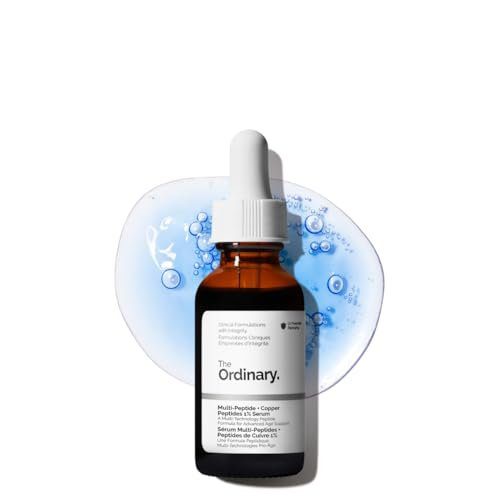
The Ordinary Multi-Peptide + Copper Peptides 1%, GHK-Cu Anti-Aging Serum for Fine Lines and Skin Elasticity, 1 Fl Oz
Low-stakes accessible entry point around $30 with opaque packaging and transparent concentration labeling, layers well with most routines.
For most buyers getting started: The Ordinary's Multi-Peptide + Copper 1% serum is the low-stakes accessible entry point. $30-ish, opaque packaging, transparent concentration labeling, layers well with most routines. Use this if you want to test whether copper peptides do anything for your skin before committing to a premium brand.
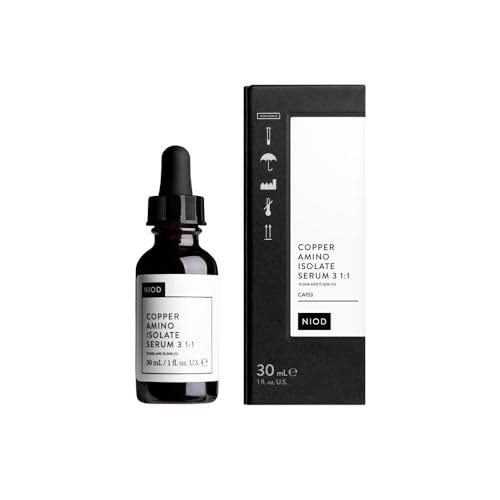
NIOD Copper Amino Isolate Serum 1.00% (30ml) by Niod
Premium-end pick with higher-concentration GHK-Cu variants and careful formulation for buyers who have already tested the basics.
For buyers ready to invest: NIOD's Copper Amino Isolate Serum sits at the premium end, higher-concentration GHK-Cu variants, more careful formulation, markedly higher cost. Use this if you've already tested The Ordinary version and want to go deeper. Skip if you're new to peptides; start cheaper first.
The detailed comparison across 7 formulations sits in Best Copper Peptide Serums of 2026: 7 Formulas Dermatologists Actually Trust.
As an Amazon Associate, I earn from qualifying purchases. Product recommendations are based on real reviews and independent research.
Frequently asked questions
Do copper peptide serums actually work?
Moderately, with consistent use. The 2016 Badenhorst trial showed roughly 30% wrinkle-volume reduction over 8 weeks in a well-designed RCT. Earlier and mechanistic studies support the finding. Effect sizes are meaningful but modest, don't expect transformation.
How long before copper peptides work?
Clinical trials measure effects at 8 weeks of daily use. Some users report subjective changes earlier (barrier feel, hydration) but instrumented wrinkle-volume measurements take the full trial duration. Don't judge a serum at two weeks.
Can I take copper peptides orally?
Oral GHK-Cu is not meaningfully studied for skin outcomes in humans. The evidence base is entirely topical. If you want an oral peptide with human data for skin, collagen peptides are better supported, see Best Collagen Peptides in 2026.
Is injecting GHK-Cu safe?
No reliable human clinical trials exist for injectable GHK-Cu at scale. Compounded versions sold online lack quality verification for identity, purity, and endotoxin content. The FDA has flagged peptide compounding concerns through 2024–2026. The answer to "should I inject copper peptides from a website?" is no.
Can I use copper peptides with retinol?
Yes, in different routine steps. Apply copper peptide serum morning after cleansing; apply retinoid at night. Don't layer them in the same moment. Niacinamide and hyaluronic acid are also compatible. Don't pair with direct vitamin C or AHA/BHA acids in the same routine moment.
What's the difference between GHK-Cu and Matrixyl?
Both are peptide complexes for skincare but with different sequences and different mechanisms. GHK-Cu is a three-amino-acid copper complex; Matrixyl (palmitoyl pentapeptide-4) is a five-amino-acid synthetic peptide. The Badenhorst 2016 trial compared them head-to-head and found GHK-Cu outperformed Matrixyl on wrinkle-volume reduction at the same 8-week timepoint.
Will copper peptides grow my hair?
The TikTok claims around copper peptides and hair growth are weaker than the skin-aging evidence. Some topical-GHK-Cu studies in hair-growth contexts exist but are smaller and earlier-stage. For the evidence deep-dive, see Copper Peptides for Hair Loss: Legit Treatment or TikTok Hype?.
Tracking a protocol like this? Our companion app, StackMyMed, lets you log doses, schedule them, and check interactions across everything you take — alongside, never instead of, your clinician’s guidance.
Conclusion: the bottom line on copper peptides
GHK-Cu is a real molecule with a 50-year research trail and moderate-but-meaningful evidence for topical skin use. A $25–$50 copper peptide serum is a reasonable skincare experiment for adults with the basics already in place. The effect is modest, not transformational; patience over 8 weeks matters more than brand choice.
The injectable version circulating on social media in 2026 is a different product with no clinical-trial base and real regulatory concerns. Topical is a cart-add. Injectable from a website is a skip.
Next steps:
- If you want the specific product roundup, read Best Copper Peptide Serums of 2026
- If you're specifically here about hair loss claims, start with Copper Peptides for Hair Loss: Legit Treatment or TikTok Hype?
- If you want the broader peptide category context, start with Peptides Explained: The Honest 2026 Guide
- If you're comparing copper peptides to oral collagen as a skin intervention, see Best Collagen Peptides in 2026
Related reading
- Peptides Explained: The Honest 2026 Guide to What Works, What's Hype, and What's Risky, the broader category pillar
- Best Copper Peptide Serums of 2026: 7 Formulas Dermatologists Actually Trust, detailed product roundup
- Copper Peptides for Hair Loss: Legit Treatment or TikTok Hype?, hair-growth evidence
- Best Collagen Peptides in 2026: 8 We'd Actually Buy (and 3 to Skip), oral collagen alternative for skin
- Peptides for Skin: Which Ones Actually Work (and Which Are Marketing Theater), category-wide skin-use comparison
This article is for informational purposes and not medical advice. Peptides, especially those marketed for therapeutic use, can interact with medications and health conditions. Consult a licensed physician before starting any supplement, particularly if you are pregnant, nursing, taking prescription medications, or managing a chronic condition.
