
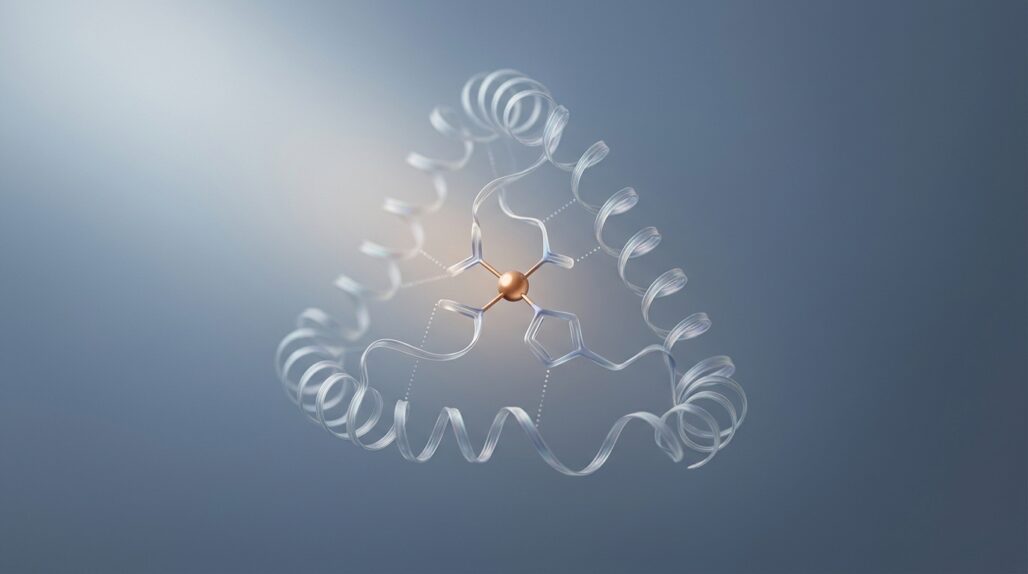
If you have been reading about copper peptides and wondering why the same three-letter compound (GHK-Cu) shows up in everything from $15 Amazon droppers to $300 dermatologist-recommended serums, the short answer is: the peptide is the same, but the formulations that actually deliver it to your dermis are not. Stability, pH, packaging, and concentration matter more than marketing. This roundup picks seven serums that get the formulation right, across budget, mainstream, and premium tiers. You will also get a plain-English look at what the research supports, what to check on a label, and why some popular products on Amazon do not make the list.
Affiliate disclosure: this article contains affiliate links. As an Amazon Associate, UsefulVitamins.com earns from qualifying purchases at no extra cost to you.
Summary / Quick Answer: the 7 copper peptide serums worth buying
For most buyers, The Ordinary Multi-Peptide Copper 1 is the mainstream default. For dermatologist-grade formulation, Allies of Skin or NIOD. For value, MAELOVE. For experimental add-ins, Skin Perfection's booster. Here is the honest break-down.
Best overall for most skin types
- The Ordinary Multi-Peptide Copper 1 Serum at the accessible price tier
- Allies of Skin Copper Tripeptide Ectoin at the premium tier
Best value
- MAELOVE Peptide Squad for Amazon-native cost-per-application
Best for advanced users
- NIOD Copper Amino Isolate Serum for the highest disclosed GHK-Cu concentration
Skip if
- You want immediate visible results (peptides need 8 to 12 weeks)
- You already use high-strength acids or vitamin C at the same step (pH incompatibility)
- You are looking for an injected or oral peptide treatment (this category is topical only)
Decision shortcut
- New to peptides: start with The Ordinary for low-commitment trial
- Already tolerate actives: step up to Allies of Skin or NIOD
- Adding to an existing routine: Skin Perfection GHK-Cu Booster
How copper peptides actually work on skin
Copper peptides are a class of molecules where a short peptide fragment binds to a copper ion, forming a bioactive complex. The most-studied member is GHK-Cu: a glycine-histidine-lysine tripeptide chelated to copper. Loren Pickart, a biochemist, first identified the GHK peptide in human plasma in the 1970s. Forty years later, its use in skincare has been shaped largely by Pickart's continued research and a broad in vitro evidence base.
In Pickart et al. 2015 (PMID 26236730), the authors review how GHK peptide functions as a natural modulator of multiple cellular pathways in skin regeneration. The mechanistic picture, summarized honestly: GHK-Cu stimulates collagen synthesis in dermal fibroblasts, modulates glycosaminoglycan production, supports wound-healing signaling, and has antioxidant and anti-inflammatory activity in cultured skin cells. It also influences gene expression relevant to skin repair and aging.
The in vitro mechanism is genuinely well-established. What is less established is how reliably any specific topical product delivers enough bioavailable GHK-Cu across the stratum corneum to the dermis where fibroblasts live. The molecule is polar, the skin barrier is lipophilic, and formulation chemistry decides the outcome. Copper peptides are legitimately evidence-supported for dermal signaling in vitro, but the tradeoff is that in vivo topical efficacy depends entirely on formulation stability, pH compatibility, and penetration enhancers.
Actionable takeaway: The peptide itself is not the variable that distinguishes a good serum from a mediocre one. Formulation is. Two products both listing "copper peptides" on the label can deliver wildly different amounts of active GHK-Cu to your skin depending on how they are formulated and packaged.
How we picked these 7
The filter for this roundup was four-part.
Disclosed concentration. Products that list specific GHK-Cu percentages (or specific peptide concentrations) made the cut over products that hide behind "peptide blend" marketing without specifying amounts. NIOD, Allies of Skin, and Skin Perfection publish concentration numbers.
Stable packaging. GHK-Cu oxidizes when exposed to air and light. Serums in clear jars with wide openings are a structural failure. Airless pumps, opaque amber glass with droppers, and multi-part activation packaging made the cut. Cheap clear-glass jars did not.
pH compatibility. GHK-Cu works best in a slightly acidic to neutral pH window, roughly 6 to 7.5. Products formulated aggressively below pH 5 (often to preserve other actives like vitamin C) chelate the copper unpredictably. The picks below keep pH in the peptide-friendly range.
Verifiable brand practices. Third-party testing, manufacturing transparency, and realistic marketing claims ruled out several popular Amazon products with opaque supply chains or promises of "instant collagen boost."
Actionable takeaway: If you are shopping on Amazon and a product does not tell you the GHK-Cu concentration, who manufactures it, or at what pH it is formulated, those gaps are telling you something.
Our 7 copper peptide serum picks
1. The Ordinary Multi-Peptide Copper 1 Serum
The mainstream-default pick, because it is the serum that got copper peptides into most bathrooms. Deciem's The Ordinary line is priced aggressively, widely distributed at Sephora and major retailers, and marketed with relatively restrained claims. GHK-Cu appears in a broader peptide blend rather than as the singular active, which keeps the price accessible but also means the individual peptide concentration is not separately disclosed.
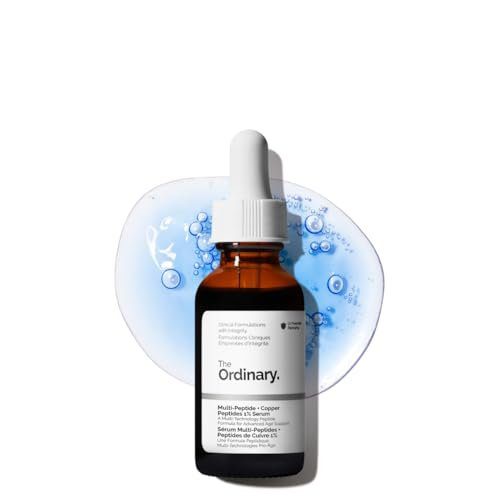
The Ordinary Multi-Peptide + Copper Peptides 1%, GHK-Cu Anti-Aging Serum for Fine Lines and Skin Elasticity, 1 Fl Oz
Mainstream default pick with a blend of peptides including GHK-Cu at an accessible price point, the SKU most new buyers start with because it is widely stocked.
2. MAELOVE Peptide Squad
The value-tier pick for Amazon-native shoppers. MAELOVE sits in the middle of the cost-per-milliliter spectrum, delivering a peptide blend that includes copper peptides at a price point that undercuts most boutique brands. The formulation is competent, the packaging is adequate, and the quality floor is solid enough for cautious daily use.
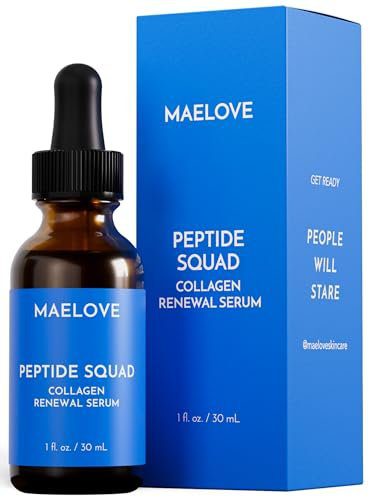
MAELOVE Peptide Squad Collagen Renewal Serum with Copper Peptides, Argireline, Matrixyl 3000 + Hyaluronic Acid and Niacinamide for Wrinkles, Fine Lines, and Skin Elasticity
Value pick with a peptide blend at a lower cost per milliliter than boutique brands, solid formulation for first-time copper peptide users.
3. Allies of Skin Copper Tripeptide Ectoin
The dermatologist-recommended premium pick, combining GHK-Cu with ectoin (an extremolyte with barrier-support properties). Allies of Skin publishes specific peptide percentages, formulates in the peptide-friendly pH window, and packages in light-protective airless containers. The price reflects the actual formulation quality, not just brand premium.
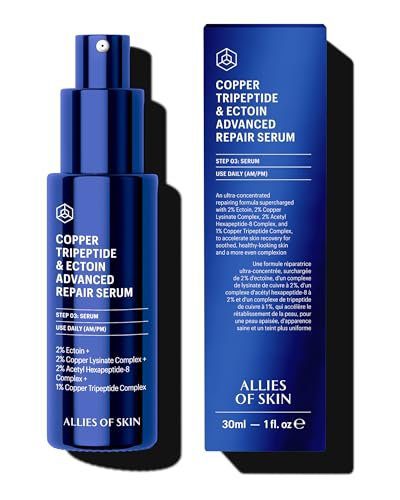
Allies of Skin Copper Tripeptide & Ectoin Advanced Repair Face Serum | Hydrating Moisturizer for Dry Skin | Anti Aging Skincare with Peptides | Treat Fine Lines & Wrinkles (1 Fl. oz)
Dermatologist-cited pick combining GHK-Cu with ectoin and a considered pH profile, designed to keep the peptide stable through the use cycle.
4. NIOD Copper Amino Isolate Serum
NIOD (also from Deciem) sits at the "advanced user" tier with the highest disclosed GHK-Cu concentration in the roundup, in the 1 percent range. The multi-part activation format is designed to keep the peptide stable until the moment of use. Appropriate for skin that already tolerates serums and acids without sensitivity issues. First-time peptide users should start elsewhere.
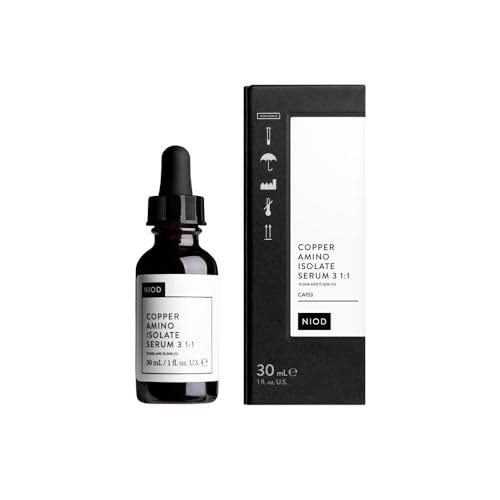
NIOD Copper Amino Isolate Serum 1.00% (30ml) by Niod
High-concentration pick from Deciem’s NIOD line with disclosed GHK-Cu percentage, multi-step activation format, built for users who already tolerate peptide routines.
5. Skin Perfection GHK-Cu Booster
The additive-booster pick, formulated to mix into an existing serum or moisturizer. If you already have a skincare routine you like and want to add copper peptides without replacing any products, this format is reasonable. It requires a compatible base (avoid high-strength acids or vitamin C products as mixing partners).
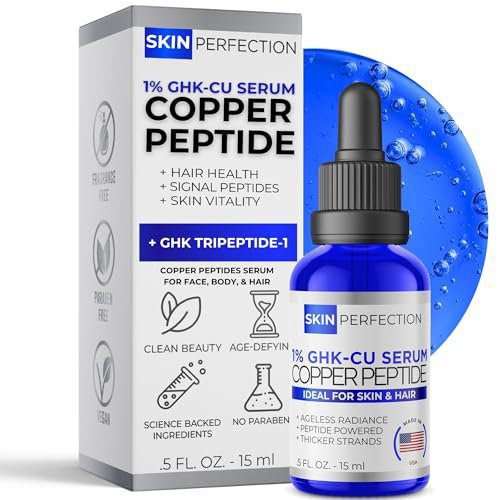
Skin Perfection GHK-CU Copper Peptides Serum for Face & Hair – Copper Peptide for Skin, Hair & Scalp – 1% Blue Liquid for Face, Neck, Body, and Scalp – Multi-Use Serum Booster with Dropper 0.5 fl oz
Additive booster format designed to mix into an existing serum or moisturizer, useful if you want GHK-Cu without committing to a standalone peptide-focused product.
6. Quicksilver Scientific Copper GHK
The wellness-adjacent pick for buyers inside the functional-medicine ecosystem. The formulation is transparent, the brand trust is solid inside its buyer segment, and the packaging is stability-conscious. The premium over alternatives reflects the brand positioning more than a formulation advantage.
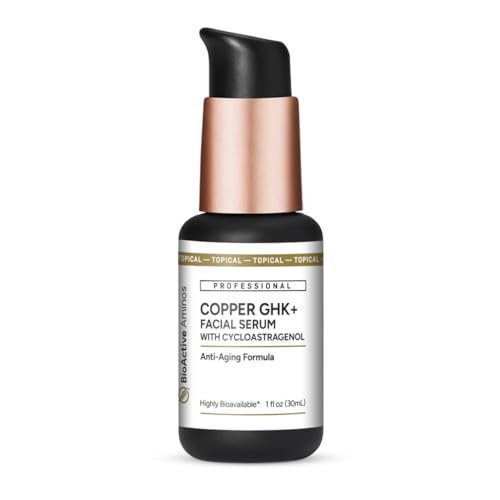
Quicksilver Scientific Copper GHK+ Facial Serum with Cycloastragenol – Copper Peptide Serum for Healthy Skin Support – Smooth Complexion & Glow – Gluten-Free, Vegan & Non-GMO – 1 fl oz
Functional-medicine wellness-brand pick with GHK-Cu positioned alongside the broader wellness stack, higher price reflects brand positioning more than unique formulation.
7. BLUPROTIN Copper Peptide
The Amazon-budget-tier pick for experimenters who want to try copper peptides at the lowest possible price. Quality-control transparency is lower than the established brands, but the peptide is present and the format is standard. Treat it as a low-stakes experiment, not a long-term routine commitment.
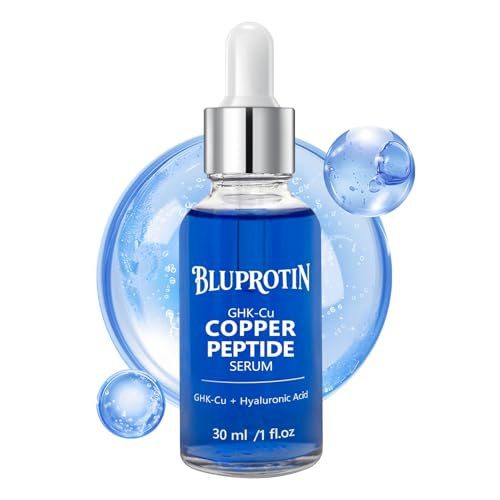
BLUPROTIN Copper Peptides Serum for Face, GHK-CU Peptide with Propylene Glycol&Copper Tripeptide-1&Hyaluronic acid, Anti-Aging Anti-Wrinkle Moisturizing Restore Collagen Enhance Skin Elasticity 30ml
Budget-tier Amazon-native pick at the lowest price in this roundup, acceptable for cautious experimentation but without the formulation transparency of mainstream options.
What to look for on the label
Four checks separate worth-buying from skip.
GHK-Cu specifically named. "Copper peptides" is marketing language that can include GHK-Cu or generic copper-amino-acid complexes or sometimes neither. Products that spell out GHK-Cu (or glycyl-histidyl-lysine copper complex) are more reliable than products using vague "copper peptide" phrasing.
Concentration disclosed. A concentration statement signals transparency. Products that hide the peptide amount behind a "blend" are often at very low concentrations that would not look impressive if stated.
Packaging. Opaque amber glass with dropper, airless pump, or activation format. Cheap clear jars and wide-mouth containers will oxidize the peptide in weeks.
pH compatibility. Products formulated in the 6 to 7.5 pH window preserve GHK-Cu bioactivity. Products formulated below pH 5 (common when aggressive acids are co-formulated) compromise the copper coordination.
Actionable takeaway: A $25 product that lists specific concentration in a pH-considered formulation in proper packaging beats a $60 product that hides behind "peptide blend" marketing. Price is not a quality signal.
Realistic expectations
Three realities worth owning before you buy.
Timeline is 8 to 12 weeks. Peptides signal fibroblasts; fibroblasts build collagen over weeks. If you want immediate visible change, retinoids and peptides are both slow. Neither flips a switch.
Routine compatibility matters. Copper peptides do not mix well with direct vitamin C (pH incompatibility), with strong alpha-hydroxy acids in the same step, or with some forms of retinol. Space them by a full routine or alternate mornings and evenings.
Topical only. This is the entire category's scope. Copper peptides sold for injection or sublingual use are not regulated the same way and sit outside this article's remit. More features are not always more useful, and peptide products that promise skin, hair, and systemic benefits in one formulation are usually overreaching.
Actionable takeaway: Buy one serum, use it daily for 12 weeks, then decide. Switching products at 4 weeks because you did not see results is not impatience, it is cancelling the experiment before the results window.
FAQ
Can I use copper peptides with retinol? Yes, on alternating nights or by spacing them in your routine. Retinol formulations are often acidic; using a peptide at the same moment may affect peptide stability. Most dermatologists recommend peptides in the morning and retinol in the evening, or vice versa.
Will copper peptides turn my skin green? No. The copper concentration in topical formulations is too low for surface discoloration. The bronze or pale green tint you sometimes see in the bottle is the formulated complex, not a stain that transfers to skin.
How long does an opened bottle stay good? GHK-Cu degrades with oxygen and light exposure. Opened bottles in proper packaging are typically good for 6 months. Clear-glass wide-mouth products may degrade within 2 months of opening.
Can copper peptides replace a retinoid? No. They work on different pathways. Retinoids accelerate cell turnover and are the most evidence-backed antiaging topical class. Copper peptides signal collagen-matrix support. The two are complementary, not substitutable.
Are injectable or oral copper peptides safer than topicals? Topical is the only well-studied and legal-to-buy format for consumer use. Injectable peptides fall under prescription or research-chemical categories with different safety profiles and legal status. This roundup covers topical serums only.
Tracking a protocol like this? Our companion app, StackMyMed, lets you log doses, schedule them, and check interactions across everything you take — alongside, never instead of, your clinician’s guidance.
Conclusion: the bottom line on copper peptide serums
The real question is not whether copper peptides work mechanistically, but which products actually deliver bioavailable GHK-Cu to your dermis through the skin barrier. Formulation decides the answer. The seven picks in this roundup are the ones that pass the concentration-disclosed, pH-appropriate, stably-packaged filters.
Start with The Ordinary or MAELOVE for a low-commitment first trial. Step up to Allies of Skin or NIOD if the entry-tier product suits you and you want higher disclosed concentration. Treat all of them as 12-week experiments, not 2-week judgments.
Next steps
- Start here for the foundation: Copper Peptides (GHK-Cu) Explained: Why Every Skincare Brand Is Suddenly Obsessed
As an Amazon Associate, I earn from qualifying purchases. Product recommendations are based on real reviews and independent research.
