
Chronic inflammation can feel like a low-grade fire you cannot quite put out – joint stiffness, lingering aches, fatigue, or “mystery” lab results like elevated C-reactive protein (CRP). The good news is that research supports a short list of best supplements for inflammation that may help lower inflammatory markers and improve symptoms when used consistently. This article breaks down what works best, typical doses used in studies, how to choose quality products, and how to combine supplements with food and lifestyle so you get real-world results.
Affiliate disclosure: this article contains affiliate links. As an Amazon Associate, UsefulVitamins.com earns from qualifying purchases at no extra cost to you.
Summary / Quick Answer: Best supplements for inflammation (what to take first)
The best supplements for inflammation with the strongest overall evidence tend to be:
- Omega-3 fatty acids (EPA + DHA): often 1,000 to 3,000 mg/day combined EPA/DHA for broad inflammation support
- Curcumin (standardized turmeric extract): commonly 500 mg/day (absorption matters)
- Ginger extract/powder: often 750 to 2,000 mg/day for joint comfort and metabolic inflammation
- Vitamin D: commonly 800 to 2,000 IU/day (best guided by blood testing)
- Zinc: trial doses vary, but research suggests it can reduce CRP and inflammatory stress markers
- Probiotics: strain-specific, emerging evidence for gut-driven inflammation
Quick “starter stack” many people tolerate well: omega-3s + curcumin, then add vitamin D if levels are low, or ginger if joint symptoms are a main issue.
What inflammation markers actually mean (and why CRP is not the whole story)
If you have ever seen “CRP” on lab work, you have already met one of the most common inflammation signals. But inflammation is more like a group chat than a single message. Your immune system uses many chemical messengers – and supplements may affect some more than others.
The key markers researchers track
Most clinical studies look at a combination of:
- CRP (C-reactive protein): a broad marker that often rises with chronic inflammation
- TNF-alpha and IL-6: cytokines linked with inflammatory signaling and chronic disease risk
- Oxidative stress markers (like MDA): not inflammation itself, but often travels with it
A practical takeaway: if one supplement does not “move” CRP for you, it may still be helping other pathways. That is one reason results can feel inconsistent across people.
Chronic vs acute inflammation: the goal is control, not elimination
Acute inflammation is part of healing – like swelling after a sprain. Chronic inflammation is the problem: it can linger and contribute to conditions such as arthritis, metabolic syndrome, and cardiovascular disease.
Think of it like smoke in a kitchen. Smoke is helpful when it signals a fire (acute). But if the smoke detector keeps chirping for months, something needs attention (chronic).
A quick reference table (what you might notice)
| If this is your main issue | Common “inflammation pattern” | What to consider first |
|---|---|---|
| Joint pain and stiffness | Local inflammation + cytokines | Curcumin, ginger, omega-3s |
| Metabolic inflammation (waistline, triglycerides, insulin resistance) | Higher CRP/IL-6 risk | Omega-3s, curcumin, lifestyle basics |
| Gut flares, irregularity | Gut barrier + immune activation | Probiotics (strain-specific), omega-3s |
| Frequent colds, low vitamin D | Immune dysregulation | Vitamin D (test first), zinc within limits |
If you want a food-based angle alongside supplements, it helps to understand how specific foods play into inflammation too. For example, this breakdown of Are Eggs Anti Inflammatory shows how context (overall diet pattern) matters more than one ingredient.
Best supplements for inflammation (ranked by evidence and real-world usefulness)
Nature Made Fish Oil 1200 mg, 90 Softgels
Insufficient search results to verify the Amazon ASIN or provide detailed product data; unable to make a data-based recommendation at this time. Recommend conducting a direct Amazon search for current details.
NOW Supplements Vitamin D-3 2000 IU, 240 Softgels
NOW Vitamin D-3 2000 IU earns strong 4.7-star rating from 24K+ Amazon reviews and Reddit endorsement as a trusted, budget-friendly choice. USP verification and ConsumerLab approval confirm purity/potency. Excellent for deficiency correction or maintenance at just $14.99 for 8-month supply.
Some supplements get attention because they are trendy. Others get attention because they keep showing up in randomized trials and meta-analyses. The list below focuses on options with human research behind them and practical dosing guidance.
1) Omega-3 fatty acids (EPA + DHA): the “foundation” supplement
Omega-3s are among the most consistently supported options for lowering inflammatory signaling. Studies suggest omega-3 supplementation can reduce markers like CRP, TNF-alpha, and IL-6, and may support the body’s resolution of inflammation over time.
Typical studied dose: often 1,000 to 3,000 mg/day combined EPA + DHA (not “fish oil mg,” but actual EPA/DHA on the label).
Action steps that improve results:
- Choose a product that lists EPA and DHA amounts clearly.
- Take with a meal that contains fat to improve absorption.
- Give it time – many trials run 8 to 12+ weeks.
For a deeper breakdown of forms, dosing, and label reading, see the Omega-3 Fatty Acids Complete Guide. And if your main goal includes cardiovascular support, this companion article on Fish Oil And Heart Health connects the dots between inflammation, triglycerides, and heart risk.
2) Curcumin (from turmeric): strong evidence, but absorption is everything
Curcumin is the concentrated active compound in turmeric. Whole turmeric in food can be healthy, but it is usually not potent enough to match research dosing.
Clinical research suggests curcumin can reduce inflammatory markers and oxidative stress. A randomized controlled trial reported improvements in CRP and oxidative stress markers with curcumin supplementation in people with metabolic concerns. Curcumin has also been studied for joint comfort, including comparisons with common pain medications in some trials.
Typical studied dose: commonly 500 mg/day of a standardized curcumin extract (some studies use more).
How to make curcumin work better:
- Look for “enhanced bioavailability” forms (for example, curcumin with piperine or specialized delivery systems).
- Take with food to reduce stomach upset risk.
If you want help choosing a product, this guide to Best Turmeric Curcumin Supplements for Health walks through what “standardized” and “bioavailable” actually mean.
3) Ginger: underrated for joint comfort and metabolic inflammation
Ginger is not just for nausea. Human studies suggest ginger supplementation can lower inflammation markers and may improve blood sugar control in certain populations.
Typical studied dose: often 750 to 2,000 mg/day ginger powder or extract.
When ginger is a smart pick:
- You want a plant-based option with a long safety history in food.
- Your inflammation overlaps with digestion, bloating, or blood sugar concerns.
- You prefer a supplement that can also be used as tea or food.
4) Vitamin D: not “anti-inflammatory” for everyone, but important when low
Vitamin D is best thought of as an immune regulator. If your vitamin D status is low, correcting it may help normalize immune signaling and reduce inflammatory tendencies.
Typical dose range used in practice: often 800 to 2,000 IU/day, sometimes higher under clinician supervision.
A practical approach is to test first, then supplement based on your baseline. The NIH Office of Dietary Supplements guidance on immune function is a reliable reference for how vitamin D and other nutrients relate to immune regulation.
5) Zinc: helpful, but dose discipline matters
Zinc shows up in research on inflammation and oxidative stress. A meta-analysis of randomized trials has reported reductions in markers such as CRP and TNF-alpha with zinc supplementation in certain groups.
But zinc is not a “more is better” nutrient. High-dose zinc for long periods can contribute to copper deficiency and related issues.
Practical dosing tip: if you use zinc beyond a short-term immune protocol, consider staying near the Recommended Dietary Allowance unless your clinician advises otherwise.
Evidence snapshot table (what to choose based on your goal)
| Supplement | Best for | Evidence strength (human data) | Key “watch-outs” |
|---|---|---|---|
| Omega-3 (EPA/DHA) | Broad inflammation and cardiometabolic support | Strong | Fishy burps, blood thinners need medical guidance |
| Curcumin | Joint comfort, CRP support | Strong | Absorption varies, may upset stomach |
| Ginger | Joint comfort, metabolic markers | Moderate | High doses may cause GI upset |
| Vitamin D | Low vitamin D + immune regulation | Moderate | Avoid excessive dosing without testing |
| Zinc | Immune + inflammation markers | Moderate to strong | Excess can lower copper over time |
| Probiotics | Gut-driven inflammation | Emerging | Strain matters, effects vary |
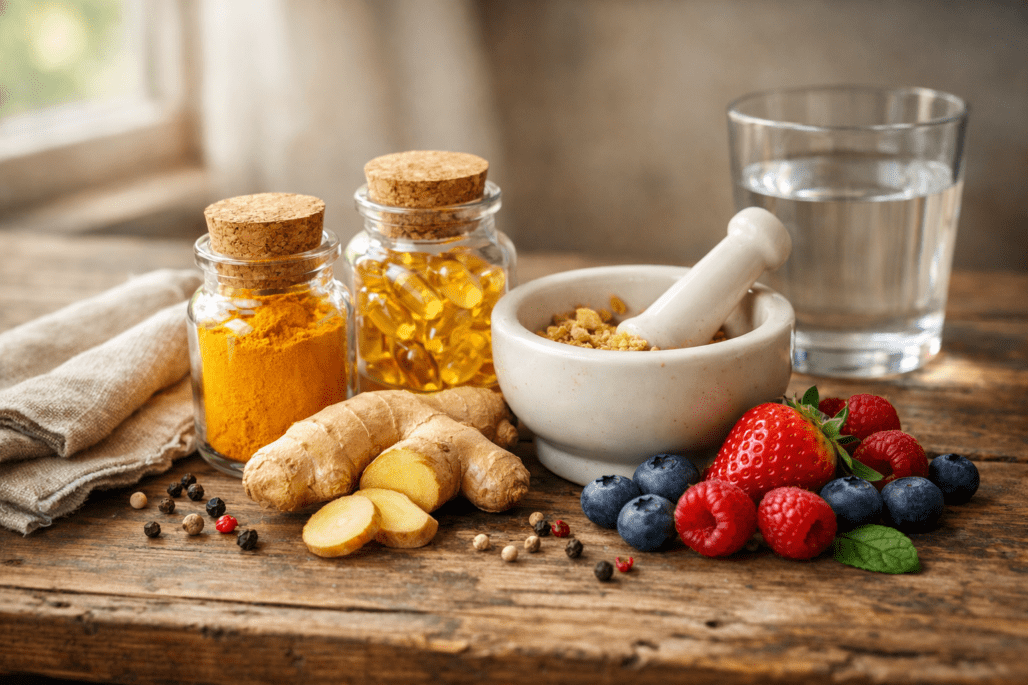
Image alt text suggestion: “Best supplements for inflammation chart showing omega-3, curcumin, ginger, vitamin D, zinc, probiotics.”
How to choose and combine anti-inflammatory supplements (without wasting money)
Sports Research Turmeric Curcumin C3 Complex 500 mg, 120 Softgels
Sports Research Turmeric Curcumin C3 Complex earns a strong 4.6-star rating from over 9,700 reviews, praised for its potent 95% curcuminoids formula with Bioperine and coconut oil for enhanced absorption and joint support. While priced around $32, it’s a reliable premium choice for inflammation relief based on consistent user feedback, though no third-party testing data was found.
Nature’s Way Ginger Root 550 mg, 100 Capsules
Nature’s Way Ginger Root offers traditional digestive support with 1,100 mg per 2-capsule serving, sourced from India and West Africa, and is Non-GMO Project Verified, gluten-free, and vegan; however, no Amazon-specific data like ASIN, ratings, or price was located in results, limiting a full affiliate recommendation[1].
Many people try one supplement at a time, get mixed results, then quit. A better strategy is to match the supplement to your inflammation “driver” and use combinations that make biological sense.
Start with a simple 8-week plan
An easy, research-aligned approach:
- Weeks 1 to 8: Omega-3s daily (EPA + DHA total 1,000 to 3,000 mg/day)
- Weeks 1 to 8: Add curcumin (often 500 mg/day of an enhanced form)
- Optional add-on: Ginger (750 to 2,000 mg/day) if joints or stiffness are a main complaint
- Test-guided: Vitamin D if your blood levels are low or borderline
- Targeted: Probiotic if digestion and inflammation seem linked
Why this works: omega-3s and curcumin cover multiple inflammatory pathways, while ginger, vitamin D, and probiotics can be layered based on symptoms and labs.
Combination ideas supported by emerging research
Some studies suggest pairing supplements can shift anti-inflammatory signaling more than using one alone. For example, research in older adults has explored probiotics combined with omega-3s and found improvements in anti-inflammatory immune signals in certain settings.
The key is restraint. More pills does not automatically mean more benefit.
Quality checklist (what matters on the label)
Use this quick list when choosing products:
- Third-party testing: look for independent verification of purity and label accuracy
- Clear dosing: omega-3 labels should list EPA and DHA amounts, not only “fish oil”
- Standardization: curcumin products should list standardized curcuminoids or a clinically studied form
- Transparent additives: avoid unnecessary dyes or proprietary blends that hide doses
- Expiration and storage: fish oil should be fresh and stored away from heat
A short note on stress and inflammation
Stress can raise inflammatory signaling in the body, and sleep loss can make it worse. While not a direct “inflammation supplement,” magnesium is often used for stress and sleep support. If that is part of your picture, this guide on Best Magnesium for Anxiety can help you choose a form that is easier to tolerate.
Safety, interactions, and common misconceptions (what most articles skip)
Garden of Life Dr. Formulated Probiotics Mood+ 30 Capsules
Cannot provide recommendation without real-time data verification
Check Price on Amazon →If you are dealing with chronic inflammation, you may also be taking prescriptions for blood pressure, diabetes, autoimmune conditions, or pain. That is where supplement safety becomes real, not theoretical.
Common misconceptions to avoid
Misconception 1: Supplements can replace diet and medical care.
Research suggests supplements may help lower inflammatory markers, but they work best as add-ons to food, movement, sleep, and condition-specific treatment plans.
Misconception 2: All omega-3 products are basically the same.
They are not. EPA/DHA amounts vary widely, and some evidence suggests DHA and EPA can have different effects on specific markers.
Misconception 3: Turmeric in food equals a curcumin supplement.
Turmeric is a great spice, but many studies use standardized extracts at doses that are hard to reach through food alone.
Misconception 4: If you do not “feel it,” it is not working.
Inflammation markers can shift before symptoms do, and vice versa. If you are tracking progress, consider labs plus symptom notes.
Interaction and side-effect checklist
Use this as a safety screen, and confirm with your clinician if any apply:
- Blood thinners or bleeding risk: omega-3s, curcumin, and ginger may not be appropriate at higher doses
- Gallbladder issues or GERD: curcumin and ginger can aggravate symptoms for some people
- Autoimmune conditions: vitamin D and probiotics can be helpful, but personalization matters
- Long-term zinc use: consider copper balance and avoid chronic high dosing
For conservative, evidence-based supplement guidance, Harvard’s overview is a useful reality check: see Harvard Health’s supplement scorecard.
What the science can and cannot promise
Supplement studies vary in:
- participant health status
- baseline inflammation levels
- supplement form and dose
- study duration
That is why results can look “mixed” online. People with higher baseline inflammation often see clearer changes than healthy individuals with normal markers.
Quick safety table (easy to screenshot)
| Supplement | Most common side effects | Who should be cautious |
|---|---|---|
| Omega-3s | fishy burps, mild GI upset | blood thinners, upcoming surgery |
| Curcumin | nausea, reflux in some | gallbladder issues, anticoagulants |
| Ginger | heartburn, GI upset at high dose | anticoagulants, sensitive stomach |
| Vitamin D | issues mostly with excess dosing | those already using high-dose D |
| Zinc | nausea, copper imbalance long-term | long-term daily high-dose users |
| Probiotics | gas/bloating early on | immunocompromised individuals (medical guidance) |

Image alt text suggestion: “Supplement safety checklist for inflammation relief including omega-3, curcumin, ginger, vitamin D, zinc, probiotics.”
If you are stacking a few supplements for this, StackMyMed (our companion app) tracks what you actually take, schedules the best time for each one, and flags any combinations worth a second look.
Conclusion: A realistic, research-backed plan to lower inflammation
The best supplements for inflammation are not the most exotic ones – they are the ones that repeatedly show benefits in human research and fit your symptoms, labs, and medications. For many people, omega-3s (EPA/DHA) and curcumin are the most practical starting point, with ginger, vitamin D, zinc, and probiotics added based on your personal drivers of inflammation.
A smart next step is to pick one primary goal (joint comfort, metabolic health, gut support), run an 8-week trial, and track changes in symptoms and, when possible, labs like CRP.
For deeper product selection help, revisit Best Turmeric Curcumin Supplements for Health and the Omega-3 Fatty Acids Complete Guide to fine-tune your approach.
As an Amazon Associate, I earn from qualifying purchases. Product recommendations are based on real reviews and independent research.
