
Peptides have become one of the most crowded categories in skincare marketing. Every brand has one, every label promises collagen "stimulation" or muscle "relaxation," and the price tags run from $12 to $280 for what is, chemically, a chain of amino acids a few molecules long. So the reasonable question is whether any of this is real — and if so, which types actually hold up when you look at the evidence rather than the label copy.
Affiliate disclosure: this article contains affiliate links. As an Amazon Associate, UsefulVitamins.com earns from qualifying purchases at no extra cost to you.
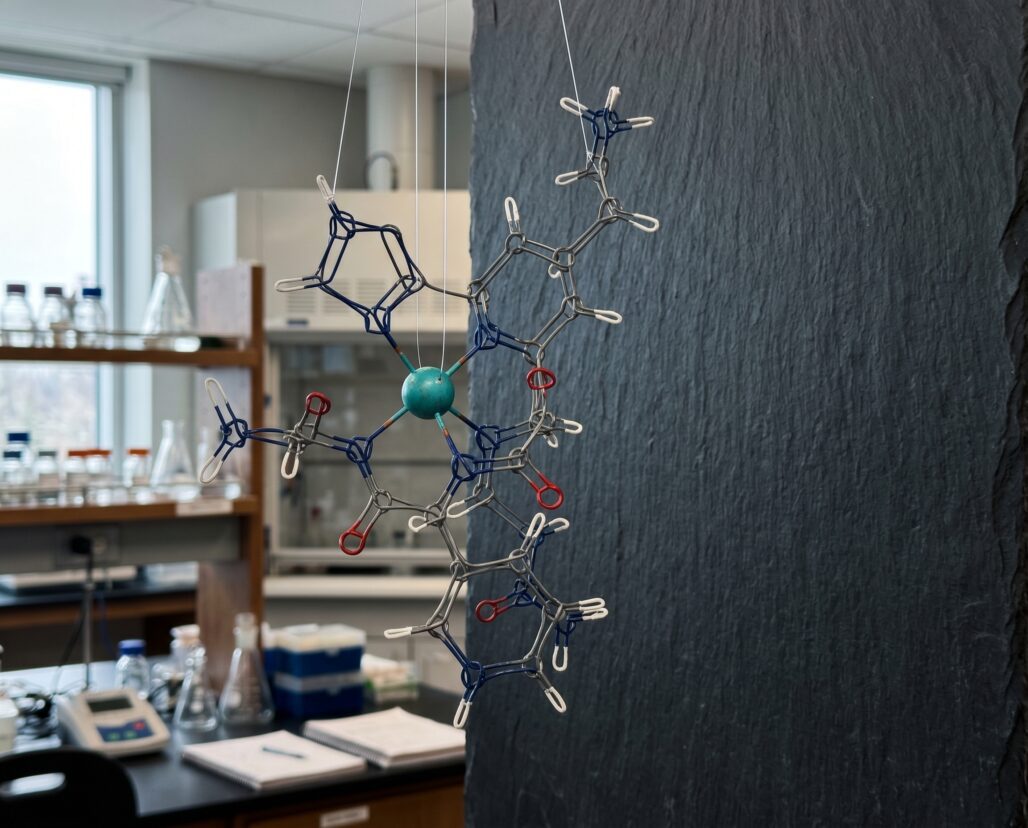
The honest answer: some peptide categories have genuine clinical support, a handful have intriguing early-stage data, and a few rest almost entirely on in-vitro fibroblast studies that have never been confirmed in real human skin. Verdict: copper peptides (GHK-Cu) and signal peptides (particularly palmitoyl pentapeptide-4, sold as Matrixyl) have the best human-trial track record; oral collagen peptides have solid meta-analytic support for hydration and elasticity; Argireline is a legitimate ingredient with a real mechanism but limited large-trial evidence; and no topical peptide replaces the anti-aging evidence base built by retinoids and broad-spectrum SPF.
Summary / Quick Answer: Do Peptides Actually Work for Skin?
Peptides work — selectively. The class is not a gimmick, but the word "peptide" on a label tells you almost nothing about efficacy. The evidence varies enormously by peptide type, concentration, and delivery system.
Best for:
- Reducing visible signs of aging (fine lines, skin laxity) when used alongside retinoids and SPF
- Sensitive or retinoid-reactive skin that cannot tolerate tretinoin but still needs a collagen-supporting active
- Barrier-focused routines where copper peptides add wound-repair support
- Women over 40 looking for oral collagen to complement topical care
Not ideal for:
- Replacing retinoids if you can tolerate them — the evidence gap is real
- Anyone expecting botox-equivalent results from topical Argireline
- Treating acne, hyperpigmentation, or post-inflammatory erythema (other actives have stronger evidence here)
What to look for:
- GHK-Cu (copper peptide) or palmitoyl pentapeptide-4 listed near the top of the ingredient list
- Concentrations above 1-5 ppm for Matrixyl (the 0.005% used in trials is very low; effective products tend to go higher)
- For oral collagen: 2.5-10 g/day hydrolyzed collagen peptides (Verisol or similar specific collagen peptide formulations)
Decision shortcut: If budget is tight, retinol plus SPF 30+ still outperforms any peptide-only routine. If you already use retinoids and want to add a complementary collagen-supporting layer, a GHK-Cu or Matrixyl serum is a reasonable, evidence-backed choice.
What "Peptide" Actually Means in Skincare
A peptide is a short chain of amino acids — the same building blocks that make up proteins. When that chain reaches hundreds of amino acids, it becomes a protein; when it stays short (2-50 amino acids, typically), it's a peptide. In the body, peptides serve as signaling molecules, enzyme inhibitors, structural components, and transport vehicles.
Skincare formulations exploit several of these natural roles. A signal peptide mimics the chemical signals that tell fibroblasts to produce more collagen or elastin. A carrier peptide transports a mineral cofactor — most often copper — to enzymes that need it for tissue repair. A neurotransmitter-inhibiting peptide interferes with the nerve-muscle signaling that drives expression wrinkles. The mechanism is plausible for each category. The question is whether enough of the molecule actually penetrates the stratum corneum to reach living skin cells and whether the resulting effect is large enough to see in the mirror.
To understand why this matters, see our deeper breakdown of what peptides are and how they work in skincare, which covers penetration barriers and the carrier-peptide chemistry in more detail.
The Four Main Peptide Categories in Skincare
Signal peptides trigger collagen and extracellular matrix synthesis. The best-studied example is palmitoyl pentapeptide-4, the active behind the Matrixyl trade name. The palmitic acid tail is a deliberate modification — it makes the peptide more lipophilic, improving stratum corneum penetration beyond what the bare KTTKS sequence could manage.
Carrier peptides stabilize and deliver trace elements to skin. GHK-Cu (glycyl-L-histidyl-L-lysine bound to copper) is the most researched example. Copper is a cofactor for lysyl oxidase, the enzyme responsible for crosslinking collagen and elastin fibers. In cell culture, GHK-Cu significantly increases collagen synthesis, elastin production, and wound contraction rate. Its gene-expression fingerprint is unusually broad: one genomics analysis found GHK upregulates roughly 59% of the genes it influences, with activation patterns overlapping collagen synthesis, antioxidant defense, and tissue remodeling pathways (Pickart et al., PMC6073405).
Neurotransmitter-inhibiting peptides are the category marketed most aggressively as "topical Botox." Argireline (acetyl hexapeptide-8, also called acetyl hexapeptide-3 in older literature) works by competing with SNAP-25, a protein involved in acetylcholine release at the neuromuscular junction. Less acetylcholine means reduced muscle contraction, which in theory softens expression lines.
Enzyme-inhibiting peptides (such as soy-derived peptides) block metalloproteinases — enzymes that break down existing collagen. The evidence for this sub-category is thinner than for signal or carrier peptides, and most of the data is in vitro.
GHK-Cu: The Most Studied Topical Peptide
GHK-Cu has a longer research history than any other cosmetic peptide, with meaningful in-vitro data stretching back to the 1980s and a modest but real body of human-use studies. In a trial comparing topical GHK-Cu cream, vitamin C cream, and retinoic acid cream applied to thigh skin over 12 weeks (n=20 volunteers), procollagen synthesis was improved in 70% of the GHK-Cu group, 50% of the vitamin C group, and 40% of the retinoic acid group (PMC11830136). A separate 12-week study in 41 women using a GHK-Cu eye cream reported reductions in wrinkle depth and skin thickness gains compared to both placebo and a vitamin K control.
The real question is not whether GHK-Cu shows activity. It is whether the available human trials are large enough and rigorously enough designed to carry serious weight. The honest answer is no — not yet. Most studies have fewer than 50 participants, lack independent replication, and use outcome measures (silicon replica scans, researcher-graded photo assessments) that are meaningful but not the same as a validated clinical endpoint like biopsy-confirmed collagen density. A skincare ingredient can have great in-vitro data and still fail to deliver on real skin, and the reverse is also possible — the small trials here point toward real effect, but they are not at the evidence level we would want for a pharmaceutical claim.
Actionable takeaway: GHK-Cu serums are a reasonable add-on for barrier support and collagen-adjacent care. If you want more detail on the best-formulated options, see our guide to the best copper peptide serums.
Matrixyl (Palmitoyl Pentapeptide-4): Signal Peptide With Solid Trial Data
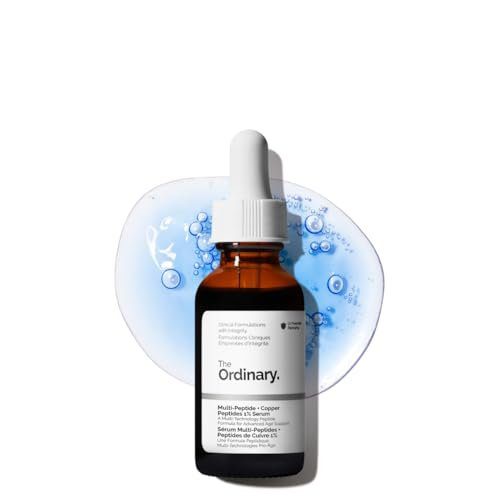
Palmitoyl pentapeptide-4 has been studied in randomized controlled designs more consistently than most cosmetic peptides. In a double-blind study, a cream containing 0.005% palmitoyl pentapeptide-4 applied to the eye area twice daily for 28 days produced an 18% decrease in fold depth and a 37% decrease in fold thickness compared to placebo (pubmed.ncbi.nlm.nih.gov/18492182). In a larger 12-week RCT (n=93 Caucasian women), topical palmitoyl pentapeptide-4 improved fine lines and overall skin appearance by expert grader assessment compared to placebo.
A more recent head-to-head trial in 21 Indonesian women (8 weeks, n=7 per group) compared palmitoyl pentapeptide-4 (PPP-4) cream to acetylhexapeptide-3 (AHP-3) cream and placebo, measuring hydration, transepidermal water loss, viscoelasticity, and crow's feet grading. Both active creams reduced the crow's feet score by 0.86 points on the grading scale by week 8. PPP-4 received higher subjective satisfaction scores and had a cleaner tolerability profile than AHP-3, which caused itching and stinging in some participants (PMC10005804). Notably, between-group differences on objective instrument measurements did not reach statistical significance — the authors attributed this to the small sample size rather than absence of effect, but it is an honest limitation to flag.
The legitimacy of Matrixyl's evidence is real, but the tradeoff is that most trials use concentrations and formulations supplied or funded by the ingredient manufacturer (Sederma), which is a recognized source of potential bias in cosmeceutical research. Independent large-scale replication would strengthen confidence considerably.
Actionable takeaway: Look for palmitoyl pentapeptide-4 (or the trade name Matrixyl) toward the top third of the ingredient list, ideally in a product that also contains a humectant base and avoids heavy occlusive oils that could interfere with penetration.
Argireline: Real Mechanism, Overstated Marketing
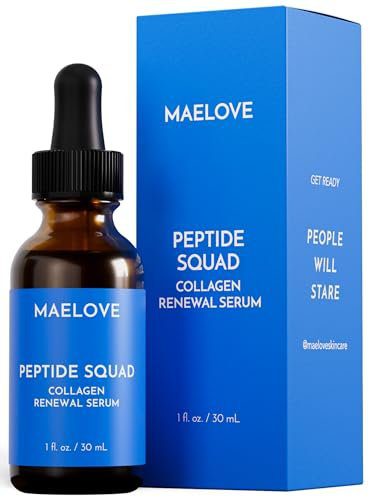
Argireline is legitimate as an ingredient category. It has a plausible mechanism of action (SNAP-25 inhibition), measurable clinical effects in small trials, and a safety profile that is dramatically better than the botulinum toxin it is often compared to in marketing copy.
In a randomized, placebo-controlled study of 60 Chinese subjects (argireline vs. placebo, 3:1 ratio, twice daily to peri-orbital wrinkles for 4 weeks), the argireline group showed 48.9% anti-wrinkle efficacy by subjective assessment versus 0% for placebo, with statistically significant reductions in skin roughness parameters (p < 0.01) by objective silicone replica analysis (pubmed.ncbi.nlm.nih.gov/23417317). A separate trial found that a 10% hexapeptide emulsion reduced wrinkle depth by up to 30% after 30 days.
Where the marketing runs ahead of the evidence is in the "topical Botox" framing. Argireline penetrates the stratum corneum poorly due to its hydrophilic, relatively large molecular structure. The amounts reaching the neuromuscular junction through intact skin are unlikely to approach the concentrations that produce meaningful muscle relaxation. What you are more probably seeing in trials is a combination of topical film-forming effect, improved hydration, and partial surface smoothing — which is real and visible, just not the mechanism the label implies.
Oral Collagen Peptides: The Strongest Systemic Evidence
If you look at the overall evidence landscape for peptides and skin, the oral route has the most rigorous trial base. In a well-cited double-blind, placebo-controlled RCT by Proksch et al. (n=114 women, aged 45-65), 2.5 g/day of Verisol bioactive collagen peptides for 8 weeks produced a statistically significant 20% reduction in eye wrinkle volume (p < 0.05), a 65% increase in procollagen type I, and an 18% increase in elastin compared to placebo, with effects persisting 4 weeks after the final dose (pubmed.ncbi.nlm.nih.gov/24401291). A related RCT (n=69 women, Proksch et al., 2.5 g and 5.0 g/day, 8 weeks) showed statistically significant skin elasticity improvement in both dosage groups versus placebo (pubmed.ncbi.nlm.nih.gov/23949208).
These are not isolated findings. A 2023 systematic review and meta-analysis of 26 RCTs involving 1,721 participants found that hydrolyzed collagen supplementation significantly improved both skin hydration and elasticity compared to placebo (p < 0.00001 for both outcomes), though the authors noted several biases in the included trials and called for larger, independent replication (pubmed.ncbi.nlm.nih.gov/37432180). Effects varied by collagen source and supplementation duration.
One important distinction: oral collagen peptides are not the same as supplements marketed as "plant-based collagen" or "vegan collagen." There is no such thing as plant-derived collagen — collagen is an animal protein. Plant-based products in this space typically contain vitamin C, amino acid precursors, or herbal extracts that may support endogenous collagen synthesis, but they are not collagen and should not be described as equivalent. The clinical evidence reviewed here applies specifically to hydrolyzed collagen peptides from animal sources (typically bovine or marine).
For women over 40 specifically, where declining estrogen accelerates collagen degradation, the data on oral collagen is particularly relevant — see our breakdown of collagen peptides for women over 40 for dosing and timing context.
Actionable takeaway: If you are considering oral collagen, look for a product using specific bioactive collagen peptides (Verisol, Peptan, or similar) at 2.5-10 g/day, not generic collagen powder at arbitrary doses. Duration matters: most RCTs ran 8-12 weeks before meaningful outcomes were detectable.
How Peptides Fit Alongside Retinoids and Sunscreen
The evidence hierarchy in topical anti-aging is not subtle. Broad-spectrum sunscreen is the most robustly supported anti-aging intervention that exists — a 4.5-year Australian RCT (n=903) demonstrated that regular daily sunscreen use meaningfully reduced skin aging in middle-aged adults (pubmed.ncbi.nlm.nih.gov/23732711). Prescription-grade retinoids (tretinoin) have decades of controlled-trial evidence for reversing photoaging, reducing fine lines, and increasing dermal collagen. Over-the-counter retinol has a weaker but real evidence base when formulated at effective concentrations (0.1-1%).
Peptides occupy a legitimate third tier. They are not alternatives to SPF and retinoids — they are complements. The real question is not whether peptides beat retinoids. It is whether a peptide serum adds measurable benefit on top of an already-solid SPF-plus-retinoid foundation, and the small-trial data suggests the answer is yes, particularly for GHK-Cu and Matrixyl.
A practical compatibility note: copper peptides and vitamin C (ascorbic acid) are chemically incompatible when used together — the copper ion can oxidize ascorbic acid, degrading both actives. Use them at different times of day (vitamin C in the morning, copper peptide in the evening) or in separate routines.
Peptides are generally well-tolerated alongside retinoids. Some practitioners suggest alternating nights to allow each active time to work without interference, but there is no strong evidence that combination use reduces efficacy. The GHK-Cu thigh collagen trial that found 70% procollagen response with the copper peptide versus 40% with retinoic acid does not mean copper peptides are superior to retinoids overall — it measured one biomarker in a small sample. Retinoids have a broader and better-validated effect profile.
Actionable takeaway: Build your routine foundation on SPF (non-negotiable) and a retinoid or retinol (strong evidence). Add a copper peptide or Matrixyl serum as a supporting layer once you have the fundamentals covered.
Buying Picks: What to Look for in Peptide Products
You do not need the most expensive product on the market. What matters for topical peptides is active concentration, delivery vehicle (emulsions and niacinamide bases tend to improve penetration), and absence of ingredients that compete or degrade the peptide.
For GHK-Cu specifically, the molecule is sensitive to pH extremes and vitamin C in the same formula. Products formulated at pH 5-7 with minimal oxidizing actives will have better copper peptide stability than those crammed with multiple high-dose antioxidants. Stable amber glass or opaque packaging matters here.
For Matrixyl, the most reliable positioning is as a secondary active in a well-formulated serum — not as a standalone hero ingredient, where concentration claims are often vague.
As an Amazon Associate, I earn from qualifying purchases. Product recommendations are based on real reviews and independent research.
If you are managing a protocol like this, StackMyMed (our companion app) keeps your doses, timing, and interaction checks in one place. It does not replace medical advice — bring the log to your clinician.
Conclusion: The Bottom Line on Peptides for Skin
Peptides are not a single ingredient — they are a category of molecules with meaningfully different mechanisms, evidence bases, and practical uses. GHK-Cu and palmitoyl pentapeptide-4 have genuine human-trial support for reducing visible signs of aging, even if the trial pool remains smaller than we would like. Oral collagen peptides have the most robust evidence overall, with a 2023 meta-analysis of 26 RCTs backing real improvements in hydration and elasticity. Argireline has a plausible mechanism and some positive trial data, but its "topical Botox" positioning outpaces the penetration science.
What peptides cannot do: replace sunscreen, out-perform a well-titrated retinoid, or treat clinical skin conditions. What they can do: provide a complementary, well-tolerated layer of collagen-supporting activity for people who have already covered the evidence-backed fundamentals.
Next steps:
- Read what peptides are and how they work in skincare for the chemistry of penetration and delivery
- If copper peptides are your focus, see the best copper peptide serums for formulated-product analysis
- If you are specifically researching oral collagen, collagen peptides for women over 40 covers dosing, timing, and what the evidence actually shows by age group
This article is for informational purposes and not medical advice. Peptides, especially those marketed for therapeutic use, can interact with medications and health conditions. Consult a licensed physician before starting any supplement, particularly if you are pregnant, nursing, taking prescription medications, or managing a chronic condition.
As an Amazon Associate, I earn from qualifying purchases. Product recommendations are based on real reviews and independent research.
