
Ro GLP-1 Telehealth Review: Inside Roman / Rory's Weight-Loss Program
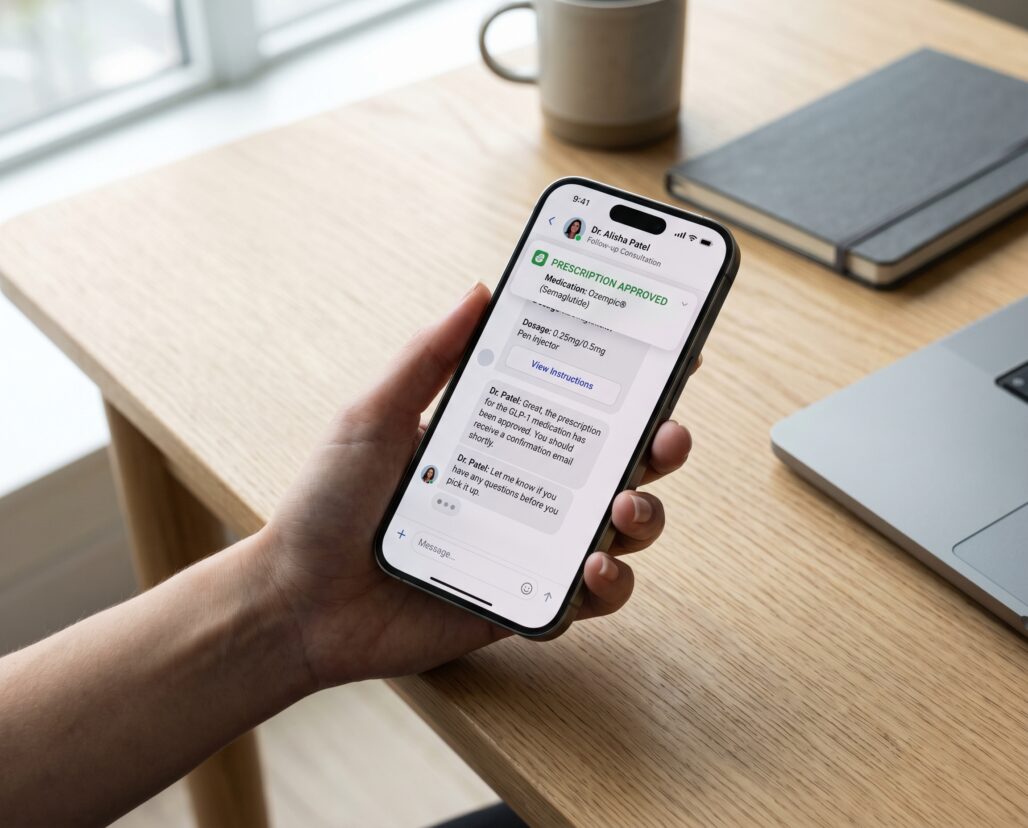
When Roman started prescribing erectile dysfunction medication online in 2017, it looked like a single-category bet. Seven years later, the company behind Roman, Rory, and the Zero smoking cessation brand has quietly become one of the largest GLP-1 telehealth platforms in the country, writing prescriptions for Wegovy and Zepbound to patients who never set foot in a clinic. The pitch is simple: skip the waiting room, get a provider consultation on your phone, and have medication delivered to your door. What the pitch does not always make clear is the cost structure once the introductory pricing expires, how Ro adapted when the FDA removed semaglutide from the drug shortage list in early 2025, and what the real-world patient experience looks like once you are inside the program.
Summary
- Ro (formerly Roman Health) is a telehealth platform operating the Roman, Rory, and Zero brands, with a primary weight-loss product called the Ro Body Program.
- The program combines asynchronous provider consultations, registered nurse coaching, lab testing when appropriate, and GLP-1 prescriptions for qualifying patients.
- Compounded semaglutide was a major part of Ro's earlier weight-loss offer, but the FDA's February 2025 declaration that the semaglutide shortage was over effectively ended that pathway by May 2025.
- Ro now writes prescriptions for branded GLP-1s, specifically Wegovy (semaglutide) and Zepbound (tirzepatide), and operates an insurance concierge service to help patients access coverage.
- Membership costs $149 per month (or as low as $74 per month on an annual plan). Medication is priced separately and can run $299 to $599 per month out of pocket for branded GLP-1 injections.
- Trustpilot reviews average 3.7 out of 5 from over 2,600 reviews. Positive feedback centers on convenience and medication access; negative reviews cluster around customer service delays, billing surprises, and insurance complications.
How Ro's Brand Portfolio Works
Ro operates as a parent company with multiple condition-specific brands sharing a single provider and pharmacy backbone. Roman, the flagship launched in October 2017, targeted men seeking ED, hair loss, and cold sore treatment without an in-person prescription visit. In March 2019, Ro launched Rory for women's health, initially around menopause and birth control. Zero covers smoking cessation. Plenity, an FDA-cleared hydrogel weight-management device, rounds out the portfolio for patients who do not qualify for GLP-1 therapy. Ro Pharmacy handles fulfillment for all of them, and affiliated licensed providers span all 50 states.
Understanding this structure matters in practice. If you start on Roman for a different condition and then inquire about weight loss, you are routed into the Ro Body Program through the same provider and pharmacy backbone, and both the strengths and the constraints of the telehealth prescribing model apply uniformly across every condition on the platform.
The Ro Body Program: Structure and Prescribing Process
The patient journey begins with an online intake form covering health history, current medications, BMI, and weight-loss goals. A licensed Ro-affiliated provider reviews that intake, and in some cases orders a metabolic lab panel before moving forward. If the review supports a prescription, the provider schedules a consultation visit, typically conducted via asynchronous messaging or a video call, to discuss medication options, set dose expectations, and confirm there are no contraindications.
GLP-1 receptor agonists are prescription-only medications. Ro cannot and does not prescribe them without provider review and a qualifying clinical indication, which generally means a BMI of 30 or above, or a BMI of 27 or above with at least one weight-related comorbidity such as hypertension, type 2 diabetes, or obstructive sleep apnea. Patients who do not meet clinical criteria are not approved for GLP-1 medications through the platform.
Once approved, patients enter a structured support framework that includes one-on-one coaching from a registered nurse, a weekly educational curriculum covering nutrition, sleep, and lifestyle, dose logging and weight tracking through the Ro app, and regular provider check-ins for prescription renewal and dose adjustment. The program is designed to feel more like continuous care than a one-time prescription delivery, which distinguishes it from some lower-overhead competitors in the same space.
Branded vs. Compounded: What Ro Actually Prescribes Now
Anyone who encountered Ro's marketing before mid-2025 will recognize a different offer than what exists now. During the FDA drug shortage period, section 503A and 503B compounding pharmacies were permitted to produce and dispense compounded semaglutide, and many telehealth platforms including Ro incorporated compounded formulations. The price advantage was real: compounded injectable semaglutide ran $135 to $250 per month on some platforms, against a roughly $1,300 per month list price for Wegovy.
On February 21, 2025, the FDA issued its declaratory order determining that the semaglutide injection shortage was resolved. That order set the clock on enforcement discretion for compounders. For state-licensed pharmacies operating under section 503A, the enforcement discretion period ended following a federal district court ruling on April 24, 2025, which denied a preliminary injunction sought by a pharmacy trade group. Section 503B outsourcing facilities had until May 22, 2025. After those dates, producing or dispensing compounded semaglutide outside of very narrow patient-specific circumstances became a violation of federal law.
Ro's current formulary reflects this landscape. The platform prescribes branded Wegovy (semaglutide, manufactured by Novo Nordisk) and branded Zepbound (tirzepatide, manufactured by Eli Lilly) as its primary injectable GLP-1 options. In late 2024, Ro announced an integration with LillyDirect, the direct-to-patient access program operated by Eli Lilly, making Zepbound vials available at a cash-pay price of $449 per month for higher doses, starting at $299 per month for the 2.5 mg entry dose. A subsequent partnership with Novo Nordisk introduced a promotional first-month pricing of $199 for Wegovy at starter doses, rising to $349 per month ongoing. In January 2026, Ro became one of the early telehealth platforms to offer the Wegovy oral pill, the first FDA-approved GLP-1 medication in pill form.
For patients who came to Ro expecting compounded semaglutide at sub-$200 pricing, this shift represents a material change in the value proposition. Branded GLP-1 medications cost meaningfully more. Whether insurance bridges that gap is the critical variable, which is where Ro's insurance concierge service becomes relevant. For a full breakdown of what GLP-1 medications cost with and without insurance across different pathways, the peptide cost and insurance guide covers the numbers in detail.
Pricing Tiers: What You Actually Pay
Ro's pricing has two components that are billed separately: the Body membership and the medication itself.
The Body membership costs $39 for the first month and $149 per month on an ongoing basis. An annual prepayment option drops the effective monthly rate to as low as $74. The membership covers provider consultations, nursing coaching, the educational curriculum, the app, and lab testing when ordered. It does not include the cost of medication.
Medication pricing depends on which GLP-1 is prescribed and whether insurance is active:
- Zepbound (tirzepatide) via LillyDirect: $299 per month for the 2.5 mg starting dose, $399 per month for 5 mg, $449 per month for the 7.5 mg through 15 mg doses. These are cash-pay prices available through Ro's LillyDirect integration.
- Wegovy (semaglutide) via Novo Nordisk partnership: Promotional first-month pricing of $199 for starter doses (0.25 mg and 0.5 mg), rising to $349 per month after the introductory period.
- With insurance: For patients with commercial health insurance that covers obesity medications, Ro's insurance concierge team works to obtain prior authorization, which can reduce out-of-pocket cost to a copay tier. Results vary substantially by plan.
The total monthly cost for a patient without insurance paying list prices typically runs between $448 (membership plus Wegovy promotional pricing, first month) and $598 (membership plus Zepbound mid-range dose). After promotional periods, the ongoing cost without insurance coverage is more likely to sit between $498 and $598 per month. Compared to the $135 per month some platforms charged for compounded semaglutide in 2024, this is a significant pricing step up. For context on how Ro's cost compares to other platforms offering GLP-1 telehealth services, the semaglutide complete guide includes a broader comparison.
Customer Review Patterns: What the Data Shows
Ro carries a 3.7 out of 5 rating on Trustpilot from over 2,600 reviews as of early 2026, which places it in an average range for a complex health services platform, neither a standout endorsement nor a signal to walk away. The distribution is notably polarized. Five-star reviews and one-star reviews together make up the bulk of submissions, with relatively few clustered in the middle, which typically indicates that patients who had smooth experiences did not feel compelled to write a review while those who encountered friction did.
Positive reviews consistently highlight three things: the convenience of skipping an in-person clinic, the responsiveness of the initial provider approval process, and the practical impact of the weight-loss medication itself. Many five-star reviewers report losing 15 to 20 percent of body weight over the course of the program, which is consistent with the clinical trial data for semaglutide and tirzepatide at therapeutic doses.
The one-star reviews tell a different story, and it is worth taking that story seriously. The most common complaints fall into three categories. First, customer service responsiveness: patients report difficulty reaching a human when something goes wrong with a delivery, a prescription transfer, or a billing dispute. Second, insurance handling: patients who were led to expect coverage encountered approval delays, denials, or unexpected out-of-pocket charges that were not clearly communicated upfront. Third, the transition from compounded to branded: patients who enrolled under the earlier compounded semaglutide pricing faced abrupt changes to their monthly cost, sometimes without what they considered adequate notice.
The BBB profile for Ro reflects a similar pattern, with complaints concentrated in billing, customer service, and product or service delivery. These are operational friction points rather than clinical safety concerns, but they have real consequences for patient experience and medication adherence.
Where Ro Earns Its Position, and Where It Does Not
Ro earns its position on several fronts. The provider network is genuinely national and covers all 50 states, which matters in states where obesity medicine specialists are scarce or have multi-month waitlists. The LillyDirect and Novo Nordisk integrations give Ro access to branded GLP-1 pricing that is materially lower than list price, even if it is higher than compounded alternatives were. The nursing coaching layer and structured curriculum are not universal features among telehealth GLP-1 platforms, and they likely contribute to the above-average weight-loss outcomes that Ro's own 68-week outcomes data reports.
The insurance concierge is genuinely useful for patients with commercial coverage. Prior authorization for GLP-1 medications is a complex and often frustrating process that many patients are ill-equipped to navigate alone. Having a dedicated team handle that process has real value, even if the outcomes are not guaranteed.
Where Ro falls short is also specific. The customer service infrastructure has not scaled cleanly with the program's growth. Patients who need help with billing errors, pharmacy transfers, or coverage disputes report difficulty reaching knowledgeable support staff in a reasonable timeframe. Service gaps that interrupt supply or create financial uncertainty carry clinical consequences for a condition requiring consistent adherence over months and years, not just consumer annoyance.
At $498 to $598 per month all-in without insurance coverage, Ro sits in the middle of the branded GLP-1 telehealth price range. Whether the coaching and curriculum justify the difference over thinner-support alternatives is a personal calculation worth making before you receive the first bill.
For a direct comparison with another major GLP-1 telehealth platform at a similar price point, the Found GLP-1 telehealth review and the Hims and Hers GLP-1 telehealth review offer useful side-by-side context.

FAQ
Is Ro a legitimate telehealth company?
Yes. Ro is a licensed telehealth platform operating across all 50 states. It employs or affiliates with licensed physicians, nurse practitioners, and physician assistants who prescribe medications under applicable state and federal law. It is not a source for off-label peptides or unapproved compounds.
Does Ro still offer compounded semaglutide?
No. The FDA declared the semaglutide shortage resolved on February 21, 2025. Enforcement discretion periods for 503A and 503B compounders ended by May 2025. Ro now prescribes only branded GLP-1 medications, primarily Wegovy and Zepbound.
Can I use Ro if I have insurance that covers GLP-1s?
Yes. Ro's insurance concierge team can submit prior authorization requests and work with your insurer on your behalf. Coverage outcomes vary by plan and employer, and Ro cannot guarantee approval.
What is the difference between Roman, Rory, and Ro Body?
Roman is Ro's men's health brand (ED, hair loss, and related conditions). Rory is the women's health brand. Ro Body is the weight-loss program, available to patients of any gender.
How long does the prescribing process take?
Most patients receive a provider decision within 24 to 48 hours of completing the intake form. Lab testing, when required, extends the timeline. First medication delivery typically arrives several days after the prescription is issued.
Is pregnancy safe while on a GLP-1 medication?
GLP-1 receptor agonists should be discontinued before attempting pregnancy. Patients who become pregnant while on these medications should stop immediately and consult their physician.
The Bottom Line on Ro
Ro is a legitimate, nationally available telehealth platform with a real GLP-1 program, a meaningful support infrastructure, and partnerships with both Eli Lilly and Novo Nordisk that provide access to branded medications at below-list-price cash rates. It is not the cheapest option for patients without insurance coverage, and its customer service reputation carries enough documented complaints that patients with complex billing or insurance situations should go in with that expectation set.
The compounded semaglutide era is over by regulatory mandate, and Ro has adapted to that landscape more deliberately than many platforms. If you are considering Ro, the most important variable is whether your insurance covers obesity medication. If it does, Ro's concierge service and structured coaching program make it a reasonable choice. If it does not, compare the all-in monthly cost against alternatives carefully before committing to an annual plan.
Actionable takeaways:
- Request insurance verification before paying for a membership. Ro's concierge team can pre-check coverage before you commit to the program.
- Use the LillyDirect Zepbound vial pricing as your baseline cash-pay reference: $299 to $449 per month depending on dose, available directly through Ro's platform.
- Read the cancellation policy in full before starting an annual plan. Prepaying for lower monthly rates locks in cost but reduces flexibility if the program does not suit your needs.
- If you are transitioning from a platform that offered compounded semaglutide, recalculate your total monthly budget before starting Ro, since the medication cost is substantially higher under the branded-only model.
This article is for informational purposes and not medical advice. Peptides, especially those marketed for therapeutic use, can interact with medications and health conditions. Consult a licensed physician before starting any supplement, particularly if you are pregnant, nursing, taking prescription medications, or managing a chronic condition.
