
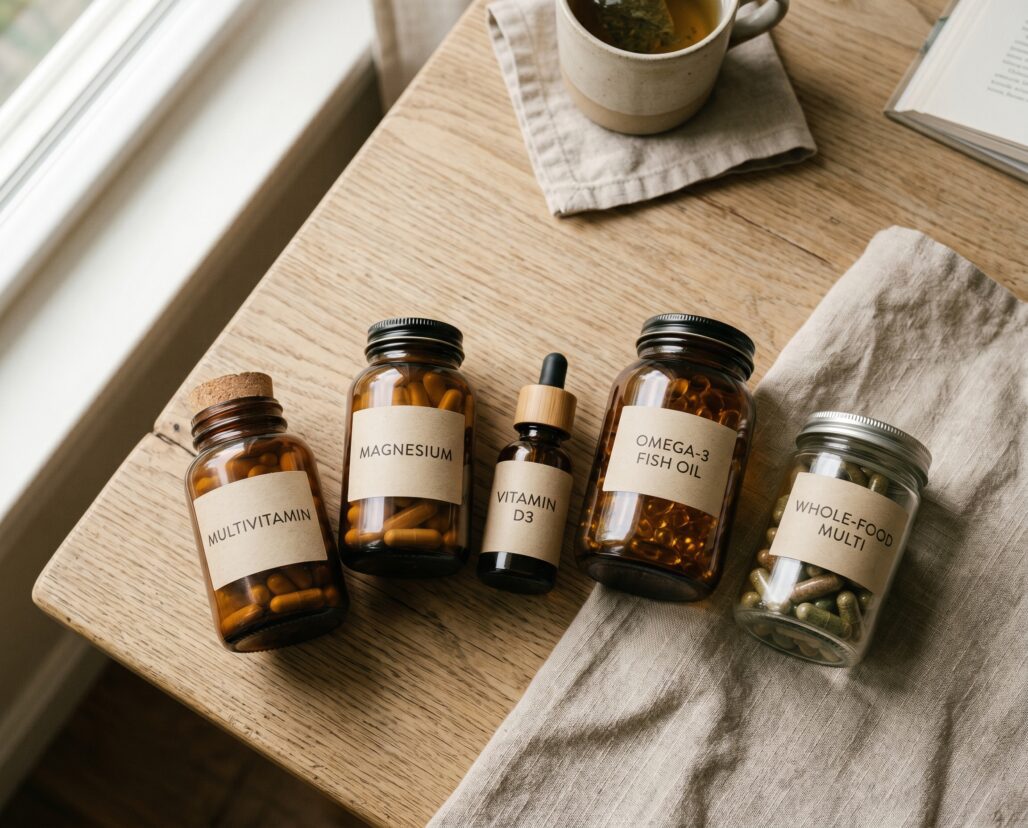
If you searched for Care/of vitamins and found only dead links, you are in a larger crowd than you might expect. Care/of shut down customer-facing operations on June 17, 2024. No new orders, no fulfilled subscriptions, no refills on whatever personalized pack you had running. The short answer is: the brand is gone, and Amazon is the fastest place to rebuild what Care/of was doing for you. This guide will walk you through eight Amazon products that cover the same goal-targeted stack logic Care/of sold, how to assemble them by outcome rather than by label, and which "personalized vitamin" subscription services trying to fill the Care/of vacuum are worth skipping.
Affiliate disclosure: this article contains affiliate links. As an Amazon Associate, UsefulVitamins.com earns from qualifying purchases at no extra cost to you.
Why people are searching for Care/of alternatives
Care/of launched in 2016 with a smart premise: answer a quiz, receive individually pouched daily supplement packs tailored to your goals. Bayer acquired the brand in 2020. By 2023 the product line had contracted, the app had stalled, and in mid-2024 the company sent shutdown notices to remaining subscribers. The closure was reported by TechCrunch and covered by NutraIngredients-USA in June 2024 as part of a broader DTC wellness consolidation trend.
The practical problem this leaves: Care/of's typical stack ran $35-45 per month depending on the number of packs. If you were getting four to six supplements in coordinated daily pouches for that price, rebuilding an equivalent set on Amazon costs $18-25 per month. That is roughly a 2x premium Care/of charged even before the closure. The goal-targeting logic, though, is what people miss most. Care/of told you why each thing was in your packet. This guide rebuilds that logic by outcome.
If you have unfilled subscription credits from Care/of's final billing cycle, Bayer customer support is the contact point. We have stopped receiving updates on the closure status.

How we picked these eight products
We mapped Care/of's six most common goal categories (foundational nutrition, sleep and stress, immune support, digestion, energy, and women's hormonal health) against Amazon's catalog using three filters: form bioavailability (not just the ingredient but the specific compound), third-party testing status (NSF, USP, Informed Sport, or Informed Choice certification where available), and cost-per-effective-dose at current Amazon pricing. A "stack" in this context means four to seven supplements that together target a set of specific outcomes, not one product trying to cover everything at once.
The real question here is not "what is the most popular vitamin brand on Amazon." It is "what set of products gives you Care/of's goal-targeted logic at a defensible price." Those are different questions and they lead to different answers.
At-a-glance comparison
| Product | Primary Goal | Form | Cost/Day (est.) | Third-Party Verified |
|---|---|---|---|---|
| Thorne Basic Nutrients 2/Day | Foundational multi | Mixed: methylated Bs, chelated minerals | ~$0.67 | NSF Certified for Sport |
| Pure Encapsulations O.N.E. | Premium foundational | Methylated Bs, selenomethionine | ~$0.83 | Informed Ingredient |
| Naturelo Whole Food Multivitamin | Whole-food multi | Food-derived vitamins, fermented minerals | ~$0.60 | Non-GMO Verified |
| Garden of Life Vitamin Code Women | Women's goals | Food-created, live cultures included | ~$0.70 | Non-GMO, Kosher |
| NOW Foods Vitamin D3 5,000 IU | Immune support | Cholecalciferol (D3) in soy oil base | ~$0.05 | GMP certified |
| Thorne Magnesium Bisglycinate | Sleep / Stress | Magnesium bisglycinate (TRAACS chelate) | ~$0.47 | NSF Certified for Sport |
| Doctor's Best Magnesium Glycinate | Sleep / Stress (budget) | Magnesium glycinate (Albion TRAACS) | ~$0.18 | Non-GMO Verified |
| NOW Foods Omega-3 Fish Oil | Digestion / Inflammation | EPA + DHA from purified fish oil | ~$0.10 | IGEN Non-GMO tested |
Product picks
Top Pick (foundational multi): Thorne Basic Nutrients 2/Day
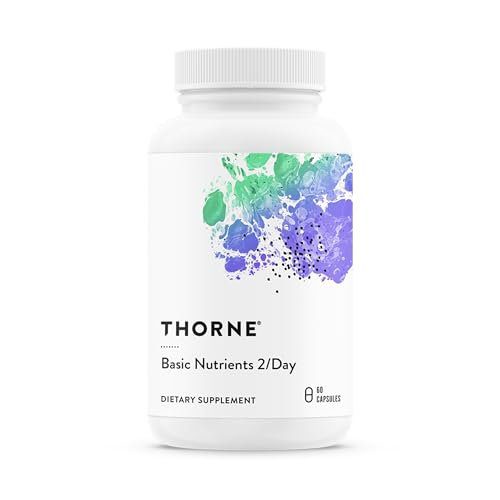
Why we picked it. Thorne Basic Nutrients 2/Day is one of the few mass-market multivitamins where the ingredient form list holds up to scrutiny: methylfolate instead of folic acid, methylcobalamin instead of cyanocobalamin, chelated minerals using Albion TRAACS bonding. For the roughly 40% of people with MTHFR gene variants who have impaired folate metabolism, the methylated B form is a meaningful difference, not a marketing distinction. NSF Certified for Sport means every production lot is tested for label accuracy and banned substances.
Form and dose. Two capsules deliver 100% or near-100% of RDA for most vitamins and minerals without the mega-dose B-vitamin pattern you see on grocery-store multis (no 8,333% RDA B12). Fat-soluble vitamins A, D, and K are dosed below the Upper Tolerable Intake limit.
The trade-off. At roughly $0.67 per day, Thorne 2/Day costs more than a pharmacy-brand multi. You are paying for form quality and NSF certification, not for clinical superiority over any specific health outcome. If you are healthy, not pregnant, and eating a varied diet, a cheaper multi may cover the gap.
Skip if. You want a single capsule per day (this requires two), or if your Care/of pack included a separate prenatal formula (switch to a prenatal-specific product instead).
Actionable takeaway: Thorne Basic Nutrients 2/Day is the closest single-product match to what Care/of was assembling as the "base" of most personalized packs. Start here, then layer by goal.
Sleep / Stress: Thorne Magnesium Bisglycinate

Why we picked it. Magnesium bisglycinate (also called glycinate) has approximately 85% bioavailability vs around 4% for the magnesium oxide you'll find in most drugstore products. Thorne uses TRAACS chelation, which binds the magnesium to glycine for absorption at the intestinal mucosa rather than relying on passive diffusion. For sleep quality and stress response, magnesium glycinate has more human trial data than any other supplemental magnesium form.
Form and dose. Each serving provides 200 mg elemental magnesium as bisglycinate. Note this distinction: many labels list 1,000 mg of compound mass which contains much less elemental mineral. Check the "elemental magnesium" figure, not the compound weight.
The trade-off. Thorne's version runs about $0.47 per day. Doctor's Best Magnesium Glycinate (below) uses the same Albion TRAACS chelate at about $0.18 per day. The cost difference buys you Thorne's NSF certification and slightly tighter lot control, not a different molecule.
Skip if. Budget matters more than certification traceability. In that case, Doctor's Best is the same compound at less than half the price.
Sleep / Stress (budget pick): Doctor's Best Magnesium Glycinate
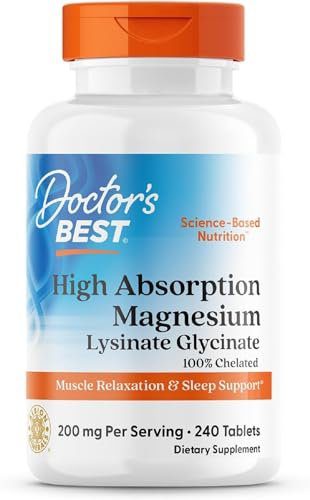
Why we picked it. Same Albion TRAACS glycinate complex as Thorne, same elemental dose per capsule, one-third the price. For a mineral with a well-established absorption mechanism, the generic argument is strong here. If Care/of recommended magnesium for your "stress" or "sleep" goal, this covers the outcome without the certification premium.
Form and dose. 100 mg elemental magnesium per two capsules. Scale to 200-400 mg elemental depending on dietary intake.
The trade-off. Non-GMO Verified but not NSF certified. If you are a competitive athlete subject to testing, use Thorne instead.
Skip if. You have kidney disease or take certain blood pressure medications; magnesium supplementation has interactions at those conditions. This note applies to all forms.
Immune support: NOW Foods Vitamin D3 5,000 IU
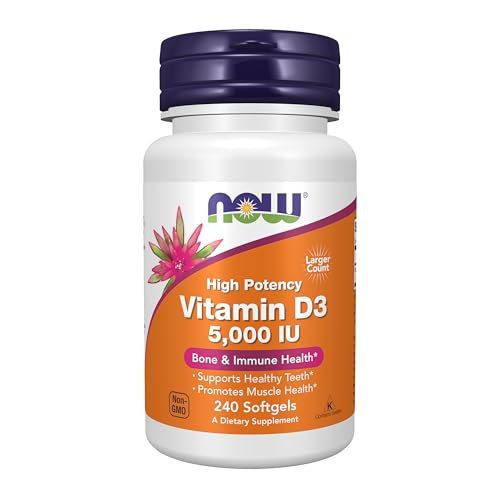
Why we picked it. Vitamin D3 (cholecalciferol) is one of the most replicated immune-function nutrients in the human trial literature, and deficiency is widespread at northern latitudes. Care/of frequently included D3 in immune-targeted packs. NOW Foods D3 at 5,000 IU in a softgel with soy oil carrier (fat-soluble, needs a fat vehicle for absorption) is about $0.05 per day. There is no meaningful quality difference between this and a $30 "premium" D3 product.
Form and dose. 5,000 IU cholecalciferol per softgel. Note: the fat-soluble accumulation risk is real at this dose. If you are already getting 1,000-2,000 IU from your multivitamin, 5,000 IU additional may push toward the Upper Limit over time. Get a baseline serum 25(OH)D test before defaulting to 5,000 IU daily.
The trade-off. NOW is GMP certified but not NSF or USP certified at the lot level. At $0.05/day the price risk of buying a third-party verified version is low enough that you could substitute Thorne's D3/K2 product if certification matters to you.
Skip if. You already take a multivitamin with 2,000+ IU D3 and spend significant time outdoors.
Actionable takeaway: D3 is the one supplement where the generic argument is almost completely airtight. '#1 best-seller on Amazon' here is fine evidence — because the active molecule is just cholecalciferol and the cost difference between premium and commodity is $0.40/day with no corresponding quality gap for a healthy adult.
Digestion / Inflammation: NOW Foods Omega-3 Fish Oil

Why we picked it. Care/of's omega-3 pack was a commodity product at a non-commodity price. NOW Foods Omega-3 is IGEN Non-GMO tested and uses a standard triglyceride form. For digestive support and inflammation management, the EPA and DHA dose matters; the brand name does not. Each serving delivers 1,000 mg fish oil, typically 180 mg EPA + 120 mg DHA per softgel (check current label as formulations can vary).
Form and dose. Triglyceride-form fish oil. The enteric-coated version reduces fishy aftertaste if that is an issue. Fish burp is real and worth planning around.
The trade-off. If you have a specific cardiovascular indication and your physician recommended prescription-level omega-3 (4g EPA/day, as in Vascepa), this OTC dose is not equivalent. Supplemental omega-3 at 1-2g EPA+DHA is a general health dose, not a clinical intervention.
Skip if. You eat oily fish (salmon, sardines, mackerel) three or more times per week. Dietary EPA/DHA from fatty fish is bioequivalent and likely better absorbed than supplement form.
Premium foundational: Pure Encapsulations O.N.E. Multivitamin

Why we picked it. Pure Encapsulations is one of the few brands that discloses chelation supplier and sources methylated B forms as standard across the line. O.N.E. (One-per-day Nutrients Essential) is the brand's flagship convenience format: one capsule, methylated Bs, selenomethionine (the most bioavailable selenium form), mixed tocopherols for vitamin E rather than synthetic dl-alpha-tocopherol.
Form and dose. One capsule per day. Slightly lower absolute mineral doses than Thorne 2/Day because of the single-capsule constraint, which is a worthwhile trade for convenience.
The trade-off. At roughly $0.83 per day it runs more than Thorne. You are paying for the Pure Encapsulations brand's hypoallergenic formulation and independent lot testing. Whether that premium is justified depends on whether you have allergies or sensitivities that make excipient quality relevant.
Skip if. You want the highest mineral density per day. Two-capsule formats can simply hold more.
Women's stack anchor: Garden of Life Vitamin Code Women

Why we picked it. Care/of offered a women-specific pack that frequently included iron, folate, and B12 in higher concentrations, plus additional nutrients for hormonal support. Garden of Life Vitamin Code Women uses a food-created delivery matrix: vitamins and minerals cultured through a raw yeast base, with live probiotics included. Iron at 22 mg per serving, methylfolate, B12 as methylcobalamin.
Form and dose. Four capsules per day (can be split to two-and-two). The food matrix claims better tolerability for iron, which is notorious for GI irritation in synthetic supplement form. Independent data on food-matrix iron tolerability vs. chelated iron is thin, but the anecdotal reports on sensitive-stomach users are consistent.
The trade-off. Four capsules per day is a commitment. The live-culture component requires proper storage (cool, dry). If you take a separate probiotic, the additional live cultures here may be redundant.
Skip if. You are post-menopausal (iron needs drop substantially after menopause; many physicians recommend no added iron at that stage).
Whole-food multi alternative: Naturelo Whole Food Multivitamin

Why we picked it. Naturelo is a smaller brand that has built a following among people who want food-derived vitamins without the live-culture complexity of Garden of Life. Organic fruit and vegetable blend as a vitamin source base, chelated minerals, no artificial colors. For people who care about ingredient origin but not the probiotic angle.
Form and dose. Four capsules per day. Similar constraint to Garden of Life. At roughly $0.60/day it is the most cost-effective whole-food option in this set.
The trade-off. Naturelo is Non-GMO Verified but not NSF or USP certified at the lot level. For a whole-food matrix product where the ingredient complexity is high, a skeptical reader should note that third-party lot certification would be preferable.
Skip if. You prefer a simpler, synthetic-vitamin formula with more predictable dose-to-dose consistency. Thorne 2/Day is that product.
How your body actually handles an Amazon stack (the Care/of logic rebuilt)
Care/of's daily packet was solving a real logistics problem: competitive absorption between minerals means that dumping everything into one morning capsule is not actually how the chemistry works. Calcium and iron compete at the same intestinal transporter (DMT1), so a multi with both in one serving is making a compromise. Magnesium and zinc compete at similar transporters. When you build your own stack, you control the timing.
Split iron from calcium. If your stack includes an iron-containing women's multi (Garden of Life Vitamin Code Women or Naturelo with iron) and you take calcium separately, put at least two hours between them. This is not optional; it is absorption mechanics.
Pair D3 with K2 and magnesium. Vitamin D3 without K2 (menaquinone-7) raises serum calcium without directing it toward bone, which over long periods at high D3 doses raises cardiovascular questions. Most multis do not include K2. Thorne's D3/K2 combo product is the fix. Magnesium is a co-factor for vitamin D conversion in the liver and kidney; deficiency in magnesium reduces D3 efficacy. Thinking of D3 as a standalone is too simple.
Watch the B-vitamin saturation math. Water-soluble B vitamins are excreted when you exceed tissue saturation, so the 8,333% RDA B12 on grocery-store multis is mostly expensive urine. That said, B12 absorption from supplements uses a passive diffusion pathway that is dose-inefficient at low doses, which is why some practitioners prefer higher doses taken less frequently. The methylcobalamin form in Thorne and Pure Encapsulations does not change this mechanism; it changes downstream usability for MTHFR-variant carriers.
Omega-3 timing. Take fish oil with food, specifically a fat-containing meal. The fat-soluble EPA and DHA require a bile acid environment for absorption. Taking it with a plain glass of water on an empty stomach reduces uptake by a meaningful margin.
Actionable takeaway: The Care/of "one packet" convenience was a timing compromise baked in. Taking your own stack gives you the option to split timing correctly. At minimum: take iron-containing products at a different time than calcium-containing products, and take fat-soluble vitamins (A, D, E, K, omega-3) with a fat-containing meal.
Skip these
Skip: Persona Nutrition and similar "personalized" subscription services
Several companies have positioned themselves as Care/of replacements on the basis that they also offer a quiz-to-packet subscription model. Persona Nutrition is the current prominent example. The honest assessment: the quiz outputs are largely template stacks with names attached. The personalization layer is not meaningfully different from reading the ingredient recommendations on a quality brand's product page and then ordering those products on Amazon. Persona's starting price is around $30-60 per month before supplementing the base packet with add-ons, which can push totals well above Care/of's original pricing.
The subscription structure means you are locked into recurring billing on a cycle that requires action to cancel. That is a commitment, not a feature. If the "personalized" quiz output is not materially different from what you would choose by reading this guide, you are paying a convenience premium for a system that Care/of already proved is not a durable business model.
Skip: Amazon house-brand and off-label "multivitamin" products below $8
There is a category of multivitamin on Amazon in the $6-8 range per 90-count bottle using magnesium oxide, folic acid (not methylfolate), cyanocobalamin (not methylcobalamin), and no third-party certification. These are technically legal supplements. The form quality means you are absorbing less of what the label claims. If price is the only constraint, start with Doctor's Best Magnesium Glycinate for magnesium and NOW Foods D3 for vitamin D — two products where the generic argument holds — rather than a low-grade multi where it doesn't.
Building your post-Care/of stack: three configurations
| Goal Profile | Build | Estimated Monthly Cost |
|---|---|---|
| Basic foundation (everyone) | Thorne Basic Nutrients 2/Day + NOW D3 + NOW Omega-3 | ~$20/mo |
| Sleep + foundation | Thorne 2/Day + Thorne Mag Bisglycinate + NOW D3 | ~$24/mo |
| Women's full stack | Garden of Life Vitamin Code Women + Thorne Mag Bisglycinate + NOW Omega-3 | ~$22/mo |
Care/of's typical $35-45 per month stack vs. the Amazon equivalents above at $18-25 per month equals roughly a 2x premium, and that is before accounting for the fact that Care/of no longer exists to charge you anything.
Brands to consider once your stack stabilizes
For people who found value in Care/of's quiz interface but want a service that is still operating, Ritual's Essential for Women and Thorne's direct subscription are both legitimate options with transparent ingredient sourcing. Neither charges a significant convenience premium over Amazon pricing. Neither bills itself as hyper-personalized, which is the honest position. Our Ritual vs. Care/of comparison covers Ritual's stack logic in detail.
DTC context: Care/of's closure
Care/of closed on June 17, 2024. The shutdown was reported by TechCrunch and NutraIngredients-USA in mid-2024, following Bayer's acquisition of the brand in 2020 and a multi-year contraction of the product line and subscriber base. If you have unfilled subscription credits from Care/of's final billing cycle, contact Bayer customer support directly. We have stopped receiving updates on the closure status.
For a broader look at how Care/of stacked up before the shutdown, see our full Care/of review. For a head-to-head between Care/of and Amazon multivitamins, see Care/of vs. Amazon Multivitamin: Was the Premium Justified?.
Internal links
For 2026 pricing across DTC supplement subscriptions and their Amazon equivalents, see our DTC supplement pricing reference.
As an Amazon Associate, I earn from qualifying purchases. Product recommendations are based on real reviews and independent research.
Once you have picked a product, our companion app, StackMyMed, scans its label and tracks it alongside everything else you take, with timing and interaction checks built in.
Conclusion: the bottom line on building a Care/of replacement on Amazon
Care/of solved a real problem (goal-targeted supplement coordination) at a price that, in retrospect, was not defensible long-term — and Bayer's June 2024 closure confirmed that. The goal-targeting logic still applies; the $35-45 monthly subscription does not. An Amazon stack built from Thorne Basic Nutrients 2/Day, a magnesium glycinate (Thorne or Doctor's Best depending on budget), NOW D3, and NOW Omega-3 covers the same foundational outcomes at roughly $18-20 per month. Layer the Garden of Life or Naturelo women's multi on top if your goals include hormonal support or iron.
Next steps:
- Read Is Care/of Worth It? (A Post-Shutdown Review) for context on what Care/of was doing right before the closure
- Compare current DTC multivitamin options in Care/of vs. Amazon Multivitamin
- If a still-active DTC brand is your preference, see our Ritual vs. Care/of comparison for how Ritual's stack holds up as a successor
This article is for informational purposes and not medical advice. Supplements — especially combinations involving fat-soluble vitamins and minerals — can interact with medications and health conditions. Consult a licensed physician before starting any supplement, particularly if you are pregnant, nursing, taking prescription medications, or managing a chronic condition.
As an Amazon Associate, I earn from qualifying purchases. Product recommendations are based on real reviews and independent research.
Editorial independence note: UV earns affiliate commissions from Amazon and (selectively) from DTC brand affiliate programs. Commissions never determine our recommendations — top picks are chosen first; affiliate links are added second. Read our full methodology and editorial independence policy →
Frequently asked questions
Is Care/of still in business?
No. Care/of stopped customer-facing operations on June 17, 2024 – no new orders, subscriptions, or refills. Bayer, which acquired the brand in 2020, is the contact point for any unfilled subscription credits.
What is the best Amazon replacement for Care/of?
Thorne Basic Nutrients 2/Day is the closest single-product match – an NSF Certified for Sport multivitamin with methylated B vitamins and chelated minerals. To recreate Care/of’s full goal-targeted logic, add omega-3, vitamin D3, and magnesium.
How much cheaper is rebuilding on Amazon?
Care/of’s typical stack ran $35-45 per month. An equivalent Amazon set costs roughly $18-25 per month, about half the price, with third-party-tested options Care/of never offered.
