
If you're searching "lions mane vs bacopa," you've already narrowed the field sensibly: both are among the most evidence-backed cognitive adaptogens available without a prescription, and the honest short answer is that they work through different mechanisms for overlapping but not identical goals. This article breaks down what each one actually does in the brain, which RCTs moved the needle, how long each takes to work, and where their interaction profiles diverge. You'll also get a plain-language decision framework so you can choose the one that fits your specific situation rather than buying both and hoping for the best.
Affiliate disclosure: this article contains affiliate links. As an Amazon Associate, UsefulVitamins.com earns from qualifying purchases at no extra cost to you.
Summary: quick answer on lion's mane vs bacopa
Lion's mane (Hericium erinaceus) is the stronger pick for neurological repair and early cognitive decline. Bacopa monnieri is the stronger pick for episodic memory consolidation and anxiety-adjacent stress.
Best for lion's mane:
- Adults with mild cognitive impairment or early memory concerns
- Neuroprotection focus (NGF support, remyelination potential)
- People who prefer a mushroom-based, non-Ayurvedic supplement
Best for bacopa:
- Adults whose main goal is faster recall and reduced forgetfulness
- Students or knowledge workers under sustained cognitive load
- Anyone already using an Ayurvedic protocol and looking to extend it
Not ideal for lion's mane:
- Anyone expecting fast results in under four weeks
- People with bleeding disorders or pre-operative contexts (minor antiplatelet signals in animal data)
Not ideal for bacopa:
- Anyone on thyroid medication, sedatives, or cholinergic drugs (see interactions section)
- People who can't commit to 8-plus weeks of consistent use
- Those prone to GI sensitivity without food pairing
Decision shortcut: If memory retrieval speed is your main complaint and you're otherwise healthy, start with bacopa. If your concern is long-term brain health, neurodegeneration risk, or slow cognitive decline, lion's mane has a clearer mechanistic rationale.
What you'll find in this guide
- How each supplement works in the brain
- What the RCT evidence actually shows
- Dosing: what clinical trials used
- Time to effect: setting realistic expectations
- Side effects and drug interactions
- Which product form to choose
- Frequently asked questions
- Conclusion: the bottom line on lion's mane vs bacopa
How each supplement works in the brain
Lion's mane: the nerve growth factor angle
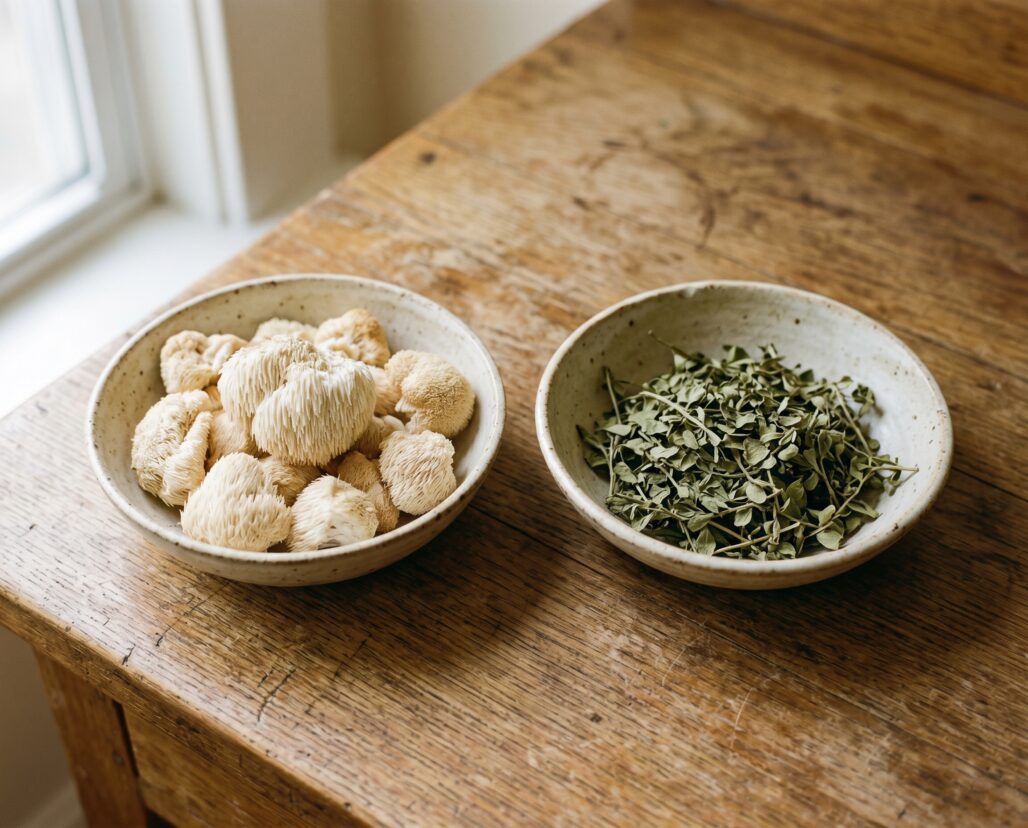
Lion's mane (Hericium erinaceus) is a culinary and medicinal mushroom, not a root or leaf extract. Its active compounds are hericenones (found in the fruiting body) and erinacines (found in the mycelium), both of which have been shown in cell and animal studies to stimulate the synthesis of nerve growth factor (NGF). NGF is a protein that supports the survival and maintenance of neurons, including cholinergic neurons in the basal forebrain that are specifically implicated in Alzheimer's disease pathology.
The real question isn't whether lion's mane drives NGF synthesis in a petri dish; it clearly does. The question is whether that effect translates to measurable human cognitive improvement at oral doses. That's where the evidence gets more limited but still meaningful. Think of lion's mane's mechanism like fertilizer for an existing plant, not a transplant. You're supporting what's already there, not regrowing neurons from scratch.
For a deeper look at the full spectrum of lion's mane evidence and product quality, see the Lion's Mane Mushroom: A Complete Evidence Guide for 2026.
Bacopa: the synaptic density route
Bacopa monnieri (Brahmi) is a creeping herb used historically in Ayurvedic medicine. Its primary active compounds are bacosides A and B, which appear to work through multiple pathways: promoting dendrite branching (increasing synaptic density), modulating acetylcholine levels, reducing oxidative stress in the hippocampus, and potentially modulating serotonin and dopamine. In Ayurveda, bacopa has been used for centuries as a medhya rasayana (brain-supporting tonic). Modern RCT evidence for those traditional memory claims is meaningful, though mostly confined to specific populations.
Unlike lion's mane's NGF mechanism, bacopa's action is more directly cholinergic, which matters practically: it also means its interaction profile with cholinergic drugs is a real concern (covered below).
| Question | Lion's mane | Bacopa |
|---|---|---|
| Primary mechanism | NGF stimulation, neuroprotection | Synaptic density, cholinergic modulation |
| Active compounds | Hericenones, erinacines | Bacosides A and B |
| Traditional origin | TCM culinary mushroom | Ayurvedic rasayana |
| Main proposed benefit | Structural brain support | Memory consolidation, recall |
| Time to effect | 8-16 weeks | 8-12 weeks |
What the RCT evidence actually shows
Lion's mane RCT evidence
The most-cited human trial is a 2009 double-blind, placebo-controlled RCT (Mori et al., n=30, PMID 18844328) in Japanese adults aged 50-80 with mild cognitive impairment. Participants took 1,000mg of Yamabushitake (H. erinaceus fruiting body) three times daily (3g/day total) for 16 weeks. Cognitive scores on the Revised Hasegawa Dementia Scale improved significantly in the lion's mane group versus placebo at weeks 8, 12, and 16. After the 4-week washout period, scores declined, suggesting the effect was tied to active supplementation rather than a permanent structural change.
This is a genuinely important data point, but equally important caveats apply. The sample was small (n=30), the population was already cognitively impaired, and there has been limited independent replication at the same dose in healthy adults. A 2010 follow-up by the same research group (Nagano et al., n=30, PMID 20834180) looked at a different population, perimenopausal women, using the powdered fruiting body at 2g/day for four weeks, and found reductions in anxiety and depression scores but did not specifically test memory.
Actionable takeaway: The lion's mane MCI evidence is real, but "proven to reduce cognitive decline in a small Japanese elderly trial" and "proven to sharpen memory in healthy 35-year-old knowledge workers" are two different claims. The first is supported. The second is an extrapolation.
Bacopa RCT evidence
Bacopa has a deeper bench of human RCTs in the memory-outcome literature. A 2001 double-blind RCT (Stough et al., PMID 11498727) enrolled 46 healthy adults and compared Bacopa extract (300mg/day of Keenmind) against placebo over 12 weeks. The bacopa group showed significantly faster visual information processing and improved scores on the Rey Auditory Verbal Learning Test (AVLT), a standard episodic memory measure, though effects were only apparent at the 12-week mark.
A 2008 randomized, double-blind trial by Stough and colleagues (Stough et al., PMID 18683852) extended the work with 107 healthy participants, using 300mg/day of Bacopa monnieri extract. After 90 days, the bacopa group showed significantly improved Spatial Working Memory and Stroop task performance compared to placebo. A separate 2008 randomized trial (Calabrese et al., PMID 18611150) enrolled 54 older adults (65 and above) and found improvements in memory acquisition and delayed recall after 12 weeks at 300mg/day.
The real question isn't whether bacopa works in lab conditions; it clearly did in multiple controlled trials across different populations. The question is standardization: most bacopa RCTs used extracts standardized to 55% bacosides. Bacopa powders and raw-herb capsules without a stated bacoside percentage tell you almost nothing.
Standardized to 55% bacosides is meaningful. "Bacopa root powder" on a label alone tells you nothing.
Actionable takeaway: Bacopa's memory evidence is more extensive and more consistently replicated than lion's mane's, particularly for episodic recall in both younger healthy adults and older populations.
Dosing: what clinical trials used
What lion's mane trials used
In the Mori 2009 MCI trial, participants took 3g/day of H. erinaceus fruiting body powder divided into three doses (three 1,000mg tablets). This is a relatively high dose by current commercial standards, and the extract was a simple dried fruiting body, not a concentrated polysaccharide extract. Many commercial products use 500-1,000mg per capsule of a 4:1 or 8:1 extract, which complicates direct dose comparison with the trial.
Look for products made from fruiting body, not mycelium grown on grain, and standardized to at least 25-30% beta-glucans. A label that says "lion's mane mycelium" without disclosing beta-glucan content is likely mycelium-on-grain filler with minimal active compound.
What bacopa trials used
The three key trials cited above all used approximately 300mg/day of a Bacopa extract standardized to 55% bacosides. The Calabrese 2008 elderly trial and the Stough 2008 healthy-adult trial both converged on that dose and duration (12 weeks minimum). Some products on the market use 150mg/day, which falls below the RCT dose range and has less supporting evidence.
Take bacopa with food. Several participants in early trials dropped out due to GI discomfort (nausea, loose stools), and fat-soluble uptake is improved when taken alongside a meal.
Time to effect: setting realistic expectations
This is where many buyers get disappointed with both supplements.
In the Mori 2009 lion's mane trial, statistically significant cognitive score improvements first appeared at week 8, with the strongest improvement at week 16. The washout analysis showed scores returning toward baseline after stopping, suggesting no permanent structural benefit at that dose and duration.
In the Stough 2001 bacopa trial, effects on word recall were absent at 5 weeks and only emerged at 12 weeks. The 2008 trial similarly required 90 days before working memory improvements became measurable. "I tried bacopa for two weeks and felt nothing" is an expected finding, not evidence that it doesn't work.
| Measure | Lion's mane | Bacopa |
|---|---|---|
| First measurable effect | 8 weeks (MCI population) | 8-12 weeks (healthy adults) |
| Peak effect observed | 16 weeks | 12 weeks |
| Effect retained post-stop | No (Mori 2009 washout) | Not well studied |
| Dose consistency required | Yes | Yes |
Side effects and drug interactions
Lion's mane side effects and interactions
In the Mori 2009 trial, no serious adverse events were reported. Occasional GI discomfort has been noted in case reports. Lion's mane has also been associated with rare allergic reactions in individuals with mushroom allergies.
Drug interactions for lion's mane are minor compared to many adaptogens. Animal studies have shown some antiplatelet (blood-thinning) activity, but human interaction data are limited. Per the NCCIH herbal and dietary supplement database, lion's mane does not have confirmed major drug interactions at typical supplement doses, though the data are limited by the small body of human research.
Anyone scheduled for surgery should stop lion's mane at least two weeks prior, given the theoretical antiplatelet signal. People with mushroom allergies should avoid it entirely.
Pregnancy and breastfeeding safety data are absent. Avoid during pregnancy without physician guidance.
Bacopa side effects and interactions
Bacopa has a more defined interaction profile. The cholinergic mechanism that makes it useful for memory is also the mechanism that creates real drug interaction risk.
Bacopa drug interactions (specific):
Per the Memorial Sloan Kettering integrative medicine herbs database and NCCIH-aligned pharmacology reviews:
- Thyroid medications: Bacopa has been associated with changes in thyroid hormone levels in animal studies, including effects on T4 and T3 conversion. Anyone taking levothyroxine, methimazole, or other thyroid medications should consult their prescriber before starting bacopa, as the combination may affect thyroid function tests.
- Cholinergic and anticholinergic drugs: Bacopa's mechanism boosts acetylcholine activity. Combining it with acetylcholinesterase inhibitors (donepezil, rivastigmine, galantamine) used in Alzheimer's treatment could result in additive cholinergic effects. Conversely, pairing bacopa with anticholinergic drugs (some antihistamines, bladder medications, certain antidepressants) may blunt bacopa's effect or complicate the drug's intended mechanism.
- Sedatives and benzodiazepines: Bacopa has been shown in animal models to enhance sedation when combined with phenobarbital and other CNS depressants. Human data are limited, but caution is warranted if you take benzodiazepines, prescription sleep aids, or other sedating medications.
- Calcium channel blockers: Some in-vitro evidence suggests bacopa may affect calcium channel activity, which is the mechanism of drugs like amlodipine and verapamil. Human data remain limited.
This interaction profile is one reason bacopa is not simply "an herbal memory supplement anyone can take." It's a biologically active compound with real pharmacological interactions.
GI side effects (nausea, cramping, loose stools) were the most common adverse events in clinical trials, typically resolved by taking with food. The washout period after GI symptoms resolved is usually short.
Pregnancy safety data are insufficient. Do not use during pregnancy.
| Interaction concern | Lion's mane | Bacopa |
|---|---|---|
| Thyroid medications | Not established | Possible (monitor T4/T3) |
| Anticholinergic drugs | None established | Potential conflict |
| Cholinesterase inhibitors | None established | Additive effect risk |
| Sedatives / benzodiazepines | None established | Possible additive sedation |
| Antiplatelet / blood thinners | Theoretical (animal data) | Not established |
| Mushroom allergy | Avoid | N/A |
Which product form to choose
For lion's mane: fruiting body beats mycelium-on-grain
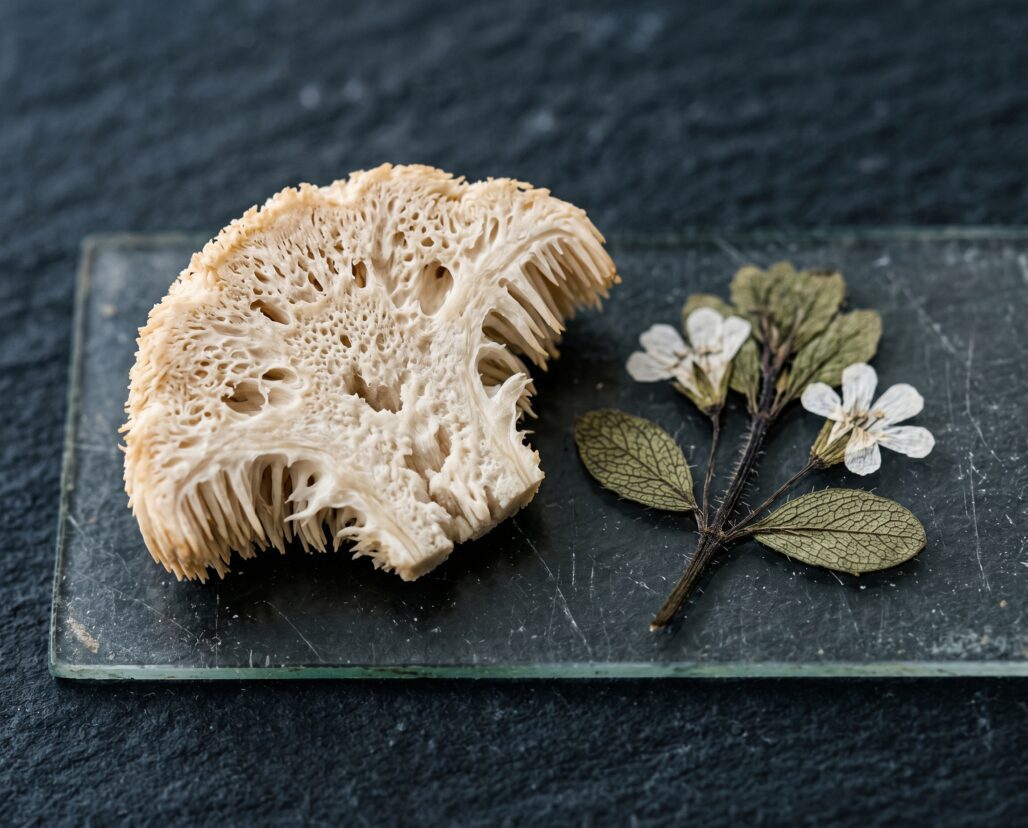
The lion's mane evidence base comes entirely from fruiting body preparations. Most of the low-cost lion's mane supplements use mycelium grown on grain, which contains primarily the grain substrate rather than the active hericenones and beta-glucans.
A brand can have impressive marketing and still miss third-party testing for the active marker compound. Look for fruiting body specified on the label, beta-glucan content stated (25%+ is a reasonable floor), and third-party testing results available (Real Mushrooms and Nammex publish these).
For a side-by-side breakdown of fruiting body vs mycelium-on-grain products, see Lion's Mane Fruiting Body vs Mycelium: Which Actually Works?.
For bacopa: standardized extract required
Standardized to 55% bacosides is the trial-validated specification. Raw powder, teas, and non-standardized capsules may have wildly varying bacoside content. Without knowing the bacoside percentage, you have no basis to compare your dose to the clinical trial doses.
Frequently asked questions
Can I take lion's mane and bacopa together?
No direct human RCT has tested the combination. There is no obvious mechanistic reason why lion's mane (NGF-focused) and bacopa (cholinergic modulation) would cause harm when combined. The more practical question is whether you want to start both simultaneously, since you won't know which one is driving any effect you observe, positive or negative. Starting one, completing 8-12 weeks, then adding the other gives you cleaner signal.
Which is better for memory: lion's mane or bacopa?
For episodic memory (recalling specific information, faster verbal recall), bacopa has more directly supporting RCT evidence across multiple trials and populations. Lion's mane's human evidence for memory improvement is mostly from a cognitively impaired elderly population. If memory recall is your primary goal and you're a healthy adult, bacopa has a stronger case.
How long do I need to take either one before deciding if it works?
Plan for 12 weeks of consistent, daily dosing at the clinical trial dose before making an efficacy judgment. Both supplements showed no measurable effect at four to six weeks in their respective trials. Stopping at four weeks because "nothing happened" does not give the compound a fair test.
Can I take lion's mane before surgery?
Stop lion's mane at least two weeks before any scheduled surgical procedure. The theoretical antiplatelet signal from animal studies is enough reason for precaution, even though the human evidence for bleeding risk is not established.
Does bacopa affect thyroid labs?
Animal data suggest it can affect T4 and T3 levels. If you take any thyroid medication or have a diagnosed thyroid condition, get a baseline thyroid panel before starting bacopa, and discuss the addition with your prescriber. Thyroid sensitivity is not a reason for everyone to avoid bacopa, but it's a reason to monitor it in anyone with a thyroid history.
As an Amazon Associate, I earn from qualifying purchases. Product recommendations are based on real reviews and independent research.
Related reading
- Lion's Mane Mushroom: A Complete Evidence Guide for 2026
- Lion's Mane for Focus: What the Research Actually Shows
- Lion's Mane and ADHD: Separating Signal from Wishful Thinking
- Lion's Mane Fruiting Body vs Mycelium: Which Actually Works?
Conclusion: the bottom line on lion's mane vs bacopa
These two supplements reach cognitive outcomes through different routes, and that distinction matters for choosing between them.
Bacopa has the more consistent human RCT record for episodic memory and recall, particularly the Stough 2001, Stough 2008, and Calabrese 2008 trials showing measurable improvements at 300mg/day of standardized extract after 12 weeks. Its interaction profile with thyroid medications, sedatives, and cholinergic drugs is real and specific, meaning it's not a casual supplement for anyone on those medications.
Lion's mane has meaningful preliminary human evidence in a cognitively impaired elderly population (Mori 2009) and a plausible NGF-mediated mechanism, but it is more appropriate to think of it as a neuroprotective supplement than a memory sharpener. Its interaction profile is minimal, which makes it more accessible to people on medications who can't use bacopa.
Next steps:
- If bacopa fits your profile, start with a 300mg standardized (55% bacosides) product taken with food. Commit to 12 weeks.
- If lion's mane fits better, prioritize fruiting body products with disclosed beta-glucan content. Expect 8-16 weeks for effect.
- If you're on any thyroid medication, sedative, or cholinergic drug, discuss bacopa with your prescriber before starting.
- For a full picture of lion's mane product quality and evidence, see the Lion's Mane Mushroom: A Complete Evidence Guide for 2026.
This article is for informational purposes and not medical advice. Herbal adaptogens, including lion's mane and bacopa, can interact with thyroid medication, cholinergic drugs, sedatives, anticoagulants, and other prescription medications. Bacopa in particular has a documented interaction profile with thyroid hormone medications and cholinesterase inhibitors. Consult a licensed physician before starting either supplement if you are pregnant, nursing, taking prescription medications, or managing a chronic condition.
As an Amazon Associate, I earn from qualifying purchases. Product recommendations are based on real reviews and independent research.
This article is for informational purposes and not medical advice. Herbal adaptogens, even traditional ones, can interact with thyroid medication, antidepressants, anticoagulants, immunosuppressants, blood-pressure drugs, and more. Consult a licensed physician before starting any adaptogen, particularly if you are pregnant, nursing, taking prescription medications, or managing a chronic condition.
