
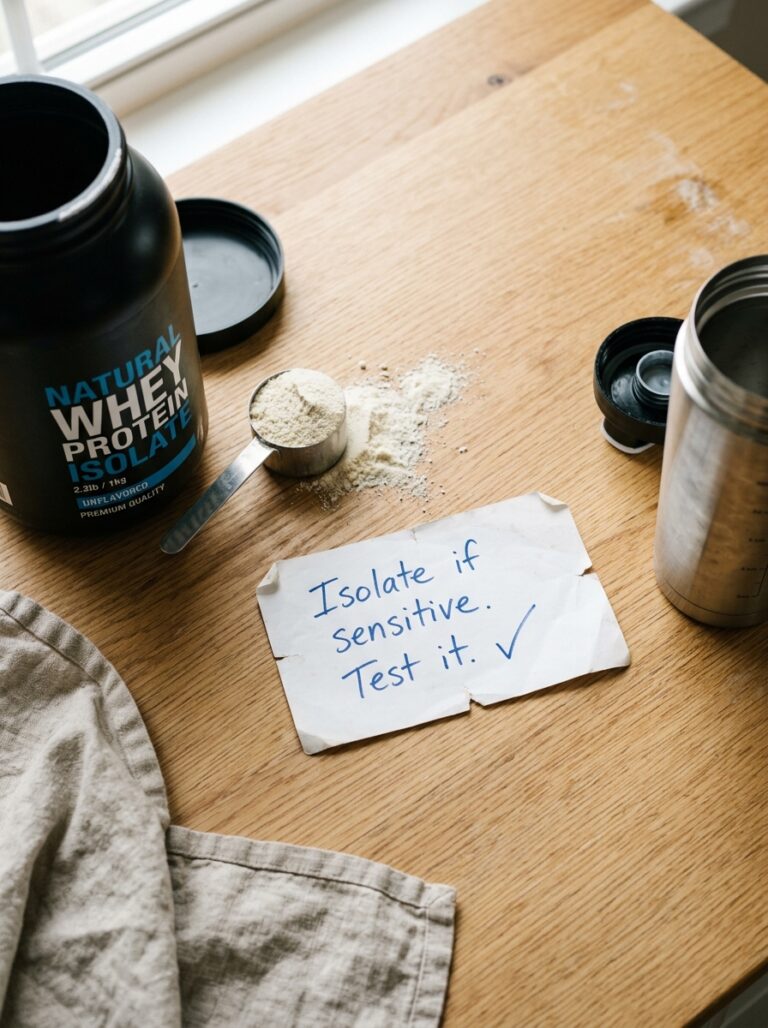
Stand in front of the whey shelf and the choice looks like a quality ladder: concentrate at the bottom, isolate above it, hydrolysate at the top, each one more expensive and presumably better. That ladder is mostly marketing. For a healthy adult, the protein your muscles see from a good concentrate and a good isolate is nearly identical.
This guide sorts the real differences from the upsell so you can buy on the two things that actually matter — your gut and your wallet — instead of the label tier. The three picks at the bottom are the tubs I'd keep in my own family's kitchen, including the one my lactose-touchy husband actually tolerates.
Affiliate disclosure: this article contains affiliate links. As an Amazon Associate, UsefulVitamins.com earns from qualifying purchases at no extra cost to you.
Before you decide
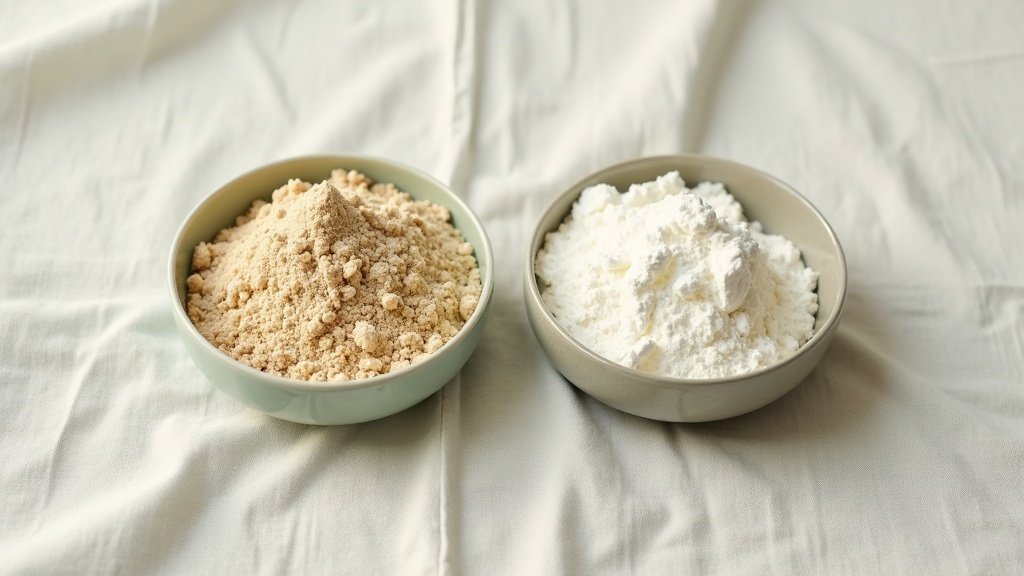
A protein powder is a convenience food, not a requirement. If you eat broadly and hit your protein target from meals, you may not need whey at all. The NIH Office of Dietary Supplements notes that protein supplements offer no advantage over whole-food protein when total daily intake is already adequate.
The average US adult eating a mixed diet already meets or exceeds the protein RDA, so whey earns its place when you're chasing a higher target — building muscle, eating in a deficit, or struggling to chew enough food — not as a default add-on.
A few people should clear it with a clinician first. If you have chronic kidney disease, you should not load up on protein without medical guidance, because the recommended intake changes with kidney function. The same goes if you have a diagnosed milk-protein allergy, which is different from lactose intolerance and means whey is off the table entirely.
If you simply get bloated or gassy from dairy, that's lactose intolerance, and it points toward isolate rather than away from whey. Before you assume whey is the problem, it's worth asking your doctor whether the dose or the lactose is the issue, since the fix differs. You can see how I weigh evidence and conflicts of interest on the how we review supplements page.
Isolate vs concentrate vs hydrolysate
The three forms come from the same liquid whey; they differ in how much filtering happens after. More filtering means higher protein purity, less lactose and fat, and a higher price — but not a meaningfully better muscle response for a healthy person.
| Form | Protein by weight | Lactose | Best for |
|---|---|---|---|
| Concentrate (WPC) | About 70 to 80% | Some, up to ~5% | Most people; best cost per gram |
| Isolate (WPI) | 90% or higher | Very little | Lactose-sensitive; cutting; leanest scoop |
| Hydrolysate (WPH) | 90% or higher, pre-digested | Very little | Niche; fastest absorption, highest price |
A compositional analysis of whey concentrates confirms the spread: concentrate runs roughly 70 to 80% protein with residual lactose and fat, while isolate is processed further to 90%-plus protein with most of the lactose removed. That lactose gap is the single real, everyday difference between the two for a healthy adult.
Hydrolysate is whey that's been partially broken into smaller peptides — "pre-digested" — so it absorbs faster. But a study on degree of hydrolysis found that how much the whey was hydrolyzed didn't change the rate amino acids actually showed up in the blood. For most people, hydrolysate is paying a premium for a difference you won't feel.
What the research shows
Whey is the reference protein for muscle for a reason. It's fast-digesting and unusually rich in leucine, the amino acid that flips the switch on muscle protein synthesis.
On the standard quality scores, a review of animal- and plant-protein DIAAS values puts whey near the top, with a digestible indispensable amino acid score around 1.0 or above — the bracket reserved for the highest-quality proteins. That score reflects the amino acid profile of the whey itself, which concentrate and isolate share because they start from the same milk.
The leucine angle is where the isolate-vs-concentrate question quietly resolves. A systematic review of the leucine trigger hypothesis describes a per-meal threshold — on the order of a few grams of leucine — that a roughly 20 to 30 gram whey dose comfortably clears. A standard scoop of either form delivers enough leucine to max out the per-meal signal, so the extra purity of isolate doesn't buy extra muscle.
That's backed by head-to-head training data. A review of protein quality and resistance training found that once total daily protein is adequate, the specific source and form make little difference to muscle gains over time. The decisive variables are your total daily protein and your training, not which whey tier you bought.
The closest test of the question pools the forms directly. A meta-analysis comparing concentrate, isolate, and hydrolysate in physically active people found no significant difference between the three for building fat-free mass — the gain was statistically the same regardless of which form people took. When researchers line the tiers up against each other, the muscle outcome doesn't sort by purity.
One nuance is worth flagging because it cuts against the upsell. In that same analysis, the only body-composition signal that reached significance was a small fat-mass reduction, and it showed up in the concentrate group, not isolate. The likeliest explanation is mundane — leaner eaters reaching for a cheaper tub — but it underlines that paying more for isolate doesn't buy a leaner physique by itself.
You'll often see isolate marketed on its higher protein-per-100-grams and a slightly richer leucine figure than concentrate. That's true on the spec sheet, but it's a difference in concentration, not quality. You close the same gap simply by using a slightly larger scoop of concentrate, which is exactly what the per-gram price math rewards.
What to look for when buying

Once you accept that the form barely changes the muscle outcome, the buying decision gets simpler — and it moves to ground most articles skip. The two questions worth asking are how clean the powder is and how much protein you get per dollar.
Start with third-party testing, because protein powders are a known route for trace heavy metals from soil and processing. Clean Label Project's protein study found measurable lead or cadmium in a large share of tested powders, with plant- and chocolate-flavored products generally carrying more than whey and vanilla. Whey tended to be among the cleaner categories, but "tends to be cleaner" is not the same as "this tub is clean."
The reassuring part is dose context. A human health risk assessment in Toxicology Reports modeled typical servings and found the hazard index stayed below 1 — meaning no elevated risk at normal intake — with whey powders showing the lowest exposure of the categories tested. A 2025 Consumer Reports test of 23 powders reached the same ranking: dairy-based whey carried roughly one-ninth the lead of plant-based powders. So this isn't a reason to fear whey; it's a reason to favor a tub that carries an independent testing seal, especially if you take it daily for years.
The seal matters because "lab tested" on a label can mean almost anything. NSF Certified for Sport and Informed Sport are the two seals with teeth, because both test the actual finished product — not just a one-time submission — for heavy metals and a long list of banned substances. NSF, for instance, screens for the toxic elements lead, mercury, arsenic, cadmium, and chromium, and re-tests on a batch basis so the tub in your hand was checked, not just a sample from two years ago.
That's the gap between a real certification and marketing language. A brand can run a single clean lab result and print "lab tested" forever; a lot-by-lot seal means each production run had to pass. If you're going to take whey daily, that recurring check is the claim worth paying a small premium for — far more than the isolate-vs-concentrate tier.
Then do the math the front label hides. Divide the price by the grams of actual protein in the tub, not by the number of scoops. A 30-gram scoop that's only 21 grams of protein is a worse deal than it looks, and this is exactly where concentrate usually beats isolate.
Work a concrete example. Say a 2-pound (about 908 g) tub costs $30 and the label lists a 30-gram scoop with 24 grams of protein. That tub holds roughly 30 scoops, so 30 scoops times 24 grams is about 720 grams of protein, and $30 divided by 720 works out near 4 cents per gram of protein. That single number — cents per gram of protein — is the honest price; do it for two tubs and the cheaper headline price often loses.
Isolate usually lands higher on that same math. A comparable isolate might pack 27 grams of protein into the same 30-gram scoop but cost enough more per tub that its cost per gram still sits above concentrate's — you're paying for purity and lower lactose, not for cheaper protein. If your gut tolerates concentrate, that premium is money left on the table.
Skip the noise. Proprietary "anabolic blends," giant scoop sizes that pad the serving with fillers, and "grass-fed" framing are marketing, not muscle. Grass-fed whey may appeal for animal-welfare or taste reasons, but there's no good evidence it builds more muscle than standard whey.
Recommended Products


As an Amazon Associate, UsefulVitamins.com earns from qualifying purchases at no extra cost to you. We only recommend products supported by published research or third-party testing.
FAQ
Is whey isolate worth the extra money?
Usually only if concentrate bothers your stomach or you're cutting and want the leanest possible scoop. For a healthy adult who tolerates dairy, concentrate delivers the same muscle benefit for less money per gram of protein.
Will concentrate make me gassy?
It can if you're lactose-sensitive, because concentrate keeps up to about 5% lactose. Isolate strips most of that out, so switching forms — not quitting whey — is usually the fix for dairy-related bloating.
How much protein do I actually need per scoop?
Enough to clear the per-meal leucine threshold, which a roughly 20 to 30 gram whey dose does easily. Going much higher in a single serving doesn't proportionally increase muscle building for most people, so a standard scoop is plenty.
Is grass-fed or organic whey better?
Not for building muscle. The amino acid profile that drives the benefit is essentially the same. Choose grass-fed for taste or values if you like, but don't pay for it expecting a performance edge.
How do I know a powder is tested for heavy metals?
Look for an independent seal such as NSF Certified for Sport or Informed Sport on the tub, not just "lab tested" in the marketing copy. A third-party certification is the only claim a buyer can actually verify, and the strongest ones test every production batch rather than a single submitted sample.
How do I compare the real price of two protein tubs?
Ignore the price per scoop and work out the cost per gram of protein: multiply the scoops per tub by the grams of protein per scoop, then divide the tub price by that total. A higher sticker price with more protein per gram can be the cheaper tub, and concentrate usually wins this calculation against isolate.
Is concentrate's leftover lactose a problem if I tolerate dairy fine?
No. The few grams of lactose in a scoop of concentrate only matter if you're lactose-sensitive. If milk and yogurt don't bother you, concentrate's residual lactose won't either, and you get the same muscle benefit at a lower cost per gram.
The bottom line on whey protein
The isolate-versus-concentrate debate is real but small. For a healthy adult, both forms deliver high-quality, leucine-rich protein that builds muscle equally well, so the tier on the label is the least important thing about the tub.
Let your gut and your budget pick the form. If dairy bloats you or you're cutting, pay up for isolate; if it doesn't, concentrate gives you the same benefit at a lower cost per gram, and hydrolysate is a premium most people don't need.
Then spend your attention where it pays off: buy a powder with a real third-party testing seal, run the price-per-gram-of-protein math, and ignore the anabolic-blend and grass-fed marketing. Your total daily protein and your training will decide your results far more than which whey you scooped.
Reviewed by Sarah Thompson, Registered Dietitian, focused on vitamin and mineral nutrition. See more from Sarah Thompson. For the full picture on choosing a powder, see our complete guide to protein powder and our roundup of the best protein powder for muscle gain. This article is educational and is not a substitute for individualized medical advice; talk to your doctor before starting a supplement, especially if you have kidney disease, a milk allergy, or are managing a diagnosed condition. As an Amazon Associate we earn from qualifying purchases.
