
Before you decide
This article is general information, not medical advice for your situation. Ativan (lorazepam) is a prescription benzodiazepine, and how it behaves in your body depends on your dose, your other medicines, and your health. Any change belongs with the clinician who prescribed it. For the bigger picture of how supplements and prescriptions collide, our ultimate drug-supplement interactions guide is a useful starting point.
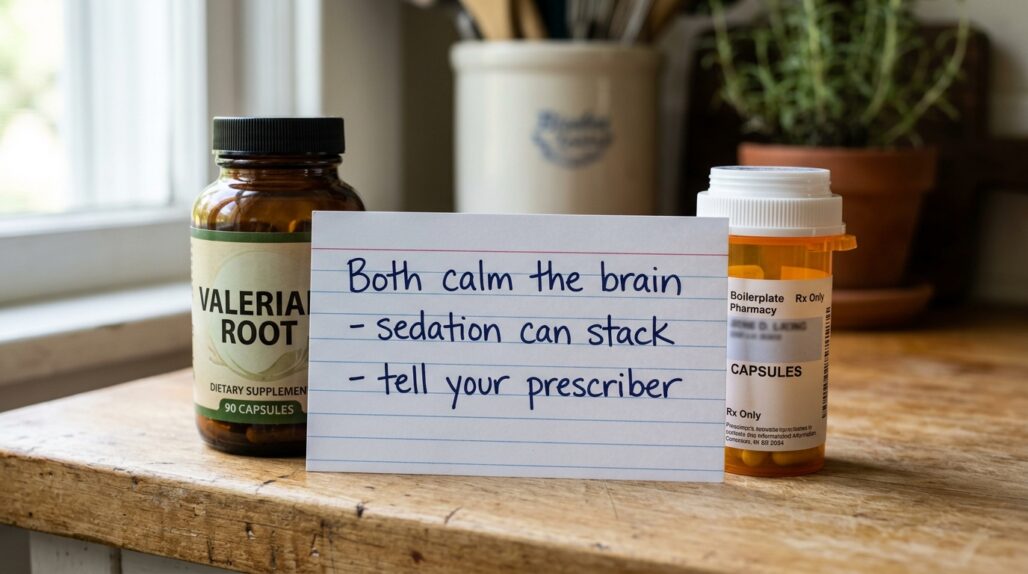
The honest summary up front: there is no good safety data on deliberately combining valerian with a benzodiazepine, and the rationale for caution is solid. Both substances push the same brake pedal in the brain, so the main concern is additive sedation rather than a dramatic chemical reaction.
Some people are far more sensitive to that overlap. Older adults, anyone with liver disease, people who drink alcohol, and those already taking other sedating drugs sit at the higher-risk end and should be the most careful. If you are layering several products, run them through our drug-supplement interaction checker before you start.
What the valerian-Ativan interaction actually is
Lorazepam works by boosting the effect of GABA, the brain's main calming neurotransmitter, at the GABA-A receptor. That is what produces its anti-anxiety and sedative effects, and it is also why benzodiazepines slow reaction time and can depress breathing at high doses, as summarized in StatPearls' benzodiazepine review.
Valerian appears to work on the same GABA system, though through different sites. According to the NIH Office of Dietary Supplements valerian fact sheet, valerenic acid and related compounds modulate GABA-A receptors and may slow the breakdown of GABA, which is the proposed basis for valerian's mild sedative reputation.
So the interaction is pharmacodynamic – two agents pulling in the same direction – not a case of one drug raising the other's blood level. The practical result is that drowsiness, slowed reflexes, and reduced alertness can add up more than either product would cause alone.
One detail matters for the rumor mill: lorazepam is cleared mainly by glucuronidation, a liver pathway that does not lean on CYP3A4. That means the classic grapefruit interaction that hits some other benzodiazepines is not a meaningful concern for lorazepam specifically. The sedation overlap is the real issue here, not metabolism.

How big is the effect, and how strong is the evidence
The candid answer is that the combination has not been studied. There are no trials measuring what happens when valerian is layered on top of lorazepam, which is exactly why authorities default to caution.
The clearest statement comes from a clinical review on EBMConsult, which notes that because both influence GABA toward CNS depression, concurrent use could be synergistic and should be avoided until safety data exist. That is a precautionary position, not proof of harm, and it is worded that way on purpose.
Valerian's own track record as a sleep aid is also modest. The AASM 2017 insomnia guideline suggests clinicians not use valerian for sleep-onset or sleep-maintenance insomnia in adults, a recommendation the panel itself graded as weak because the trials are small and inconsistent. NCCIH reaches a similar conclusion: the evidence that valerian helps sleep is mixed at best. If sleep is the real goal, our sleep supplement protocol walks through gentler options to raise with your clinician.
Put together: the benefit you might gain from adding valerian is uncertain, while the sedation you might add to a benzodiazepine is plausible. That risk-to-reward math is the heart of why this pairing deserves a conversation, not a guess.
Who is most at risk
The overlap is not equally risky for everyone. Sedation, unsteadiness, and the chance of a fall all climb with age, and benzodiazepines are flagged for older adults specifically for this reason. Adding a second calming agent only widens that margin.
The table below sums up the higher-risk situations and the practical reason each one matters.
| Risk factor | Why it raises concern | Sensible step |
|---|---|---|
| Older age | Greater sedation, unsteadiness, and fall risk with benzodiazepines | Avoid stacking sedatives; review with the prescriber first |
| Liver disease | Rare valerian-linked liver injury reported; reduced reserve overall | Do not add valerian without clinician sign-off |
| Alcohol use | Alcohol is itself a CNS depressant and compounds sedation | Avoid alcohol while taking either product |
| Other sedating meds | Opioids, sleep aids, and antihistamines add to the depressant load | List every product for a pharmacist interaction check |
| Driving or operating machinery | Slowed reaction time and next-day fog impair safe operation | Do not drive until you know how the pair affects you |
The combination of a benzodiazepine with an opioid is a separate, more serious matter that carries an FDA warning about severe sedation and slowed breathing. Valerian is not an opioid, but the point stands: when sedatives are layered, the margin for safety narrows. Keep your full list visible to your care team, and if anxiety is what you are trying to manage, our roundup of natural supplements for anxiety covers options to discuss with a professional.

What to do about timing, forms, and spacing
The cleanest move is not a timing trick – it is a conversation before you start. Bring the valerian product, in its bottle, to your prescriber or pharmacist and ask whether it is reasonable given your lorazepam dose and your other medicines.
If your clinician is comfortable with a trial, a few practical points tend to come up:
- Watch for additive drowsiness in the first days, especially the morning after, since both can leave next-day grogginess.
- Skip alcohol entirely; NCCIH specifically advises against taking valerian with alcohol or other sedatives.
- Hold off on driving or anything requiring sharp reflexes until you know your own response.
- Do not increase your lorazepam to "match" or offset valerian, and never adjust a benzodiazepine dose on your own.
Valerian product quality is a real wrinkle. The NIH ODS fact sheet notes that valerian preparations vary widely, and the active constituents are not consistent from brand to brand. That variability means two bottles labeled the same can behave differently, which makes self-stacking even harder to judge. The same lack of standardization is one of the supplement safety red flags worth knowing before you trust any sedating herb.
For dosing, valerian has been used in studies at roughly 300 to 600 mg daily for up to six weeks, per NCCIH, with long-term safety unknown. Treat that as a research range, not a personal prescription – your clinician should set anything you actually take alongside lorazepam.
A logging habit helps here. If you do trial valerian with your prescriber's awareness, jot down when you took each product and how you felt the next morning, so the pattern is visible at your next visit. A tool like StackMyMed can help you record a supplement-and-medication stack and flag overlaps to raise with a pharmacist; it organizes the conversation but does not replace clinical judgment.
When to call a clinician
Some signs deserve more than a note for later. Call your prescriber or seek urgent care if you feel unusually drowsy, confused, dizzy, or unsteady, or if someone notices you are hard to rouse or breathing slowly. Those point to too much sedation, and they matter more in older adults and anyone on other depressants.
There is also a less obvious reason to involve a clinician: stopping abruptly. A 1998 JAMA case report described delirium and cardiac symptoms after a patient suddenly stopped long-term, high-dose valerian, with a picture that resembled benzodiazepine withdrawal. It is a single case, not a common event, but it reinforces that GABA-acting products should not be started, stacked, or quit casually – especially while you are also on lorazepam.
Bottom line for this section: do not self-manage a benzodiazepine schedule around a supplement. The prescriber who knows your dose, your history, and your other medicines is the right person to make that call. If you also use a separate over-the-counter sleep aid, the additive-sedation logic in our piece on combining melatonin and Xanax applies in much the same way.

FAQ
Can I take valerian root and Ativan together? Only with your prescriber’s awareness. Both calm the brain through GABA, so the main risk is additive sedation, and there is no safety data on the combination – so clear it with a clinician or pharmacist first.
Will valerian make my Ativan stronger? Not by raising its blood level. Lorazepam is cleared by glucuronidation, not CYP3A4, so valerian is not expected to change how much lorazepam is in your system. The concern is that their drowsy effects add together.
Does grapefruit interact with Ativan like it does with some benzodiazepines? Lorazepam is not significantly metabolized by CYP3A4, so the grapefruit interaction that affects some other benzodiazepines is not a meaningful issue for lorazepam specifically. The sedation overlap with valerian is the real point.
Is valerian safer than my benzodiazepine for sleep? Not clearly. The AASM 2017 guideline suggests clinicians not use valerian for insomnia, and the evidence that it helps sleep is inconsistent. Do not swap or stop a prescribed medicine on your own.
Who should be most careful with this combination? Older adults, people with liver disease, anyone who drinks alcohol, and those on other sedating medicines such as opioids, sleep aids, or sedating antihistamines. These groups face the greatest additive-sedation risk.
Can I just stop the valerian if I feel too groggy? Talk to your clinician about how to taper rather than quitting long-term, high-dose valerian all at once. A case report linked abrupt withdrawal after long-term use to delirium and cardiac symptoms.
Conclusion: a combination to clear, not to guess
Valerian root and Ativan both act on the brain's GABA system, so taking them together can stack sedation and leave you groggier, slower, and less steady – with the highest risk in older adults, people with liver disease, and anyone using alcohol or other sedatives. There is no safety data on the pairing, and valerian's own sleep benefit is uncertain at best.
The practical next step is simple: bring the valerian bottle to your prescriber or pharmacist before adding it, avoid alcohol and driving while you assess your response, and never adjust your lorazepam on your own. If you feel unusually drowsy, confused, or unsteady, treat that as a reason to call your clinician.
This article is for general educational purposes and is not a substitute for personalized medical advice. Always consult your prescriber or pharmacist before combining any supplement with a prescription medication, and do not change a prescribed dose on your own.
Reviewed by the UsefulVitamins Editorial Team.
