
Affiliate disclosure: this article contains affiliate links. As an Amazon Associate, UsefulVitamins.com earns from qualifying purchases at no extra cost to you.
Before you buy
Transparent Labs Creatine HMB is one of the most heavily marketed creatine products you will see in fitness ads. The pitch is that adding HMB and vitamin D to creatine builds more muscle than creatine alone. That is the claim worth testing before you spend.
Here is the real decision. You are not choosing between this and a bad product. You are choosing between a clean, premium tub and a plain bag of the same creatine that costs five to ten times less per gram. The HMB is the only thing that justifies the markup, so the HMB had better earn it.
It mostly does not, at least not for healthy, training adults. The creatine is genuinely good – Creapure, third-party tested, no junk fillers. The question is whether the bundle is worth paying for, and for most lifters the honest answer is no.
This review breaks down what is inside, what the HMB research actually shows, and exactly how the cost compares to plain monohydrate.
What Transparent Labs Creatine HMB actually is
Per single scoop, you get a short, clean ingredient list. The creatine dose is the part that matters, and it is correct at 5g.
- Creatine monohydrate – 5,000mg. This is the studied, effective daily dose.
- myHMB (beta-hydroxy-beta-methylbutyrate) – 1,500mg. The leucine metabolite the product is named after.
- Vitamin D3 – 12.5mcg (500 IU). About 60 percent of the daily value.
- BioPerine black pepper extract – 5mg. An absorption agent.
The formula skips artificial sweeteners, coloring, and preservatives, and it comes in unflavored plus around 13 flavored versions. If you hate dosing plain powder, the flavor range is a real, if minor, point in its favor.
According to the official Transparent Labs product page, the brand publishes purity and ingredient-verification test results and carries an Informed Choice badge. Independent reviewers, including BarBend's teardown of the formula, confirm the creatine is Creapure, the branded German-made monohydrate. On quality, this product holds up.
So the creatine is not the problem. The HMB is.
What HMB does, and what it does not do
HMB is a compound your body makes from the amino acid leucine. The marketing frames it as an anti-catabolic muscle builder. The evidence for trained, healthy adults is much weaker than the ads suggest.
A systematic review and meta-analysis of 11 trials in young adults put it bluntly. HMB produced a tiny bump in total body mass, but that signal vanished once one low-quality study was removed. There was no significant gain in fat-free mass, no significant strength improvement, and no significant fat loss versus resistance training alone.
In plain terms, HMB did not build more muscle or make people stronger in healthy lifters who were already training. The authors described it as not an effective anabolic supplement for that group.
Where HMB shows more promise is narrower. The research is more interesting in older adults losing muscle, people in prolonged calorie deficits, or untrained beginners under heavy training stress. Some studies also report reduced markers of muscle damage after hard sessions. Those are real but limited findings, and they do not describe the average gym-goer buying this tub.
There is also newer work suggesting HMB may nudge testosterone in some adults, but those findings are early, small, and not the same as proving it builds muscle. Treat any "HMB boosts T" headline as unproven for now.
So the named ingredient does little for the person this product is mostly marketed to. That is the core of the value problem. If you want the broader picture on the base ingredient, the NIH Office of Dietary Supplements summary on exercise and athletic performance is a clear, non-commercial starting point, and creatine carries far stronger evidence than HMB.
The creatine itself is the easy part
Creatine monohydrate is one of the most studied sports supplements that exists. The ISSN position stand calls it the most effective ergogenic supplement available for high-intensity performance and lean mass during training, and it has a strong safety record at the standard dose.
The standard maintenance dose is 3g to 5g per day, which is exactly what one scoop here delivers. You can take it any time; the post-workout timing on the label is fine but not magic.
Creapure deserves a quick word, because it is a selling point. Creapure is a branded, high-purity monohydrate made by one German manufacturer, as described on the Creapure source page. It is genuinely consistent. But it is the same raw material no matter whose label is on the tub, so Creapure alone is not a reason to pay a premium when other tested monohydrates sit on the same shelf for less.
If you are deciding between forms in general, the difference between HCl and monohydrate is smaller than the marketing implies, and we cover it in our creatine HCl versus monohydrate breakdown. For nearly everyone, monohydrate wins on evidence and price.
Cost per 5g: where the math turns against it
This is where the verdict gets decided. You are paying a large premium for the HMB and the convenience, not for better creatine.
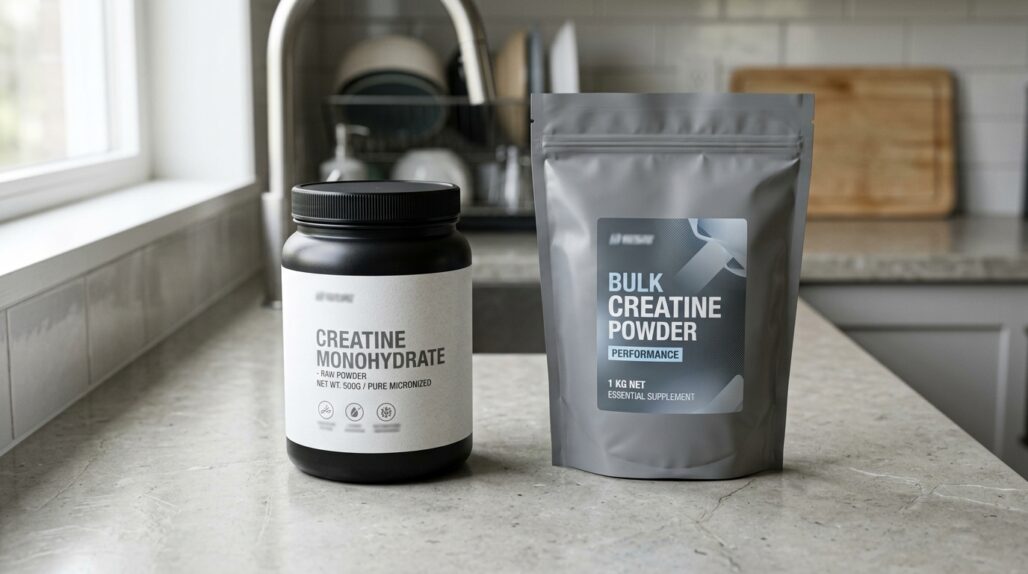
At around $49.99 for 30 servings as of writing, you are spending roughly $1.50 to $1.67 per 5g of creatine (check current price, since promos and tub size shift this). Plain monohydrate from mainstream brands runs a fraction of that.
| Product | Creatine per serving | Extras | Approx. cost per 5g |
|---|---|---|---|
| Transparent Labs Creatine HMB | 5g Creapure | 1.5g HMB, vitamin D, BioPerine | ~$1.50-$1.67 |
| Optimum Nutrition Micronized | 5g monohydrate | None | ~$0.30-$0.40 |
| NOW Foods Monohydrate | 5g monohydrate | None | ~$0.15 |
| Budget bulk (Nutricost, BulkSupplements) | 5g monohydrate | None | ~$0.10-$0.22 |
All prices are approximate as of writing; confirm current pricing before you buy. Even against another premium Creapure product, the HMB version costs more.
The takeaway is hard to dodge. You can buy a year of plain creatine for what a few months of this costs, and the plain version gives you the only ingredient with strong evidence behind it.
Third-party testing: a real point in its favor
To be fair to Transparent Labs, the testing story is good. The brand publishes certificates of analysis and purity results, which most budget bags do not, and the product carries an Informed Choice badge tied to banned-substance screening.
For a drug-tested athlete, that screening has real value. A certified or batch-tested product reduces the risk of a contaminated supplement triggering a failed test. If you compete under testing, the certification is worth something concrete.
For everyone else, it is a nice-to-have, not a need. Plenty of reputable monohydrates are tested and cheap. If batch testing matters to you, you can get it without the HMB markup, and our take on single-ingredient value creatine walks through cleaner, cheaper options.
Who should buy it, and who should not
Buy Transparent Labs Creatine HMB if you specifically want one tidy, well-tested tub with flavor options and you are not bothered by paying extra for an ingredient that probably will not do much. Some people value the simplicity and brand trust, and that is a legitimate choice.
Skip it if you care about cost per gram, which is most people. The smart move is plain creatine monohydrate at 5g a day, ideally a tested one if you want extra assurance.


As an Amazon Associate, UsefulVitamins.com earns from qualifying purchases at no extra cost to you.
UsefulVitamins may earn a commission from qualifying purchases made through links on this page, at no extra cost to you. This never changes our verdict.
If you want to see how this stacks up against another premium tested option, our Transparent Labs Creatine HMB versus Thorne comparison goes deeper on the HMB-versus-plain question for tested athletes.
FAQ
Does the HMB in Transparent Labs Creatine actually build more muscle? The best evidence in healthy, training adults says no. A meta-analysis of trials in young adults found no significant gains in lean mass or strength from HMB beyond what resistance training delivered on its own.
Is the creatine in Transparent Labs good quality? Yes. It is 5g of Creapure monohydrate, the studied effective dose, and the brand publishes third-party purity and ingredient test results. The creatine is not the weak point; the price for the HMB is.
How much does Transparent Labs Creatine HMB cost per serving? Around $49.99 for 30 servings as of writing, or roughly $1.50 to $1.67 per serving. Plain monohydrate costs about $0.10 to $0.40 per 5g, so check current pricing before buying.
Is plain creatine monohydrate just as effective? For the creatine benefit, yes. The ISSN calls monohydrate the most effective ergogenic supplement available, and a cheap, tested monohydrate gives you the same 5g dose without paying for HMB.
Is the Informed Choice testing worth paying for? If you are a drug-tested athlete, banned-substance screening has real value. If you are not, it is a nice extra you can also get from cheaper tested monohydrates.
Should I do a creatine loading phase with this? You can, but you do not have to. Taking one 5g scoop daily reaches full muscle saturation in a few weeks, which is fine for most people who are not in a hurry.
The verdict
Transparent Labs Creatine HMB is a good product wrapped around a weak premium. The creatine is correct, clean, Creapure, and tested, and the flavor range is a nice touch. None of that is the problem.
The problem is the HMB. The ingredient that justifies the price does little for healthy lifters, and you are paying several times the cost of plain monohydrate to get it. For a drug-tested athlete who wants one tidy certified tub, it is a defensible buy. For most people, it is not.
Our honest call: skip the HMB premium and buy plain creatine monohydrate – ideally a tested one if certification matters to you. Your next step is simple. Decide whether banned-substance testing is a real need for you, then pick the cheapest 5g monohydrate that meets that bar, such as the budget and premium picks we compare here.
This article is for general information and is not medical advice. Talk to a doctor or registered dietitian before starting any supplement, especially if you have a health condition or take medication.
Reviewed by the UsefulVitamins Editorial Team.
