
What an annual medication review actually is
An annual medication review is a sit-down where a doctor or pharmacist goes through everything you take and asks a plain question of each item: is this still doing more good than harm? It is not a lecture, and it is not a test you can fail. It is a chance to catch the things that pile up quietly over a year.
Those things add up faster than most people expect. You see one specialist, then another. A short-term prescription never gets a stop date. A friend recommends a supplement. Before long you are taking more than you can keep straight, and that is exactly when problems show up. The National Institute on Aging notes that taking several medicines at once, sometimes called polypharmacy, raises the odds of side effects and drug interactions, and that a careful review can find medicines worth reducing or stopping, a practice clinicians call deprescribing.
A good review tends to surface three things: duplicates (two products doing the same job), interactions (combinations that work against each other), and drugs that no longer fit your life or your kidneys, since the way your body handles medicine changes as you age. If you are on Medicare, the yearly wellness visit already builds in a review of your current medications, so this is not an extra hoop. It is a slot that already exists, and a little prep makes it worth far more.
Build one list before you go
The single most useful thing you can do is arrive with one complete, current list. That sounds obvious, and yet memory alone is not enough. The medication-reconciliation literature finds discrepancies between what is on file and what people actually take in roughly three out of four cases, which is why pharmacists ask people to bring the actual containers instead of reciting from memory. AHRQ built its brown-bag review toolkit around exactly that habit.
You have two reliable options, and both are fine.
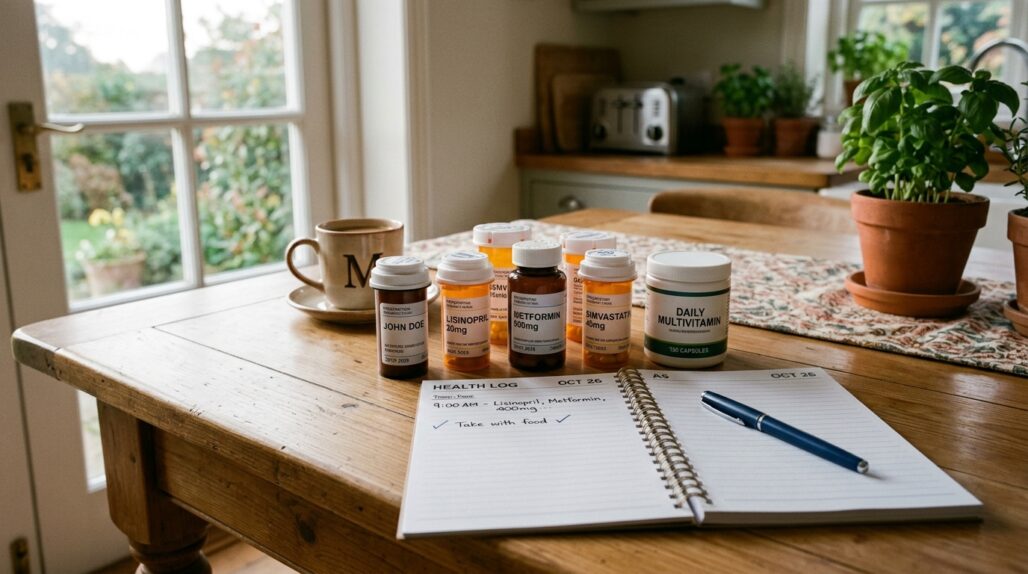
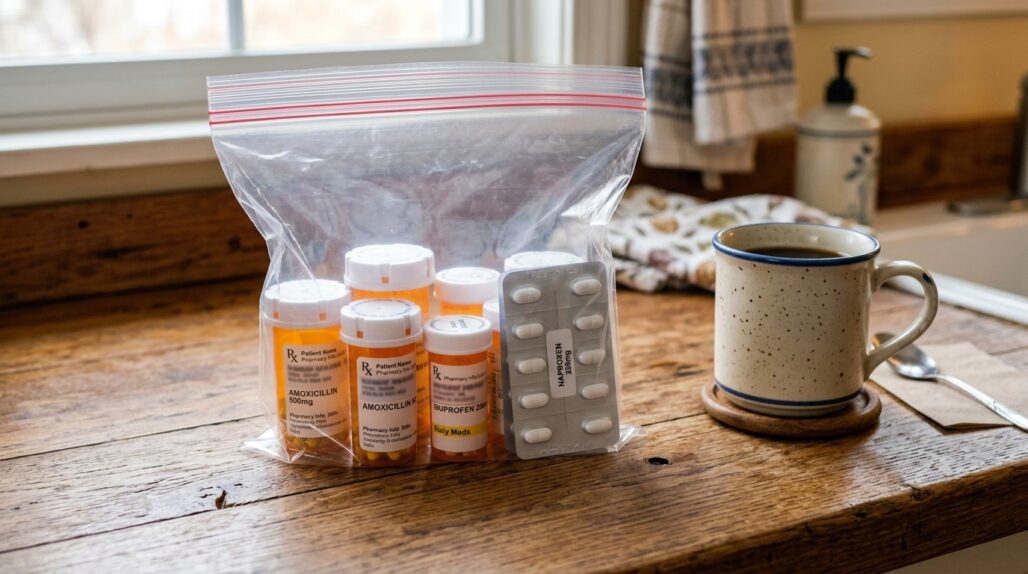
- The brown-bag method. Put every bottle, box, tube, inhaler, and supplement jar into a bag and bring the lot. This is the classic approach AHRQ built a whole tool around, and it works because the reviewer sees the real strengths and how full each bottle is, not just what you meant to say.
- The written list. Write down each item with its strength, what you take it for, and how and when you take it. The FDA recommends keeping exactly this kind of list and updating it whenever something changes.
The list should pull in more than your prescriptions. Include over-the-counter products, vitamins, and dietary supplements, because those are the items most likely to be missing from the version your clinic already has on file. The FDA's free "My Medicine Record" template is a clean starting point if you would rather not design your own.
Here is a simple structure you can copy onto paper or into a phone note. Fill in a row for each item.
| Item | Strength and form | What it is for | How and when I take it |
|---|---|---|---|
| Lisinopril | 10 mg tablet | Blood pressure | One every morning |
| Vitamin D3 | 2,000 IU softgel | Low vitamin D | One with breakfast |
| Ibuprofen | 200 mg tablet | Knee pain, as needed | A few times a week |
| Fish oil | 1,000 mg softgel | General heart support | One with dinner |
Notice that the as-needed items made the list too. The ibuprofen you take "only sometimes" still counts, and so does the supplement you almost forgot. If you are not sure whether your stack has quietly grown past what you need, our self-audit for too many supplements walks through how to spot the overlap before the appointment.
The questions that make a review worth the trip
A reviewer can only work with what you raise. Bring three or four questions written at the bottom of your list so they do not evaporate the moment you sit down. These tend to surface the most.
- "Do I still need this one?" This is the heart of deprescribing, and the NIA frames it as a fair question to ask of any long-standing medicine.
- "Can anything be stopped, lowered, or simplified?" Sometimes two pills become one combination pill. Sometimes a dose that suited you ten years ago is now too high.
- "Do any of these clash with each other, or with my supplements?" This matters more than people think. The American Heart Association points out that supplements and even some foods can change how a medicine works, and combinations involving blood thinners are a common example.
- "Is there a better time of day to take these, or anything I should space apart?" Some minerals and medicines bind to each other if taken together, and a small timing change can fix it.
For the interaction question specifically, it helps to come in already aware of the rough edges. You can skim likely pairings ahead of time with our drug and supplement interaction checker, and our deeper guide to drug-supplement interactions explains why blood thinners, thyroid medicine, and blood pressure drugs come up so often. Treat anything you find as a question to raise, not a verdict. A tool can flag a possible issue; only your pharmacist or doctor can weigh it against your actual prescriptions and your health.
Keep the list current after today, not just for the visit
The list that helps most is the one that is already accurate when you walk in, which means keeping it up to date between appointments rather than rebuilding it in a panic the night before. The FDA's advice is to review and update it whenever something changes: a new prescription, a different dose, or a medicine you stopped.
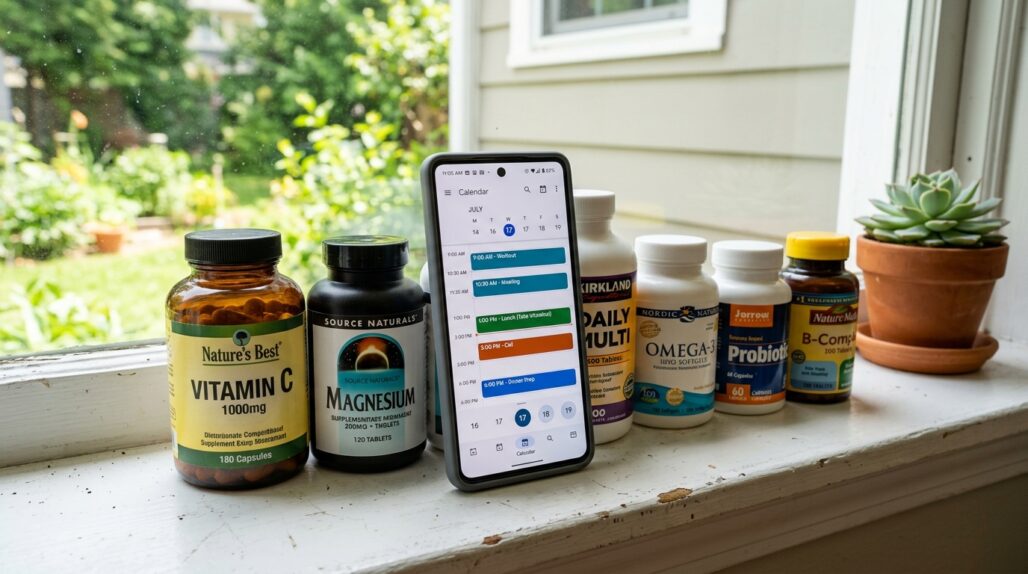
The low-tech version is genuinely fine. A folded index card in your wallet, a note on the fridge, or a phone note you edit the day a prescription changes will all do the job. The point is that one place holds the truth, and you touch it the moment anything shifts.
If you would rather not retype things by hand, this is the one spot where an app earns its place. Reviews go faster when you arrive organized, so you can export your current stack from a free app we make, StackMyMed, and hand the pharmacist the whole list, supplements included, in one pass. It is the same job as the index card, just easier to keep current and to share, and it flags possible interactions for you to raise with your pharmacist rather than clearing anything as safe. Whether you use a card or an app, the rule does not change: the professional makes the medical decision.
What to do with the outcome
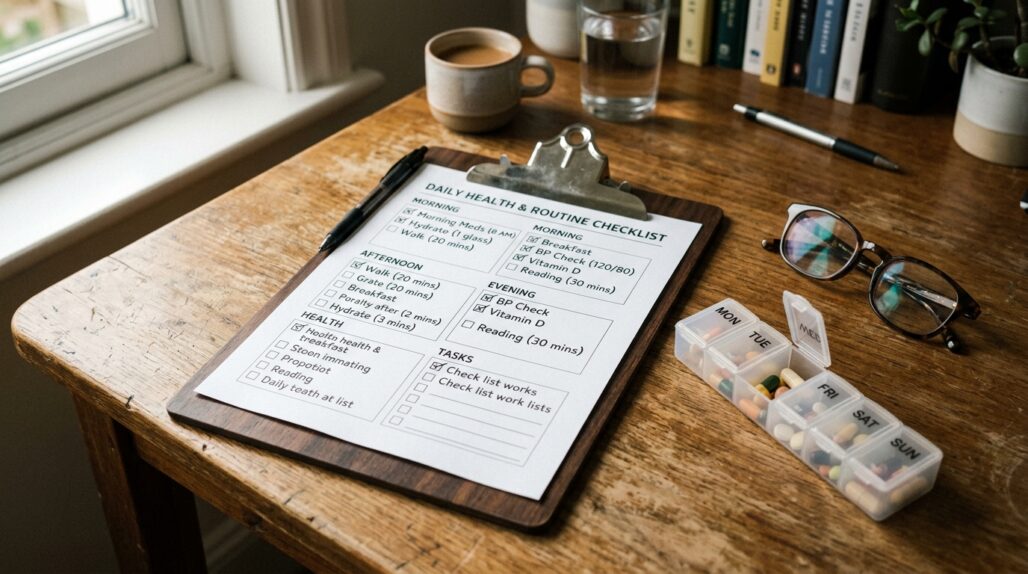
A review usually ends with a few suggestions, not a finished plan. Capture them while they are fresh. Jot down what is changing, what is staying, and why, then update your master list that same day so the next clinician sees the new picture.
If something is being stopped or lowered, ask how to do it and what to watch for. Some medicines need a gradual taper and a little monitoring, and you want that plan in writing before you leave. This is also the moment to remember the boundary at the center of the whole exercise: the review surfaces options, but your prescriber makes the changes. Do not stop or alter a prescription on your own to act on a suggestion you heard, even a good one.
If your appointment is the in-person, bring-the-bag kind, our brown-bag medication review checklist gives you a printable list of exactly what to pack so nothing gets left in the cabinet.
FAQ
How is an annual medication review different from a brown-bag review? They overlap a lot. A brown-bag review is the method, bringing every container in a bag so someone can see what you really take. An annual review is the yearly habit of doing that and asking whether each item still belongs. Many people use the bag as the way to prepare for the yearly review.
Who should do my review, my doctor or my pharmacist? Either works, and pharmacists are especially good at spotting interactions and timing issues because they see the whole list at once. If your doctor is short on time, a separate pharmacist review is a reasonable way to get a closer look.
Do I really need to mention vitamins and supplements? Yes. They are the items most often missing from your clinic’s records, and some can affect how a prescription works. The FDA specifically advises listing vitamins and supplements alongside your medicines so nothing is invisible to your care team.
Can I just stop a medicine if the review suggests it? No. Bring the suggestion back to your prescriber and follow their plan. Some medicines need to be reduced gradually and monitored, and stopping on your own can cause problems even when ending the drug is the right long-term move.
How often should I do this? Once a year is a sensible baseline, and sooner if a lot has changed, such as a new diagnosis, a hospital stay, or several new prescriptions added at once. The more your list has shifted, the more a fresh review tends to find.
What if I take very few medicines? A short list is still worth a glance, especially if it includes supplements or over-the-counter products you take regularly. The review is quick, and “nothing to change” is a perfectly good result.
The bottom line
An annual medication review is one of the simplest ways to keep your routine from quietly drifting into duplicates, interactions, and drugs you no longer need. The preparation is not complicated: build one complete list with doses, include the supplements and the as-needed items, and bring a few real questions. Keep that list current afterward so the next visit starts from the truth. Then let the review do its job, surface the options, and ask your pharmacist or doctor to make any changes, rather than adjusting anything yourself.
This article is for general information and is not medical advice. It is not a substitute for guidance from your own doctor or pharmacist, who know your health history. Do not start, stop, or change any medication or supplement based on this page alone; talk to a professional about your specific situation.
StackMyMed is made by UsefulVitamins. It helps you organize your list and flag things to discuss with a pharmacist or doctor; it is not a diagnosis or treatment tool and does not replace professional medical advice.
Reviewed by the UsefulVitamins Editorial Team.
