
Affiliate disclosure: this article contains affiliate links. As an Amazon Associate, UsefulVitamins.com earns from qualifying purchases at no extra cost to you.
Why iron upsets your gut in the first place
Oral iron is rough on a lot of people. In a meta-analysis of randomized trials, oral ferrous sulfate caused gastrointestinal side effects in about a third of users versus roughly 22% on placebo (odds ratio 2.32), with constipation and nausea among the most common at around 12% and 11%, per Tolkien and colleagues (PLOS One, 2015). The NIH Office of Dietary Supplements likewise notes that iron can cause gastric upset, constipation, and nausea.
The reason is simple. Your gut absorbs only a fraction of the iron in a tablet, and the unabsorbed iron sits in the intestine, irritates the lining, and slows things down. Bigger doses do not fix this; they just leave more leftover iron behind.
So the goal is not heroic doses. The goal is getting more of a smaller amount of iron into you while leaving less to churn through your gut. Almost every trick below works toward that.
A quick, honest note before anything else. Iron deficiency is a medical issue, and you should confirm it with a blood test before self-treating. Taking iron you do not need is the one mistake nothing on this page fixes.
The form you pick changes how harsh it feels
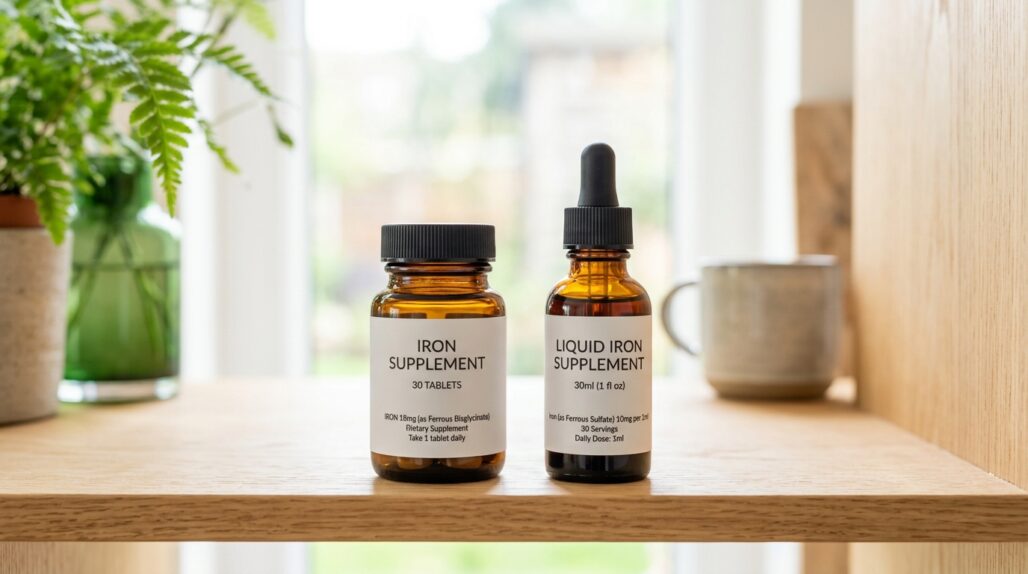
Most cheap iron is ferrous sulfate, the standard, well-absorbed, and frankly the most likely to back you up. It works, but it is the form people quit.
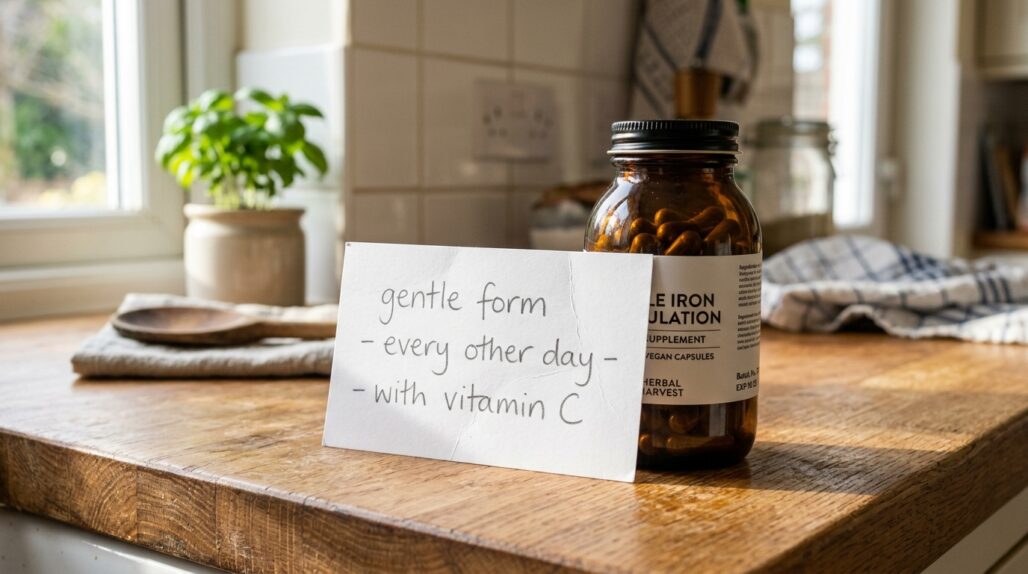
Ferrous bisglycinate (also sold as iron bisglycinate) is the gentler swap worth knowing. The iron is bound to the amino acid glycine and released inside the gut wall rather than floating free in the intestine, which tends to mean less nausea and less constipation.
A 2024 analysis of two randomized pregnancy trials found that among equipotent low doses, ferrous bisglycinate at 25 mg iron had the most favorable GI side-effect profile, while ferrous sulfate and ferrous fumarate sat higher, per the pooled results published in PMC. The catch is that bisglycinate usually costs more per dose.
Slow-release (extended-release) iron is the other tolerability play. It drips iron out gradually, so studies report fewer nausea and abdominal complaints. The tradeoff is real, though: extended-release and enteric-coated tablets can be less well absorbed because they pass part of the absorption window before dissolving, as noted in the Drugs.com slow-release iron overview.
Liquid iron earns a spot for one reason: you can titrate it. If a full tablet wrecks you, a liquid lets you dial the dose down drop by drop and climb back up as your gut adjusts.
Here is the practical comparison.
| Form | GI tolerability | Absorption | Best for |
|---|---|---|---|
| Ferrous sulfate | Lowest (most constipation) | High, well studied | Budget, if your gut tolerates it |
| Ferrous bisglycinate | Higher (gentler) | Good at lower elemental doses | Sensitive stomachs |
| Slow-release iron | Higher (fewer GI complaints) | Lower (may release past the window) | People who fail standard tablets |
| Liquid iron | Adjustable | Good, dose-dependent | Titrating up slowly, kids |
If you want to understand why ferrous forms behave so differently from food iron, our explainer on heme versus non-heme iron bioavailability walks through the absorption mechanics in plain terms.
Take it every other day, not every day
This is the change most people have never heard, and it does double duty: better absorption and fewer side effects from the same supply of tablets.
When you take iron, your body raises a hormone called hepcidin that briefly blocks further iron absorption for roughly the next 24 hours. Take iron again the next morning and you are partly fighting your own block. Skip a day and the block fades, so the next dose absorbs better.
In a landmark Lancet Haematology trial, Stoffel and colleagues showed that alternate-day single doses produced higher fractional iron absorption than consecutive daily doses in iron-depleted women. A later randomized trial in iron-depleted women, published in PMC, found alternate-day dosing triggered fewer gastrointestinal side effects at an equal total iron amount, with a longitudinal prevalence ratio for GI symptoms of 1.56 favoring the alternate-day schedule.
In plain language: every-other-day dosing can get you roughly the same iron into the blood while halving the days your gut has to deal with it. That is close to a free win.
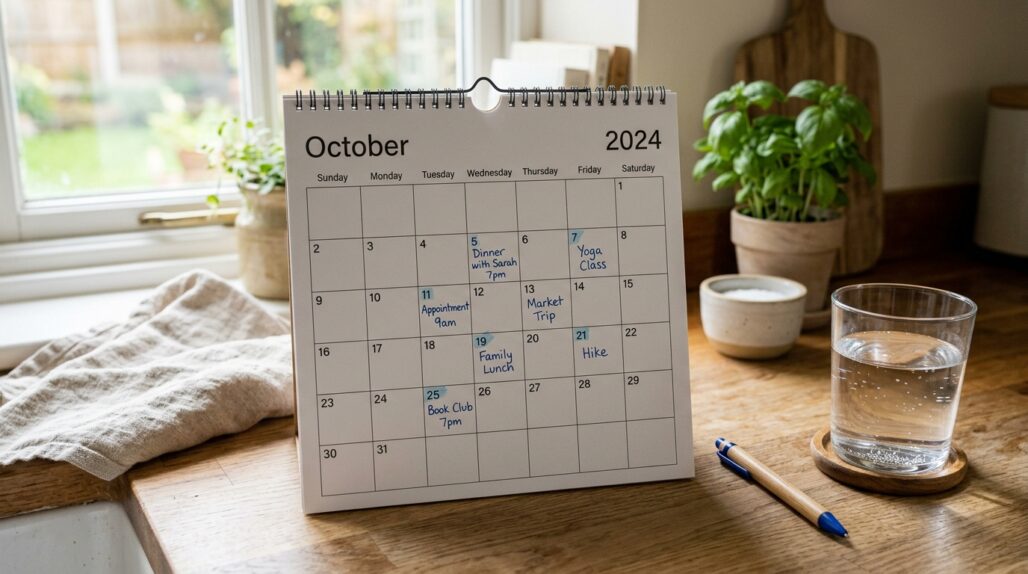
Mark it on a calendar so you do not lose track. Monday, Wednesday, Friday is an easy rhythm.
The food and timing rules that protect absorption
What you take iron with matters almost as much as the form.
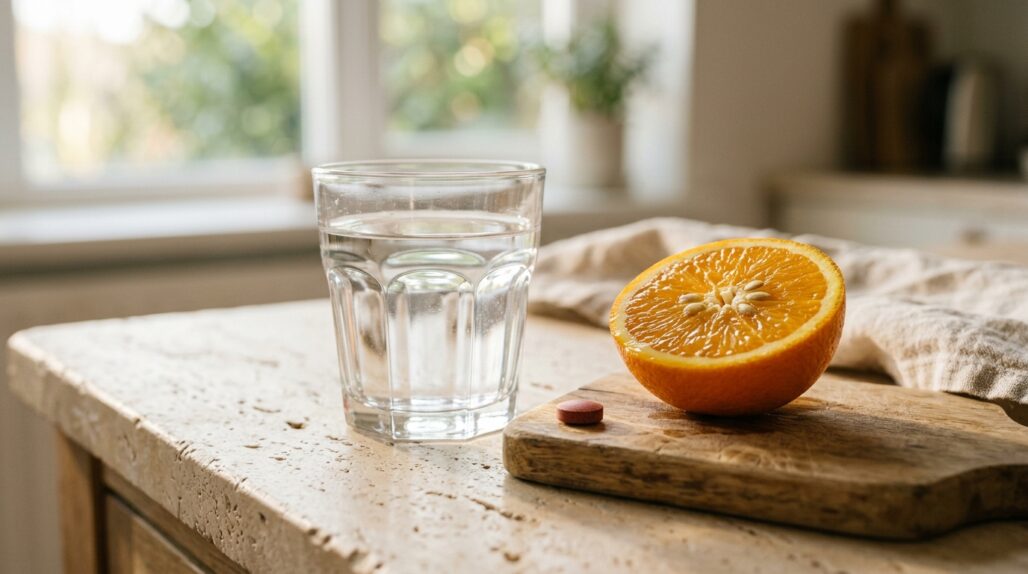
- Add vitamin C. A small glass of orange juice or a vitamin C tablet alongside your iron raises non-heme iron absorption. The NHS notes a doctor or pharmacist may suggest taking iron with vitamin C for exactly this reason.
- Keep coffee, tea, and dairy away. Polyphenols in tea and coffee and the calcium in dairy both blunt iron absorption; NIH ODS cites research where calcium cut iron absorption from one form by about half. Leave a 2-hour gap around your dose.
- Separate calcium and antacid pills. If you take a calcium supplement or an acid reducer, do not stack them with iron. Different times of day.
- Empty stomach absorbs best, but food is allowed. Iron absorbs best on an empty stomach, yet if that nauseates you, taking it with a little food is a reasonable trade. You lose some absorption but you actually keep taking it, which beats a perfect dose you abandon.
None of these undo the gut-slowing effect on their own, but pairing smart absorption with the every-other-day schedule means less leftover iron and less constipation.
Managing the constipation directly
Two simple habits do most of the work here.
Drink more water. Iron-related constipation gets worse when you are even mildly under-hydrated, and the fix costs nothing.
Eat more fiber, or talk to a pharmacist about a gentle stool softener if needed. Many people on iron use a softener short term while their gut adjusts. That is a normal conversation to have at the pharmacy counter.
If you miss a dose, do not double up the next time. Both the NHS and standard pharmacy guidance say to skip the missed dose and resume your schedule, because a double dose mostly buys you more GI upset, not more iron.
Which iron to buy if your stomach is the problem
If constipation is your main barrier, lead with form. A ferrous bisglycinate or a slow-release product is the practical first move, and a titratable liquid is the fallback when even gentle tablets bother you.
Before you fixate on a number on the bottle, get your target dose right. The label often lists the compound weight, not the elemental iron you actually absorb, so 325 mg "ferrous sulfate" is only about 65 mg elemental iron. Use our iron dose calculator to translate your situation into an elemental iron number instead of guessing from the front label. For the broader picture on choosing a product, our complete guide to iron covers forms, doses, and who actually needs supplementation.
The picks below match the gentle-form strategy on this page: a bisglycinate, a slow-release tablet, and a titratable liquid.
We may earn a commission from purchases made through links below, at no extra cost to you. This does not affect which products we recommend.


As an Amazon Associate, UsefulVitamins.com earns from qualifying purchases at no extra cost to you.
For a deeper rundown of tolerability and value across brands, our roundup of the best iron supplements compares the gentle options side by side.
What to watch for
A few things are worth flagging so you do not misread your own body.
Black or dark stools are normal on iron and harmless. They are unabsorbed iron, not bleeding. Tarry, sticky black stools with stomach pain are different and worth a same-day call to a clinician.
More iron is not better. Adults have a tolerable upper intake level of 45 mg of elemental iron per day from supplements before risking GI effects, per NIH ODS, unless a doctor directs a higher therapeutic dose for diagnosed deficiency. Stacking extra "just to fix it faster" mostly fixes nothing and worsens constipation.
Iron poisoning is a real emergency in children. Keep supplements out of reach; pediatric iron overdose can be fatal.
FAQ
Will a gentler iron form really fix my constipation? Often it helps, but not always completely. Ferrous bisglycinate and slow-release iron cause fewer GI complaints in studies than ferrous sulfate, yet any iron can slow your gut. Pair the form change with every-other-day dosing, fluids, and fiber for the best shot.
Does taking iron every other day mean it works slower? No, that is the surprising part. Alternate-day single doses absorb a higher fraction of the iron, so you can rebuild stores at a similar pace while giving your gut fewer rough days. Ferritin still takes 3 to 6 months to refill either way.
Should I take iron with food to avoid constipation? Food can ease nausea, though it modestly lowers absorption. Constipation is driven more by leftover iron in the gut than by whether you ate, so the form and frequency matter more. If an empty stomach bothers you, a small snack is a fair compromise.
Can vitamin C cause more stomach upset with iron? Vitamin C boosts iron absorption, which is the goal, and most people tolerate a small glass of juice or a low-dose tablet fine. Very high-dose vitamin C can cause its own GI upset, so keep the vitamin C modest rather than mega-dosing.
What if I miss a dose on my schedule? Just take the next scheduled dose; do not double up. Doubling mostly increases GI side effects without meaningfully speeding recovery, which is why pharmacy guidance is consistent on skipping rather than catching up.
How do I know I even need iron supplements? A blood test showing low ferritin or iron-deficiency anemia is the only reliable signal, and it should come from a doctor. Self-treating fatigue with iron when you are not deficient adds GI risk with no benefit, so get tested first.
The bottom line
The constipation that makes people quit iron usually comes from harsh form, daily dosing, and leftover iron sitting in the gut. Switch to a gentle form, dose every other day, add vitamin C, keep coffee and calcium hours away, and drink more water. That routine keeps absorption high while cutting the side effect that derails most people.
Get your elemental target with the iron dose calculator first, then pick a gentle product and give it the 3 to 6 months stores actually need.
This article is general education, not medical advice. Iron deficiency is a diagnosis that needs a blood test, and iron interacts with several medications, so confirm your need and your dose with a pharmacist or doctor before starting, changing, or stopping any supplement.
Reviewed by the UsefulVitamins Editorial Team.
