
Affiliate disclosure: this article contains affiliate links. As an Amazon Associate, UsefulVitamins.com earns from qualifying purchases at no extra cost to you.
What "too much zinc" actually means
Zinc is one of those minerals where a small daily amount does the job and more does not buy you anything. The recommended dietary allowance is 11 mg a day for adult men and 8 mg for women, per the Linus Pauling Institute at Oregon State University. Most people get close to that from food alone.
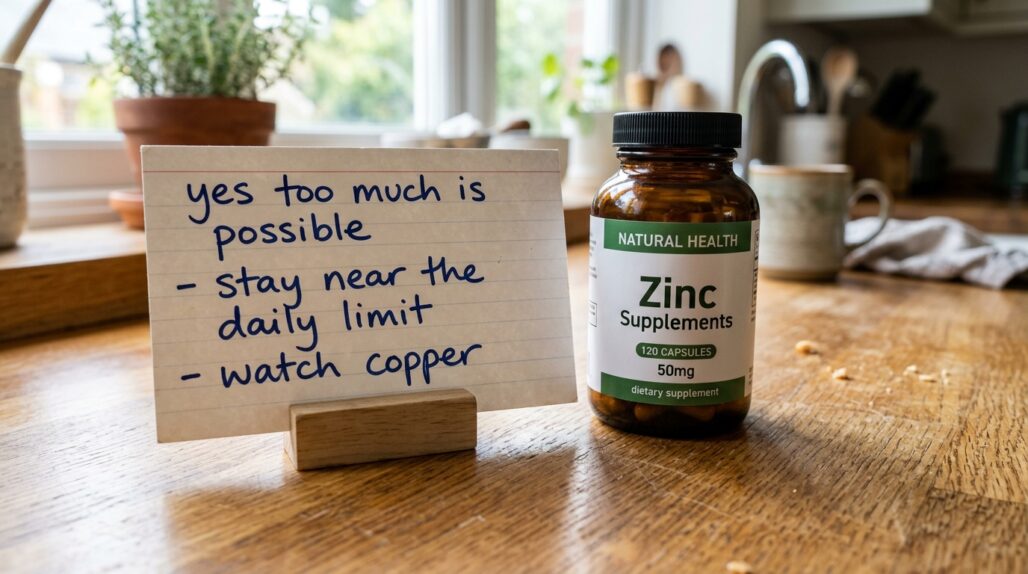
The number that matters for "too much" is the tolerable upper intake level, set at 40 mg of elemental zinc a day for adults. That ceiling counts everything together: your diet, your multivitamin, and any standalone zinc.
Here is the catch that trips people up. The 40 mg figure is elemental zinc, not the bigger compound weight printed on some labels. A capsule of zinc sulfate or gluconate weighs far more than the zinc it delivers, so always read the elemental number. To turn a label into your real intake, use our zinc dose calculator to get your exact number rather than guessing.
The 40 mg upper limit, and why short-term is different
The upper limit is a ceiling for regular, ongoing intake, not a single-day alarm. The Food and Nutrition Board set it at the point where higher chronic intake starts to interfere with copper, which we will get to in a moment.
A short, deliberate course is a separate situation. Zinc lozenges for a cold deliberately run well above 40 mg for a few days because the goal is local contact in the throat, not steady absorption. The Cochrane review on zinc for the common cold and a later meta-analysis of zinc acetate lozenges found that more than 75 mg of elemental zinc a day, started within 24 hours of symptoms, shortened colds by roughly a third.
That is a five-day situation, not a lifestyle. The problems with zinc come from holding a high number for weeks and months, not from a few days of lozenges.
| Use case | Typical elemental zinc | Sensible duration |
|---|---|---|
| Daily maintenance | 8 to 11 mg | Ongoing |
| Higher daily supplement | Up to 40 mg | Ongoing ceiling, ideally with copper |
| Cold lozenge course | 75 mg or more, split into doses | A few days only |
| Above 50 mg daily, no copper | 50 mg and up | Where copper depletion starts |

The real long-term risk is copper, not zinc itself
The headline danger of too much zinc is not zinc poisoning. It is copper deficiency, and it sneaks up slowly.
Here is the mechanism in plain words. High zinc intake ramps up a gut protein called metallothionein, which grabs copper and holds it in the intestinal cells until those cells shed. The copper you eat never makes it into your bloodstream, so your stores drift down month after month while you feel fine at first.
The dose where this starts is closer than people expect. The Linus Pauling Institute notes that total intakes of 60 mg a day (50 mg supplemental plus 10 mg dietary) for up to 10 weeks produced signs of copper deficiency. That is the kind of number you can hit with one generous zinc capsule on top of a normal diet.
What copper deficiency looks like
Copper runs your red and white blood cell production and parts of your nervous system, so a shortage shows up in both. Reported effects include anemia, low white cells (neutropenia), and a nerve problem called myeloneuropathy that can cause numbness, tingling, and unsteady walking.
A case write-up in the review Zinc Toxicity: Understanding the Limits described a patient taking about 65 mg of zinc a day from a multivitamin plus a zinc supplement who developed undetectable copper and neutropenia. The blood counts recovered in weeks once zinc stopped, but the nerve symptoms took around six months to improve.
The takeaway is simple. If you plan to sit near or above 40 mg of zinc daily for a long stretch, a small amount of copper alongside it is the standard safeguard. Our complete guide to zinc walks through how the two minerals balance.
Acute overdoses: the metallic-taste warning
Swallowing a large single dose of zinc is unpleasant fast. The body pushes back with nausea, vomiting, a metallic taste, stomach cramps, and diarrhea.
The thresholds are well documented. The Linus Pauling Institute reports that single doses of 225 to 450 mg of zinc usually cause vomiting, while milder gut upset shows up in the 50 to 150 mg a day range. The PMC toxicity review describes a trial where most participants taking 50 mg of elemental zinc three times daily for six weeks ran into nausea and abdominal cramps.
A bad metallic taste with queasiness after a dose is your signal to stop and back off the amount, not to push through. Vomiting after a much larger accidental dose, or in a child, is a reason to call a poison control line or a doctor promptly.
One more form to flag: intranasal zinc, used in some old cold gels, is a different problem entirely. The FDA warned in 2009 that zinc nasal products were linked to lasting loss of smell. Stick to lozenges or capsules and keep zinc out of your nose.

How to take zinc so it stays safe
Most of the trouble with zinc comes from how it is taken, not the mineral itself. A few habits keep it gentle and effective.
- Take it with food. Zinc on an empty stomach is the classic recipe for nausea and a metallic taste. A small meal smooths that out.
- Separate it from certain medicines. Zinc binds tetracycline and quinolone antibiotics and cuts the absorption of both. Leave a few hours between them, and check timing with your pharmacist.
- Do not stack it on iron. High-dose iron and high-dose zinc compete, so taking large amounts of each together blunts the zinc. Space them out.
- Mind the total, not just one bottle. A multivitamin, an immune blend, and a standalone zinc can add up past 40 mg without you noticing.
If you take several products, it is worth tallying the elemental zinc across all of them. Our supplement self-audit is built for exactly this kind of overlap check, and the zinc dose calculator turns the label compound weight into the elemental amount that the upper limit actually refers to.
Which zinc to buy, and at what strength
For everyday use, the form barely matters and the dose matters a lot. A well-absorbed chelate like zinc picolinate at around 15 to 30 mg covers most daily needs and sits comfortably under the limit.
If you want to run near the higher end day after day, the smart pick is a zinc-plus-copper product so you are not slowly draining copper; note this one runs 50 mg of zinc, so treat it as a deliberate higher-end choice rather than an everyday default, and keep an eye on your total intake. For colds, a lozenge is a separate, short-term tool and not your daily driver. Picking by your situation matters more than chasing the biggest milligram number, and our roundup of the best zinc supplements compares forms and strengths in detail.
We may earn a commission from links below, at no extra cost to you. This does not change which products we recommend.


As an Amazon Associate, UsefulVitamins.com earns from qualifying purchases at no extra cost to you.
A 30 mg daily capsule is plenty for most people. Reserve the high-count lozenge tubes for the first day or two of a cold, then go back to your usual low dose.
FAQ
How much zinc is safe to take every day? For ongoing daily use, stay at or below the 40 mg elemental upper limit for adults, and most people do well on 8 to 30 mg. Higher amounts should be short courses only.
Can 50 mg of zinc a day hurt you? Not overnight, but 50 mg a day or more held for weeks is the range where copper depletion begins, so it is not a dose to sit on long term without copper and medical guidance.
What are the first signs you are taking too much zinc? Acutely, nausea, a metallic taste, and stomach upset. Over months, the warning signs are copper-related, such as unusual fatigue, anemia, or numbness and tingling, which need a doctor’s workup.
Should I take copper with zinc? If you plan to use higher daily zinc for a long period, a small amount of copper is the common safeguard against deficiency. For short courses or low daily doses, it is usually unnecessary.
Is it safe to take zinc lozenges for a cold? Short courses above 75 mg a day for a few days are what the cold studies used, and that is fine for most healthy adults. The risk comes from making high doses a daily habit, not from a brief cold course.
Does zinc interact with my medications? It can. Zinc lowers the absorption of tetracycline and quinolone antibiotics and competes with high-dose iron, so spacing doses apart and asking your pharmacist is the safe move.
The bottom line
Yes, you can take too much zinc, and the line is closer than most labels suggest: 40 mg of elemental zinc a day is the adult ceiling for regular use. The real hazard of sitting above it is not zinc itself but the slow copper deficiency it causes, which can take months to undo.
Keep your daily dose modest, take it with food, count every source against the 40 mg limit, and treat high-dose lozenges as a short cold-season tool. Run your label through the zinc dose calculator to see your real elemental intake, and pick a sensible product from our best zinc supplements guide.
This article is general education, not medical advice. It does not diagnose, treat, or replace care from a qualified professional, and you should not start, stop, or change any supplement or prescription based on it without talking to your own pharmacist or doctor.
Reviewed by the UsefulVitamins Editorial Team.
