

If you searched "complete guide to zinc," you probably already know zinc has something to do with colds and immunity, and you want to know whether the bottle on your shelf actually matches the dose, form, and timing the research supports.
You will also get a quick reference on testing limits, the food sources that cover the RDA without a single capsule, and the drug interactions that send zinc and certain antibiotics into a tug of war in your gut.
Quick Answer: how to actually use zinc
For most adults, a daily 15 to 30 mg zinc supplement (picolinate or glycinate) for 8 to 12 weeks is enough to correct a likely dietary gap; the cold-shortening lozenge protocol is a separate, short-term tool, not a daily habit.
- Best for: vegetarians and vegans, people on long-term PPIs or NSAIDs, post-bariatric patients, older adults with thin appetite, anyone with IBD or chronic diarrhea, plus short-term lozenge use within 24 hours of cold onset
- Not ideal for: anyone already eating oysters, beef, or pumpkin seeds regularly with no absorption issues; people on tetracycline or fluoroquinolone antibiotics within the same 2-hour window; anyone using intranasal zinc sprays
- What to look at before buying: the elemental zinc dose per capsule (not the total salt weight), whether copper is included or whether you need to add 1 to 2 mg copper separately if you stay above 25 mg zinc for months, and whether the bottle uses one of the better-absorbed forms instead of zinc oxide
- Decision shortcut: if you eat little to no animal protein and never crack pumpkin seeds, start at the low end and add 1 to 2 mg copper after week 8; if you're using lozenges for a cold, set a calendar reminder to stop on day 7
1. What Zinc Actually Is
Zinc is an essential trace mineral, which is a polite way of saying your body needs only a small amount but absolutely will not work without it. It is the second most abundant trace mineral in the human body after iron, and it acts as a structural or catalytic cofactor for roughly 300 enzymes and well over 1,000 transcription factors. Those numbers sound abstract until you list the systems that touch zinc: DNA synthesis, cell division, wound repair, taste perception, sperm production, insulin signaling, skin barrier turnover, and the development and function of T cells, B cells, and natural killer cells.
In immune signaling specifically, zinc is required to mature thymocytes into functioning T cells, to support cytokine production, and to keep neutrophil and macrophage activity in a usable range. The reason a cold lozenge can change the course of a respiratory virus is not that zinc is some general booster. It is that free ionic zinc in the throat appears to block rhinovirus from binding to the ICAM-1 receptor, plus zinc generally supports the immune cells that have to clear the infection.
The body does not have a meaningful storage depot for zinc. There is no zinc equivalent of liver ferritin. That means daily intake matters more than for nutrients you can bank.
Actionable takeaway: think of zinc as a daily-throughput nutrient, not a once-a-year top-up. If intake drops, function drops within weeks.
2. Why Zinc Matters: What Deficiency Actually Looks Like
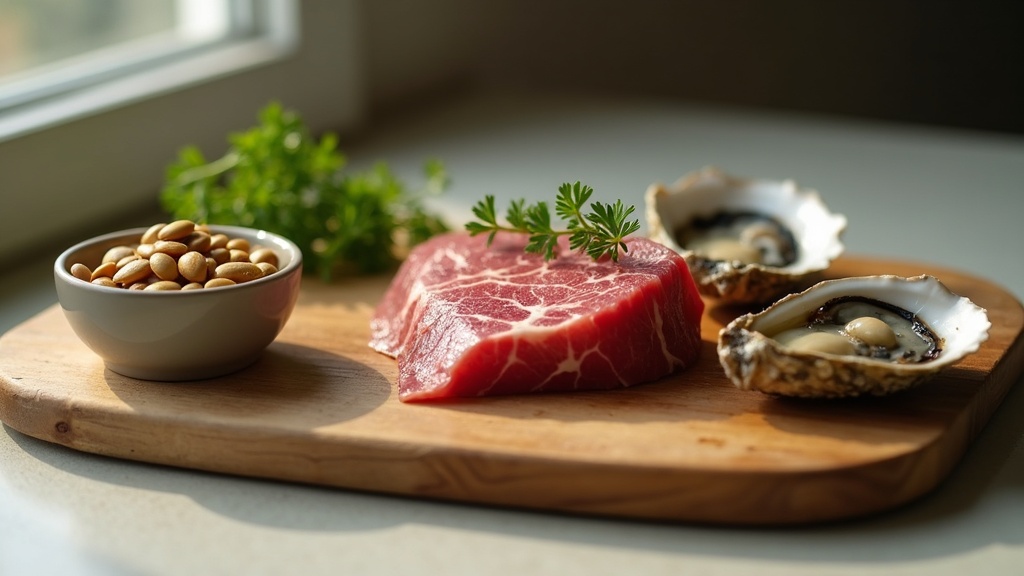
Severe zinc deficiency is rare in industrialized countries but mild-to-moderate inadequacy is not. The clinical picture is consistent across populations. Recurrent or slow-clearing infections, especially upper respiratory and skin infections. Loss or distortion of taste, sometimes smell. Hair shedding past the normal 50 to 100 strands per day. Wounds that take noticeably longer to close, including post-surgical sites. In children, growth that lags the curve. In men, lower testosterone and reduced sperm count.
Skin tells the story early. Persistent acne, eczema flares, perioral dermatitis, and slow-healing minor cuts often track with low zinc status. This is why "best supplements for acne" rotations almost always include zinc, and why our team has covered the topic in Best Supplements for Acne for readers triaging which mineral to actually start with.
The skepticism marker here: zinc is real biochemistry but it is also the most over-claimed mineral in supplement marketing. "Boosts immunity" is not a meaningful claim. The real question is not whether zinc helps immunity in general, it is whether your intake is actually below the requirement, which is a different problem entirely.
3. Food Sources and the RDA
Recommended Dietary Allowances for zinc in adults are 8 mg per day for women and 11 mg per day for men, with the Tolerable Upper Intake Level set at 40 mg per day from all sources combined for adults 19 and older. Pregnancy raises the RDA to 11 mg, lactation to 12 mg.
The single most efficient food source is oysters. Six medium oysters provide roughly 30 to 50 mg of zinc, several times the RDA in one serving. Beef, lamb, crab, and pork cover roughly 3 to 7 mg per 100 g serving. Pumpkin seeds are the standout plant source at about 2 to 3 mg per ounce, with lentils, chickpeas, hemp seeds, cashews, and oats contributing meaningful but smaller amounts.
| Food | Serving | Approx zinc (mg) |
|---|---|---|
| Oysters, cooked | 6 medium | 30 to 50 |
| Beef chuck, cooked | 100 g | 7 |
| Pumpkin seeds, raw | 1 oz (28 g) | 2 to 3 |
| Lentils, cooked | 1 cup | 2.5 |
| Cashews, dry roasted | 1 oz | 1.6 |
| Greek yogurt | 1 cup | 1.4 |
| Fortified breakfast cereal | 1 serving | varies, often 3 to 4 |
Now the part most articles skip. Phytate, the natural compound in whole grains, legumes, nuts, and seeds, binds zinc in the gut and reduces absorption. Vegetarian and vegan diets can deliver enough zinc on paper while delivering noticeably less to the bloodstream. Soaking, sprouting, fermenting (think sourdough, tempeh, miso), and pairing plant zinc with a small amount of animal protein all help. The NIH ODS suggests vegetarians may need up to 50% more zinc than the RDA to compensate for phytate-driven absorption losses.
Actionable takeaway: if you eat broadly and include even a few high-zinc foods weekly, you likely meet the RDA. If you do not, the math gets thin fast.
4. Who Actually Needs to Supplement
Food first, supplement when food does not close the gap. Here are the groups where the gap is documented:
- Vegetarians and vegans: phytate-heavy diet, no oysters or beef, often borderline intake
- Crohn's, ulcerative colitis, and chronic diarrhea: zinc is lost rapidly through GI losses, malabsorption compounds the problem
- Post-bariatric surgery (sleeve gastrectomy, Roux-en-Y): reduced absorptive surface and altered gut acidity
- Long-term PPI users (omeprazole, esomeprazole, pantoprazole): reduced stomach acid lowers zinc bioavailability; same logic applies to chronic H2-blocker use
- Long-term NSAID users: chronic mucosal irritation and small bleeding losses
- Adults 65+: appetite drops, intake drops, and absorption efficiency falls
- Alcohol use disorder: alcohol increases urinary zinc excretion and reduces absorption
- Pregnant and lactating women: RDA rises and absorption demands rise
- Sickle cell disease: well-documented higher requirements
Blood work changes the question. Without it you are guessing which supplement to add. If you fall in one of these groups for more than a few months, ask your doctor about a serum zinc test combined with a serum copper, plus a quick dietary recall. The pattern is more useful than the single number.
5. Forms and Bioavailability
Not all zinc salts are created equal. The bioavailability rank that holds up reasonably well across human absorption studies looks like this, from generally better to generally worse:
Zinc picolinate → zinc glycinate (bisglycinate) → zinc citrate → zinc gluconate → zinc sulfate → zinc oxide
Zinc picolinate has the longest history as a "high-absorption" form in supplement marketing and decent human comparative data supporting it. Zinc bisglycinate (zinc chelated to two glycine molecules) absorbs well, tends to be gentle on the stomach, and is the form most people tolerate without nausea on an empty stomach. Zinc citrate sits comfortably mid-pack. Zinc gluconate is the most common and least expensive functional form, well-absorbed enough, and is the form used in many of the cold-lozenge trials. Zinc oxide is cheap, poorly absorbed, and shows up in low-cost multivitamins because it lets the label say "15 mg zinc" without actually delivering 15 mg of usable zinc.
For cold lozenges specifically, the form story is different. The two forms with the most RCT support are zinc acetate and zinc gluconate, both designed to release free zinc ions in the mouth and throat. Citrate-based and "sweetened with citric acid" lozenges can chelate the zinc back up and blunt the effect. If you are buying a cold lozenge, check the label for zinc acetate or plain zinc gluconate without added citric or tartaric acid.
A supplement brand can look impressive on a label and still miss the basics. Zinc oxide as the sole form, no per-pill elemental dose printed, "proprietary blends" without per-ingredient mg. These are the signals to put the bottle back.
Actionable takeaway: for daily maintenance pick picolinate or glycinate. For colds pick acetate or plain gluconate lozenges. Avoid zinc oxide as a primary form.
6. Dosing Protocols
There are two distinct zinc protocols and conflating them is the most common reader mistake.
Daily maintenance dose
For closing a likely dietary gap or supporting recovery from mild deficiency, 15 to 30 mg of elemental zinc per day taken with food (zinc on an empty stomach is the most reliable way to provoke nausea). Run for 8 to 12 weeks, then reassess. If you stay above 25 mg per day for more than 8 to 12 weeks, add 1 to 2 mg of copper for every 15 to 25 mg of zinc to protect against zinc-induced copper deficiency. Many quality formulas already include this ratio.
Vegetarian and vegan readers can reasonably sit at the higher end (around 25 to 30 mg) given phytate-driven absorption losses. The average omnivore American diet covers most of the RDA, so a 15 mg supplement plus food generally lands well under the 40 mg UL.
Cold-duration lozenge protocol
This is the protocol that gets quoted, often inaccurately. The Cochrane and meta-analytic evidence (Hemila 2017, Singh & Das 2013) supports zinc lozenges shortening common cold duration by roughly 1 to 2 days when:
- The form is zinc acetate or zinc gluconate (no added citric or tartaric acid)
- The first lozenge is started within 24 hours of symptom onset
- Total daily elemental zinc reaches roughly 75 to 90 mg per day, divided across 6 to 8 lozenges throughout the day
- The protocol stops at day 7, not longer
This is short, deliberate, high-dose use of a specific delivery form. It is not a daily 90 mg habit. Running 75 to 90 mg per day for weeks is exactly how readers stumble into copper deficiency and other side effects. For more on stacking zinc into a winter respiratory strategy, see our Best Supplements for Cold and Flu Season breakdown.
Actionable takeaway: treat the lozenge protocol like a course of antibiotics. Defined start, defined stop.
7. Side Effects and Drug Interactions
Zinc is generally well tolerated at maintenance doses with food. The problems show up at high doses, chronic use, or specific drug combinations.
Zinc-induced copper deficiency
Long-term zinc intake above 40 mg per day (and especially above 50 mg) upregulates intestinal metallothionein, which preferentially binds copper and excretes it in shed enterocytes. The result is a copper deficiency that can cause anemia, neutropenia, and in severe cases a copper-deficiency myelopathy that mimics B12-deficiency neurological symptoms. This is the most important long-term safety issue with zinc and the one most consumers miss. If you are above 25 mg per day for more than 8 to 12 weeks, add 1 to 2 mg copper per 15 to 25 mg zinc.
Iron and zinc compete
Taken in the same dose, iron blunts zinc absorption and vice versa. If you take both, separate them by at least 2 hours, and take zinc on the empty side of meals only if you tolerate it, otherwise with food.
Antibiotic chelation (HB-7)
Zinc forms insoluble complexes with several antibiotic classes, dramatically reducing antibiotic absorption. Per Drugs.com and the NIH ODS zinc fact sheet:
- Tetracyclines (doxycycline, minocycline, tetracycline): separate from zinc by at least 2 hours before or 4 to 6 hours after the antibiotic
- Fluoroquinolones (ciprofloxacin, levofloxacin, moxifloxacin): same 2-hour-before / 4-to-6-hour-after rule
- Penicillamine (used for Wilson's disease and rheumatoid arthritis): zinc significantly reduces penicillamine absorption and effect; do not co-administer
- Thiazide diuretics (hydrochlorothiazide, chlorthalidone): increase urinary zinc excretion; long-term thiazide users may have higher requirements
Intranasal zinc and anosmia (FDA warning)
In June 2009, the FDA issued a Safety Communication warning consumers to stop using Zicam intranasal zinc gluconate gel and swabs after more than 130 reports of long-lasting or permanent loss of smell (anosmia). The mechanism is plausible (zinc damage to olfactory neurons) and the harm is not reliably reversible. Do not use intranasal zinc products. Oral lozenges are not the same delivery route and are not under this warning.
Other side effects
Nausea, metallic taste, and stomach upset are the most common at any dose, especially on an empty stomach. Acute toxicity (single doses well above the UL) produces vomiting, diarrhea, headache, and abdominal cramping.
8. Testing for Zinc Status
Serum zinc is the most commonly available test and the most commonly overinterpreted. It moves with recent intake, with acute illness (zinc drops during infection and inflammation), and with the time of day the blood is drawn. A single low serum zinc in an otherwise healthy person does not prove deficiency, and a single normal value does not rule it out.
What clinicians actually use is a pattern:
- Dietary recall (what does the person actually eat over a week)
- Clinical signs (skin, hair, taste, infection frequency, wound healing)
- Risk factor inventory (vegetarian, PPI, IBD, post-bariatric, alcohol use, age)
- Serum zinc as a supporting data point, ideally morning fasting, not during acute illness
- Serum copper alongside, especially before or during higher-dose zinc supplementation, to catch the zinc-copper seesaw
Hair and urinary zinc tests are commercially marketed but are not validated for clinical decisions. Spend the money on a fasting serum zinc + serum copper through your primary care provider instead.
Blood work changes the question. Without it you are guessing which supplement to add.
9. FAQ
Can I take zinc with food?
Yes, and you should if you get nausea on an empty stomach. Avoid taking it at the same meal as a high-fiber whole-grain or legume-heavy plate when possible, since phytate reduces absorption. Coffee and tea (tannins) also blunt zinc absorption modestly. If you are using zinc with iron or calcium supplements, separate by at least 2 hours.
Is zinc safe to take every day, long term?
Daily maintenance up to about 25 mg, paired with adequate copper intake from diet (organ meats, dark chocolate, cashews, seeds) or a small copper supplement, is generally safe long term for most healthy adults. Above 40 mg per day chronically without copper is where the safety profile breaks down.
How long does it take to feel a difference?
For deficiency-related symptoms like skin, taste, or recurrent infections, allow 8 to 12 weeks. For cold duration with the lozenge protocol, the effect is measured in shortening an active infection by 1 to 2 days, not in feeling something within an hour.
Can I take zinc during pregnancy?
The RDA rises to 11 mg per day in pregnancy and 12 mg per day in lactation. Most prenatal vitamins already cover this. Consult your OBGYN before adding a standalone zinc supplement on top of a prenatal.
Do zinc supplements really help with acne?
Oral zinc has modest but real evidence for inflammatory acne, particularly in people with marginal zinc status. The mechanism is anti-inflammatory and androgen-modulating rather than direct antibacterial. It is not a replacement for evidence-based dermatology when acne is moderate to severe.
Conclusion: the bottom line on zinc
Zinc is one of the few supplements where the daily-use case (15 to 30 mg of picolinate or glycinate to close a real dietary gap) and the short-term-use case (75 to 90 mg of acetate or gluconate lozenges within 24 hours of a cold, capped at 7 days) are both supported by reasonable evidence. The traps are not exotic. They are using zinc oxide and getting almost no usable mineral, running a high dose for months without copper and ending up with a copper deficiency, layering zinc on top of a tetracycline prescription, or reaching for an intranasal spray that the FDA warned against in 2009.
Food first when possible. Six oysters cover an entire week's RDA. A handful of pumpkin seeds covers a quarter of the day. Supplements earn their place when the diet does not, or when absorption is impaired, or when you are explicitly trying to shorten an active cold.
Next steps:
- Run a 7-day dietary recall. If zinc-rich foods appear only rarely, start at 15 mg of zinc picolinate or glycinate with food.
- If you plan to stay above 25 mg per day past 8 to 12 weeks, add 1 to 2 mg of copper per 15 to 25 mg zinc.
- Review how we evaluate every supplement we cover at How We Review Supplements, or see more from our Sarah Thompson author page.
This article is for informational purposes and not medical advice. Zinc can interact with antibiotics, diuretics, and other medications, and chronic high-dose use can cause copper deficiency. Consult a licensed physician or registered dietitian before starting any supplement, particularly if you are pregnant, nursing, taking prescription medications, or managing a chronic condition.
Reviewed by Sarah Thompson, Registered Dietitian, focused on vitamin and mineral nutrition.
Recommended Products


As an Amazon Associate, UsefulVitamins.com earns from qualifying purchases at no extra cost to you. We only recommend products supported by published research or third-party testing.
