
Affiliate disclosure: this article contains affiliate links. As an Amazon Associate, UsefulVitamins.com earns from qualifying purchases at no extra cost to you.
If your breasts get full, heavy and sore in the days before your period and then settle once bleeding starts, that pattern has a name: cyclical mastalgia. It is one of the most common premenstrual complaints, and it is almost always benign. The good news is you can usually take the edge off. The honest news is that supplements help some people somewhat, and the cheapest fixes here cost nothing.
This page ranks three supplements people reach for, grades how solid the evidence actually is, and tells you the doses used in studies. It also covers the free habits that often help more than a pill, and the warning signs that mean you should stop self-treating and get checked.
Why your breasts get sore before your period
After you ovulate, you enter the luteal phase. Estrogen and progesterone shift, prolactin can nudge upward, and the breast tissue holds more fluid and grows slightly more glandular. Prostaglandins, the local signaling fats that drive inflammation and tissue sensitivity, tip toward the irritating side. The result is that familiar swollen, tender, sometimes lumpy feeling that hits both breasts at once and eases when your period arrives.
Two features matter for sorting normal from worrying. Cyclical breast pain is usually bilateral (both sides) and diffuse (spread out, not one tight spot), and it tracks your cycle. Pain that sits in one fixed area, comes with a discrete lump, or has nothing to do with your cycle is a different question, and we cover that below.
The supplements that get recommended all aim at the same machinery: the fatty-acid and prostaglandin balance, the hormone signaling, or both. None of them changes your cycle. At best they soften the symptom. Soreness rarely arrives alone, either, so it is worth treating the whole premenstrual picture: if cramps travel with it, our guide to supplements for menstrual cramps overlaps with several of the picks here.
The 3 best supplements for PMS breast tenderness
Here is the short version before the detail. Vitex has the strongest human trial support, evening primrose oil is popular but the trials disagree, and vitamin B6 has only weak, low-quality evidence plus a real safety ceiling you have to respect.
| Supplement | Evidence | Typical dose | Best for |
|---|---|---|---|
| Vitex (chasteberry) | Moderate. Several human RCTs, pooled effect favors it. | 20-40 mg standardized extract once daily, for 3 cycles | People with broader PMS plus breast soreness who can wait it out |
| Evening primrose oil (GLA) | Weak and mixed. Trials split between modest help and no benefit. | About 240-360 mg GLA daily (roughly 2,000-3,000 mg EPO), for 2-3 months | People who want a low-risk option and accept it may do little |
| Vitamin B6 (P-5-P) | Weak. Mostly poor-quality studies; some signal at low doses. | Keep total well under 100 mg/day; many trials used 50-100 mg | People taking it inside a multivitamin who want the small possible edge |


As an Amazon Associate, UsefulVitamins.com earns from qualifying purchases at no extra cost to you.
Some links below are affiliate links. If you buy through them we may earn a small commission, at no extra cost to you. It never changes our ranking or our honest read of the evidence.
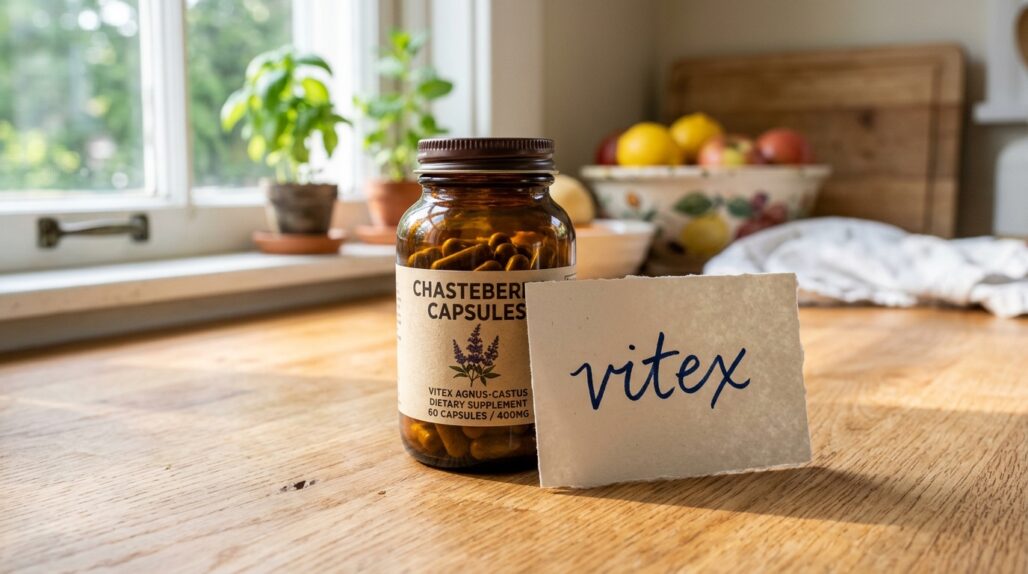
1. Vitex (chasteberry) – the best-supported pick
Vitex agnus-castus is the one supplement here with a real human track record for this exact problem. A 2020 systematic review and meta-analysis in the Journal of Women's Health pooled six randomized trials covering 718 women and found a moderate effect favoring vitex over placebo for breast pain intensity. Broader PMS reviews point the same direction.
The proposed mechanism fits the symptom. Vitex gently lowers prolactin, which can be slightly elevated in some women with cyclical breast pain, and it nudges the progesterone side of the luteal phase. That is plausible biology backed by trial data, which is more than the other two picks can claim.
Dose: studies clustered around 20-40 mg of a standardized extract once daily, usually in the morning, taken for three months. Realistic timeline: this is the part people skip. Vitex typically needs two to three full cycles before you can judge it. If you quit after a week, you have not actually tested it.
Who should be careful: because vitex acts on hormone signaling, skip it if you are pregnant or trying to conceive, and talk to your clinician first if you use hormonal contraception or have a hormone-sensitive condition. It can interact with dopamine-related medications. The trials reported only mild, reversible side effects, but the hormonal angle is exactly why it might work and exactly why it is not for everyone.
2. Evening primrose oil – popular, but the evidence wobbles
Evening primrose oil delivers gamma-linolenic acid (GLA), a fatty acid that feeds into the anti-inflammatory prostaglandin pathway. The theory is that it rebalances the local fats that make luteal-phase breasts cranky. It is the supplement clinicians have recommended for decades, and plenty of women say it helps them.
The trial record is genuinely split. The NHS patient guidance from Cambridge University Hospitals sums it up plainly: two partly unblinded trials found a benefit, while better-designed fully blinded placebo-controlled trials found no difference from placebo. A 2021 systematic review and meta-analysis of EPO for mastalgia reached a similarly cautious read. Grade: weak and inconsistent. If a brand promises it erases breast pain, it is overselling.
Dose: the GLA dose used for breast pain is about 240-360 mg per day, which usually means 2,000-3,000 mg of evening primrose oil split across the day. Check the label, because GLA content per softgel varies a lot. Timeline: the NHS leaflet says to allow at least two months and not to expect anything immediate.
Cautions: EPO can mildly thin the blood, so be careful if you take anticoagulants or antiplatelet drugs, or stop it before surgery. The NHS guidance also flags caution with epilepsy and certain antipsychotics, and advises against it in pregnancy or when trying to conceive. It is low-risk for most healthy people, which is its real selling point, not its potency.
3. Vitamin B6 – weak evidence and a hard safety cap
Vitamin B6 (pyridoxine, or its active P-5-P form) is a long-standing PMS suggestion, supposedly because it supports progesterone and neurotransmitter pathways. If you want the background on where it fits among the rest of the family, see our complete guide to B vitamins. A 2025 systematic review and meta-analysis in BMC Women's Health pooled the trials but found no significant difference between B6 and placebo for breast pain (SMD -3.57, 95% CI -9.15 to 2.01), and rated the certainty of evidence as very low. The trials are small, highly heterogeneous and at high risk of bias, so treat any benefit as unproven. Grade: weak.
Here is the part that matters more than the modest upside. B6 has a real toxicity ceiling. The NIH Office of Dietary Supplements sets the adult tolerable upper intake level at 100 mg per day, and chronic high intakes can cause sensory nerve damage (tingling, numbness, unsteady walking) that is slow to reverse. Some regulators have moved even more conservatively. So this is not a more-is-better nutrient.
Dose: if you try it, keep your total daily B6 from all sources well under that 100 mg ceiling, and remember a B-complex or a women's multivitamin may already contain some. There is no good reason to megadose. If you notice tingling or numbness, stop and see your clinician.
The free fix that often does more than a pill
Before you spend anything, the conservative measures are the ones the medical guidance actually leads with, and they help a lot of people on their own.
- Wear a properly fitted, supportive bra. Get measured, and consider a soft sports bra at night during the tender days. Mayo Clinic lists better breast support as a first-line step for breast pain, and it costs nothing if you already own one that fits.
- Cut caffeine in the luteal phase. The studies on caffeine are not conclusive, but many women find that dialing back coffee, tea, energy drinks and chocolate in the week before their period eases the heaviness. Try it for two cycles and judge for yourself.
- Ease off salt and very fatty foods late in the cycle. Less salt means less fluid retention, and trimming saturated fat is a reasonable, low-cost lever on the prostaglandin balance.
- Use a warm or cool compress on the sore days, whichever feels better, and a plain over-the-counter painkiller like ibuprofen or acetaminophen for the worst day or two if you tolerate them.
Stress tends to make every premenstrual symptom louder, so calming the luteal-phase load helps here too; if that is your weak spot, our roundup of supplements for stress covers the calmer end of the toolkit. None of this is glamorous, and that is the point. A free habit you keep beats a supplement you take inconsistently.
What to skip and where people go wrong
The most common mistake is quitting too soon. Vitex and EPO both need months, not days, so a one-week trial tells you nothing. The second mistake is stacking everything at once, which makes it impossible to know what, if anything, is working. Add one thing, give it a fair run, then judge.
Be wary of products promising to "balance your hormones" or "cure" breast pain. Cyclical tenderness is a normal hormonal response, not a disease to be cured, and supplements at best soften it. And do not megadose B6 chasing a stronger effect; the ceiling is there for a reason.
When to see a doctor
Cyclical, both-sided soreness that comes and goes with your period is reassuring. These signs are not, and they mean you should see a clinician rather than reach for a supplement.
- A new fixed lump, or any lump that does not change with your cycle.
- One-sided, focal pain that stays in a single spot rather than spreading across both breasts.
- Skin or nipple changes such as dimpling, puckering, redness, scaling, an inverted nipple, or any nipple discharge (especially bloody or clear).
- Non-cyclical pain that has no link to your period, or pain severe enough to disrupt daily life.
Never treat a discrete lump or a one-sided change with supplements while you "wait and see." Most breast pain is benign, but the Mayo Clinic advises getting one-sided pain, a lump, or skin and nipple changes checked. If you are pregnant, breastfeeding, or on hormonal medication, clear any of these supplements with your clinician or pharmacist first.
FAQ
How long until vitex works for breast tenderness? Plan on two to three full cycles. Vitex acts slowly on hormone signaling, so a week is not a real trial. If there is no change after three months, it is probably not your answer.
Can I take evening primrose oil and vitex together? People do, and they work by different routes. But adding both at once makes it hard to tell what helps, and both carry pregnancy and interaction cautions. It is cleaner to test one at a time, and to check with your clinician if you take other medication.
Is it safe to take vitamin B6 every day for this? Low daily doses are generally fine, but keep your total from all sources well under 100 mg per day. Chronic high intake can damage sensory nerves, and that is slow to reverse, so do not megadose.
Does cutting caffeine actually help sore breasts? The evidence is mixed, but it is free and harmless to test. Try reducing caffeine for the week before your period across two cycles and see whether the heaviness eases.
Can these supplements be used with the pill? Vitex works on hormone pathways and may interact with hormonal contraception, so check with your clinician before combining them. Evening primrose oil is lower risk but still worth flagging if you take other medication.
Is breast tenderness before my period ever a sign of something serious? Cyclical, both-sided soreness that eases when your period starts is almost always benign. A new lump, one-sided focal pain, or skin or nipple changes are different and should be checked promptly.
The bottom line
For sore breasts before your period, vitex (chasteberry) at 20-40 mg a day is the pick with the most credible human evidence, but give it two to three cycles and expect modest relief rather than a cure. Evening primrose oil is low-risk and worth a try if you accept the trials disagree, and vitamin B6 has only weak support plus a firm 100 mg ceiling you should not push. Before any of it, a supportive bra and less caffeine and salt in the luteal phase cost nothing and often help. And if you notice a new lump, one-sided pain, or any skin or nipple change, see a doctor instead of self-treating.
This article is for general information and is not medical advice. Supplements can interact with medications and are not right for everyone, especially during pregnancy or breastfeeding. Talk to a qualified clinician or pharmacist before starting anything new, and never start, stop, or change a prescription on your own. Prices and product details change; check current details before buying.
Reviewed by the UsefulVitamins Editorial Team.
