
Affiliate disclosure: this article contains affiliate links. As an Amazon Associate, UsefulVitamins.com earns from qualifying purchases at no extra cost to you.
Calming the clock vs calming the body
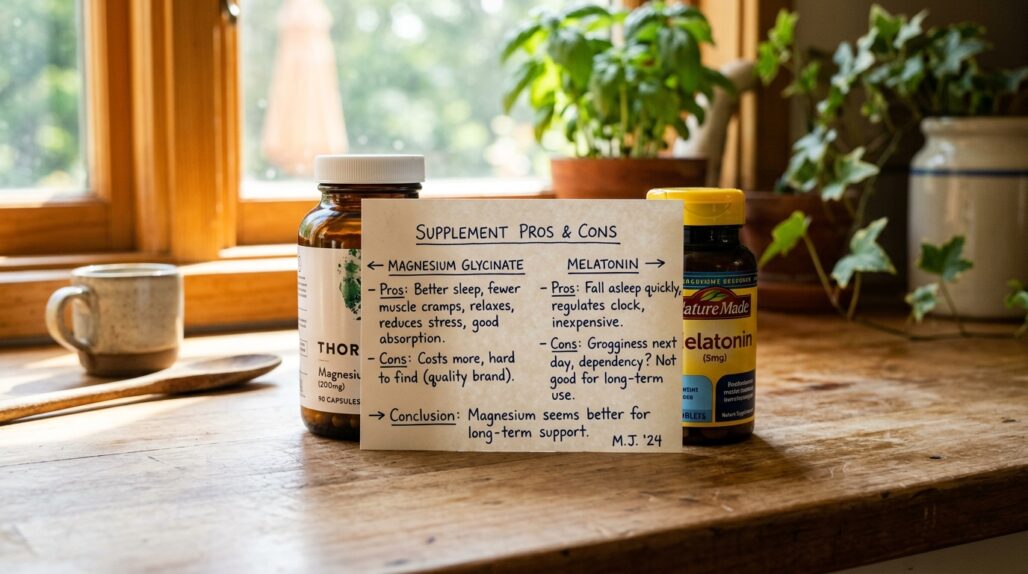
These two get lumped together as "natural sleep aids," but they are not doing the same job, and that is the whole story of which one you should buy.
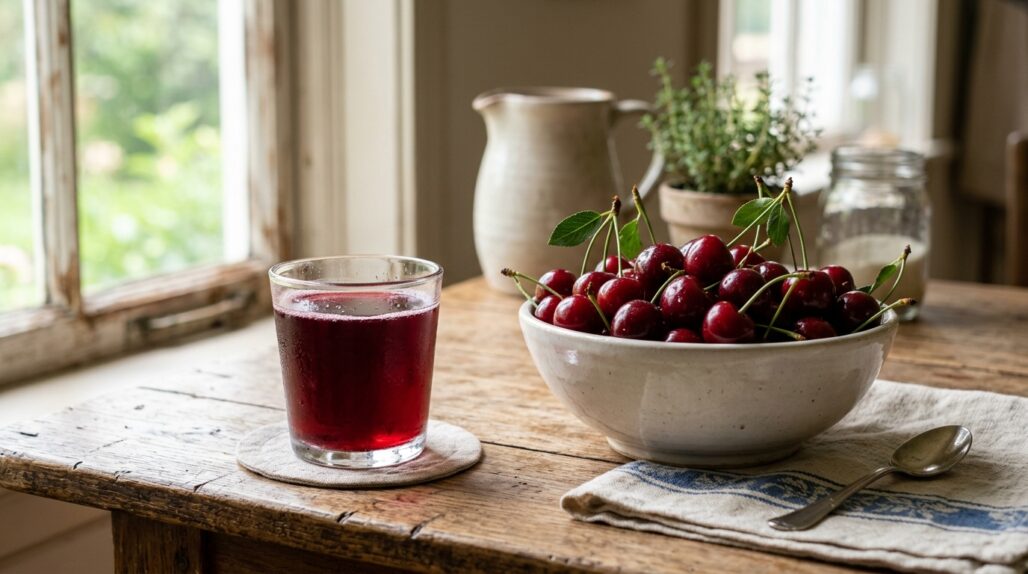
Tart cherry, usually sold as Montmorency cherry juice or extract, works mostly on the timing side of sleep. It carries a little real melatonin plus compounds that may help your body hold onto its own melatonin. Think of it as a gentle signal to your body clock.
Magnesium works on the other side: the calming, muscle-relaxing, nervous-system side. It is a mineral your body already needs for hundreds of jobs, and topping it up may quiet the kind of physical restlessness that keeps you wired at midnight.
So the honest framing is not "which is stronger." It is "which problem do you have". If your sleep is wrecked by jet lag, shift work or hard training, lean cherry. If it is tension, twitchy legs or a diet light on greens and nuts, lean magnesium. Below, both sides get graded honestly, including where the evidence is thin.
What tart cherry is and how it works
Montmorency tart cherry is a sour cherry rich in melatonin, tryptophan (the precursor your body turns into melatonin and serotonin) and procyanidins, which may slow the breakdown of tryptophan. In plain terms, it gives your circadian system a small push rather than knocking you out.
The most cited human study is a small randomized, placebo-controlled crossover trial in 20 healthy adults. After a week of tart cherry juice concentrate, participants showed higher urinary melatonin and modest gains in total sleep time and sleep efficiency. You can read the Howatson tart cherry and melatonin trial on PubMed.
Now the honest counterweight. A 2024 randomized crossover trial gave 34 adults with overweight or obesity 500 mg of Montmorency tart cherry powder an hour before bed for two weeks. It found no meaningful change in objective sleep or in inflammation markers, and the authors suggested the common powder dose may simply be too low. See the 2024 tart cherry powder trial in PMC.
Evidence grade for tart cherry: weak to moderate, and inconsistent. A couple of small positive juice trials, at least one null powder trial, and a real gap between the juice doses studied and the convenient capsules most people actually buy.
There is one place tart cherry pulls ahead: athlete recovery. Trials in marathon runners found cherry juice sped recovery of muscle strength and lowered some inflammation markers, as in the Howatson marathon recovery study. The recovery data are also mixed, but if you wake up sore and stiff, that soreness-plus-rhythm combination is a reasonable reason to try it.
What magnesium is and how it works
Magnesium is an essential mineral, not a botanical, and a real shortfall is common in people who eat few greens, legumes, nuts or whole grains. That matters, because the clearest sleep benefit shows up when you are correcting a deficit rather than piling extra onto a full tank.
Mechanistically it is well described. Magnesium acts as a natural antagonist at the NMDA (glutamate) receptor and supports GABA, your main calming neurotransmitter, while helping muscles relax. A readable overview is the review of magnesium mechanisms in sleep disorders. That is why magnesium tends to feel like physical settling rather than drowsiness.
For trial data, the most useful single source is a systematic review and meta-analysis of oral magnesium for insomnia in older adults: 3 randomized trials, 151 people, with sleep onset latency roughly 17 minutes faster than placebo. The catch is that the authors graded the evidence low to very low quality with moderate-to-high risk of bias. Read the magnesium for insomnia meta-analysis in PMC.
Evidence grade for magnesium: limited but slightly deeper than tart cherry. More pooled human data and a clear mechanism, dragged down by small, lower-quality studies. The strongest case is in older adults and likely-deficient people, not necessarily healthy young sleepers.
For form, magnesium glycinate is the gentle, well-absorbed choice for sleep. Oxide is cheap but laxative and poorly absorbed. If you want to see what a sensible nightly amount looks like for your size, our magnesium dose calculator walks through it.
Head to head: rhythm nudge vs body relaxant
Here is the side-by-side, graded honestly. Neither earns a knockout.
| Factor | Tart cherry | Magnesium |
|---|---|---|
| Best for | Circadian timing, jet lag or shift work, plus athletes who wake up sore | Muscle tension, restlessness, and people likely short on magnesium |
| Evidence | Weak to moderate and mixed: small positive juice trials, at least one null powder trial | Limited but slightly deeper: small RCTs and a low-quality meta-analysis, best signal in older or deficient adults |
| Onset | Gradual; works on rhythm, often takes several nights to settle | Can feel same-night for tension, with cumulative benefit over weeks |
| Typical dose | Around 30 ml concentrate or an equivalent extract in the evening; juice doses outrun most capsules | About 200 to 350 mg elemental as glycinate at night, under the 350 mg supplemental limit |
| Main downside | Sugar in juice, cost, and a real gap between studied juice doses and convenient capsules | Loose stools or GI upset at higher doses, and some drug interactions to check |
The pattern is clear once you read the rows together. Tart cherry is a timing tool with a dosing problem. Magnesium is a relaxation tool with a quality-of-evidence problem. Whichever matches your actual complaint is the better buy.
Who should pick which
Pick tart cherry if your sleep tracks with your schedule rather than your stress: you fly across time zones, work rotating shifts, or your body clock has drifted late. It is also the friendlier option for endurance athletes and lifters who notice they sleep worse on heavy training days, since the recovery and sleep angles overlap. Use juice or concentrate rather than a low-dose capsule if you can. To compare formats and dosing, see our roundup of the best tart cherry supplements for sleep.
Pick magnesium if your nights are about physical tension: restless legs, a body that will not switch off, jaw clenching, or a diet thin on greens, nuts and whole grains. It is also the better default for older adults, where the trial signal is strongest. Choose a gentle form and keep the dose sensible. Our guide to the best magnesium for sleep sorts the forms so you avoid the laxative ones.
Still not sure where your problem fits? Our complete guide to sleep supplements maps common sleep complaints to the options that match, including melatonin itself if a timing fix is all you need.
Which to buy


As an Amazon Associate, UsefulVitamins.com earns from qualifying purchases at no extra cost to you.
We may earn a commission from purchases made through links on this page, at no extra cost to you. It does not change our verdict.
If you are buying for rhythm or recovery, the tart cherry pick is your option. If you are buying for tension or a likely shortfall, the magnesium pick is the one. If you want to cover both sides without guessing, the combo or value option pairs them. A reasonable plan is to start with the single supplement that matches your main complaint, give it two to three weeks, and only add the second if the gap is still there.
Can you take both together?
Yes, and the pairing makes sense. Tart cherry leans on the timing and melatonin side; magnesium leans on the relaxation and muscle side. There is no known direct interaction between them, so taking both in the evening is reasonable.
Two real cautions, though, and they sit on the magnesium side. First, watch total magnesium. The NIH sets the supplemental upper limit at 350 mg of elemental magnesium a day for adults, mainly because more than that can cause diarrhea and cramping. The NIH Office of Dietary Supplements magnesium fact sheet also notes that magnesium can interfere with certain antibiotics, bisphosphonates and some other drugs by binding them or by stacking with the effects of others. Space doses apart and check with a pharmacist if you take prescriptions.
Second, mind additive drowsiness. If you also take a prescription sleep medication, a sedating antihistamine or anything that makes you sleepy, layering supplements on top can push you further than you want. That is a conversation for your doctor or pharmacist, not a do-it-yourself stack. And never start or stop a prescribed medication on the strength of a supplement.
One more honest note: persistent insomnia is not a supplement problem. If you have struggled for more than a few weeks, snore heavily or wake unrefreshed no matter what, get evaluated for things like sleep apnea before spending money on either of these.
FAQ
Is tart cherry the same as taking melatonin? Not quite. Tart cherry contains a small amount of natural melatonin plus tryptophan and other compounds, so the dose is far lower and gentler than a standard melatonin tablet. If you want a precise melatonin dose for jet lag, plain melatonin is more direct; tart cherry is the softer, food-based version.
Which works faster, tart cherry or magnesium? Magnesium can feel like it helps the same night by easing physical tension, while tart cherry usually needs several nights of consistent use to nudge your rhythm. Neither is a knockout sedative, so judge them over a week or two, not a single night.
What is the best magnesium form for sleep? Magnesium glycinate is the usual pick because it absorbs well and is gentle on the gut. Magnesium citrate also works but is more likely to loosen stools, and oxide is cheap but poorly absorbed. Keep supplemental magnesium at or below 350 mg of elemental magnesium per day.
Can tart cherry or magnesium help muscle soreness too? Tart cherry has the better recovery story: marathon trials suggest it can speed strength recovery and lower some inflammation markers, though results vary. Magnesium supports normal muscle function but is not specifically a recovery aid, so for sore legs after training, cherry is the more on-point choice.
Are these safe in pregnancy? Magnesium needs in pregnancy are real, but doses and forms should be set by your clinician rather than guessed. Tart cherry as a food is generally fine, but concentrated supplements have not been well studied in pregnancy. Check with your doctor before adding either.
Should I just take both every night? You can, since there is no known interaction, but it is smarter to start with the one that matches your main complaint. That way you actually learn what is working instead of paying for two products when one would do.
The bottom line
This is a true it-depends matchup, and the evidence on both sides is modest, so set expectations accordingly. Pick tart cherry if your sleep problem is about timing or training: jet lag, shift work, or waking up sore. Pick magnesium if it is about tension, restlessness or a likely dietary shortfall, especially if you are older, since that is where the human data look best. The two are safe to combine and cover different sides of sleep, but start with one so you can tell what helped, keep total magnesium under 350 mg, and bring any prescriptions or stubborn insomnia to a clinician.
This article is for general information and is not medical advice. Talk to a qualified healthcare professional before starting a new supplement, especially if you are pregnant, take medication or have a health condition.
Reviewed by the UsefulVitamins Editorial Team.
