
Affiliate disclosure: this article contains affiliate links. As an Amazon Associate, UsefulVitamins.com earns from qualifying purchases at no extra cost to you.
Why beta-blockers mess with your sleep, not your vitamins
Most "supplements for X medication" lists open with a depletion. Beta-blockers are a little different. They are not known for stripping a vitamin or mineral out of you the way some drugs do. What they reliably do is turn down your own melatonin at night.
Here is the chain. Beta-blockers like metoprolol, atenolol, propranolol, bisoprolol, and carvedilol block beta-1 adrenergic signaling. Your pineal gland relies on that same sympathetic signaling to make melatonin after dark. Block the signal and you make less melatonin. Human studies measured roughly a 40 to 50 percent drop in urinary 6-sulphatoxymelatonin (the marker doctors use for melatonin output) in people taking beta-1 blockers, as reported in the European Journal of Clinical Pharmacology work by Stoschitzky and colleagues. That suppression is the most likely reason for the insomnia and vivid dreams people complain about on these drugs.
So the honest framing is this. You are not topping off a depleted tank of vitamins. You are deciding whether to gently replace the one thing the drug turns down, and which popular add-ons could either fight your medication or stack a risk on top of it. This article is education, not a change to your prescription. Keep taking your beta-blocker exactly as prescribed and run any addition past your pharmacist first.
What a beta-blocker actually depletes or affects (graded honestly)
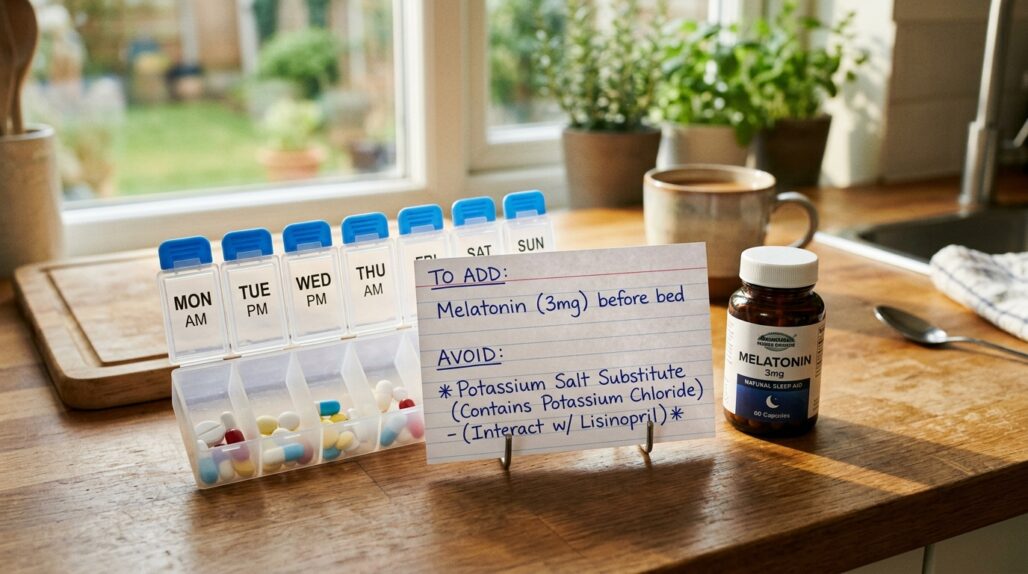
Melatonin – well-documented. This is the real one. On top of the urinary-marker studies, there is a randomized controlled trial. In Scheer and colleagues' 2012 SLEEP trial (PMID 23024438), 16 hypertensive patients already on atenolol or metoprolol took 2.5 mg melatonin nightly for three weeks. Compared with placebo it added about 36 minutes of total sleep time, raised sleep efficiency by 7.6 percent, and cut the time to fall into stable sleep by roughly 14 minutes. Small study, but it lines up with the mechanism and points at a low-risk fix.
CoQ10 – theoretical, not proven. You will see "beta-blockers deplete CoQ10" repeated all over the supplement internet. The basis is thin. Some older lab work suggested propranolol and metoprolol might interfere with how the body uses coenzyme Q10, but there is no good evidence of a clinically meaningful CoQ10 deficiency caused by these drugs, and pharmacists generally agree it does not happen with cardioselective agents like bisoprolol. We are not treating it as a real depletion, and we are not putting CoQ10 in the safe-add picks. There is a second reason for that, below: CoQ10 can nudge blood pressure down, and you are already on a drug that lowers it.
Everything else – largely unsupported. Beta-blockers are not a recognized cause of low magnesium, low B vitamins, or low vitamin D. Plenty of people on a beta-blocker do run low on those, but usually because of diet, age, or other medications, not the beta-blocker itself. That matters: it means you supplement to fix a tested gap, not to "counter the drug."

The supplements worth adding, and how to take each
These three are safe-to-add options for most people on a beta-blocker. None of them lowers your dose, replaces your medication, or treats your heart condition. They address the side effect (sleep) or a common separate gap (magnesium, vitamin D). Confirm with your pharmacist, especially if you have kidney disease or also take an ACE inhibitor, an ARB, or a potassium-sparing diuretic.


As an Amazon Associate, UsefulVitamins.com earns from qualifying purchases at no extra cost to you.
We may earn a commission if you buy through links on this page, at no extra cost to you. It does not change what we recommend or how we grade the evidence.
| Supplement | What it helps with | How to take it (timing/spacing from your dose) | Caution |
|---|---|---|---|
| Low-dose melatonin (around 2.5 mg) | Replaces the nighttime melatonin your beta-blocker suppresses; the insomnia and vivid-dream side effect. | About 30 to 60 minutes before bed. The trial used 2.5 mg; many people do fine on 1 to 2 mg. Start low, give it a week or two. | Can cause grogginess or vivid dreams of its own. Talk to your prescriber if you take other sedatives or have low blood pressure at night. |
| Magnesium glycinate | A common dietary gap; the gentle, well-absorbed form for sleep and muscle cramps. | A normal daily dose (around 200 to 350 mg of elemental magnesium) at night. Keep it about 2 hours away from your beta-blocker. | Magnesium mildly lowers blood pressure and heart rate, so do not megadose on top of the drug. Talk to your doctor first if you have kidney disease. |
| Vitamin D3 | A widespread deficiency unrelated to the drug; bone and general health if your level is low. | With a meal that has some fat. A common maintenance dose is 1,000 to 2,000 IU, ideally guided by a blood test. | Does not interact with beta-blockers. Test before dosing high; more is not better. |
A few notes the table can not hold. Melatonin is first here because it targets the actual problem the drug creates, and the dose is small. Magnesium earns its place as a sensible add for the many people who run low, not as something the beta-blocker depleted. Vitamin D3 is on the list for the same reason: common gap, no interaction, easy to test. For form comparisons it is worth reading our roundups of the best melatonin supplements and the best overall magnesium supplement before you buy, and if you want help landing on a sensible amount, our magnesium dose calculator is a starting point to bring to your pharmacist.
What to avoid or space apart (the part that matters most)
This is the section to read twice. A few popular supplements do not belong anywhere near a beta-blocker without a green light from your prescriber.
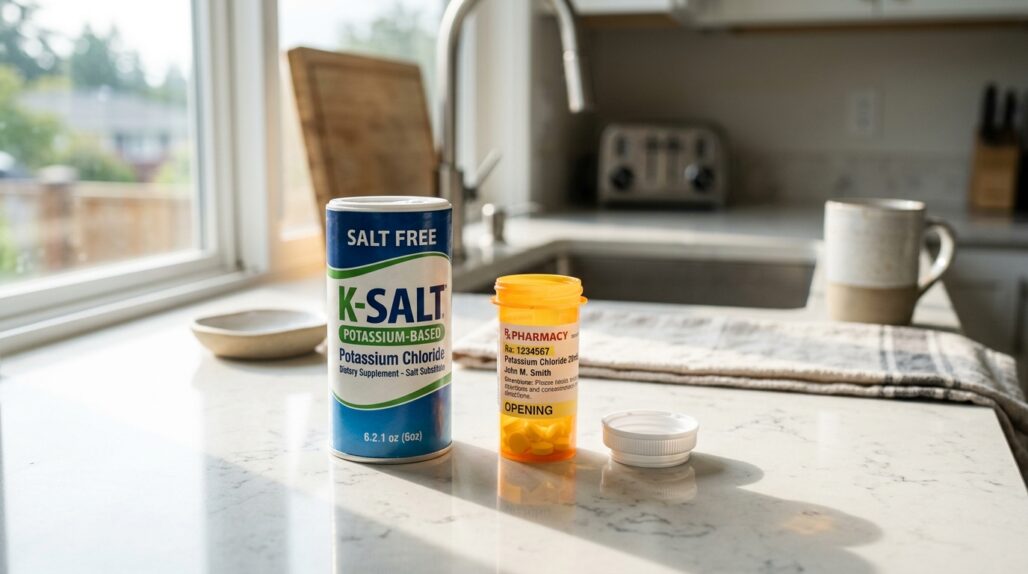
Potassium supplements and potassium-based salt substitutes. Do not add on your own. Beta-blockers can raise blood potassium. They blunt aldosterone and slow the pump that moves potassium into your cells, so potassium drifts up in the blood. The effect is stronger with non-selective agents like propranolol and carvedilol, and it gets riskier if you have kidney disease or also take an ACE inhibitor, an ARB, or a potassium-sparing diuretic such as spironolactone. That means no potassium pills and no "NoSalt" or "LoSalt" style substitutes unless your doctor specifically directs and monitors it. Ordinary potassium from food in a normal diet is a different matter, but a concentrated supplement or salt substitute can tip you into hyperkalemia, which is dangerous for your heart rhythm.
Calcium. Space it apart. Calcium binds beta-blockers in the gut. In a pharmacokinetic study, 500 mg of calcium cut atenolol peak levels by about 51 percent and total exposure by about 32 percent, per the professional interaction monograph. That can leave you under-dosed. The fix is simple: take your beta-blocker and any calcium (or calcium-containing antacid) at least 2 hours apart, and keep your timing consistent day to day so your effective dose does not bounce around.
CoQ10 and fish oil stacked for blood pressure. Both can lower blood pressure a little. Pile them on top of a beta-blocker and the lowering can add up. For many people that is fine, but watch for dizziness or faintness, especially if your blood pressure already runs low, and tell your prescriber. This additive effect, plus the lack of real depletion evidence, is exactly why CoQ10 is not in the safe-add cards despite the marketing.
High-dose magnesium taken at the same time as your dose. A normal daily magnesium dose is fine. Large doses mildly lower blood pressure and heart rate (additive with the drug) and can reduce absorption if taken together. Keep it to a sensible amount, separate it from the beta-blocker by about 2 hours, and report new lightheadedness. The NIH Office of Dietary Supplements magnesium fact sheet has the upper limits worth respecting.
Heart-rate and blood-pressure-active botanicals. Hawthorn and high-dose garlic can add to blood-pressure lowering. On the other side, stimulant "energy" or "pre-workout" blends and bitter-orange or synephrine products can fight the drug and push heart rate up. Clear any of these with your pharmacist before combining.
A practical way to keep all of this straight: write down everything you take, the prescription and every supplement, and show that single list to your pharmacist. If you would rather not keep it on paper, you can log both your beta-blocker and your supplements in StackMyMed (our own free app), which flags overlaps like the potassium and additive-blood-pressure ones so you know what to ASK about. It is a prompt to raise things with your pharmacist, not medical advice, and it does not diagnose anything. Either route works. What matters is that one person who knows your full list looks at it before you add a pill.
Can you cover it with food instead?
Often, yes, and food is the better starting place for the mineral side of this.
For magnesium, lean on leafy greens, nuts, seeds, legumes, and whole grains before reaching for a capsule. For vitamin D, sensible sun exposure and foods like fatty fish and fortified dairy help, though many people in northern climates still need a supplement to correct a tested low level. Potassium is the one to handle through ordinary food rather than pills on a beta-blocker, and even then, if you have kidney issues or take an ACE/ARB, ask your doctor how much is right for you.
Melatonin is the exception. You can support it with good sleep habits, dim evening light, and a consistent bedtime, but there is no food that meaningfully replaces what the drug suppresses. If sleep is the problem, the low-dose supplement is the targeted tool, used with your prescriber's awareness. Sleep, electrolytes, and blood pressure all sit close together on a beta-blocker, which is why the guide for people on diuretics is a useful companion read if you also take a water pill.
FAQ
Does my beta-blocker deplete CoQ10, and should I take it? Probably not in any way that matters. The CoQ10-depletion claim is theoretical and not shown to be clinically meaningful, especially with cardioselective drugs like bisoprolol. CoQ10 can also lower blood pressure, which can add to your medication. If you want to try it, treat it as a discussion with your prescriber, not a routine add.
Is melatonin safe to take with a beta-blocker? For most people, low-dose melatonin is reasonable and is the one add with trial support specifically in beta-blocker users. Start low (around 1 to 2.5 mg), take it 30 to 60 minutes before bed, and check with your pharmacist if you take other sedatives or have very low nighttime blood pressure.
Why can’t I just take a potassium supplement if I feel tired? Because beta-blockers can already raise your blood potassium, and adding more can be dangerous, particularly with kidney disease or an ACE inhibitor, ARB, or potassium-sparing diuretic. Tiredness has many causes. Get a blood test rather than guessing, and let your doctor decide on potassium.
How far apart should I take calcium and my beta-blocker? At least 2 hours. Calcium binds the drug in the gut and can cut how much you absorb. Keep the timing the same each day so your dose stays steady.
Can a supplement replace my beta-blocker? No. Nothing here is a natural alternative to your medication, and none of it reduces or substitutes for your dose. These supplements support sleep or fill a separate nutrient gap while you stay on the drug your doctor prescribed.
What if I want to stop my beta-blocker? Never stop one abruptly. Stopping suddenly can trigger rebound fast heartbeat and blood-pressure spikes. Any change is a medical decision and is done by tapering under your prescriber’s guidance.

The bottom line
If a beta-blocker is wrecking your sleep, the best-supported add is low-dose melatonin at bedtime, which gently replaces what the drug turns down. Magnesium glycinate and vitamin D3 are worth it if you are low, kept to normal doses and spaced from your medication. The rule to respect above all others: do not add potassium supplements or salt substitutes on your own, and keep calcium at least 2 hours away from your dose.
See your doctor or pharmacist promptly if you develop muscle weakness, fatigue, tingling, palpitations or an irregular or slow heartbeat – these can signal high blood potassium, a known beta-blocker effect, and the risk is higher with kidney disease or alongside an ACE inhibitor, ARB, or potassium-sparing diuretic. Also get care for fainting, severe dizziness, or a resting pulse that drops very low. And never stop a beta-blocker abruptly.
Write your full list down or log it, then take it to your pharmacist, who can see the whole picture. Your pharmacist can confirm in a few minutes whether anything you want to add is safe with your exact drug.
This article is for general education and is not medical advice, a diagnosis, or a change to your prescription. Talk to your own doctor or pharmacist before adding, stopping, or changing anything.
Reviewed by the UsefulVitamins Editorial Team.
