
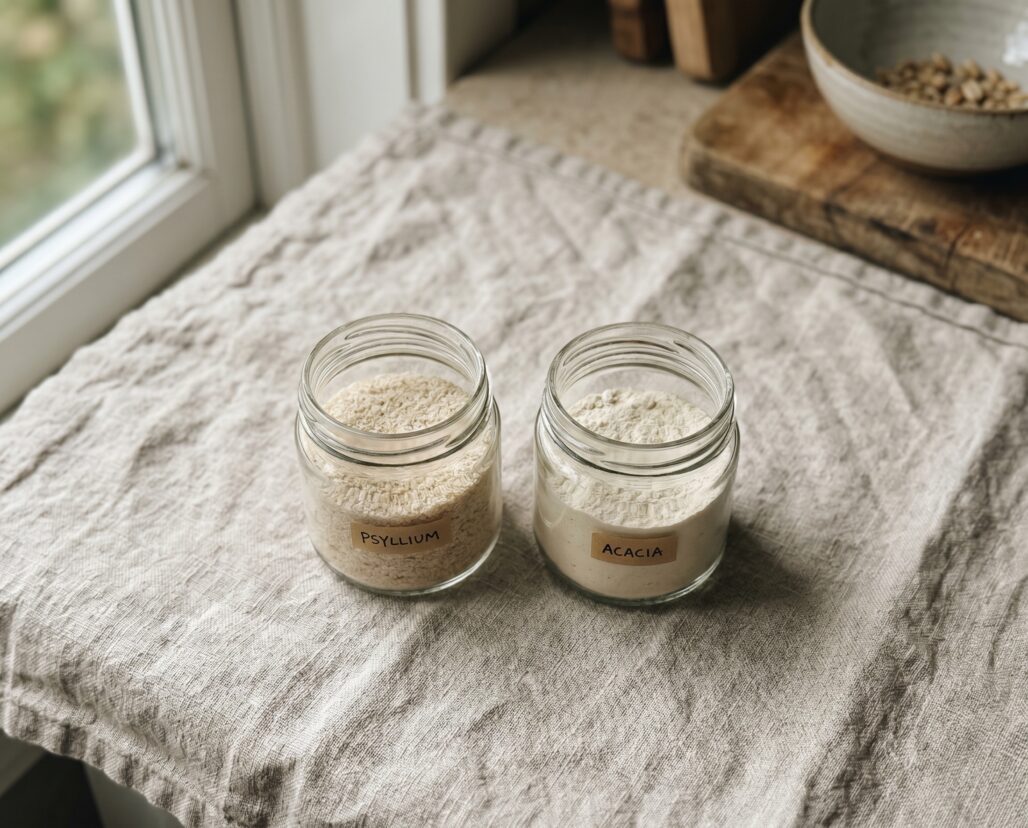
If you're searching for the best fiber supplement while on Wegovy or Zepbound, the short answer is: for most GLP-1 users, a soluble fiber (psyllium or acacia) will do more good than anything labeled "digestive cleanse" or "prebiotic blend." GLP-1 medications slow gastric emptying and gut motility as a direct pharmacological effect, and constipation follows for a significant portion of users. This article names a top pick for each scenario, compares psyllium against acacia (they're not interchangeable), flags the products worth skipping, and gives you a practical dosing framework to start low and build without making things worse. You'll also get a value comparison between budget-friendly options and premium brands that charge 4-5x more for the same fiber gram. The picks below are the ones we'd keep in our own family's cabinet.
Affiliate disclosure: this article contains affiliate links. As an Amazon Associate, UsefulVitamins.com earns from qualifying purchases at no extra cost to you.
Table of Contents
- Who fiber supplements help on GLP-1 therapy (and who doesn't need them)
- How we picked
- Comparison table
- Top fiber supplement picks for GLP-1 users
- Top Pick: Konsyl Original Psyllium Fiber
- Premium / Sensitive Stomach: Heather's Tummy Fiber Acacia
- Budget Pick: BulkSupplements Psyllium Husk Powder
- Best for FODMAP and IBS: NOW Foods Acacia Fiber
- Best for Cholesterol Support: Metamucil Psyllium Fiber
- Best Whole-Food Blend: Garden of Life Raw Organic Fiber
- Skip these
- How to use fiber on GLP-1 medications: dosing and timing
- Side effects and interactions
- Fiber and GLP-1: what the research shows
- Frequently Asked Questions
Who fiber supplements help on GLP-1 therapy (and who doesn't need them)
GLP-1 receptor agonists like semaglutide and tirzepatide reduce gut motility as a side effect — the same mechanism that slows gastric emptying to reduce hunger also slows the entire digestive tract. Constipation is a common adverse reaction: it was reported in about 24% of adults on semaglutide 2.4 mg versus roughly 11% on placebo, per the Wegovy prescribing information, and it tends to show up during the early dose-escalation weeks.
Strong fit:
- GLP-1 users experiencing fewer than 3 bowel movements per week
- Anyone whose fiber intake from food has dropped due to appetite suppression (eating less means less fiber from vegetables and whole grains)
- People with pre-existing IBS-C who want the gentlest possible option
- Those managing LDL cholesterol alongside weight loss (psyllium has well-documented LDL-lowering effects at roughly 7-10 g/day)
Skip or use carefully if:
- You have an esophageal narrowing or difficulty swallowing — psyllium can become a bolus risk without adequate water
- You're already at 25-35 g total daily fiber from food (additional supplementation gives diminishing returns and increases bloating risk)
- You have severe gastroparesis — adding bulk fiber to an already-stalled system can backfire
Think of your gut motility on a GLP-1 as a river whose current has been turned down. Adding fiber without enough water doesn't restart the current; it just piles up sediment. Hydration is not optional here.

How we picked
We started with the six fiber products most frequently appearing in GLP-1 user threads on r/Semaglutide, r/WegovyWeightLoss, and clinician-facing forums, then filtered by: disclosed soluble fiber content per serving (not just total fiber), ingredient label transparency, third-party facility certification or NSF registration, and cost-per-effective-dose. We excluded products where the primary selling point was a proprietary blend with no per-fiber disclosure. We did not taste-test or lab-test these products independently; our shortlist references available third-party lab data where it exists (ConsumerLab, NSF) and is transparent about what we don't know.
Comparison table
| Brand | Type | Soluble fiber / serving | Cost per gram | Form | FODMAP-friendly | Best for |
|---|---|---|---|---|---|---|
| Konsyl Original | Psyllium husk | 3 g | ~$0.07 | Powder | Conditional | Most GLP-1 users |
| Heather's Tummy Fiber | Acacia | 6 g | ~$0.22 | Powder | Yes | Sensitive stomach / IBS |
| BulkSupplements Psyllium | Psyllium husk | 5 g | ~$0.04 | Powder | Conditional | Budget / high-volume use |
| NOW Foods Acacia | Acacia | 6 g | ~$0.12 | Powder | Yes | FODMAP-sensitive |
| Metamucil Orange | Psyllium husk | 2.4 g | ~$0.15 | Powder | No (sugar) | Cholesterol focus |
| Garden of Life Raw Organic | Psyllium + flax + chia blend | 5 g | ~$0.28 | Powder | Conditional | Whole-food supplement seekers |
Top fiber supplement picks for GLP-1 users
Top Pick: Konsyl Original Psyllium Fiber
Form: 100% psyllium husk powder (no additives, no sweeteners)
Soluble fiber per serving: about 3 g per 1 tsp (6 g psyllium; 5 g total fiber)
Best for: Most GLP-1 users as a first-line fiber supplement
Why we picked it: Konsyl has been around since 1957, manufactures in an NSF-registered facility, and uses a single ingredient — psyllium husk with no flavors, colors, or sweeteners added. That matters for GLP-1 users who are already managing a sensitive GI system and don't need novel ingredients complicating the picture. At about 3 g soluble fiber (5 g total) per teaspoon, it matches or beats most premium competitors gram for gram.
The trade-off: Psyllium is not FODMAP-certified, and some IBS sufferers report gas and bloating, particularly when starting above 5 g/day. Konsyl also has no flavor — it's chalky in plain water. Mixing into a smoothie or juice solves this, but it's worth noting upfront.
Skip if: You have confirmed IBS-C with FODMAP sensitivity. Go to the acacia options instead. Also skip if you're buying for children — psyllium dosing for pediatric use requires physician guidance.
Actionable takeaway: Konsyl is the cleanest, lowest-cost entry point for GLP-1-related constipation. Start at 1 tsp once daily with 8 oz water, not mixed into a protein shake that you'll drink slowly.
Konsyl Original Psyllium Fiber
Single-ingredient psyllium husk, about 3 g soluble fiber per teaspoon, made in an NSF-registered facility.
Premium / Sensitive Stomach Pick: Heather's Tummy Fiber Acacia
Form: 100% organic acacia senegal powder
Soluble fiber per serving: 6 g per 2 tsp (6 g)
Best for: GLP-1 users with IBS, FODMAP sensitivity, or significant GI distress from psyllium
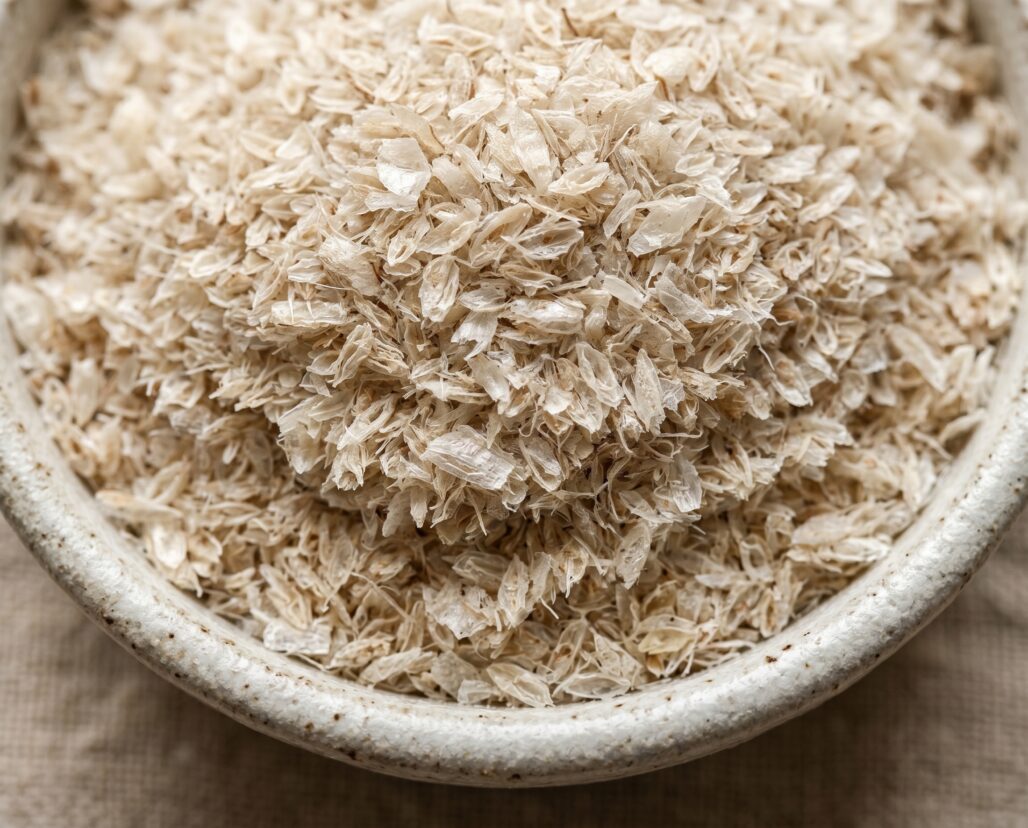
Why we picked it: Acacia ferments more slowly in the colon than psyllium — it's not a prebiotic in the FOS/inulin sense, but it does feed gut bacteria, just at a pace that doesn't produce a rapid gas surge. This slower fermentation profile is why gastroenterologists frequently recommend acacia specifically for IBS-C patients. Heather's Tummy Fiber is 100% organic acacia senegal, which the manufacturer positions as low-FODMAP — though note it carries no formal Monash University certification, and Monash has not published FODMAP test data for acacia gum.
The trade-off: At roughly $0.22 per gram of soluble fiber, this costs about 3x more than Konsyl per gram delivered. You're paying for the FODMAP certification, the organic sourcing, and the IBS-specific formulation — not for a clinically superior fiber molecule. If you don't have IBS, the premium is hard to justify.
Skip if: You're cost-sensitive and don't have IBS or FODMAP issues. Psyllium at Konsyl or BulkSupplements pricing is a better allocation of your supplement budget.
Actionable takeaway: The right call for anyone whose GI system was already unpredictable before starting a GLP-1.
Heather's Tummy Fiber Organic Acacia
Organic low-FODMAP acacia senegal, slower fermentation, aimed at IBS-C and sensitive guts.
Budget Pick: BulkSupplements Psyllium Husk Powder
Form: 100% psyllium husk powder, unflavored
Soluble fiber per serving: ~5 g per 5 g scoop (varies slightly by lot)
Best for: High-volume buyers, people titrating up over weeks, those already committed to psyllium
Why we picked it: BulkSupplements sells at roughly $0.04 per gram of fiber — nearly half the price of Konsyl and a fraction of the premium acacia options. The company operates under cGMP conditions and has its products third-party tested for heavy metals and microbials; Certificates of Analysis are available on request. For fiber supplementation, where you're buying a commodity ingredient in bulk, there's no meaningful clinical advantage to paying more.
Konsyl costs roughly $0.07/g. BulkSupplements costs $0.04/g. That's the same psyllium molecule. The 1.75x premium at Konsyl buys you slightly better quality documentation and name recognition — not better constipation relief.
Skip if: You want individual serving packets for travel or office use, or if you need a product that's immediately third-party searchable by name on ConsumerLab. BulkSupplements' COA-on-request model is fine for most buyers but requires more legwork than a pre-certified brand.
Actionable takeaway: The right call if you're planning to use fiber supplements long-term and cost adds up over months.
BulkSupplements Psyllium Husk Powder
Commodity psyllium at roughly $0.04 per gram of fiber, cGMP-produced with COA available on request.
Best for FODMAP and IBS: NOW Foods Acacia Fiber
Form: 100% acacia fiber (Fibregum brand acacia senegal)
Soluble fiber per serving: 6 g per 2 tsp
Best for: FODMAP-sensitive GLP-1 users who want acacia without the premium of Heather's brand
Why we picked it: NOW Foods uses Fibregum, an acacia senegal ingredient with its own published safety data and EFSA-reviewed GRAS status. NOW's Fibregum acacia ingredient holds FODMAP Friendly certification — an independent Australian program, distinct from Monash — making it the only pick on this list whose acacia carries a third-party FODMAP credential. At roughly $0.12/g it sits between Konsyl and Heather's on cost.
The trade-off: Plain packaging with fewer IBS-specific usage cues than Heather's, and no flavor options.
Skip if: You want IBS-tailored dosing guidance on the label — Heather's packaging is built around that use case. Otherwise, it's a solid, mid-priced acacia option.
NOW Foods Acacia Fiber
Fibregum acacia senegal at a mid-tier price, a solid pick when you want acacia without the Heather's premium.
Best for Cholesterol Support: Metamucil Psyllium Fiber
Form: Psyllium husk with flavoring (orange, sugar-free or regular)
Soluble fiber per serving: 2.4 g per dose (regular) or 2.1 g (sugar-free)
Best for: GLP-1 users primarily focused on LDL management alongside constipation relief
Why we picked it: Metamucil is the most studied commercial psyllium product by name, appearing in multiple cholesterol RCTs and carrying FDA authorized health claim language for LDL reduction. A 2000 meta-analysis in the American Journal of Clinical Nutrition (Anderson et al., 8 controlled trials, 656 participants) found that about 10 g/day of psyllium lowered LDL cholesterol by roughly 7% when used as part of a low-fat diet. Metamucil is the product most commonly used in those trials.
The trade-off: Metamucil's per-serving soluble fiber content (2.4 g) is lower than Konsyl's roughly 3 g — a real gap, but smaller than the marketing on either side suggests. "The most recognized brand name" isn't the same as "the most fiber per dollar." This is also the most expensive fiber per gram on this list at roughly $0.15/g.
Skip if: Your primary goal is constipation relief. Konsyl or BulkSupplements gives you more soluble fiber per dollar for that purpose.
Metamucil Psyllium Fiber
The most-studied commercial psyllium by name, with FDA-authorized LDL health-claim language — but a lower fiber dose per serving.
Best Whole-Food Blend: Garden of Life Raw Organic Fiber
Form: Psyllium, flaxseed, chia, plus 14 organic fruit/vegetable powders
Soluble fiber per serving: ~5 g per 2-scoop serving
Best for: GLP-1 users who prefer a "food-first" philosophy and don't mind the premium
Why we picked it: Garden of Life Raw Organic Fiber is USDA Organic certified, uses a non-GMO blend of actual food-derived fibers, and the ingredient list reads more like a smoothie add-in than a pharmaceutical supplement. For people who find plain psyllium powder texturally off-putting, the multi-ingredient blend mixes more easily into shakes.
The trade-off: At roughly $0.28/g of soluble fiber, it's the most expensive per gram on this list. The organic fruit and vegetable powders sound impressive but contribute negligible nutrients per serving — you're paying for the branding narrative as much as the product. More forms of fiber in one scoop isn't necessarily more effective; for GLP-1-related constipation, plain psyllium at a therapeutic dose does the job.
Skip if: You're budget-conscious or specifically managing FODMAP triggers (the multi-ingredient blend makes individual triggers harder to isolate).
Garden of Life Raw Organic Fiber
USDA Organic, non-GMO psyllium-flax-chia blend that mixes easily into shakes — at the highest cost per gram here.
Skip these
Skip: Fiber gummies (any brand)
We don't recommend fiber gummies for GLP-1 users. The category has a fundamental dose problem: most deliver 1-2 g of inulin or chicory root extract per serving, which is below the 5-10 g threshold where psyllium and acacia show meaningful motility benefit in trials. To hit 10 g from most fiber gummies, you'd eat 5-10 gummies and a significant amount of added sugar or sugar alcohol along with them. The chewable format is not the issue — the dose ceiling is. If you've seen a fiber gummy recommended heavily on TikTok or Instagram, that's marketing budget reflecting, not evidence.
Skip: Prebiotic "gut health" blends with FOS or inulin as the primary fiber
Prebiotic fibers like fructooligosaccharides (FOS), inulin, and galactooligosaccharides (GOS) feed gut bacteria and produce short-chain fatty acids, which is genuinely useful for gut health. But many people — particularly those already dealing with IBS or motility disruption — experience notable bloating and cramping when fermentation is rapid. On a GLP-1, where your gut is already running slow, adding a fast-fermenting prebiotic before your motility has stabilized is a setup for discomfort. Psyllium and acacia are both fermented more slowly and are better tolerated at the start of GLP-1 therapy. Save the prebiotic exploration for after your GI situation has settled.
How to use fiber on GLP-1 medications: dosing and timing
The most common mistake with fiber supplementation is starting at the "recommended dose" on the label. For GLP-1 users, that's often too much, too fast.
Starting protocol:
- Week 1-2: 5 g/day (1 tsp Konsyl or BulkSupplements, or equivalent)
- Week 3-4: 10 g/day if tolerated (split into two doses)
- Week 5+: titrate toward your personal tolerance ceiling, up to the 25-35 g/day total daily fiber target (food + supplement combined)
Hydration requirement: 8 oz water minimum with each fiber dose. This is non-negotiable — psyllium absorbs water and forms a gel; without enough fluid it becomes a constipating bulking agent rather than a laxative one. Think of psyllium dry as a sponge, and your gut as the container it's expanding into. Water is what makes it work.
Medication separation: Soluble fiber can bind to oral medications and reduce absorption. Separate fiber doses from any oral medications (metformin, thyroid, statins) by at least 2 hours. GLP-1 injectables (Wegovy, Zepbound) are subcutaneous — no interaction concern. If you take several oral medications, our companion app StackMyMed can map the timing gaps and run a whole-stack interaction check with source-backed warnings — though your pharmacist stays the final word on your specific regimen.
Timing: Morning with breakfast or mid-morning tends to work well for most users. Avoid dosing immediately before bed since lying down reduces the water-movement effect.
Side effects and interactions
Common, usually transient:
- Bloating and gas in the first 1-2 weeks as gut bacteria adjust. This resolves for most users after consistent daily use. Starting at 5 g/day minimizes this.
- Increased stool frequency initially (this is the point, but can feel abrupt).
Less common:
- Psyllium allergy is rare but documented — occupational asthma has been reported in healthcare workers with repeated high-dose inhalation exposure. For most consumers, the risk is negligible.
- Acacia can cause mild loose stools at doses above 30 g/day. At the 6-12 g range standard for supplementation, this is not an issue.
Drug interactions to flag with your prescriber:
- Metformin absorption can be marginally reduced by soluble fiber in the same meal window; the 2-hour separation rule addresses this.
- Levothyroxine (thyroid hormone) absorption is well-documented to be impaired by fiber — always separate by at least 4 hours.
- Warfarin and other anticoagulants: psyllium may modestly affect vitamin K absorption from food; if you're anticoagulated, mention any new fiber supplementation to your prescriber.
For a broader look at peptide and supplement interactions during GLP-1 therapy, see our guide to GLP-1 peptide side effects and how to manage them.
Fiber and GLP-1: what the research shows
The underlying constipation mechanism is well established: GLP-1 receptors in the enteric nervous system reduce gut motility when activated, particularly in the colon and small intestine. This effect is dose-dependent and most pronounced in the first 12-16 weeks as patients titrate up on semaglutide or tirzepatide.
For fiber's role specifically in GLP-1-related constipation, the direct RCT evidence is limited — most fiber trials predate the current GLP-1 adoption wave. However, soluble fiber's mechanism is well understood and aligns directly with the motility problem:
- A 2012 meta-analysis in the World Journal of Gastroenterology (Yang et al.) found that dietary fiber significantly increased stool frequency in people with chronic constipation, though it did not significantly change stool consistency.
- The FDA-authorized health claim for psyllium and LDL cholesterol (at 7 g/day soluble fiber) is relevant for GLP-1 users managing cardiovascular risk alongside weight loss.
- Acacia fiber's tolerability is supported by a 2024 randomized controlled trial in the European Journal of Nutrition (n=180) in which acacia fiber was well tolerated and increased stool frequency in people with constipation-predominant IBS.
Human data on GLP-1 plus fiber stacking specifically remain limited. The practical framing: fiber is first-line dietary management for constipation across medical guidelines (ACG, AAFP), and the mechanism fits GLP-1's specific motility effect. For a deeper look at the gut-peptide relationship, see our overview of peptides for gut health.
Frequently Asked Questions
How much fiber should I take per day on Wegovy or Zepbound?
The total daily fiber target is 25-35 g from all sources (food plus supplement). Most Americans eat well under that from food. On a GLP-1, appetite suppression often reduces food intake further, so the gap widens. Start supplementing at 5 g/day and titrate weekly based on tolerance. Don't try to close the gap immediately — you'll overshoot and cause bloating.
Should I take psyllium or acacia?
For most GLP-1 users without IBS, psyllium is the better-studied and more cost-effective choice. Acacia is preferable if you have confirmed FODMAP sensitivity or IBS, or if psyllium has caused significant bloating in the past. Acacia ferments more slowly and tends to be gentler on a sensitive gut.
Can I take fiber with my GLP-1 injection?
Yes. Subcutaneous GLP-1 injectables (Wegovy, Zepbound) have no absorption interaction with fiber. The separation rule applies only to oral medications taken by mouth at the same time as fiber.
Is a fiber supplement still necessary if I eat vegetables every day?
Possibly not. If you're reliably eating 5+ servings of vegetables, whole grains, and legumes and your total fiber intake is above 25 g/day, a supplement may add little. The issue for many GLP-1 users is that appetite suppression drops total food intake significantly, pulling fiber intake down with it. Track your fiber from food for a week before deciding.
Will fiber help with the nausea from GLP-1s?
Not directly. Fiber addresses the constipation end of GLP-1 GI side effects; nausea is a separate mechanism related to gastric emptying rate. Some users report that eating a small fiber-rich snack before their injection reduces nausea, but that's not documented in clinical trials. For nausea specifically, meal timing, portion size, and eating slowly matter more than fiber type.
Is psyllium safe to take every day long-term?
Yes, for most people. Psyllium is classified as a bulk-forming laxative and is not habit-forming in the way stimulant laxatives are. Daily use at 5-15 g is consistent with both the FDA health claim trial doses and clinical practice. Reduce or pause if your constipation resolves and you've restored dietary fiber to normal levels.
Can I add fiber powder to a protein shake?
You can, but it changes the hydration math. A thick protein shake doesn't deliver the 8 oz of free water needed for psyllium to work properly. Mixing fiber into a shake and then sipping it slowly over 30 minutes is not ideal. Better to take your fiber dose dissolved in a full glass of water separately, then have your shake.
Related reading
- Peptides for gut health: what the evidence shows
- GLP-1 side effects: what to expect and what to do
- Best magnesium for GLP-1 constipation
- Best probiotic for GLP-1 GI issues
The bottom line on fiber supplements for GLP-1 users
GLP-1-related constipation is a pharmacological side effect with a straightforward first-line response: soluble fiber plus adequate hydration. The hard part isn't identifying the right strategy — it's choosing a product that isn't overpriced, over-engineered, or under-dosed.
Konsyl Original Psyllium Fiber handles most cases. Heather's Tummy Fiber is the right swap for IBS and FODMAP sensitivity. BulkSupplements covers anyone who wants the same result at the lowest possible price. Fiber gummies and most "gut health blends" fail on dose math.
Next steps:
- Start at 5 g/day with 8 oz water, separate from medications by 2 hours
- Track stool frequency for 1-2 weeks before changing dose
- If bloating is significant after week two, switch from psyllium to acacia
- See best magnesium for GLP-1 constipation if fiber alone isn't enough
- See best probiotic for GLP-1 GI issues for the gut-bacteria angle
This article is for informational purposes and not medical advice. Fiber supplements and other over-the-counter products can interact with medications and health conditions. Consult a licensed physician or pharmacist before starting any supplement, particularly if you are pregnant, nursing, taking prescription medications, or managing a chronic condition.
As an Amazon Associate, I earn from qualifying purchases. Product recommendations are based on real reviews and independent research.
