
Affiliate disclosure: this article contains affiliate links. As an Amazon Associate, UsefulVitamins.com earns from qualifying purchases at no extra cost to you.
A stomach bug flips our usual electrolyte advice on its head. On this site we routinely tell healthy adults that sugar-free, high-sodium mixes are the smarter buy for sweat. During a bout of vomiting and diarrhea, the opposite is true: the sugar is not filler, it is the delivery mechanism that moves salt and water out of your gut and into your blood. This guide covers why that is, which products actually match the oral rehydration formula that hospitals rely on, and the symptom list that means you should stop self-treating and call a clinician. The picks below are the same bottles and packets we keep in our own family's sick-day drawer, because nobody wants to comparison-shop at 3 a.m. with a bucket next to the bed.
Before you decide
First, the safety gate, because gastroenteritis is one of the few situations where a drink choice genuinely matters less than knowing when to escalate. The National Institute of Diabetes and Digestive and Kidney Diseases publishes a clear red-flag list for adults, and NIDDK's symptom guidance says to seek medical care right away for any of these: stools that are black, tarry, or contain blood or pus; diarrhea lasting more than 2 days; high fever; frequent vomiting; six or more loose stools in a day; severe abdominal or rectal pain; a change in mental state such as confusion or unusual lack of energy; or signs of dehydration. The dehydration signs worth memorizing are urinating less than usual or not at all, dark urine, extreme thirst with a dry mouth, sunken eyes, and light-headedness or fainting. If any of that describes you or the person you are caring for, close this tab and call a doctor or emergency services. No product fixes those situations.
This article also cannot cover everyone. Talk to a clinician before self-treating if you are pregnant, over 65, immunocompromised, or managing kidney disease, heart failure, or diabetes, because both the fluid loss and the salt-and-sugar replacement carry different risks for you. People on diuretics, blood pressure medication, lithium, or a GLP-1 drug should read the FAQ below before reaching for any of these products. This is general information, not medical advice.
For everyone else, a typical viral gastroenteritis runs 1 to 3 miserable days, and the practical question is simply what to sip. If you want the physiology behind sodium, potassium, and fluid balance in general, our complete guide to electrolytes covers the foundations; this page stays focused on the sick-day version of the problem.
What a stomach bug actually takes out of you
Exercise loses fluid through sweat, which is relatively dilute. Gastroenteritis loses fluid through the gut, and gut fluid carries serious amounts of sodium, potassium, chloride, and bicarbonate with it. Vomiting adds stomach acid losses on top. You are losing salt-rich fluid from both ends while your intake drops to nearly zero, which is why a person can go from fine to dizzy-on-standing within a day.
The reason a specific drink helps comes down to one piece of physiology. In the small intestine, sodium is absorbed alongside glucose through a shared transport mechanism, and water follows the sodium. This pathway keeps working even while a virus or toxin is driving secretion in the other direction. As a review in Current Gastroenterology Reports puts it, the efficacy of oral rehydration solution rests on the ability of glucose to stimulate sodium and fluid absorption in the small intestine. Salt without sugar is poorly absorbed by an inflamed gut, and sugar without salt pulls no sodium in at all, so the ratio between the two is the whole game.
That insight produced the oral rehydration solution, arguably the most cost-effective medical intervention of the last century. The current recipe, laid out in WHO and UNICEF's treatment-of-diarrhoea manual, is a reduced-osmolarity formula containing 75 mEq of sodium and 75 mmol of glucose per liter, about 1,700 mg of sodium and 13.5 g of glucose, at a total osmolarity of 245 mOsm/L. The switch to this lower-concentration formula followed a systematic review in BMJ comparing it with the older, saltier version, and a Cochrane review in cholera patients examined the same trade-off in the most severe diarrheal disease there is. The deliberately modest glucose dose matters: it is enough to power sodium absorption without adding an osmotic load that drags extra water into the gut. A drink that is mostly sugar does exactly that, which is why heavy sugar can make diarrhea worse.
One honesty note, since we insist on it for every product claim on this site: the strongest ORS trial evidence comes from children and from cholera wards, because that is where the mortality was. The physiology of sodium-glucose transport is the same in an adult with norovirus, and bodies like the CDC extend the advice accordingly. CDC's travelers' diarrhea guidance points to oral rehydration solution for fluid replacement in serious cases. But you should know the adult-with-stomach-flu trials are thinner than the marketing implies.
When water alone is enough
Most healthy adults with a mild stomach bug do not need to buy anything. NIDDK's treatment page says most adults can replace fluids and electrolytes with liquids they already have: water, diluted fruit juice, broth, and yes, sports drinks. Salty crackers and a bowl of soup do real electrolyte work too. If you are keeping fluids down, urinating normally, and expect to eat within a day, water plus salty food is a perfectly sound plan.
The calculus changes when losses are large or intake is failing. NIDDK specifically recommends oral rehydration solutions for older adults, adults with weakened immune systems, and anyone with severe diarrhea or signs of dehydration. In practice, we would add: anyone who has vomited more than a couple of times, anyone whose diarrhea is watery and frequent rather than a one-off, and anyone who tried the water-and-crackers plan for half a day and still feels worse when standing. Broth deserves a special mention as the underrated free option, since a cup of chicken broth delivers several hundred milligrams of sodium in a warm, easy-to-sip form, though it lacks the glucose that makes a true ORS absorb faster.
How to choose an oral rehydration solution
Once you have decided a product is warranted, three numbers on the label do the sorting.
Sodium first. A true ORS lands roughly between 45 and 75 mEq of sodium per liter of prepared drink, which is about 1,000 to 1,700 mg. Pedialyte Classic sits at the bottom of that range and the WHO formula at the top. Sports drinks sit far below it, around 20 mEq per liter, because they were formulated for palatability during exercise. A drink with a quarter of the target sodium simply replaces less of what you are losing per swallow, and when every swallow is a negotiation with your stomach, concentration matters.
Sugar second, and here the logic inverts from our usual advice. You want some glucose, in the ballpark of 13 to 25 g per liter, to run the cotransport mechanism. You do not want the 58 g per liter of a full-sugar sports drink, which raises osmolarity and can worsen diarrhea. And you specifically do not want zero. A sugar-free stick such as LMNT, with 1,000 mg of sodium and no glucose per its label, is a product we recommend for heavy sweat sessions and skip for gastroenteritis. The sugar-free mixes that are the right call for a workout are the wrong call for a stomach bug.
Format third. Ready-to-drink bottles cost more per liter and earn it, because nobody sick wants to measure powder, and mixing errors change the concentration in ways that matter. Powder sticks are cheaper, shelf-stable for years, and fine as long as you use the stated water volume exactly. Whichever you choose, chilled tends to go down easier, and citrus flavors are gentler than they sound while dairy-adjacent flavors are a gamble.
Caffeine has no place here, and alcohol prolongs the misery. Skip anything marketed as an energy-plus-hydration hybrid until you are well.
The numbers side by side
We normalized every product to one liter of prepared drink so the comparison is honest; serving sizes vary wildly between brands. Label numbers were checked against brand pages, the printed nutrition label, or USDA's branded-food database in August 2026. Where a brand does not publish a figure, we say so rather than guess. Gatorade appears as the reference point people actually reach for, not as a recommendation; its per-liter numbers come from USDA's branded food database entry.
| Drink (prepared) | Sodium per liter | Sugar per liter | Potassium per liter | Format | Price per serving |
|---|---|---|---|---|---|
| WHO reduced-osmolarity ORS | about 1,700 mg (75 mEq) | 13.5 g glucose | about 780 mg | dry packet, mix into 1 L | varies by brand |
| Pedialyte Classic | 1,080 mg | 13 g | 780 mg | ready-to-drink 1 L bottle | varies by retailer |
| DripDrop | about 1,400 mg (330 mg per 8 oz stick) | about 30 g (7 g per stick) | about 780 mg (185 mg per stick) | powder stick into 8 oz | about $1.12 as of August 2026 ($35.99 per 32) |
| Liquid I.V. Hydration Multiplier | about 1,060 mg (500 mg per 16 oz stick) | about 23 g (11 g per stick) | about 780 mg (370 mg per stick) | powder stick into 16 oz | about $1.56 as of August 2026 ($24.99 per 16) |
| Gatorade Thirst Quencher (reference) | about 460 mg | about 58 g | about 140 mg | ready-to-drink bottle | varies by retailer |
Read the table top to bottom and the pattern is hard to miss. The rehydration products carry two to four times the sodium of a sports drink at a fraction of the sugar, which is precisely the profile the WHO formula targets. Gatorade is not a bad product; it is a product built for a different job.
How to sip it when nothing stays down
Volume is the enemy early on. A stomach mid-revolt will reject a chugged glass and often tolerate a tablespoon. NIDDK's advice for adults who are vomiting is to sip small amounts of clear liquids rather than drinking a lot at once, and every pediatric ER discharge sheet says the same thing for a reason. Start with a sip or two every five minutes or so, and treat keeping it down for an hour as the win before gradually increasing the amount per sip.
If a round comes back up, give your stomach a short rest, then restart at the tiny-sip pace rather than trying to catch up. Cold liquid, a straw, and even ORS frozen into ice chips or popsicle molds all slow the intake rate naturally, which is the point. Once urine looks pale again and food sounds vaguely interesting, you are past the phase where the product matters; a normal salted diet takes over from there. If you cannot keep even small sips down for 12 hours or more, that is a red flag from the list above, and the next step is a clinician rather than a different flavor.
Top picks for stomach flu
Pedialyte Classic is the best overall pick for one deeply practical reason: it requires nothing from you. The liter bottle is premixed to 1,080 mg of sodium, 780 mg of potassium, and 13 g of sugar per its Abbott label, close to the WHO template, and it lives happily in a cabinet until needed. When you are the sick one, unscrewing a cap is the right level of difficulty. It is sold in nearly every US pharmacy and grocery store, which matters at odd hours.
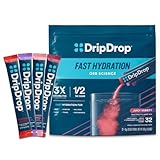
DripDrop is the best value and the best pantry insurance. It is a true ORS by design; the company's own materials describe the formula in sodium-glucose cotransport terms, and its 330 mg of sodium per 8 oz prepared stick works out to roughly 1,400 mg per liter, the saltiest of the mainstream options. Its label's 7 g of sugar per stick also lands near 30 g per liter, sweeter than the WHO and Pedialyte template we described above, so if you are choosing strictly on formula, Pedialyte hews closer to the textbook. A 32-stick box at $35.99 as of August 2026 costs about $1.12 per serving and stores for years. We took a longer look at the brand, including its sugar-free line (skip that version for illness), in our DripDrop review, and if the box is sold out we keep a list of DripDrop alternatives on Amazon that includes proper WHO-style ORS packets.
Liquid I.V. is the acceptable already-in-the-house option. Its printed label reads 500 mg sodium, 370 mg potassium, and 11 g sugar per stick in 16 oz of water, which lands near Pedialyte on sodium per liter with noticeably more sugar. If a pouch is already in your kitchen, use it and do not feel you must shop mid-illness. We would not buy it specifically for stomach flu at $1.56 per stick as of August 2026 when DripDrop is saltier and cheaper; our Liquid I.V. review goes deeper on where it does earn its price.
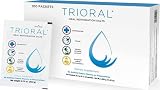
WHO-style ORS packets are the purist pick. Generic packets that mix into a liter match the 75 mEq sodium formula exactly and cost the least per liter of anything here. The taste is bluntly salty, which is the honest cost of the correct formula, and the liter of water must be measured, not eyeballed.
What to look for when buying
Check the sodium per prepared volume first and do the liter math yourself, since brands quote different serving sizes precisely to make comparison hard. Anything below roughly 400 mg of sodium per liter is a sports drink wearing wellness packaging. Confirm the product contains actual glucose or sugar, since the sugar-free versions of DripDrop, Liquid I.V., and others use the same brand name for a formula that cannot run the cotransport mechanism. Skip added caffeine entirely. Prefer ready-to-drink for the sick person who lives alone, and powder sticks for the family cabinet. Finally, check the date: powder sticks routinely carry two-year shelf lives, which makes a single box cheap insurance against the next bug making the rounds.

As an Amazon Associate, UsefulVitamins.com earns from qualifying purchases at no extra cost to you. We only recommend products supported by published research or third-party testing.
FAQ
Can I just drink Gatorade for stomach flu?
For a mild bug in an otherwise healthy adult, yes. NIDDK explicitly lists sports drinks among acceptable fluids for most adults, alongside water, juice, and broth. The case for a proper ORS strengthens as symptoms do: heavy watery diarrhea, repeated vomiting, older age, or any early dehydration sign. At about 460 mg of sodium and 58 g of sugar per liter, Gatorade replaces fluid but under-replaces salt, and its sugar load is high enough to aggravate diarrhea in some people. Diluting it half-and-half with water cuts the sugar but also cuts the already-low sodium, so it remains a compromise.
I take blood pressure medication, diuretics, or lithium. Is an ORS safe for me?
Ask your pharmacist or prescriber before using one, ideally before you are sick. An ORS is deliberately salty, which can work against a sodium-restricted regimen, and the illness itself changes how some drugs behave: dehydration raises lithium levels, and vomiting can mean doses of any medication are not absorbed. Diuretics plus heavy fluid loss is a combination that lands people in the hospital. Our drug and supplement interaction checker can flag common conflicts to bring up with your pharmacist, but a live human who knows your prescription list is the right authority here.
Is Pedialyte AdvancedCare Plus better than Classic for adults?
It is saltier; Abbott's own materials list 60 mEq of sodium per liter versus 45 mEq in the original formula, which moves it closer to the WHO number. For significant diarrhea that is a reasonable upgrade. For run-of-the-mill queasiness the Classic bottle is already close enough to target, usually easier to find, and slightly cheaper. Either beats a sports drink for this job.
I already own a sugar-free electrolyte powder. Will it work?
Not well for this. Sugar-free mixes such as LMNT deliver plenty of sodium (1,000 mg per stick, zero sugar, per its label) and we recommend that profile for sweat losses. During gastroenteritis the missing glucose is the problem, because the sodium-glucose cotransport pathway is what pulls salt and water through an inflamed gut. If it is genuinely all you have at 2 a.m., using it alongside a spoonful of sugar or a few sips of juice gets you closer to the concept, and a real ORS the next morning is the fix.
I'm on a GLP-1 medication and caught a stomach bug. Anything different for me?
Be more conservative on every front. GLP-1 drugs already suppress thirst and appetite and commonly cause nausea, so people on them tend to run closer to dehydration before a virus ever shows up, and vomiting stacks on top of that baseline. Sip an ORS early rather than waiting to feel dry, and call your prescriber if you cannot keep fluids down, since dehydration is the pathway to the kidney problems reported with these drugs. We cover the day-to-day version of this in electrolytes on GLP-1s.
How long should I keep drinking an ORS after the symptoms stop?
Through the tail of the illness, roughly until urine is consistently pale and you are eating normal salted meals again, which for most people is a day or so after the last vomiting or watery stool. There is no benefit to continuing beyond that; regular food and water take over. If diarrhea itself is still going past the 2-day mark, that is on NIDDK's see-a-doctor list regardless of how well you are hydrating.
The bottom line
Stomach flu is the one common situation where the cheap sports drink and the trendy sugar-free mix are both the wrong tool, because rehydrating a gut under attack requires salt and glucose together in a narrow ratio that only oral rehydration solutions hit. Keep Pedialyte Classic or a box of DripDrop sticks in the cabinet before anyone gets sick, sip in small frequent doses instead of glasses, and let salty food take over as soon as it stays down. Above all, respect the red flags: blood in the stool, diarrhea past 2 days, high fever, no urination, confusion, or fainting mean a clinician now, and no bottle on this page substitutes for that call.
