
Searching "peptides cause cancer" will surface a mix of real warnings, real signals, and complete fabrications. The GLP-1 thyroid concern is real and appears on every FDA prescribing label in the class. The FAERS pancreatic signal is real and worth understanding, while also being widely misread. The claim that any peptide you happen to be taking will cause any cancer if you look hard enough — that one is largely fiction dressed up in scientific-sounding language. The honest answer to the cancer question requires separating what regulators have formally warned about, based on controlled studies, from what wellness creators have amplified based on pharmacovigilance noise. Those two things look similar on a phone screen and are very different in practice.
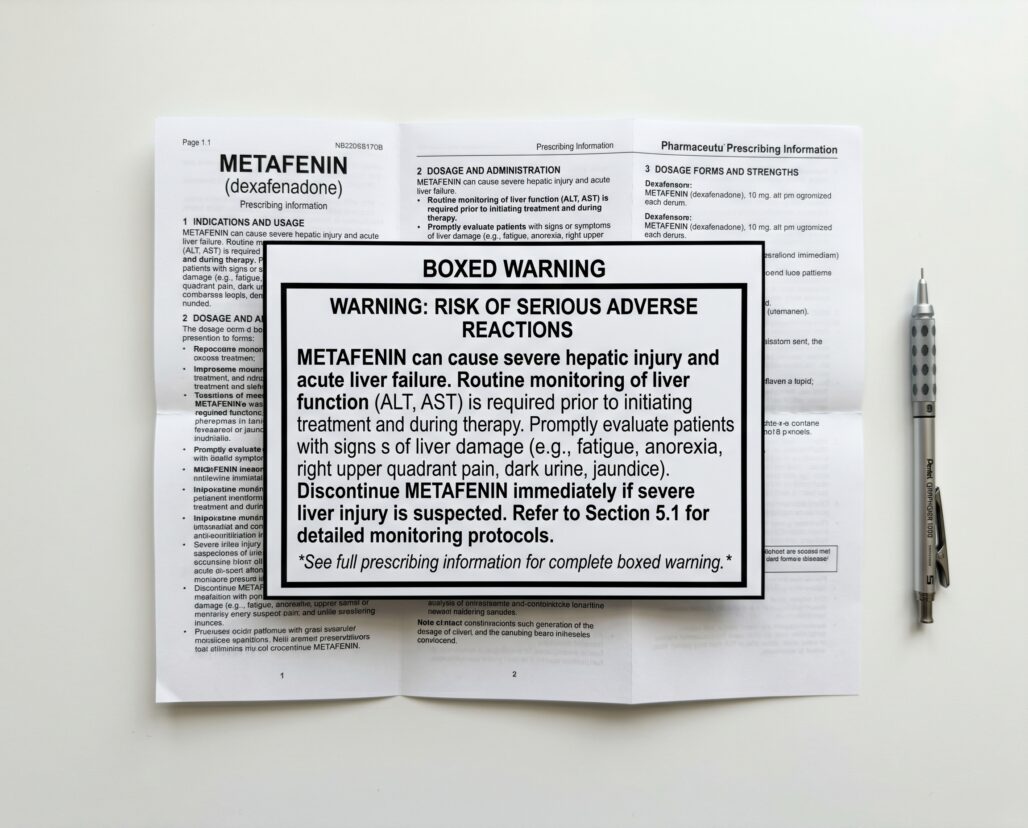
Summary: The Cancer Risk Landscape by Peptide Class
Not all peptide cancer concerns carry the same weight. The table below maps what the evidence actually supports, ranging from formal regulatory action down to theoretical concern with no human signal.
| Peptide / Class | Cancer Concern | Evidence Tier | Key Action |
|---|---|---|---|
| GLP-1 agonists (semaglutide, liraglutide) | Thyroid C-cell tumors | Rodent data; boxed FDA warning; human data largely reassuring | Contraindicated if personal/family history of MTC or MEN-2 |
| GLP-1 agonists | Pancreatic malignancy | FAERS pharmacovigilance signal; no causal proof | Discuss history of pancreatic disease with prescriber |
| GH-axis peptides (GHRP-2, GHRP-6, ibutamoren) | Elevated IGF-1 driving proliferation | Biological plausibility; observational associations in non-GHRP populations | Avoid unsupervised use; no long-term GHRP-specific human safety data |
| BPC-157 | Unknown | No long-term human safety data exists | Cancer risk is unknown, not zero |
| FDA-approved peptide drugs overall | Multiple (class-specific) | Labeled; clinical trial-derived | See individual prescribing information |
If you are a cancer survivor or currently in treatment, discuss any peptide therapy — including GLP-1 agonists — with your oncologist before starting. No self-reported wellness benefit justifies bypassing that conversation.
How "Peptides Cause Cancer" Myths Spread
The mechanism is predictable once you understand pharmacovigilance databases. The FDA's Adverse Event Reporting System (FAERS) collects reports of adverse events that occur in people taking a drug — including cancer diagnoses. The reports do not prove causation. A diabetic patient taking semaglutide who develops pancreatic cancer gets counted in the FAERS database. Whether the semaglutide contributed, or whether type 2 diabetes itself raises pancreatic cancer risk by approximately 50%, is a question FAERS cannot answer.
Signal detection in FAERS works by comparing reporting rates for a drug against background rates across all drugs. A proportional reporting ratio (PRR) above 1.0 means a drug's adverse event is reported more often than average — not that the drug caused the event. The key word in these analyses is "signal," meaning something that warrants further investigation, not confirmed causation.
Wellness creators and some news headlines collapse the gap between "signal detected" and "drug causes cancer" routinely. The evidentiary steps between those two statements — mechanistic hypothesis, animal study, observational cohort, randomized trial, regulatory conclusion — each require their own evidence. Skepticism should cut both ways: the data does not support sweeping claims that peptides cause cancer, and it does not support dismissing every concern as myth either.
GLP-1s and Thyroid C-Cell Tumors: Rodent Warning, Human Reality
This is the most rigorously documented cancer-adjacent concern in the entire peptide category, and it is worth reading carefully.
The FDA prescribing information for Ozempic (semaglutide) opens with a boxed warning — the most prominent safety notice the FDA uses — that reads: "Thyroid C-cell tumors have been observed in rodent studies with semaglutide and other GLP-1 receptor agonists at clinically relevant exposures." The warning explicitly states that it is "unknown whether semaglutide causes thyroid C-cell tumors, including medullary thyroid carcinoma (MTC), in humans." The same warning text and the same contraindications appear on the prescribing information for liraglutide (Victoza, Saxenda), dulaglutide (Trulicity), and tirzepatide (Mounjaro, Zepbound).
The contraindication is unambiguous: GLP-1 receptor agonists are contraindicated in patients with a personal or family history of medullary thyroid carcinoma and in patients with Multiple Endocrine Neoplasia syndrome type 2 (MEN-2). If either of those applies to you or a close blood relative, GLP-1 agonists are not appropriate for you regardless of how much weight loss benefit they might otherwise offer.
Why the warning exists: GLP-1 receptors are expressed on thyroid C-cells in rodents. Sustained agonism caused C-cell hyperplasia and tumors in rat and mouse studies. Medullary thyroid carcinoma arises from those same C-cells. The rodent response appears species-specific, driven by higher receptor density in rodent thyroid tissue than in humans.
Two large human studies pull in partially reassuring directions. A French nested case-control study (PMID: 36356111, Diabetes Care 2023) across 47,000 patients found adjusted HRs of 1.58 (95% CI 1.27-1.95) for all thyroid cancers and 1.78 (95% CI 1.04-3.05) for medullary thyroid cancer specifically at 1-3 years of GLP-1 use. That sounds alarming until you account for the base rate: medullary thyroid cancer affects roughly 1,000 people per year in the United States total. A hazard ratio of 1.78 on a rare baseline produces a very small absolute risk increase.
A larger Scandinavian cohort study (PMID: 38683947, BMJ 2024) followed 145,410 GLP-1 users and 291,667 comparator patients across three Nordic countries. Thyroid cancer incidence was 1.33 per 10,000 person-years in GLP-1 users versus 1.46 in the DPP4 inhibitor group. The hazard ratio for overall thyroid cancer was 0.93 (95% CI 0.66-1.31), and 1.19 (95% CI 0.37-3.86) for medullary thyroid cancer — confidence intervals spanning 1.0 in both directions, no statistically meaningful signal.
The honest read: the boxed warning is appropriate and the contraindications are firm. Human population data across hundreds of thousands of patients is largely reassuring so far, but follow-up periods remain relatively short for cancer latency, and long-term data needs another decade to mature. If you have any thyroid history, family history of thyroid cancer, or MEN-2, this is an endocrinologist conversation before you fill any GLP-1 prescription.
GLP-1s and Pancreatic Cancer: Parsing the FAERS Signal
A 2022 pharmacovigilance analysis (PMID: 36386208) examined 8,718 GLP-1-associated tumor adverse event reports in FAERS from 2004 to 2021. The study found a proportional reporting ratio of 9.86 for pancreatic malignancies — meaning pancreatic cancer was reported roughly ten times more often relative to all adverse events than the average drug in the database. That number should not be read as "GLP-1 drugs raise pancreatic cancer risk ten-fold." At the broadest classification level, GLP-1 agonists showed no disproportionate overall tumor signal (PRR 0.83). The pancreatic figure is a specific reporting pattern with a major structural confounder: type 2 diabetes is itself an established pancreatic cancer risk factor, raising risk by approximately 50% in some epidemiological estimates. Most GLP-1 users in FAERS have type 2 diabetes. When one of them develops pancreatic cancer, the GLP-1 is logged as the suspected drug — but the decade of diabetes may be far more causally relevant than the semaglutide started eighteen months ago. FAERS cannot disentangle those effects.
The 2025 JAMA Oncology study (PMID: 40839273) is more methodologically rigorous. Using target trial emulation in 86,632 propensity-matched adults in the OneFlorida+ network, GLP-1 users showed significantly lower overall cancer incidence than nonusers (HR 0.83, 95% CI 0.76-0.91), with reduced endometrial, ovarian, and meningioma risk — likely driven by weight loss, since excess adiposity independently raises risk for at least 13 cancer types. Pancreatic cancer was not elevated.
The current evidence: there is a FAERS signal worth monitoring, no established causal link between GLP-1 use and pancreatic cancer, and the stronger human studies point toward lower overall cancer burden with GLP-1 use. That does not eliminate individual risk; the weight-loss mechanism deserves most of the credit, not any intrinsic cancer-protective property of the drug. If you have a personal or family history of pancreatitis, pancreatic cysts, or hereditary pancreatic cancer syndromes, disclose that before starting any GLP-1 agonist.
IGF-1 Concerns with GH-Axis Peptides
Growth hormone-releasing peptides (GHRP-2, GHRP-6, hexarelin) and growth hormone-releasing hormone analogues (sermorelin, CJC-1295) work by stimulating pituitary GH secretion. Elevated GH drives elevated insulin-like growth factor 1 (IGF-1), the downstream mediator of most of GH's anabolic effects. IGF-1 is also a growth factor in the literal oncological sense — it promotes cell proliferation and can inhibit apoptosis, the programmed cell death that normally eliminates precancerous cells before they expand.
The biological concern is not speculative. A 2004 meta-analysis in The Lancet (PMID: 15110491, Renehan et al., 3,609 cancer cases across 21 studies) found that high circulating IGF-1 was associated with elevated risk of prostate cancer (OR 1.49, 95% CI 1.14-1.95) and premenopausal breast cancer (OR 1.65, 95% CI 1.26-2.08). The review was careful: associations are "modest and vary between sites," and laboratory standardization differences complicate pooled estimates. But the biological plausibility is grounded in real cancer case data — this is not a fabricated concern.
The critical distinction for GHRP users: the IGF-1-cancer associations in the literature come from observational studies of people with endogenously elevated IGF-1, not from clinical trials of GHRP use. There are no published long-term randomized trials examining GHRP-2, GHRP-6, or CJC-1295 and cancer incidence. Physiological GH pulses in a healthy adult produce transient IGF-1 elevations that return to baseline; sustained pharmacological elevation above the age-adjusted normal range is a meaningfully different exposure. Whether short-cycle GHRP use raises cancer risk is a question the existing literature cannot answer.
The practical implication: GH-axis peptides should not be used without baseline and periodic IGF-1 monitoring. Anyone with a personal or family history of hormone-sensitive cancers — prostate, breast, or colorectal — should discuss IGF-1 implications with an oncologist before starting any GH-secretagogue.
BPC-157: Long-Term Unknowns Are Not the Same as Safety
BPC-157 is a synthetic pentadecapeptide popular in biohacking communities for claimed tissue-repair effects. A 2024 review in Inflammopharmacology (PMID: 38980576) summarizes the state of evidence: robust animal healing data, no lethal dose found in rodent toxicology, and one Phase II trial in ulcerative colitis reporting no significant side effects.
What needs to be said plainly: no long-term human safety data exists for BPC-157. Cancer risk is unknown, not zero.
The absence of a cancer signal does not mean the risk is zero — it means the studies have not been done at the scale or duration required to detect a rare adverse event. A compound that promotes angiogenesis and tissue proliferation, as BPC-157 appears to do in animal models, has at least theoretical mechanisms by which it could accelerate growth of a pre-malignant lesion. That concern has not been studied in humans. "Not observed" is not the same as "doesn't happen" when the observation window is a handful of short-duration animal experiments.
The FDA placed BPC-157 on its list of bulk drug substances presenting significant safety risks for compounding, prohibiting licensed pharmacies from including it in any preparation. The rationale is insufficient evidence of safety — not confirmed harm. For a compound with no FDA approval, the burden runs: demonstrate safety first. If you are considering BPC-157, you are accepting unknown long-term risk, not well-characterized low risk.

Frequently Asked Questions
Do GLP-1 agonists cause thyroid cancer in humans? Current human data does not establish a causal link. A French case-control study suggested a modest elevated risk of medullary thyroid cancer (HR 1.78), while a larger Scandinavian cohort found no elevation (HR 1.19, CI spanning 1.0). If you have a personal or family history of medullary thyroid carcinoma or MEN-2, GLP-1 agonists are contraindicated — that is a hard stop, not a risk-benefit discussion. For everyone else, current evidence does not support avoiding GLP-1s on thyroid cancer grounds alone, but prescriber monitoring is appropriate.
Is BPC-157 safe? Preclinical safety data is broadly favorable and no lethal dose has been found in animal toxicology. Human safety data is extremely limited — one Phase II trial with short follow-up. Long-term cancer risk has not been studied. "No adverse events observed in short animal studies" is not the same evidence tier as "safe in humans over years of use."
Should cancer survivors avoid peptides entirely? Not necessarily, but that decision belongs with your oncologist. GLP-1 agonists may reduce obesity-related cancer risk based on the 2025 JAMA Oncology data — but whether that applies to your specific cancer type, treatment status, or medications requires individual medical judgment no article can substitute for.
Where is the line between a real concern and fearmongering? Real concerns have a mechanistic basis, appear in peer-reviewed data, and have been acknowledged by a regulatory body. Fearmongering collapses the FAERS signal-vs-causation distinction or applies rodent data directly to humans. The FDA boxed warning on GLP-1s and the FAERS pancreatic signal are worth discussing with a prescriber. Most forum claims are not.
If you are managing a protocol like this, StackMyMed (our companion app) keeps your doses, timing, and interaction checks in one place. It does not replace medical advice — bring the log to your clinician.
Conclusion
The peptide-and-cancer question has a layered answer. GLP-1 receptor agonists carry a formal FDA boxed warning about thyroid C-cell tumors, grounded in rodent data, with human cohort studies largely reassuring so far and clear contraindications for specific family histories. The FAERS pancreatic cancer signal is a pharmacovigilance flag worth monitoring, not a proven causal link — and the most rigorous human data actually points toward lower overall cancer incidence in GLP-1 users. GH-axis peptides raise a biologically plausible IGF-1 concern that warrants monitoring but has not produced a documented cancer signal in clinical data. BPC-157 occupies the most uncertain position: no long-term human safety data, no confirmed harm, and no scientific basis for claiming either outcome confidently.
The same action step applies across all these categories: use peptides with FDA-approved prescribing information under a prescriber who knows your full history — including personal and family cancer history. If that prescribing information carries a boxed warning relevant to your situation, treat it as the hard stop it is. If you have any cancer history, your oncologist is the right evaluator, not a wellness protocol.
For a broader look at peptide safety overall or how cancer concerns compare to other documented peptide side effects, those articles cover the adjacent territory. If you are evaluating drug interactions alongside cancer risk, peptides and medications addresses pharmacological overlaps often left out of these conversations.
This article is for informational purposes only and does not constitute medical advice. Peptide therapies carry real risks that vary by compound, individual health history, and source of the product. Consult a licensed healthcare provider before starting, changing, or stopping any peptide therapy. If you have a personal or family history of cancer, medullary thyroid carcinoma, MEN-2, or are currently in cancer treatment, speak with your oncologist before using any peptide.
