
Peptides and Medications: Drug Interactions to Know Before Starting
If you take any prescription medication and are starting a peptide, the honest answer is: most peptide-drug interactions are predictable, document-able from FDA prescribing information, and worth bringing to your prescriber before your first dose. The interactions covered in this article are not theoretical — they appear in approved drug labeling, peer-reviewed pharmacokinetic trials, and clinical outcome data. None of that means you cannot use peptides alongside other medications. It means you should go in with a specific list, not a vague concern, so your prescriber can make a plan. This article covers the interactions with the clearest documented evidence, the ones with FDA label sections you can point to directly.
Summary: What You Need to Know First
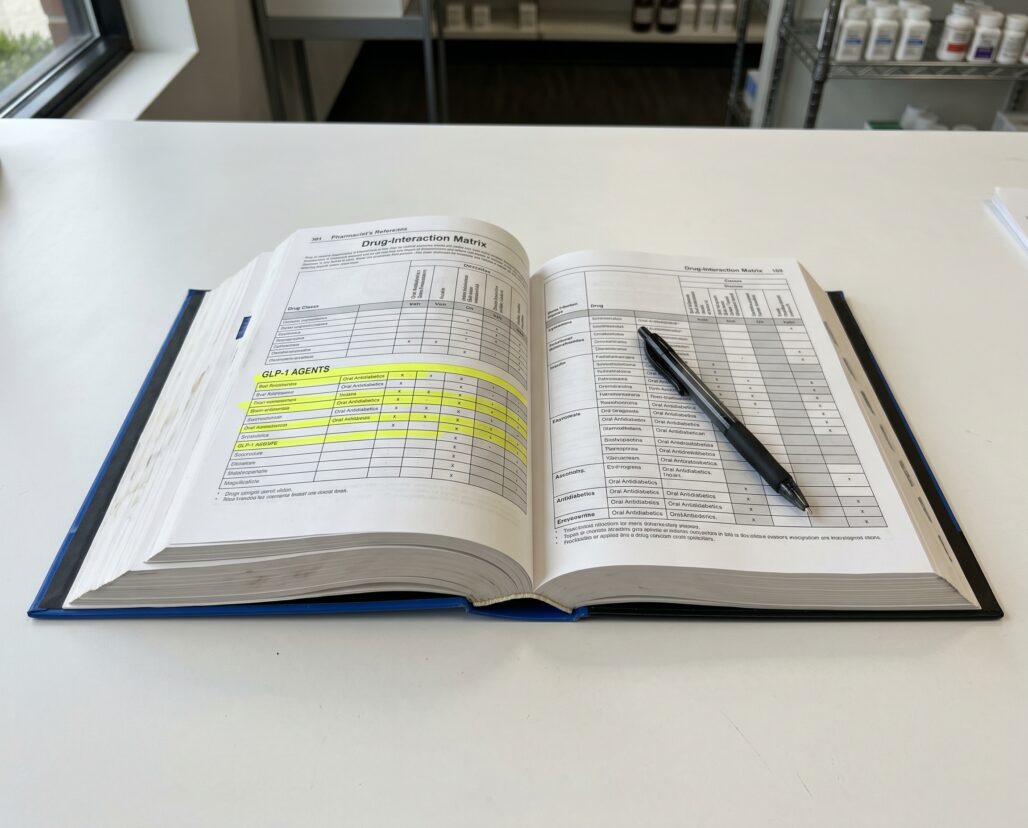
Peptide-drug interactions fall into three main categories: absorption interference, pharmacodynamic overlap, and direct cardiovascular effects. GLP-1 receptor agonists such as semaglutide and tirzepatide slow gastric emptying, which shifts how quickly oral medications reach the bloodstream. When GLP-1s are combined with insulin or sulfonylureas, the risk of hypoglycemia is documented and quantified in clinical trial data. Bremelanotide (Vyleesi) produces transient blood pressure changes that interact directly with antihypertensive medications. Leuprolide and other GnRH agonist peptides suppress sex hormones and accelerate bone loss, which has implications for patients already managing bone density. Each of these interactions has a predictable mechanism, which means your prescriber can adjust doses, sequence medications, or switch to alternative delivery methods — but only if they know what you are taking before you start.
Why Peptide-Drug Interactions Matter More Than People Expect
Peptides are often marketed as supplements or wellness products, which creates a perception gap: they can feel less "medical" than a pill bottle with a pharmacy label. But the interactions in this article occur through the same mechanisms as classic drug-drug interactions — delayed absorption, competing pharmacodynamic pathways, and direct cardiovascular effects.
The gap is wider for compounded peptides. FDA-approved drugs go through clinical pharmacokinetic studies before approval, and the results appear in prescribing information documents any clinician can access. Compounded peptides do not have the same interaction-screening process. If you are using a compounded version, treat it as unknown-risk until your prescriber has reviewed the evidence from the approved analogue, if one exists.
Worth noting: the interactions documented here were identified in people using peptides as prescribed medications for approved indications. At different doses, routes, or in combination with supplements that affect gastric motility or blood pressure, the picture becomes harder to predict.
For a broader look at the general safety data, see our are peptides safe article and the companion piece on peptide side effects.
GLP-1 Agonists and Oral Medication Absorption
The most widely used peptides in clinical settings right now are GLP-1 receptor agonists: semaglutide (Ozempic, Wegovy, Rybelsus) and tirzepatide (Mounjaro, Zepbound). Both slow gastric emptying as part of their mechanism, which is one reason they reduce appetite and blood sugar. That same slowdown affects how oral medications move from the stomach into the small intestine for absorption.
The Ozempic prescribing information addresses this directly in Section 7.2: semaglutide "causes a delay of gastric emptying and has the potential to impact the absorption of concomitantly administered oral medications." The Mounjaro prescribing information carries an identical structural warning in Section 7.2.
Most oral medications tested in pharmacokinetic studies showed no clinically meaningful change in exposure when combined with injectable semaglutide. The FDA labeling notes this. But two specific drug classes have generated controlled trial evidence of significant changes, and those are the ones worth flagging with your prescriber.
Levothyroxine. A 2021 trial (PMID 34289755, published in Expert Opinion on Drug Metabolism and Toxicology) enrolled 45 healthy subjects to measure what happens when oral semaglutide is combined with levothyroxine. Total T4 exposure increased by 33 percent compared to levothyroxine alone. The authors concluded that "monitoring of thyroid parameters should be considered when treating patients with both oral semaglutide and levothyroxine." In practice, this means a TSH check after starting a GLP-1 agent is clinically warranted if you are on thyroid replacement therapy. Even if you are on injectable rather than oral semaglutide, the gastric emptying effect is present, and your prescriber should be aware.
Oral hormonal contraceptives. The Mounjaro prescribing information in Section 7.2 states explicitly that patients on oral hormonal contraceptives should "switch to a non-oral contraceptive method or add a barrier method of contraception for 4 weeks after initiation and for 4 weeks after each dose escalation." This instruction is in the tirzepatide label specifically because pharmacokinetic data showed significant changes in oral contraceptive exposure. A 2025 comprehensive review of GLP-1 and GIP receptor agonist drug-drug interactions (PMID 40330819, Drug Design, Development and Therapy) confirmed that "significant changes in exposure were observed for oral contraceptives and levothyroxine following the administration of tirzepatide and oral semaglutide, respectively." If you are using a GLP-1 agent for weight loss or metabolic health and rely on oral contraceptives, this interaction has a specific and actionable mitigation in the approved labeling.
Other oral medications. For medications with narrow therapeutic windows — warfarin, cyclosporine, thyroid hormone, some antibiotics — any shift in absorption timing can matter. The general guidance from the Mounjaro prescribing information is to monitor patients "on concomitant oral medications that require threshold concentrations for efficacy or where delayed onset of action would be undesirable." The practical step is to tell your prescriber and pharmacist every oral medication you take before starting a GLP-1 agent.
| Oral Medication Class | Documented Interaction with GLP-1 Agonist | Action |
|---|---|---|
| Levothyroxine | 33% increase in T4 exposure (oral semaglutide; PMID 34289755) | Monitor TSH after starting GLP-1 |
| Oral hormonal contraceptives | Significant exposure change (tirzepatide label, Section 7.2) | Use non-oral or barrier backup x4 weeks per label |
| Narrow therapeutic index drugs (warfarin, cyclosporine) | Potential absorption timing shift (semaglutide label, Section 7.2; Mounjaro label, Section 7.2) | Increased monitoring; notify prescriber |
| Naltrexone (oral) | Vyleesi may significantly decrease systemic exposure (Vyleesi label, Section 7.2) | Avoid combination (separate mechanism, see below) |
| Most other oral medications | No clinically significant change found in pharmacokinetic studies | Notify prescriber; no routine dose change required |
GLP-1 Agonists and Hypoglycemia Risk with Insulin or Sulfonylureas
This interaction has the clearest and most quantified evidence of any peptide-drug combination. If you use insulin or a sulfonylurea (glipizide, glyburide, glimepiride, and others) alongside a GLP-1 agonist, hypoglycemia risk increases — and the increase is documented in both the semaglutide and tirzepatide prescribing information.
The Ozempic label (Section 5.5) reports symptomatic hypoglycemia in 17.3 to 24.4 percent of patients combining semaglutide with sulfonylureas, with severe hypoglycemia in 0.8 to 1.2 percent. The SUSTAIN 4 trial (PMID 28344112, Lancet Diabetes and Endocrinology, 2017) found 4 to 6 percent of semaglutide-treated patients experienced confirmed hypoglycemic events on background sulfonylurea therapy.
The Mounjaro prescribing information (Section 5.3) and the Ozempic label (Section 7.1) both carry the same direct instruction: consider reducing the dose of the sulfonylurea or insulin when initiating a GLP-1 agent.
If you are on insulin or a sulfonylurea and starting any GLP-1 peptide, the following applies without exception:
- Discuss a dose-reduction plan with your prescriber before your first GLP-1 dose, not after symptoms appear.
- Carry fast-acting glucose at all times (glucose tablets, gel, or juice). If you develop symptoms of hypoglycemia — shakiness, sweating, confusion, rapid heartbeat — stop activity, treat with fast carbohydrates immediately, and contact your prescriber.
- Do not skip or delay meals after injecting, especially during the first weeks of GLP-1 use when the glucose-lowering effect is still being calibrated.
This is not a reason to avoid GLP-1 agents if you are also on insulin or a sulfonylurea. It is a reason to enter that combination with a prescriber who has adjusted your doses in advance.
Bremelanotide and Cardiovascular Medications
Bremelanotide (Vyleesi), the FDA-approved peptide for hypoactive sexual desire disorder, works through melanocortin receptors and produces a transient but real blood pressure increase. The Vyleesi prescribing information (Section 5.1) documents a mean systolic increase of 6 mmHg and a diastolic increase of 3 mmHg, peaking 2 to 4 hours after each dose, with normalization within 12 hours. Heart rate decreases by up to 5 beats per minute over the same window.
That profile creates two overlapping concerns for patients on antihypertensives.
First, the transient blood pressure spike may partially offset the effect of a blood pressure medication for several hours. For patients whose hypertension is well-controlled at baseline, this is often manageable. For patients whose blood pressure is borderline or whose treatment is already at maximum dose, the spike may push readings into a range their prescriber would want to know about.
Second, the Vyleesi label carries a direct contraindication in Section 4: "VYLEESI is contraindicated in patients who have uncontrolled hypertension or known cardiovascular disease." If you are in either category, bremelanotide is not a medication to try while adjusting antihypertensives or during a period of unstable blood pressure. Section 5.1 recommends evaluating cardiovascular risk before initiating and periodically during therapy.
The Vyleesi label also notes in Section 7.2 that bremelanotide may significantly decrease systemic exposure of orally administered naltrexone. Patients using naltrexone for alcohol use disorder or opioid use disorder should not combine these without explicit prescriber guidance, as Vyleesi's effect could undermine the naltrexone's therapeutic effect.
Leuprolide and Bone Density Medications
Leuprolide (Lupron, Eligard) is a GnRH agonist peptide used in prostate cancer, endometriosis, uterine fibroids, and precocious puberty. Its mechanism — suppressing sex hormone production — carries a well-documented consequence: accelerated bone density loss.
The Eligard prescribing information (Section 6.1) states that "decreased bone density has been reported in the medical literature in men who have had orchiectomy or who have been treated with a GnRH agonist analog" and that "long periods of medical castration in men will have effects on bone density." The same applies in women, where estrogen suppression accelerates bone resorption.
This creates a direct concern for patients already taking bisphosphonates (alendronate, risedronate, zoledronic acid), denosumab, or calcium and vitamin D for osteopenia or osteoporosis. Leuprolide amplifies the very mechanism those drugs are working against. Patients starting long-course leuprolide should have a baseline DEXA scan and discuss bone-protective therapy at the start of treatment, not after a fracture.
The Eligard label (Section 7) states that no pharmacokinetic drug-drug interaction studies were conducted, which is a reminder that absence of data is not absence of risk.
How to Plan This Conversation with Your Prescriber
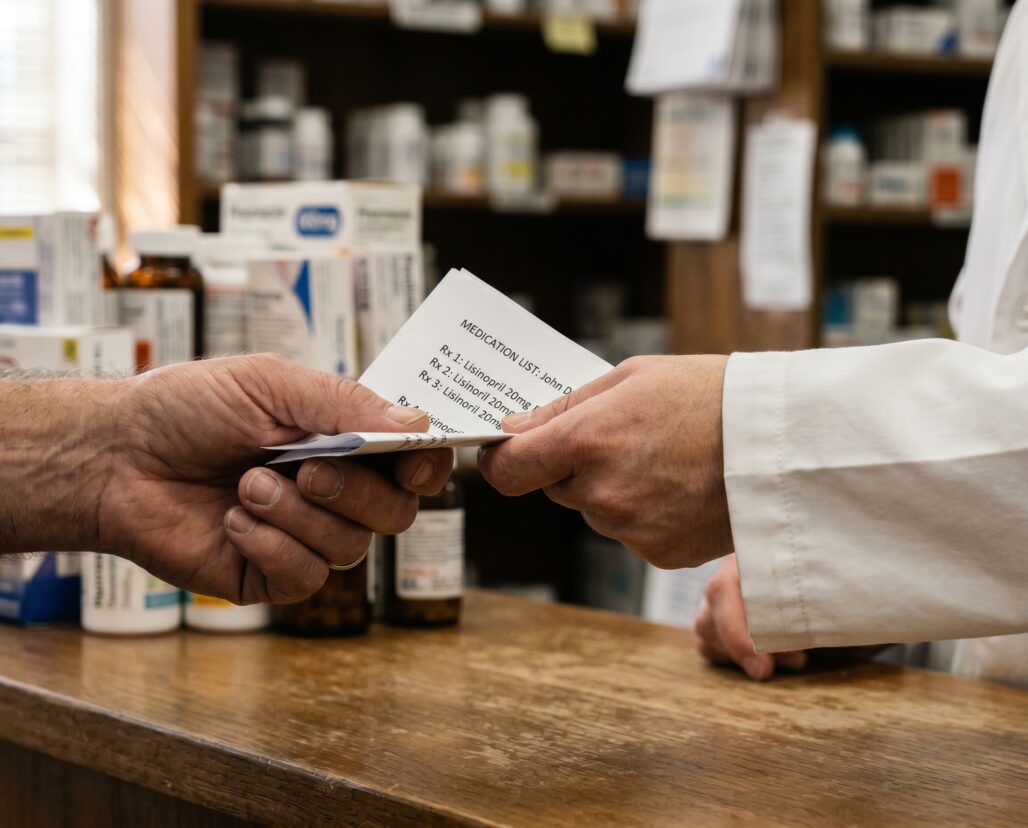
The single most useful thing you can do before starting any peptide is write a complete medication list — including over-the-counter drugs, supplements, and hormonal methods — and bring it to the appointment.
For GLP-1 agents: Tell your prescriber about every oral medication you take that requires stable blood levels (thyroid hormone, anticoagulants, seizure medications, hormonal contraceptives). Ask whether a TSH or INR check is warranted after starting. If you are on insulin or a sulfonylurea, ask about dose reduction before your first injection.
For bremelanotide: Disclose any history of hypertension, cardiovascular disease, or current antihypertensive medication. Ask your prescriber to review recent blood pressure readings before approving a prescription.
For leuprolide: Ask whether a baseline DEXA scan is indicated and whether bone-protective supplementation should begin at the same time as the peptide, not after a fracture.
For compounded peptides: Be direct with your prescriber that the peptide is compounded, not an FDA-approved product. Compounded peptides do not have the same interaction-screening process as FDA-approved drugs. If the peptide is a compounded analogue of an approved drug, your prescriber can use the approved drug's interaction data as a reference — but the compounded version may differ in absorption or potency in ways that affect that comparison. Treat compounded peptide combinations as unknown-risk until your specific situation has been reviewed.
If you are pregnant or nursing, stop before combining peptides with any prescription medication. See our peptides during pregnancy article for the full picture on what the evidence and the FDA say about peptide use in those periods.
Frequently Asked Questions
Do all peptides interact with oral medications? No. The gastric emptying interaction is specific to GLP-1 class peptides. Peptides that do not affect gastric motility — BPC-157, TB-500, PT-141 (bremelanotide) — do not slow oral drug absorption through that mechanism. Bremelanotide has its own cardiovascular interaction profile, separate from absorption.
Can I take my levothyroxine at a different time to avoid the interaction? Timing separation is a reasonable strategy. Take levothyroxine on an empty stomach, away from GLP-1 injection timing if you are using oral semaglutide. Monitor TSH levels afterward to confirm stability. Do not adjust your levothyroxine dose without prescriber guidance.
If my GLP-1 is compounded, do the same interactions apply? Assume yes, with the caveat that compounded formulations may differ in bioavailability. Treat the interaction data from approved drugs as your best available reference, not a guaranteed match.
What counts as a fast-acting carbohydrate for treating hypoglycemia? Glucose tablets (15-20g), glucose gel, 4 oz of orange juice, or regular (not diet) soda. Check blood sugar 15 minutes after treating. If still below 70 mg/dL, repeat. If you cannot self-treat, call emergency services. Report any hypoglycemic episode to your prescriber.
Should I tell my pharmacist as well as my prescriber? Yes. Your pharmacist reviews your full medication list when filling prescriptions and can flag interactions your prescriber may not have in front of them. This is especially useful when prescriptions come from multiple providers.
If you take several supplements with prescription medications, StackMyMed (our companion app) scans each label and checks your full stack for conflicts, so a risky combination is easier to catch before you take it. Always confirm anything it flags with your doctor or pharmacist.
Conclusion
The interactions covered here — GLP-1s slowing oral drug absorption, GLP-1s plus insulin or sulfonylureas increasing hypoglycemia risk, bremelanotide raising blood pressure transiently, and leuprolide accelerating bone loss — appear in FDA prescribing information with specific numbers and specific instructions. Most have a clear mitigation: a timing adjustment, a dose reduction, a switch in contraceptive method, or a monitoring plan. None of those mitigations are complicated. All of them require your prescriber to know what you are taking before you start.
Compile a full medication list, bring it to your appointment, and ask specifically about the drug classes covered in this article. That five-minute conversation turns an unknown into a plan.
Medical disclaimer: This article is for informational purposes only and does not constitute medical advice, diagnosis, or treatment. Drug interactions depend on your individual health status, doses, and concurrent medications. Always consult a qualified healthcare provider before starting, stopping, or changing any medication or peptide regimen. Do not adjust prescription medication doses based on this article without prescriber guidance.
