
Most people do not lose track of their medications because they are careless. They lose track because a simple routine quietly grew into a system: a morning statin, a bedtime blood pressure pill, a fish-oil capsule, a vitamin D, a probiotic a friend swore by. The single biggest safety upgrade most households can make is organizational, not medical — one master list, sensible timing, and one system everyone actually uses. This is the hub guide for building that system, whether you are managing your own cabinet or quietly taking over for an aging parent.
We have linked to deeper, step-by-step guides throughout, and the organizers and dispensers we recommend near the end are the exact kinds of tools we would put in our own parents’ kitchen. None of this replaces your pharmacist or doctor — think of it as the filing system that makes their advice far easier to follow.
Affiliate disclosure: this article contains affiliate links. As an Amazon Associate, UsefulVitamins.com earns from qualifying purchases at no extra cost to you.
Before you decide
This guide is about logistics — lists, timing, containers, reminders, and caregiving handoffs. It is not a substitute for a clinical medication review, and it does not tell you to start, stop, or change any dose. Those decisions belong to your prescriber and pharmacist.
If your parent is on five or more prescriptions, has just left the hospital, or has kidney, liver, or heart disease, do the medical review before you optimize the organizing system. The U.S. Food and Drug Administration’s guidance on ensuring safe use of medicine is a good starting frame, and the National Institute on Aging’s advice on safe medicine use for older adults covers the questions to raise first. The system in this guide keeps a good regimen running; it cannot fix a regimen that needs a doctor’s eyes.
One more thing to settle up front: supplements are drugs to your body even when the label calls them “natural.” The FDA warns that mixing medications and dietary supplements can be genuinely dangerous. Treat every capsule in the cabinet — prescription or not — as part of the same list.
Start with one master medication and supplement list
Almost every medication problem — a double dose, a dangerous interaction, a refill that lapsed — traces back to the same root cause: the information lived in three places and nobody had the whole picture. The master list is the foundation of the entire system, and it comes before any container or app.
A useful list is not just drug names. For each item, capture the name, strength, what it is for, who prescribed it, the exact time it is taken, and whether it goes with or without food. Do the same for every supplement, because a pharmacist cannot flag an interaction they never see.
Where that list lives matters as much as what is on it. A paper card in the wallet works for one person; a family caring for a parent across town or across the country needs it synced. A shared family medication and supplement profile lets siblings, a parent, and a caregiver all see the same current version, so the person at the pharmacy counter and the person on the phone are never working from different facts. One source of truth, visible to everyone who helps, is the goal.
Keep the list honest by updating it the moment anything changes — a new prescription, a stopped drug, a supplement someone quietly added. The NIH Office of Dietary Supplements’ consumer guidance makes the case plainly: your care team can only protect you from what they know about. An out-of-date list is worse than none, because it invites false confidence.
Timing and spacing: when to take what
Once the list exists, the next question is when. Timing is where supplements and medications quietly collide, and it is the single most common thing people get wrong without ever knowing it. Two things taken at the wrong hour can cancel each other out even when each is fine on its own.
The classic example is minerals and thyroid medicine. Calcium and iron can bind levothyroxine in the gut and blunt its absorption, which is why our guide on spacing iron and thyroid medication recommends a wide gap and a consistent daily rhythm. Same pills, different hours, completely different result.
Another is minerals and blood pressure drugs. Magnesium is popular and generally reasonable, but it can interact with certain blood pressure and heart medications, so our breakdown of magnesium and blood pressure medication walks through when the combination is fine and when to space or skip it. The dose is rarely the problem — the timing usually is.
Rather than memorize every pairing, use a rule-based approach: build the day around the prescription anchors first, then slot supplements into the gaps. Our full medication and supplement timing guide lays out how to space them apart, which ones belong with food, and how to fold it all into a single morning-and-evening rhythm. A schedule the person can actually follow beats a perfect schedule they abandon by Thursday.
Pill organizers vs automatic dispensers
The container is where the system becomes physical. The right one depends almost entirely on how complex the regimen is and how much the person can still manage on their own. Match the tool to the person, not to the price tag.
A simple weekly organizer is perfect for one or two daily items and a clear head. Larger AM/PM organizers handle bigger supplement stacks and twice-a-day dosing. Automatic locking dispensers are a different category entirely — they are built for cognitive decline, complex regimens, and the real risk of an accidental double dose. The table below maps the options to the situation.
| Option | Best for | Typical cost | Watch out for |
|---|---|---|---|
| Weekly 7-day organizer | One to a few pills once a day, cognitively sharp adult | $5 to $15 | No AM/PM split; large tablets or fish-oil softgels may not fit |
| Weekly AM/PM (2x/day) organizer | Twice-daily dosing and larger supplement or fish-oil stacks | $15 to $35 | Still relies on the person remembering to open it; no alarm |
| Budget XL 2x/day organizer | Big regimens on a tight budget, or a backup set | Under $10 | Lids can be stiff for arthritic hands; no reminder built in |
| Automatic locking dispenser | Dementia, 5-plus medications, high double-dose risk | $70 to $130 | Setup takes time; needs power or batteries; larger footprint |
| Phone or app reminders | Tech-comfortable users and long-distance caregivers | Free to low | Easy to dismiss and forget; pairs best with a physical organizer |
The honest verdict most articles skip: for a sharp adult, a $10 organizer plus a phone alarm is genuinely all you need — the expensive dispenser is not an upgrade, it is a different medical decision. Automatic dispensers earn their price only when memory is failing or a double dose could be harmful. Below the analysis, we have picked one strong option in each tier.
Building a refill and adherence system that actually holds
Even a perfect organizer fails if the bottle behind it runs empty. Adherence — actually taking the right dose at the right time — is a bigger real-world problem than most families expect, and the U.S. Centers for Disease Control and Prevention treats medication safety and adverse drug events as a leading, largely preventable cause of harm. The fix is boring and it works: reduce the number of decisions a person has to make.
Start by synchronizing refills. Ask the pharmacy to align every prescription to the same monthly pickup date, so there is one trip instead of six scattered ones. Med synchronization turns a dozen renewal deadlines into a single recurring appointment.
Then layer reminders onto the physical system rather than replacing it. An app alarm tells the person when; the loaded organizer shows them what and confirms at a glance whether today’s dose was already taken. The pairing — a visible container plus a nudge — catches far more misses than either alone.
Finally, close the loop with the pharmacist. Auto-refill, 90-day supplies where appropriate, and a standing note of every supplement on file all reduce the chance of a lapse or a surprise interaction. Your pharmacist is the most accessible and underused safety net in the whole system.
Caring for an aging parent (near or long-distance)
Managing your own three pills is a habit. Managing a parent’s fifteen — sometimes from another state — is a coordination job, and it deserves to be treated like one. The shared master list is what makes remote caregiving possible at all.
Polypharmacy is the central risk. Once someone is on five or more medications, the odds of an interaction, a duplicate, or a drug that is no longer needed climb sharply, which is why our guide to safe supplements for seniors on five or more medications starts by subtracting before it adds. With a long medication list, the safest new supplement is often no new supplement.
Chronic conditions change the math further. Kidney disease narrows which vitamins and minerals are safe, so our guide to kidney-friendly vitamins and medications is worth reading before touching a parent’s regimen. Diabetes adds its own traps, and our breakdown of diabetes medications and herbal supplement risks covers the combinations that can push blood sugar in dangerous directions. The condition, not the supplement’s marketing, decides what is safe.
Care transitions are the single most dangerous moment. When a parent comes home from the hospital, the medication list has almost always changed — doses adjusted, drugs added, old ones silently discontinued — and the paperwork rarely matches the cabinet. Work through our checklist on what to check when medications change after discharge within the first day home. Reconciling the discharge list against the home cabinet prevents the most common and most serious post-hospital errors.
Long-distance caregiving adds logistics: keep the shared profile current, know which pharmacy holds the prescriptions, and have a printed one-page list on the fridge for any responder who walks in. Set up who gets called for what, and confirm the parent can reach that person fast. In an emergency, the person on the scene needs the list in ten seconds, not ten phone calls.
And do not skip your own maintenance. Caregiver burnout is real and it degrades the quality of the care you give; our piece on adaptogens for caregiver stress looks at what has modest evidence and what does not, without pretending a capsule fixes an overloaded schedule. A depleted caregiver makes more medication mistakes — protecting your own bandwidth is part of the safety system.
The brown-bag review: your most powerful safety tool
The highest-yield thing any household can do costs nothing: gather every bottle — prescriptions, over-the-counter drugs, vitamins, and supplements — into one bag and bring it to a pharmacist or doctor for a full review. A brown-bag review is the closest thing to a reset button the whole system has.
Seeing the actual bottles surfaces what a printed list hides: duplicates under different brand names, expired stock, drugs the person stopped needing years ago, and supplements nobody flagged. The Agency for Healthcare Research and Quality’s work on patient safety at care transitions underlines why reconciling the real inventory — not the assumed one — matters. The bottles tell the truth the memory forgot.
Do it at least once a year, and again after any hospital stay or new diagnosis. To make the visit count, follow our brown-bag medication review checklist so you arrive with the questions and paperwork that turn a five-minute glance into a real audit. Book it deliberately — a reviewed regimen is a safer regimen.
Red flags: when to call the pharmacist or doctor
Organizing is our lane; diagnosing is not. Some signs mean you should stop optimizing containers and pick up the phone. Call your pharmacist or doctor promptly — not next week — if any of the following show up.
Contact a clinician when you notice a new symptom that started soon after a medication or supplement change, confusion or unusual drowsiness in an older adult, dizziness or falls, or a suspected double dose. Any reaction that involves trouble breathing, swelling, or chest pain is an emergency, not a phone call — use emergency services.
Also call before you act whenever you are tempted to add a supplement to a full prescription list, when a parent has just been discharged, or when two prescribers may not know about each other’s drugs. The pharmacist can run an interaction check on the spot. When in doubt, a two-minute call to the pharmacy is always the right move — that is exactly what they are there for.
Recommended tools for staying organized
After all the strategy, the hardware still has to fit the person. These are the three we would actually reach for — one for complex, memory-sensitive regimens, one for big twice-daily supplement stacks, and one budget pick that still does the job.
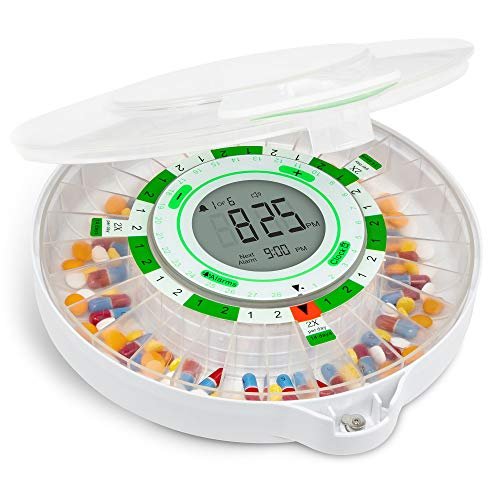
LiveFine 28-Day Automatic Pill Dispenser
A locking, alarmed dispenser that only releases the correct dose at the scheduled time — the right tool when memory is failing or an accidental double dose is a real risk.
- Locking lid prevents accidental double dosing
- 28 compartments with loud audible and visual alarms
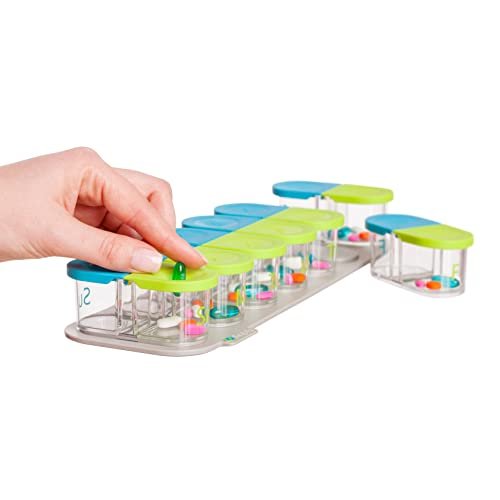
Sagely Weekly Pill Organizer, 2 Times a Day
Seven magnetic pods with separate AM and PM sides, each one detachable so a single day travels with you instead of the whole tray.
- Doubles as a 14-day planner if you dose once a day
- Removable magnetic pods and an optional companion reminder app
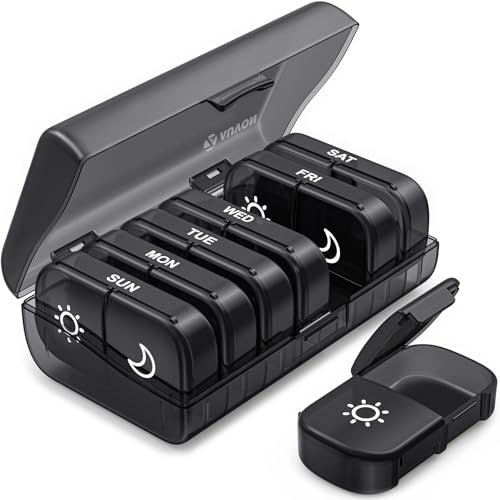
AUVON XL Weekly 2x/day Organizer
A no-frills XL weekly organizer with morning and evening slots that covers a real regimen for under ten dollars — ideal as a primary box or a travel backup.
- Large twice-daily capacity at a very low price
- Simple, lightweight design that is easy to refill
FAQ
How far apart should I take supplements and prescription medications?
It depends on the specific pair. Some minerals like calcium and iron should be separated from certain drugs by several hours, while others can be taken together. Rather than guess, build the day around your prescriptions and slot supplements into the gaps — our timing and spacing guide covers the common combinations, and your pharmacist can confirm your exact list.
Do I really need to tell my doctor about vitamins and supplements?
Yes, every single one. The NIH Office of Dietary Supplements and the FDA are both explicit that supplements can interact with prescription drugs. Your care team cannot flag a problem they do not know exists, so keep supplements on the same master list as your medications.
When is an automatic pill dispenser worth the money over a cheap organizer?
When memory is failing, the regimen is large or complex, or an accidental double dose could be harmful. For a cognitively sharp adult on one or two medications, a low-cost organizer plus a phone alarm is genuinely enough. The locking dispenser is a safety device for a specific situation, not a general upgrade.
What is a brown-bag medication review?
You bring every medication and supplement — in their original bottles — to a pharmacist or doctor for a full look. Seeing the actual containers catches duplicates, expired stock, and interactions a list can hide. Do it yearly and after any hospital stay; our checklist shows what to bring.
My parent just got home from the hospital — what should I check first?
Reconcile the discharge instructions against what is actually in the cabinet, because doses are often changed and old drugs discontinued. Care transitions are the highest-risk moment for medication errors. Work through our guide on what to check when medications change after discharge on day one, and call the pharmacist with any mismatch.
The bottom line on managing medications and supplements
Managing medications and supplements — for yourself or an aging parent — is a solvable logistics problem, and it comes down to a repeatable order of operations. Build one master list everyone can see, get the timing right, choose a container that fits the person, sync the refills, and book a brown-bag review at least once a year. The gadget is the last and smallest decision, not the first.
Next steps to put this into motion:
- Create a single shared medication and supplement profile today and get every bottle onto it.
- Fix your timing using the timing and spacing guide, then match a container to the regimen’s complexity.
- Schedule a brown-bag review with your pharmacist, and repeat it after any hospital stay.
Above all, keep the medical decisions with the professionals. This system exists to make your pharmacist’s and doctor’s advice easy to follow — not to replace it. When something changes or something feels off, the two-minute call to the pharmacy is always the right first move.
Written and reviewed by the UsefulVitamins Editorial Team.
As an Amazon Associate, UsefulVitamins earns from qualifying purchases at no extra cost to you. This article is for general educational purposes only and is not medical advice; always confirm any medication or supplement decision with your doctor or pharmacist.
