
Semaglutide is not one drug. It is three FDA-approved products sold under different brand names, each with a distinct indication, dose, and route of administration. On top of those three legitimate products sits a chaotic compounded-pharmacy market that the FDA has issued repeated public warnings about, including formal alerts about unapproved salt forms of the molecule that have not been tested for safety or effectiveness in humans. Knowing which is which is the difference between a regulated prescription backed by trials involving tens of thousands of patients and a roll of the dice with a vial that may not contain what the label claims. This guide covers the clinical trial evidence, the FDA labels, the real side-effect profile, and the practical realities of accessing semaglutide as a prescription drug. It does not recommend, endorse, or suggest any particular treatment path. That conversation belongs with a licensed physician.

Summary
Semaglutide is a GLP-1 receptor agonist approved by the FDA in three branded forms: Ozempic (injection, type 2 diabetes), Wegovy (injection, chronic weight management), and Rybelsus (oral tablet, type 2 diabetes). Large randomized trials show meaningful reductions in HbA1c, body weight, cardiovascular events, and kidney disease progression. It is a prescription drug, not a supplement, and it carries a boxed warning about thyroid C-cell tumors.
- Three approved products: Ozempic (2017, NDA 209637), Rybelsus (2019, NDA 213051), Wegovy (2021, NDA 215256) — each a separate FDA action with distinct labeling.
- T2D evidence: SUSTAIN trial program (10 global trials) showed HbA1c reductions of 1.0 to 1.8 percentage points and consistent weight loss versus active comparators and placebo.
- Weight-loss evidence: STEP-1 trial (NCT03548935) showed 14.9% mean body weight reduction versus 2.4% with placebo over 68 weeks. Weight returns after stopping.
- Cardiovascular evidence: SELECT trial (NCT03574597, n=17,604) showed a 20% reduction in MACE (cardiovascular death, nonfatal MI, nonfatal stroke) in people with obesity but without diabetes.
- Kidney evidence: FLOW trial (NCT03819153) showed a 24% reduction in kidney failure composite in T2D patients with chronic kidney disease.
- Hard limits: Personal or family history of medullary thyroid carcinoma (MTC) or Multiple Endocrine Neoplasia type 2 (MEN-2) is an absolute contraindication. Pancreatitis is a serious known risk. Gastroparesis cases are reported in real-world data.
- Compounded semaglutide: The FDA has explicitly warned that compounded semaglutide using unapproved salt forms — semaglutide sodium, semaglutide acetate — are not FDA-approved drugs and have not been demonstrated safe or effective.
What Semaglutide Is
Semaglutide is a synthetic analog of human glucagon-like peptide-1 (GLP-1), sharing 94% structural homology with the naturally occurring hormone. The 31-amino-acid peptide is modified at two positions: an amino acid substitution reduces DPP-4 degradation, and a C18 fatty-acid chain enables albumin binding that extends half-life to roughly seven days — the pharmacological basis for once-weekly dosing. Rybelsus co-formulates the peptide with the absorption enhancer SNAC to enable gastric uptake in an oral tablet. The FDA reviewed each branded formulation under a separate NDA, treating semaglutide more like a small-molecule drug than a full biologic despite its manufacturing complexity.
For where semaglutide fits in the broader peptide landscape, see what are peptides and the FDA-approved peptides overview.
Mechanism of Action
Semaglutide works through three interlocking pathways, each of which contributes to its clinical effects in both diabetes and obesity.
Insulin secretion: GLP-1 receptors are expressed on pancreatic beta cells. When semaglutide binds those receptors, it amplifies glucose-dependent insulin secretion, meaning it boosts insulin release specifically when blood glucose is elevated. This glucose-dependency is pharmacologically significant: unlike sulfonylureas, which force insulin release regardless of glucose levels, semaglutide's insulin-stimulating effect largely switches off when blood sugar normalizes. That said, when semaglutide is combined with insulin or sulfonylureas, hypoglycemia risk rises substantially, and dose reductions of those agents are typically required.
Glucagon suppression: GLP-1 receptors on pancreatic alpha cells suppress glucagon in a glucose-dependent manner, reducing the liver's contribution to fasting glucose elevation.
Appetite and gastric emptying: GLP-1 receptors in the hypothalamus and brainstem respond to semaglutide by reducing appetite and caloric intake. In the gut, semaglutide slows gastric emptying, the rate at which food moves from the stomach to the small intestine. Slower gastric emptying produces a longer feeling of fullness after meals and attenuates post-meal glucose spikes. It is also the primary mechanism behind the nausea that many patients experience, particularly during dose escalation, and it is the mechanism implicated in the cases of gastroparesis discussed below.
Branded Products: Ozempic, Wegovy, and Rybelsus
Each of the three branded semaglutide products has a distinct FDA approval with distinct labeling, dosing, and approved patient population. They are not interchangeable, either clinically or regulatorily.
| Brand | Generic | Approved indication | Dose ramp | Approval year |
|---|---|---|---|---|
| Ozempic | Semaglutide SC injection | T2D glycemic control; CV risk reduction in T2D with established CVD | 0.25 mg weekly x4 wk, then 0.5 mg; max 2 mg weekly | 2017 |
| Rybelsus | Semaglutide oral tablet | T2D glycemic control | 3 mg daily x30 d, then 7 mg; max 14 mg daily | 2019 |
| Wegovy | Semaglutide SC injection | Chronic weight management (adults, adolescents 12+); CV risk reduction in adults with obesity/overweight and established CVD | 0.25 mg weekly, escalate every 4 wk to 2.4 mg; max 2.4 mg weekly | 2021 |
Ozempic's cardiovascular indication was added based on SUSTAIN-6 data. Wegovy's CV indication, added in 2024 from SELECT, was a first for an anti-obesity drug. Rybelsus is the only oral GLP-1 agonist approved in the U.S.; its bioavailability is roughly 1%, which explains the different dose range and the requirement to take it on an empty stomach with no more than 4 ounces of water, 30 minutes before eating.
Major Trial Results
SUSTAIN Program (T2D Efficacy)
The SUSTAIN program comprises 10 global trials evaluating subcutaneous semaglutide (0.5 mg and 1.0 mg, later 2 mg) in adults with type 2 diabetes. Across the program, semaglutide reduced HbA1c by 1.0 to 1.8 percentage points from baseline, outperforming comparators including sitagliptin, exenatide ER, insulin glargine, and liraglutide 1.2 mg. Body weight fell 3 to 6 kg. Between 58% and 83% of patients hit the composite target of at least 1% HbA1c reduction and at least 5% weight loss, versus 4% to 68% for comparators.
SUSTAIN-6 (NCT01720446, n=3,297) was the pre-approval cardiovascular outcomes trial. It followed patients with T2D at high cardiovascular risk for two years. The composite primary endpoint — cardiovascular death, nonfatal MI, or nonfatal stroke — occurred in 6.6% of the semaglutide group versus 8.9% of the placebo group (HR 0.74; 95% CI 0.58–0.95; P<0.001 for noninferiority). One caution from SUSTAIN-6 that the prescribing information reflects: retinopathy complications were more frequent with semaglutide (HR 1.76 vs. placebo), an effect thought to relate to rapid HbA1c reduction in patients with pre-existing retinopathy.
STEP Program (Weight Loss)
The STEP (Semaglutide Treatment Effect in People with obesity) program evaluated semaglutide 2.4 mg weekly in adults with obesity or overweight, eventually leading to the Wegovy approval.
STEP-1 (NCT03548935, n=1,961) remains the most cited. Adults without diabetes achieved a mean body weight reduction of 14.9% with semaglutide versus 2.4% with placebo over 68 weeks (difference -12.4 percentage points; 95% CI -13.4 to -11.5; P<0.001). Eighty-six percent of semaglutide participants lost at least 5% of body weight, and 50.5% lost at least 15%, compared with 4.9% in the placebo arm. Published in the New England Journal of Medicine (Wilding et al., 2021; PMID 33567185).
One finding clinicians consistently raise: when semaglutide was discontinued at 68 weeks and participants were followed for another 52 weeks, approximately two-thirds of the lost weight returned. At week 120, the semaglutide group sat at a net 5.6% below baseline; the placebo group at 0.1%. Semaglutide suppresses the physiology of weight regain only while it is being taken. It is not a course of treatment that ends in a durable new set point.
SELECT Trial (Cardiovascular Outcomes in Obesity)
SELECT (NCT03574597, n=17,604) is the largest semaglutide cardiovascular trial published to date and the study that earned Wegovy its CV risk-reduction indication. Participants had preexisting cardiovascular disease and overweight or obesity but did not have diabetes — a different population from SUSTAIN-6. Over a mean follow-up of 39.8 months, the primary three-point MACE endpoint occurred in 6.5% of the semaglutide group versus 8.0% of the placebo group (HR 0.80; 95% CI 0.72–0.90; P<0.001). That translates to a 20% relative risk reduction in cardiovascular death, nonfatal MI, and nonfatal stroke. Mean body weight fell 9.4% in the semaglutide arm. Published in the New England Journal of Medicine (Lincoff et al., 2023; PMID 37952131).
Because the SELECT population had no baseline diabetes, the trial established that the cardiovascular benefit is not simply a downstream effect of lower blood sugar.
FLOW Trial (Kidney Outcomes)
FLOW (NCT03819153) enrolled adults with type 2 diabetes and chronic kidney disease. The composite kidney primary endpoint — kidney failure, a 50% or greater eGFR reduction, or death from kidney-related or cardiovascular causes — showed a hazard ratio of 0.76 (24% reduction). Annual eGFR decline was 1.16 mL/min/1.73 m2 less steep with semaglutide; cardiovascular events fell 18% and all-cause mortality 20%. Published in the New England Journal of Medicine (May 2024; PMID 38785209), this is the first GLP-1 trial to demonstrate a kidney outcomes benefit.
Side Effects and Safety Warnings
Boxed Warning: Thyroid C-Cell Tumors
All three semaglutide products carry the same FDA boxed warning. In rodent studies, semaglutide caused dose- and duration-dependent thyroid C-cell adenomas and carcinomas. Human thyroid C-cells express few GLP-1 receptors, so the relevance to humans is uncertain. The FDA requires the warning because the risk cannot be ruled out, and medullary thyroid carcinoma is difficult to detect early.
Absolute contraindications: Semaglutide is contraindicated in anyone with a personal or family history of medullary thyroid carcinoma (MTC) or Multiple Endocrine Neoplasia syndrome type 2 (MEN-2). Patients should be counseled to report any neck mass, hoarseness, dysphagia, or persistent throat discomfort to their prescriber without delay.
Pancreatitis
Acute pancreatitis, including fatal and non-fatal hemorrhagic or necrotizing cases, has been reported with GLP-1 receptor agonists. The FDA prescribing information for all semaglutide products states that patients should be observed for signs and symptoms of pancreatitis after initiating the drug or increasing the dose. If pancreatitis is suspected — sudden, severe abdominal pain radiating to the back, with or without vomiting — patients should stop semaglutide immediately and seek emergency care. Do not restart the drug without physician re-evaluation. Semaglutide has not been studied in patients with a prior history of pancreatitis.
Hypoglycemia With Insulin or Sulfonylureas
Semaglutide alone has a low intrinsic hypoglycemia risk because its insulin-stimulating action is glucose-dependent. The clinical picture changes when semaglutide is combined with insulin or a sulfonylurea (for example, glipizide or glyburide). In that setting, the combined glucose-lowering effect increases the risk of symptomatic low blood sugar. The prescribing information recommends reducing the insulin or sulfonylurea dose when initiating semaglutide, and patients should be counseled on recognizing hypoglycemia symptoms and on appropriate management.
Gastrointestinal Effects and Gastroparesis
Nausea is the most common adverse event across all three products, affecting roughly 20% to 44% of patients in trials, with rates varying by dose and the pace of escalation. Vomiting, diarrhea, constipation, and abdominal pain are also frequently reported. Most GI effects are mild to moderate and peak during dose escalation, typically improving once the dose stabilizes.
A 2023 cohort study in JAMA (Sodhi et al., JAMA 2023;330(18):1795-1797) found that GLP-1 agonist use for weight loss was associated with a 3.67-fold higher risk of gastroparesis (95% CI 1.15–11.90), a 9.09-fold higher risk of pancreatitis (95% CI 1.25–66.00), and a 4.22-fold higher risk of bowel obstruction (95% CI 1.02–17.40) versus bupropion-naltrexone. FAERS data show semaglutide accounts for roughly a quarter of GLP-1 gastrointestinal adverse events in database analyses. Patients with pre-existing gastroparesis or motility disorders warrant extra caution; anyone with severe, persistent nausea or vomiting should stop the drug and contact their physician.
Pregnancy and Fertility
Semaglutide should be discontinued before a planned pregnancy. The FDA label recommends at least a two-month washout before conception given the drug's long half-life. Animal data showed fetal harm at sub-human exposures. If pregnancy is discovered during treatment, stop the drug and contact the prescriber promptly.
Other Notable Risks
Diabetic retinopathy worsening is observed with rapid HbA1c reduction, as seen in SUSTAIN-6 (HR 1.76 versus placebo). Acute kidney injury is reported, typically via dehydration from GI side effects. Gallbladder disease (cholelithiasis, cholecystitis) occurs more often in trial participants on semaglutide than on comparators. Heart rate rises approximately 2 to 4 bpm on average.
Compounded Semaglutide: What the FDA Has Said
From roughly 2021 through early 2025, Ozempic and Wegovy faced documented drug shortages in the United States. During a shortage, federal law permits compounding pharmacies to compound drugs that are on the FDA shortage list, even drugs that are otherwise not permitted to be compounded from bulk substances.
Some compounding pharmacies used this window to market semaglutide products made from bulk drug substances, including salt forms of the molecule — semaglutide sodium and semaglutide acetate — that are chemically distinct from the base form used in the FDA-approved products. The FDA has been explicit: those salt forms are different active ingredients, not generic equivalents. They have not been shown to be safe or effective. The agency issued public warnings in April and October 2023 stating these concerns, and by September 2025 had issued warning letters to multiple compounding operations for claiming their products were equivalent to FDA-approved semaglutide.
The FDA formally resolved the semaglutide shortage designation, which removed the legal basis for compounding semaglutide from bulk substances under the shortage exemption. State-based compounding pharmacies and 503B outsourcing facilities faced different timelines for compliance, and litigation complicated the enforcement picture in 2025. The takeaway for patients is direct: a vial purchased from a compounding pharmacy or an online "medspa" is not Ozempic. It is not Wegovy. It has not passed FDA review. The dose printed on the label has not been independently verified. Dosing errors, contamination, and unexpected salt-form exposures are real documented risks.
If you are comparing options for a GLP-1 approach to weight loss, the gap between a pharmacy-dispensed, manufacturer-sealed FDA-approved pen and a compounded vial is not a technicality about paperwork. It is a gap in demonstrated safety.
Practical Considerations: Dosing, Cost, and Access
Dosing and escalation. Semaglutide's dose escalation schedules are not optional. They exist because GI tolerability is sharply better with gradual ramp-up than with a full therapeutic dose from day one. Ozempic starts at 0.25 mg weekly for four weeks, then 0.5 mg; Wegovy starts at 0.25 mg weekly and steps up every four weeks across five levels to reach 2.4 mg at approximately week 17. Physicians sometimes adjust the timeline for individual tolerability. Skipping rungs on the ladder dramatically increases nausea and dropout rates.
Cost without insurance. A monthly Ozempic pen lists at roughly $1,000 to $1,200; Wegovy is similar. Novo Nordisk's savings card can bring the cost to $25 per month for commercially insured patients, while GoodRx introductory pricing for uninsured cash-pay patients has run $199 to $349 per month for some doses. These figures shift; verify current pricing before assuming what you will pay.
Insurance access. Ozempic is generally covered by commercial insurance for T2D, typically with prior authorization. Wegovy coverage for weight management is far less consistent: many plans exclude obesity pharmacotherapy, with PA requirements tied to BMI thresholds and documented comorbidities. Coverage is expanding as SELECT data shift the clinical conversation.
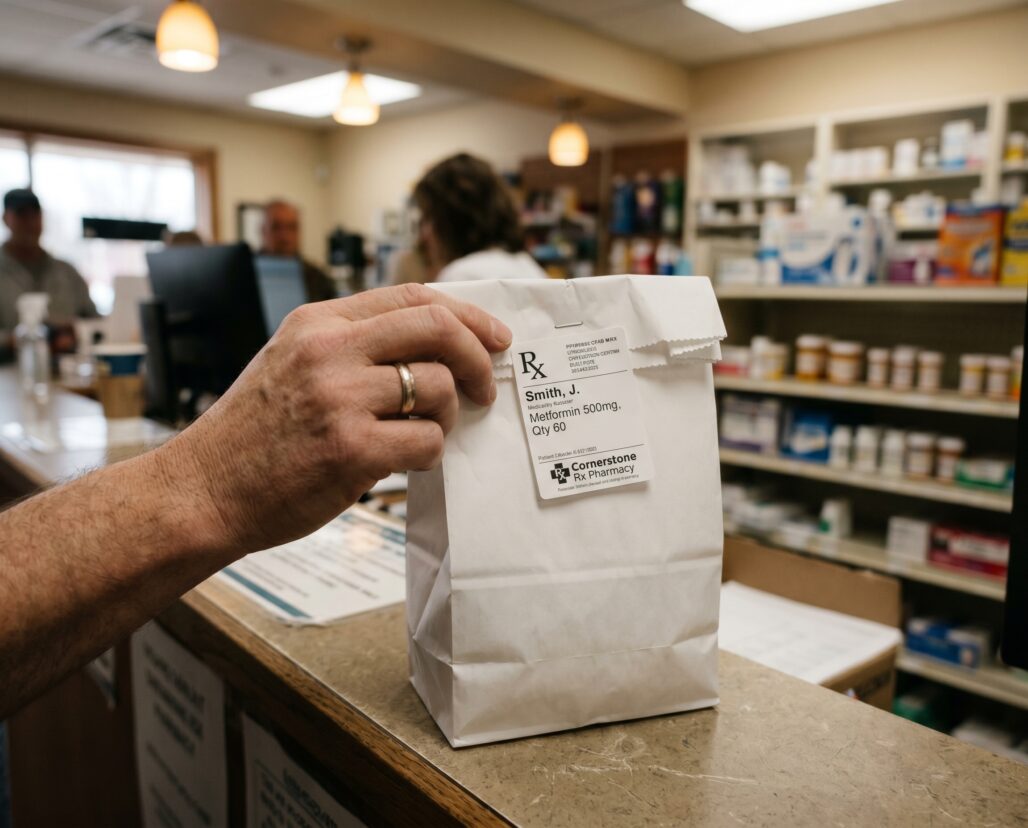
Physician supervision is not optional. Off-label prescribing of Ozempic for weight loss in patients without T2D, cosmetic use for modest weight reduction in patients who do not meet clinical obesity criteria, and online subscription services that skip thorough metabolic workups all represent uses of semaglutide outside the guardrails of the clinical trial populations. The FDA-approved indications exist for a reason. A prescribing physician who knows your cardiovascular history, thyroid history, GI history, and concurrent medications is the appropriate decision-maker, not a telehealth intake form.
Frequently Asked Questions
Can I switch from Ozempic to Wegovy? They are the same molecule at different doses with different labeling. Wegovy is a separate prescription requiring its own prior authorization, and the 2.4 mg maintenance dose exceeds Ozempic's 2 mg maximum. The switch requires physician oversight.
Does semaglutide cause muscle loss? Any weight-loss intervention reduces some lean mass. Trial data suggest semaglutide's proportion of lean mass loss is comparable to other approaches. Resistance training and adequate protein intake are the standard clinical recommendations. For the evidence on nutritional strategies, see supplements and GLP-1 muscle loss.
How long do you stay on it? STEP-1 extension data show most weight returns within a year of stopping. For T2D, semaglutide is typically indefinite, like other diabetes medications. Wegovy's indication is chronic weight management, not a short course. Continue, reduce, or stop only with physician guidance.
What about oral semaglutide (Rybelsus) for weight loss? Rybelsus is approved only for type 2 diabetes, not for weight management. It has not cleared the FDA for obesity. The dose range (3–14 mg) achieves lower systemic exposure than injected semaglutide at weight-management doses.
Is there a generic semaglutide? Not in the U.S. as of early 2026. NDA exclusivity and patent protection remain in effect. When exclusivity expires, FDA-approved generic or biosimilar pathways will require demonstrating bioequivalence or biosimilarity, a higher bar than most small-molecule generics.
Tracking a protocol like this? Our companion app, StackMyMed, lets you log doses, schedule them, and check interactions across everything you take — alongside, never instead of, your clinician’s guidance.
Conclusion
Semaglutide has one of the largest and most rigorous trial portfolios of any drug approved in the past decade. The evidence across T2D, weight loss, cardiovascular outcomes, and kidney disease is consistent and clinically meaningful. So are the risks: an absolute contraindication for anyone with a personal or family history of MTC or MEN-2, documented pancreatitis and gastroparesis risk, and a required washout before pregnancy.
The compounded-semaglutide market exploited a legitimate shortage window. That window is narrowing, and products containing semaglutide sodium or semaglutide acetate remain unapproved, unverified, and documented sources of harm.
Any conversation about starting semaglutide belongs with a physician who knows your full history — not a platform that ships after a five-minute intake form.
This article is for informational purposes and not medical advice. Peptides, especially those marketed for therapeutic use, can interact with medications and health conditions. Consult a licensed physician before starting any supplement, particularly if you are pregnant, nursing, taking prescription medications, or managing a chronic condition.
