
If you landed here searching whether Care/of personalized vitamins are worth the monthly subscription in 2026, the short answer is: you can no longer subscribe — Care/of shut down in June 2024. But the longer answer still matters: if you used Care/of in 2021 or 2022 and are now looking for what replaced it, or if you are evaluating the personalized-vitamin category more broadly, this review breaks down what Care/of actually offered, where the model held up, where it didn't, and which Amazon-available alternatives deliver comparable or better value at a lower monthly cost. You will also get a frank assessment of whether any quiz-based supplement service can deliver on its personalization promise, and a dollar-for-dollar comparison against building your own stack from Thorne and Pure Encapsulations.
Affiliate disclosure: this article contains affiliate links. As an Amazon Associate, UsefulVitamins.com earns from qualifying purchases at no extra cost to you.
Summary / Quick Answer: Was Care/of Worth It?
Care/of was a thoughtfully designed personalized vitamin subscription that closed operations June 17, 2024, after parent company Bayer ceased funding.
- Best for (when it existed): Supplement newcomers who wanted a curated starting point and were willing to pay a 2-3x premium for the quiz-and-packet experience
- Not ideal for: Anyone already familiar with Thorne, Pure Encapsulations, or NOW Foods — the underlying ingredients overlapped significantly at meaningfully lower cost
- What to look at before buying an equivalent now: Persona Nutrition (still active, includes dietitian review) or building your own stack from Thorne Basic Nutrients 2/Day as a base
- Decision shortcut: If the quiz is what appealed to you, the quiz logic did not account for drug interactions or competitive absorption (calcium blocking iron, for example). It was a better onboarding experience than most, but not a clinical assessment.
What Care/of Was: The Model Explained
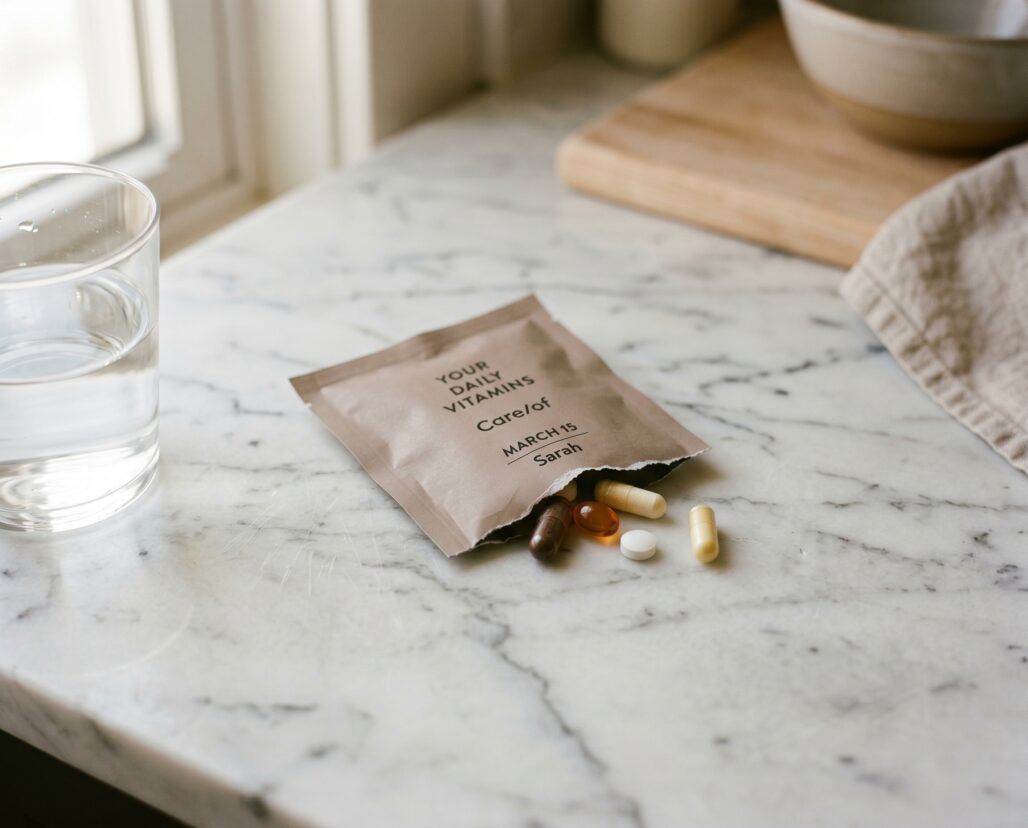
Care/of was founded in 2016 and acquired by Bayer (70% stake, $225 million valuation) in 2020. The pitch was elegant: answer a roughly six-minute quiz covering diet, sleep, stress, fitness goals, and health concerns, and Care/of would build a personalized daily supplement pack shipped monthly in individual labeled packets stamped with your first name.
The catalog ran to approximately 50 ingredients — vitamins, minerals, adaptogens, probiotics, amino acids, and herbal extracts. A typical recommendation came back as 4 to 7 supplements, consolidated into one tear-open packet per day. Monthly cost ranged from $20 (a minimal stack) to $60-plus (a fuller stack). The average landed around $35/month.
The packaging was genuinely good: compostable packets, clean label typography, a companion app that let you track habit streaks. For someone who had never systematically taken supplements before, it functioned as a reasonable guided onboarding experience.
Bayer announced the closure in June 2024. All subscriptions were canceled as of June 17, 2024. The company's statement: "We unfortunately no longer have funding to operate in the way we have been." The 143-person Brooklyn team was laid off by July 3. As of this writing, no relaunch or acquisition has been confirmed.
Marketing Claims vs Reality
Care/of's core claim was personalization: that the quiz would produce a supplement stack matched to your biology and lifestyle. The reality was more limited.
The quiz asked about goals (energy, immunity, focus, sleep, gut health) and lifestyle factors (diet type, exercise frequency, stress level). It did not ask about:
- Current medications (which create real interaction risks with some supplements)
- Existing lab values (ferritin, 25-OH vitamin D, B12 serum levels)
- Family history of conditions where supplementation guidelines differ
The quiz was a self-reported preference survey, not a clinical intake. The result was a stack optimized for the most common user profile that fit your answers, not a genuinely individualized recommendation. That is appropriate for a DTC brand with no clinical staff; the problem was that Care/of's marketing language ("personalized for you," "your unique needs") implied more clinical precision than the backend could deliver.
Actionable takeaway: The quiz was useful as a starting point. It was not a substitute for a conversation with a registered dietitian or a blood panel. If you are managing a health condition, the quiz format — any quiz format — should be a beginning of research, not the end of it.
Real-User Reports
User reports from Reddit r/supplements and Trustpilot (before the June 2024 closure) showed a consistent split:
What users valued: The habit-formation element was consistently praised. Seeing your name on the packet and receiving a curated monthly delivery lowered the activation energy of actually taking supplements daily. One Trustpilot reviewer wrote: "I had tried buying bottles off Amazon for years and always let them expire. The packets got me to actually take them." (Trustpilot, Care/of reviews, archived 2023)
What users criticized: Price versus the underlying ingredients. A recurring Reddit theme was that users who looked up the individual product forms would find the same or equivalent ingredients on Amazon at 40-60% of the Care/of cost. Another recurring complaint was that the quiz recommended the same 4-5 supplements to users who reported very different lifestyles — which is consistent with a quiz serving population-level recommendations rather than individual ones. (r/supplements, multiple threads 2022-2023)
The honest synthesis: Care/of solved an adherence problem better than most. It did not solve a personalization problem.
Cost Math: The Premium in Real Dollars
The real question isn't whether Care/of's ingredients were high quality. The real question is what you pay for them.
A representative Care/of stack for an active adult (multivitamin base, vitamin D, magnesium, omega-3, probiotic) ran approximately $42-$48/month on average.
Building a comparable stack on Amazon from established brands:
| Supplement | Care/of equivalent | Amazon alternative | Amazon monthly cost |
|---|---|---|---|
| Multivitamin base | Care/of daily multi | Thorne Basic Nutrients 2/Day | ~$27/mo |
| Vitamin D3 | Care/of Vitamin D | NOW Foods Vitamin D3 2000 IU | ~$4/mo |
| Magnesium | Care/of Magnesium | Pure Encapsulations Magnesium Glycinate | ~$8/mo |
| Omega-3 | Care/of Omega-3 | Nordic Naturals Ultimate Omega | ~$14/mo |
| Total | ~$45/mo | ~$53/mo (premium stack) |
That comparison actually skews in Amazon's favor more dramatically if you use mid-tier brands like NOW Foods across the board: the equivalent stack drops to $22-$28/month. The Care/of premium was 1.5x to 2x, not the 3x that some comparisons overstate. The premium bought you the packet convenience, the quiz experience, and the brand's testing standards — not a fundamentally superior ingredient.
Actionable takeaway: If ingredient quality was the draw, Thorne Basic Nutrients 2/Day at ~$27/month on Subscribe and Save delivers NSF-certified, third-party-verified nutrients without the subscription lock-in. That is where most former Care/of users who cared about quality have landed.
For 2026 pricing across DTC supplement subscriptions and their Amazon equivalents, see our DTC supplement pricing reference.
Cancellation Friction (Historical)
For historical accuracy and for readers evaluating similar services: Care/of's cancellation was handled in-app. There was no documented phone-call or email-only requirement — users could pause or cancel through the account settings portal. There was no noted days-notice requirement for the standard monthly cycle, though orders in processing could not be reversed. This placed Care/of on the more user-friendly end of DTC subscription cancellation relative to peers who required email requests or 7-day notice windows.
The closure itself terminated all subscriptions automatically as of June 17, 2024, with no further charges.
For current personalized vitamin services: check cancellation policy before you subscribe. Persona Nutrition (one of the active alternatives) requires cancellation via chat or email — there is no self-serve in-app cancel button as of 2025.
How Your Body Actually Handles This Stack
This is where quiz-based supplement services have a structural blind spot, and Care/of was no exception. The quiz recommends a stack; the stack ships as a single daily packet; you take the packet together. The chemistry does not always cooperate.
Competitive absorption — the calcium-iron problem. If your Care/of stack included both a calcium supplement and an iron supplement (or a multivitamin with both), taking them simultaneously creates a transport competition at the intestinal DMT1 transporter. Research published in the Journal of Nutrition (2021) found that at physiological supplementation doses this effect is not as large as once feared for long-term status, but short-term absorption can still be meaningfully reduced. Care/of's one-packet model made it structurally impossible to separate minerals across the day without tearing packets apart yourself. The quiz did not flag this.
Form bioavailability. Care/of used methylcobalamin (active B12) and methylfolate in several products — a genuine quality signal, since these forms are usable by MTHFR-variant carriers who represent roughly 40% of the population. Cyanocobalamin (cheap B12) is a common cost-cut in DTC brands; Care/of avoided it in their B-complex formulations. Credit where it is due.
Saturation kinetics. The B12 in Care/of's products ran at or above 1000 mcg in some stack configurations — multiples of the RDA. For water-soluble vitamins, excess B12 is excreted. This is not a safety concern, but it is an example of dose logic that sounds impressive on a label while delivering no additional benefit. You are paying for expensive urine, not enhanced results.
Co-factor pairing. Vitamin D without magnesium is a common oversight: magnesium is required as a cofactor for vitamin D conversion to its active form, 25-hydroxyvitamin D. If your Care/of stack included Vitamin D but placed magnesium in a separate "optional add-on" position (which some stack configurations did), the combination was incomplete by design.
The packet model had one unresolved structural problem: it assumed all supplements work best taken together at the same time. The chemistry of the stack often suggested otherwise.
Who It Was For / Who Should Skip
Care/of made sense if: You had never systematically taken supplements before, responded well to gamified habit-tracking, and were willing to pay a moderate premium for the onboarding experience. The quiz got you started; the packets kept you consistent; the brand's third-party testing standards were on the better end for DTC.
Care/of did not make sense if: You already knew which specific forms and doses worked for you, you were managing a health condition where drug-nutrient interactions matter, or you were comparing cost-per-effective-dose against Thorne or Pure Encapsulations. In that case, you were paying for packaging and marketing, not for better nutrients.
"You're paying for the brand, not the molecule" — that was the honest summary for intermediate-to-experienced supplement users evaluating Care/of at any point in its history.
Amazon Top Pick: Thorne Basic Nutrients 2/Day
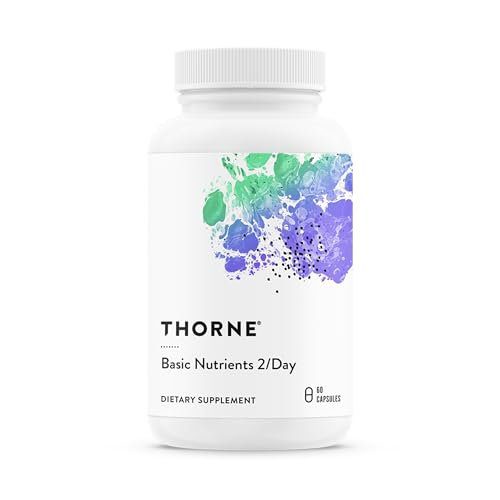
Top Pick: Thorne Basic Nutrients 2/Day — because it delivers NSF-certified, third-party-verified nutrients in bioavailable forms with no proprietary blend obscuring the doses.
Additional Picks from the Amazon Lookup
Best for once-daily convenience: Pure Encapsulations O.N.E. Multivitamin

Best budget base: NOW Foods ADAM Men's Multivitamin
Best for women: Ritual Essential for Women 18+
Best garden-variety comprehensive: Garden of Life Vitamin Code Men
Premium one-a-day for women: SmartyPants Adult Complete Multivitamin
Brands and Products to Skip
Skip: Generic "personalized vitamin" quiz services with no third-party testing disclosure. The Care/of closure spawned a wave of quiz-based copycats. Several offer no third-party testing and no ingredient sourcing transparency. A supplement brand can look impressive in a quiz interface and still miss the basics on the product side. Before subscribing to any personalized vitamin service, ask specifically: "Which third-party certifies your products?" If the answer is vague or absent, the quiz is the product — the supplements are not.
Skip: Any multi that lists magnesium oxide as the primary magnesium form. Magnesium oxide has approximately 4% elemental absorption in most adult GI systems versus 85% for magnesium glycinate. Seeing "magnesium (as magnesium oxide) 400 mg" on a label means you are absorbing roughly 16 mg of usable magnesium. If the brand charges a premium for "comprehensive" mineral coverage and then uses oxide as the magnesium form, that is marketing budget at work, not ingredient quality.
As an Amazon Associate, I earn from qualifying purchases. Product recommendations are based on real reviews and independent research.
The Alternatives Worth Considering in 2026
If you came here because you used Care/of and are looking for what replaced it, two paths are worth considering:
Path 1 — Personalized quiz service, still operating: Persona Nutrition (personanutrition.com) runs a more extensive quiz (asks about medications, which Care/of did not) and provides access to a dietitian review team. Monthly cost depends on stack, typically $30-$80. Cancellation requires contacting support — there is no self-serve cancel button. That is a real friction point to weigh before subscribing.
Path 2 — Self-directed from Amazon: Start with Thorne Basic Nutrients 2/Day as your multivitamin base. Add individual supplements based on documented needs (ideally confirmed by bloodwork). Total cost for a base + 1-2 add-ons runs $30-$45/month from Thorne and Pure Encapsulations — comparable to Care/of's cost, with full dose transparency and no subscription lock-in beyond what you choose.
For a full breakdown of the Care/of alternatives category, see Care/of alternatives on Amazon: what actually replaces the personalized pack model.
For a direct comparison of the two most similar active DTC brands, see Ritual vs Care/of: which personalized vitamin approach is worth it?.
Takecareof.com — $20-$60/mo direct from brand when active. The site currently reflects Care/of's prior product catalog; as of mid-2024 the subscription service is no longer operational. We will update this section if a confirmed relaunch is announced.
For broader context on supplement stacking for specific health goals, see Best multivitamin for GLP-1 users: what changes when you're on semaglutide.
Once you have picked a product, our companion app, StackMyMed, scans its label and tracks it alongside everything else you take, with timing and interaction checks built in.
Conclusion: the bottom line on Care/of
Care/of was a well-designed entry point into supplement habits, not a clinically precise personalization system. Its quiz logic was smarter than the average supplement quiz (it sourced citations, it used bioavailable forms, it designed with habit-adherence in mind) but it could not account for drug interactions, did not separate incompatible minerals in the packet, and charged a 1.5-2x premium over building an equivalent stack yourself.
Whether that premium was worth it depended on whether the adherence problem was the real one you were trying to solve. For a significant portion of its users, it was.
The closure in June 2024 ended the experiment before the personalized supplement category could fully mature. The honest answer to "is Care/of worth it in 2026" is that the question is now academic — but the question it pointed to (can a quiz-based service genuinely personalize supplementation?) is still worth asking of every service that replaces it.
Next steps:
- If you want to replicate the Care/of quality at lower cost: start with Thorne Basic Nutrients 2/Day and add individual supplements as needed
- If you want the personalized quiz experience with active dietitian support: evaluate Persona Nutrition and read their cancellation policy before subscribing
- If you want a full comparison of active DTC vitamin subscription brands: see Ritual vs Care/of
This article is for informational purposes and not medical advice. Supplements — especially those marketed for personalized health use — can interact with medications and health conditions. Consult a licensed physician or registered dietitian before starting any supplement regimen, particularly if you are pregnant, nursing, taking prescription medications, or managing a chronic condition.
Editorial independence note: UV earns affiliate commissions from Amazon and (selectively) from DTC brand affiliate programs. Commissions never determine our recommendations — top picks are chosen first; affiliate links are added second. Read our full methodology and editorial independence policy →
