
Affiliate disclosure: this article contains affiliate links. As an Amazon Associate, UsefulVitamins.com earns from qualifying purchases at no extra cost to you.
If you are shopping for the best PQQ supplements, you have probably read that pyrroloquinoline quinone "grows new mitochondria" and powers up cellular energy. The honest answer: the mechanism is genuinely interesting, but the human evidence is a handful of small, short trials, so this is a low-risk experiment, not a sure thing. The picks below are the ones I would actually keep in my own family's cabinet if I wanted to test PQQ, because they match the dose and form that the studies used. This article walks through what PQQ does at the cellular level, what the human trials really showed, whether the PQQ-plus-CoQ10 combo earns its premium, and the dose worth using if you try it.
Before you decide
PQQ is a low-stakes experiment for healthy adults, not a treatment for a medical problem. If you have persistent fatigue, brain fog, or sleep trouble, the honest first step is a clinician and basic labs (thyroid, iron, ferritin, B12, sleep apnea screen), not a mitochondrial supplement. Those common, fixable causes explain far more fatigue than any quinone cofactor will.
PQQ is also not a stimulant. You will not feel a jolt, and the trial endpoints were measured over 8 to 12 weeks, not in an afternoon.
Skip it, or ask your doctor first, if you are pregnant or nursing (no safety data in those groups), or taking prescription medication where you want to avoid an unstudied variable. The mechanism is mostly preclinical, the PQQ-plus-CoQ10 combo is plausible but not proven better than either alone, and the upside in healthy people is realistically modest.
What PQQ is and the mitochondrial story
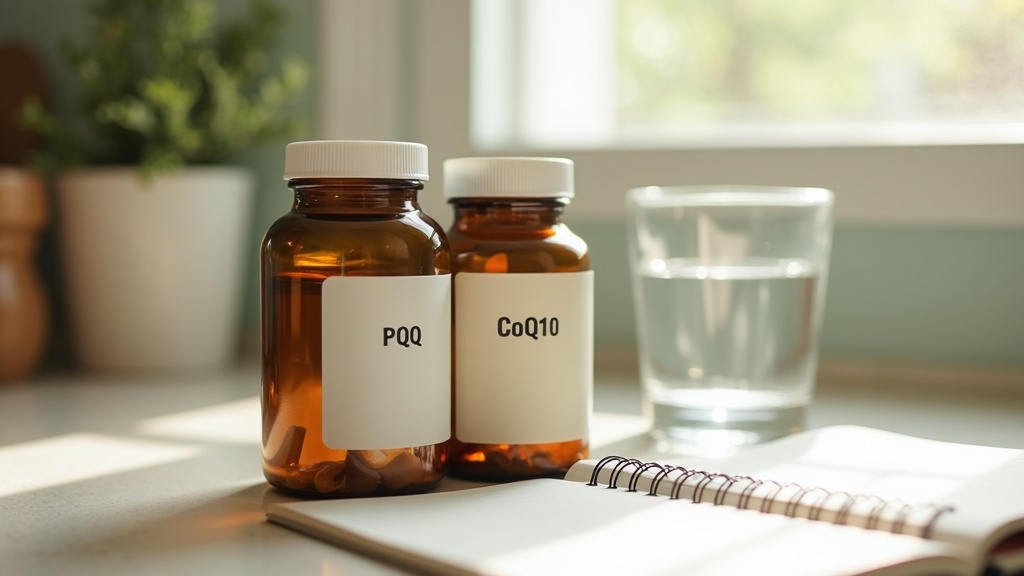
Pyrroloquinoline quinone is a small redox-active quinone found in trace amounts in foods like fermented soy, green tea, and parsley. It is not a vitamin, but it behaves like a cofactor that nudges the cell's energy machinery rather than fueling it directly. Your body does not make it, and dietary intake is tiny, which is why the supplement pitch exists at all.
The headline claim is mitochondrial biogenesis: PQQ is said to help cells build more mitochondria, the organelles that produce ATP. The proposed pathway is specific and worth naming, because the specificity is what makes PQQ more credible than the average "cellular energy" powder.
In cultured mouse liver cells, PQQ phosphorylated CREB and increased expression of PGC-1alpha, the master regulator of mitochondrial biogenesis, in a 2010 study in the Journal of Biological Chemistry. When the researchers silenced CREB or PGC-1alpha, the effect disappeared, which is the kind of mechanistic control that separates a real signal from hand-waving.
A later 2017 paper in Biochemistry added a second route: in cell culture, PQQ raised cellular NAD+ and activated the SIRT1/PGC-1alpha axis, deacetylating PGC-1alpha and pushing it into the nucleus. Two independent mechanisms converging on the same biogenesis switch is a strong preclinical story.
Here is the honest catch. Both of those papers are cell-culture work, and most of the supporting evidence sits in cells and rodents. A mechanism that fires cleanly in a dish of mouse hepatocytes at micromolar concentrations does not automatically translate to a felt difference in a person swallowing 20 mg with breakfast. That gap between dish and human is the whole ballgame for PQQ.
What the small human trials actually show
There are human trials, but you should know their size before you read their conclusions. They are small, short, and mostly measure surrogate or self-reported endpoints.
The fatigue-and-sleep result people cite most is a 2012 study (Nakano et al.) in which healthy adults taking 20 mg of PQQ daily for 8 weeks reported improvements in fatigue, mood, and sleep quality, with a change in the cortisol awakening response as a supporting biomarker. The signal is encouraging. The design is weak: a small open-label sample, self-reported scales, no robust placebo control in the early form. Treat it as a hypothesis, not proof.
The strongest cognition evidence is a randomized, double-blind, placebo-controlled trial in Advances in Experimental Medicine and Biology. Forty-one older adults took 20 mg of BioPQQ or placebo for 12 weeks. The PQQ group showed better selective attention on the Stroop test and a working-memory benefit in participants who started with lower baseline scores. That is a real placebo-controlled signal, but n=41 on a narrow set of tasks is a pilot, not a settled finding.
More recently, a 2024 randomized controlled trial in the Journal of Nutrition, Health and Aging gave a dihydro-PQQ formula to 34 older adults with mild cognitive impairment for 6 weeks. Brain metabolism markers moved (cerebral oxygenation and N-acetyl aspartate rose, serum BDNF increased), but most of the actual cognitive endpoints came back non-significant, with only one orientation subscore reaching significance. That is the pattern across PQQ: the biology shifts on the machines, the felt cognitive change stays small or absent.
Actionable takeaway: across every human trial, the dose was 20 mg/day and the studies ran 8 to 12 weeks. If you test PQQ and quit after a week, you have not replicated anything anyone studied.
The PQQ plus CoQ10 question
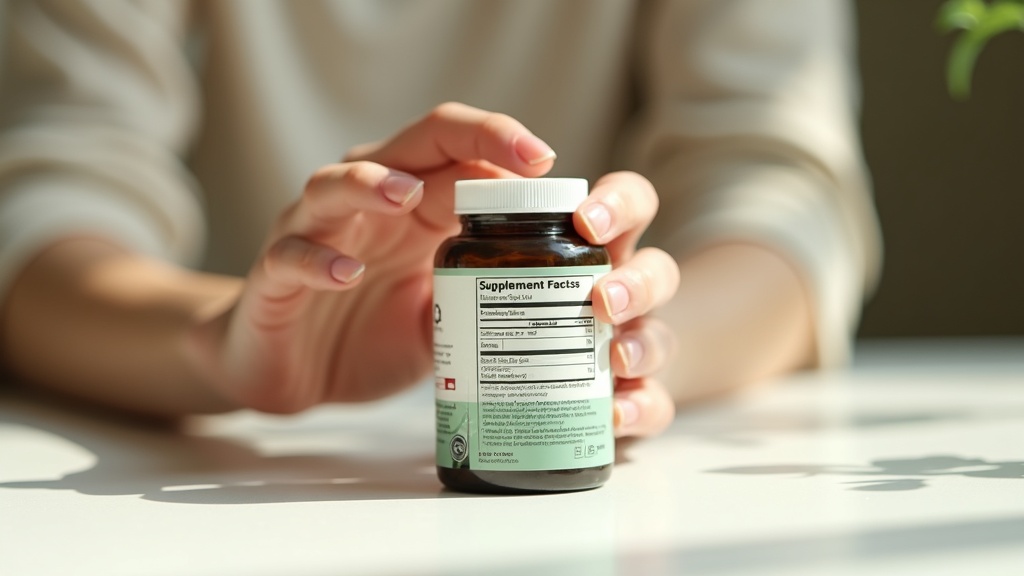
The most marketed PQQ product is not plain PQQ, it is PQQ stacked with CoQ10, sold as a "mitochondrial duo." The logic is tidy on a slide: CoQ10 shuttles electrons inside your existing mitochondria, while PQQ supposedly helps build new ones, so the two should cover complementary jobs. Mechanistically that is plausible.
Plausible is not the same as proven superior. The "synergy" claim usually traces back to a single small Japanese trial, and there is no solid body of head-to-head human data showing PQQ-plus-CoQ10 beats either compound alone on a hard endpoint. The real question is not whether the stack sounds elegant, it is whether you are paying a premium for an unproven combination.
Here is the practical rule. If you already take CoQ10 (common for people on statins or over 50), a combined cap is a reasonable convenience buy. If you do not, do not start CoQ10 just to "complete the stack," because that is two unsettled variables instead of one. The combination is not a cure for fatigue or a treatment for any condition, regardless of how the bottle reads.
For the CoQ10 side of that decision, our complete guide to CoQ10 covers ubiquinol versus ubiquinone, dosing, and who actually benefits.
Dose and what to look for when buying
Every meaningful human trial used 20 mg of PQQ per day, and that is the number to match. More is not better here; the studies that found anything used 20 mg, and the safety dossiers were built around that level too. A lot of cheap blends bury 5 to 10 mg of PQQ inside a "proprietary mitochondrial complex," which is below the studied dose and unlikely to reproduce a trial result.
Form matters less than dose, but the trials specifically used BioPQQ, a branded PQQ disodium salt. A stated 20 mg of PQQ disodium salt is what you are looking for, with the milligrams printed per capsule, not hidden in a blend. Avoid proprietary blends that refuse to disclose the PQQ amount.
Third-party testing is the non-negotiable. Independent testing matters here because purity and label accuracy are not guaranteed: in ConsumerLab's PQQ review, only 5 of 7 products met their stated PQQ amount, with two delivering less than claimed. Look for a USP, NSF, or ConsumerLab mark, or a brand that publishes its own certificate of analysis.


As an Amazon Associate, UsefulVitamins.com earns from qualifying purchases at no extra cost to you. We only recommend products supported by published research or third-party testing.
Is PQQ safe, and who should skip it
For healthy adults at the studied dose, PQQ has a reassuring safety profile. The European Food Safety Authority's novel-food assessment judged PQQ disodium salt safe at the proposed maximum of 20 mg/day, citing a no-observed-adverse-effect level of 100 mg/kg in a 90-day rat study, a wide margin over typical human use. In the US, PQQ disodium salt has cleared the FDA's GRAS notification process with a no-questions response for use in foods and beverages.
Reported side effects in the small human trials were minimal, occasionally mild stomach upset or headache. That is not the same as a long safety record, because the trials were short and small.
Who should skip it, or clear it first: anyone pregnant or nursing (no data), children (not studied), and anyone on prescription medication who would rather not add an unstudied variable. If your fatigue or cognitive symptoms are significant enough to disrupt work or daily life, the honest move is medical evaluation first, not a mitochondrial supplement. PQQ is an experiment at the margins, not a fix for an underlying problem.
For the bigger picture on where mitochondrial supplements fit, see our complete guide to longevity supplements, and if cognition is your real target, start with the evidence-ranked options in our roundup of the best supplements for memory.
How the options compare
| Option | Best for | What the evidence says | Watch for |
|---|---|---|---|
| Plain BioPQQ 20 mg | Matching the trials exactly | All human trials used 20 mg/day for 8 to 12 weeks | Confirm 20 mg disodium salt, not a blend |
| PQQ + CoQ10 combo | People already taking CoQ10 | Plausible mechanism, not proven superior to either alone | Paying a premium for an unproven stack |
| Generic PQQ disodium salt | Cost-conscious experimenters | Same compound; depends on label accuracy | Third-party verification, since 2 of 7 underdelivered in testing |
Frequently asked questions
Does PQQ actually give you more energy?
Not the way caffeine does. There is no stimulant effect to feel. The human trials measured fatigue, sleep, and cognition over weeks, and even there the changes were modest and the studies small. Expect a subtle effect at most, or none.
How long until PQQ works, if it works at all?
The trials ran 8 to 12 weeks at 20 mg/day. If you are going to test it, commit to roughly two to three months at the studied dose before judging, and stop if you notice nothing.
Is PQQ better than CoQ10?
They do different jobs. CoQ10 supports the existing electron transport chain and has more human data behind it; PQQ targets mitochondrial biogenesis and has thinner human evidence. Neither is "better," and stacking them is not proven superior to either alone.
Can I just eat PQQ in food instead?
Dietary PQQ is real but tiny, well below the 20 mg used in trials. You cannot reasonably reach a studied dose through food, which is the entire rationale for the supplement.
The bottom line on the best PQQ supplements
PQQ is one of the more honest "mitochondrial" supplements because its mechanism is specific and reproducible in the lab: it activates the CREB and SIRT1 routes to PGC-1alpha, the biogenesis master switch. The problem is that the human evidence is a few small, short trials with mixed or surrogate endpoints, so the felt benefit in a healthy person is realistically modest. What most roundups gloss over, and what this article says outright, is that the PQQ-plus-CoQ10 combo is not proven superior to either compound alone, so do not pay extra for the stack on faith.
Next steps:
- If you want to test it, buy a third-party tested 20 mg BioPQQ cap and commit to 8 to 12 weeks, the way the trials did.
- Fix the common causes of fatigue first; review the evidence-ranked cognitive options in our best supplements for memory guide.
- See how we weigh evidence and pick products in our how we review supplements methodology, and more from this author on the Maria Rodriguez profile.
As an Amazon Associate, I earn from qualifying purchases. Product recommendations are based on real reviews and independent research.
Reviewed by Maria Rodriguez, MS Nutrition Science, focused on cognitive and mood biochemistry.
This article is for informational purposes and not medical advice. Supplements can interact with medications and health conditions. Consult a licensed physician before starting any supplement, particularly if you are pregnant, nursing, taking prescription medications, or managing a chronic condition.
