
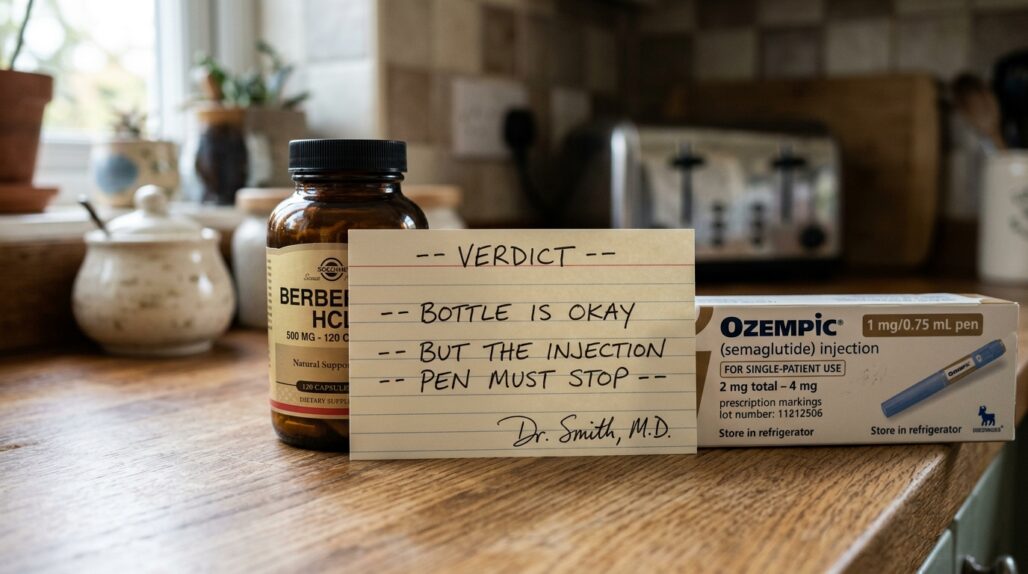
Before you decide
This is general information, not medical advice. GLP-1 medicines like Ozempic, Wegovy, Mounjaro, and Zepbound are prescription drugs, and what is safe to add depends on your other medications, your kidney function, and how your gut is handling the dose.
The people who need to be most careful are those who also take insulin or a sulfonylurea, anyone with gastroparesis or frequent nausea and vomiting, and people loading up on multiple "metabolism" or "blood sugar support" supplements at once. Stacking effects, not any single product, is usually where trouble starts.
Nothing here tells you to stop a supplement on your own. The goal is to know which categories overlap with the drug so you can raise the right ones with your pharmacist before they cause a problem.
The actual interaction: same job, doubled
Ozempic and its relatives do two things that matter here. They lower blood glucose, and they slow how fast your stomach empties. Both effects are part of how the drug works, and both can be amplified by the wrong supplement.
A supplement "interaction" with a GLP-1 drug is rarely a chemical clash in the bloodstream. It is usually additive pharmacology: the supplement nudges glucose down or slows the gut in the same direction the drug already does. Two mild pushes can add up to one strong one.
That framing matters because it tells you what to watch. You are not looking for exotic toxic combinations. You are looking for supplements that lower blood sugar, bulk up in the gut, or further delay emptying.
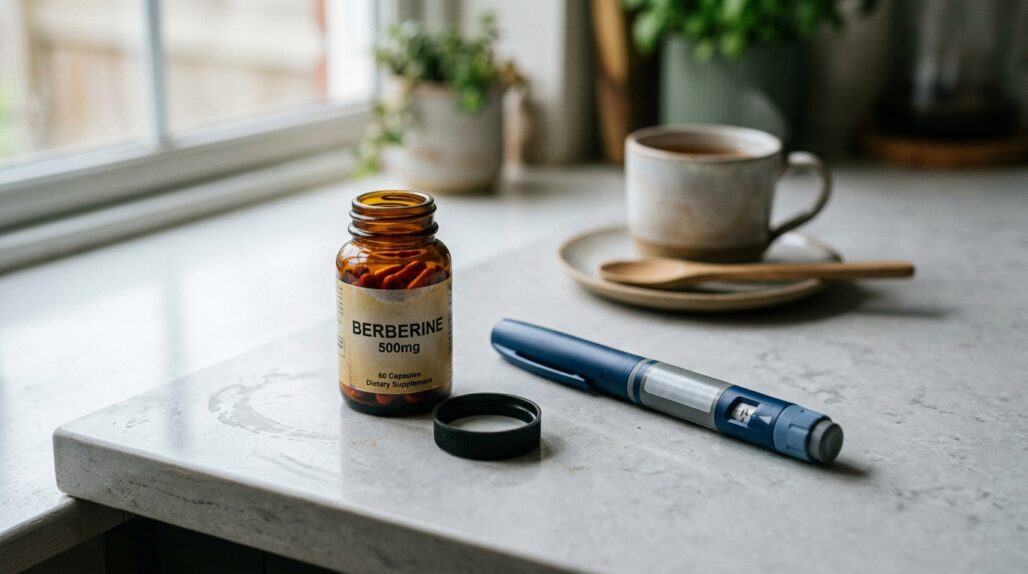
Berberine: skip the "natural Ozempic" stack
Berberine is the headline example. It went viral as "nature's Ozempic," but the comparison is loose. As UCLA Health explains, berberine works mainly by activating the AMPK enzyme, a different pathway from the GLP-1 hormone that Ozempic mimics. It does not bind the GLP-1 receptor.
What berberine does share with the drug is the downstream effect. It can lower fasting glucose and it commonly causes nausea, abdominal pain, constipation, and diarrhea, which the NCCIH overview of berberine lists among its frequent side effects. Those are the same complaints GLP-1 users already field in the first weeks.
So stacking the two tends to double up on both fronts. UCLA's clinicians warn that if you already take a diabetes medication, berberine "could make the drug more potent" – meaning a steeper glucose drop than you bargained for. There is no good evidence that adding berberine improves your results on a GLP-1, and a real chance it worsens the GI ride.
If you are tempted by a "berberine plus GLP-1" protocol sold online, treat that as a reason to ask your prescriber first, not a shortcut. The safest assumption is that you do not need a second glucose-lowering agent layered on top of the one your doctor chose.
Heavy fiber and laxatives: right idea, wrong timing
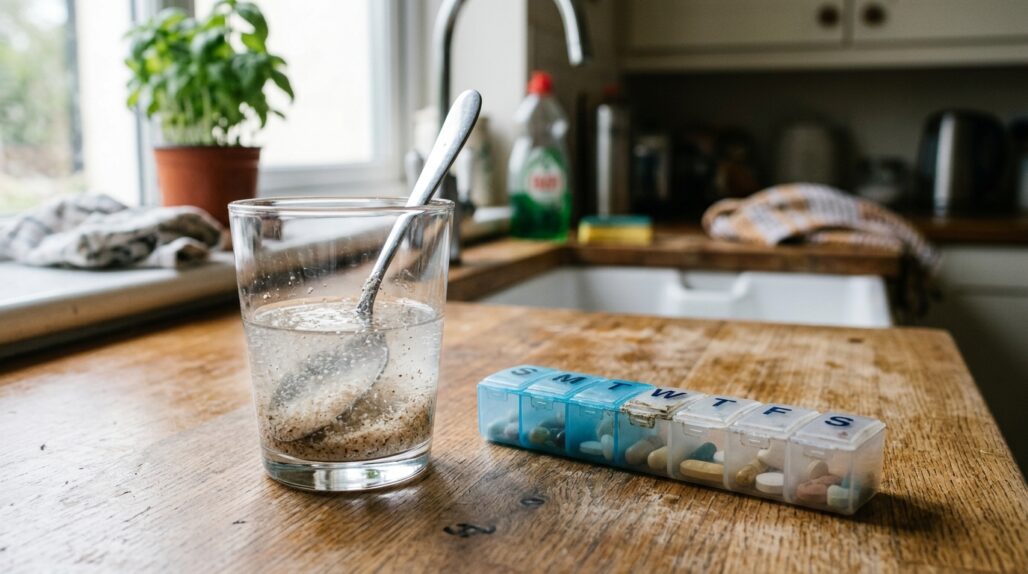
Constipation is one of the most common GLP-1 complaints, so reaching for psyllium or another bulk fiber is understandable. The problem is two-fold.
First, GLP-1 drugs slow the gut, and bulk fiber adds bulk to an already sluggish system. Soluble fiber soaks up water and forms a gel, which can ease constipation in some people but worsen bloating and the "full and heavy" feeling in others. A Cochrane-style systematic review and meta-analysis in PMC found fiber helps chronic constipation overall, but benefit depends on adequate fluid and steady dosing over weeks – not a heaped scoop dumped onto a stalled stomach.
Second, fiber can trap your other pills. That viscous gel binds drug molecules, and standard pharmacy guidance is to separate bulk fiber from other oral medications by at least 2 hours so absorption is not blunted. Since Ozempic itself can already delay how oral drugs get absorbed, you do not want fiber compounding that.
Stimulant laxatives are a different caution. Leaning on them regularly to push through GLP-1 constipation can mask dehydration and electrolyte shifts. A practical sequence to discuss with a pharmacist:
- Water and movement first – mild GLP-1 constipation often eases with fluids and a daily walk.
- Introduce fiber slowly – a small dose with a full glass of water, built up over days, taken away from your other medications.
- Reserve laxatives for short-term use – and flag it if you need them more than occasionally.
If you go days without a bowel movement, have severe bloating, or vomit repeatedly, that is a clinician call, not a supplement fix.
Other blood-sugar lowerers: the hypoglycemia stack
Berberine is not the only supplement marketed to lower glucose. Cinnamon extract, chromium, alpha-lipoic acid, gymnema, fenugreek, and bitter melon all show up in "blood sugar support" blends.
Here the evidence is weaker than the marketing. NCCIH's review of the science notes that for chromium, a 2022 meta-analysis found no effect on fasting glucose, and the page notes alpha-lipoic acid has evidence mainly for diabetic nerve and kidney symptoms, not for lowering blood sugar. So you may be adding risk without a real glucose benefit.
The risk that does carry weight is hypoglycemia by addition. NCCIH's consumer guidance on diabetes supplements flags that combining herbal products with conventional diabetes drugs can cause unwanted effects, and people on glucose-lowering medication should tell their providers what they take. The danger climbs sharply if you also use insulin or a sulfonylurea, because those drugs can drop blood sugar on their own.
Know the warning signs of a low: shakiness, sweating, a racing heart, confusion, sudden hunger. If those hit, treat with fast carbohydrate and contact your clinician. Repeated lows after starting a supplement are a signal to stop the supplement and review your regimen, not to ride it out.
Gastroparesis and delayed emptying: a real caution
GLP-1 drugs slow the stomach by design. The FDA prescribing information for Ozempic states that semaglutide delays gastric emptying and therefore has the potential to affect absorption of other oral medications, though clinical trials did not find a clinically meaningful effect on most drugs.
That label-level caution became more prominent in 2025. As Pharmacy Times reported, the FDA added delayed gastric emptying as a recognized adverse event and noted rare reports of food remaining in the stomach before anesthesia. Semaglutide is not recommended for people with severe gastroparesis.
For supplements, the takeaway is straightforward. If your stomach is already emptying slowly, piling on large fiber doses, big capsule loads, or anything that sits heavy can worsen nausea, fullness, and reflux. Spreading supplements out, taking them with water, and choosing smaller doses are reasonable adjustments to discuss with your team. People with diagnosed gastroparesis should treat any new supplement as a conversation with their prescriber first.
This also matters before procedures. If you have surgery or sedation scheduled, your supplement and medication list should be on the table well in advance, because a slow-emptying stomach changes pre-op planning.
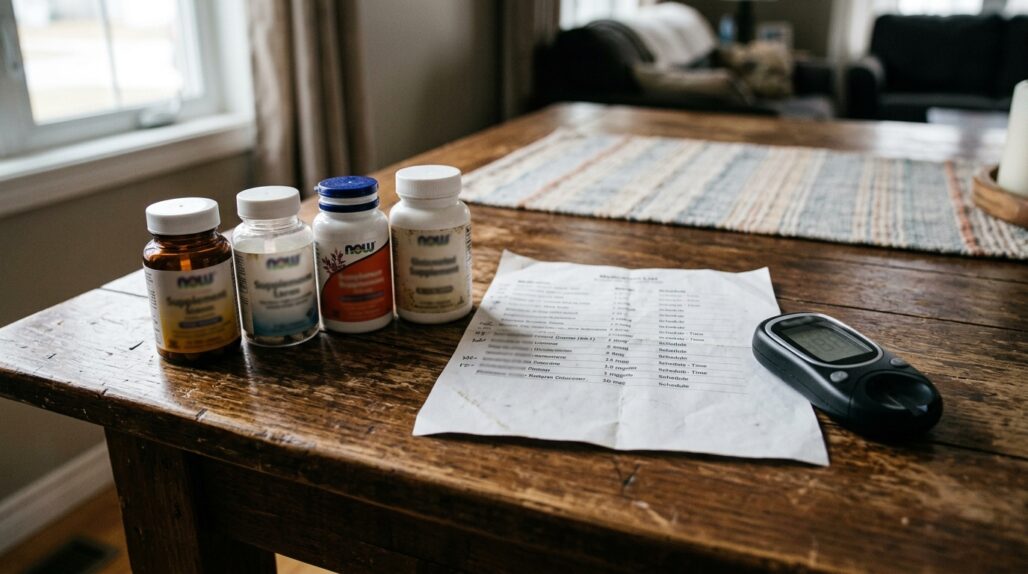
What to do instead: tell the prescriber everything
The single most protective habit is the least glamorous one. Bring your full supplement list to every appointment – names, doses, and how often you take them. NCCIH's guidance is blunt: people on diabetes drugs should tell their providers about any herbal supplements they use, because interactions and added effects are real.
A few practical moves cover most of the risk:
- Drop redundant glucose-lowerers. If your doctor prescribed a GLP-1, you generally do not also need berberine, gymnema, or a "blood sugar" blend layered on top.
- Time your fiber. Separate bulk fiber from other medications by a few hours, build the dose slowly, and drink enough water.
- Watch for lows and slow-gut signs. New hypoglycemia, persistent nausea, or vomiting after adding a supplement is a reason to pause it and check in.
- Flag everything before surgery. Delayed emptying changes anesthesia planning.
If you want help keeping that list straight, an app like StackMyMed lets you log your supplements and medications in one place and flag possible overlaps to raise with a pharmacist. It is a prompt for a better conversation, not a substitute for clinical judgment.
For the bigger picture on how supplements and prescriptions overlap, see our ultimate guide to drug-supplement interactions and run your own stack through the drug-supplement interaction checker. If you want to know what genuinely helps on a GLP-1, our guide to supplements to take with Ozempic covers protein, electrolytes, and the gaps worth filling. For glucose-lowering herbs specifically, read why berberine can drive low blood sugar in diabetes and how we vet every supplement we cover.
FAQ
Can I take berberine with Ozempic? It is generally best avoided unless your prescriber signs off. Both lower glucose and both upset the gut, so combining them can deepen side effects without adding a proven benefit.
Is it safe to take a fiber supplement on a GLP-1 drug? Often yes, but go slow, drink plenty of water, and separate it from your other medications by at least a couple of hours. Heavy doses on an already slow stomach can worsen bloating and constipation.
Which supplements raise my risk of low blood sugar? Glucose-lowering supplements such as berberine, gymnema, fenugreek, bitter melon, and high-dose cinnamon may add to the drug’s effect. The risk is highest if you also take insulin or a sulfonylurea.
Do I need to stop my multivitamin or vitamin D? Usually no. A standard multivitamin, vitamin D, or omega-3 is not the concern here – the caution is aimed at glucose-lowering herbs, bulk fiber, and laxatives.
I have slow digestion on Ozempic. Should I avoid certain supplements? Large fiber doses and big capsule loads can sit heavy and worsen nausea. Smaller doses with water, spread through the day, are gentler – and people with diagnosed gastroparesis should clear new supplements with their clinician first.
What if I already started a supplement and feel off? Stop the supplement and contact your prescriber or pharmacist, especially if you have low-blood-sugar symptoms, persistent vomiting, or severe bloating. Do not wait it out.
Conclusion: keep the list short and shared
Most of what is in your cabinet can coexist with a GLP-1 drug. The trouble comes from a narrow group – berberine and other blood-sugar lowerers, heavy bulk fiber and laxatives, and anything that further slows an already slow stomach. They overlap with what the medicine is doing, so they add risk rather than results.
The fix is not dramatic. Drop the redundant glucose-lowerers, time your fiber away from other pills, and make sure your prescriber sees the whole list. Your next step is the simplest one: write down everything you take and ask a pharmacist to look it over.
This article is for general education and does not replace personalized medical advice. Dosing, timing, and whether to start or stop any supplement should be decided with your doctor or pharmacist, who knows your full medication list and health history.
Reviewed by the UsefulVitamins Editorial Team.
