
Affiliate disclosure: this article contains affiliate links. As an Amazon Associate, UsefulVitamins.com earns from qualifying purchases at no extra cost to you.
Before you buy
The real question with Perelel is not whether the formula is good. It is. The question is whether the trimester-pack format is worth roughly $50 a month when a solid full-dose prenatal can cost less and a basic drugstore one costs a fraction.
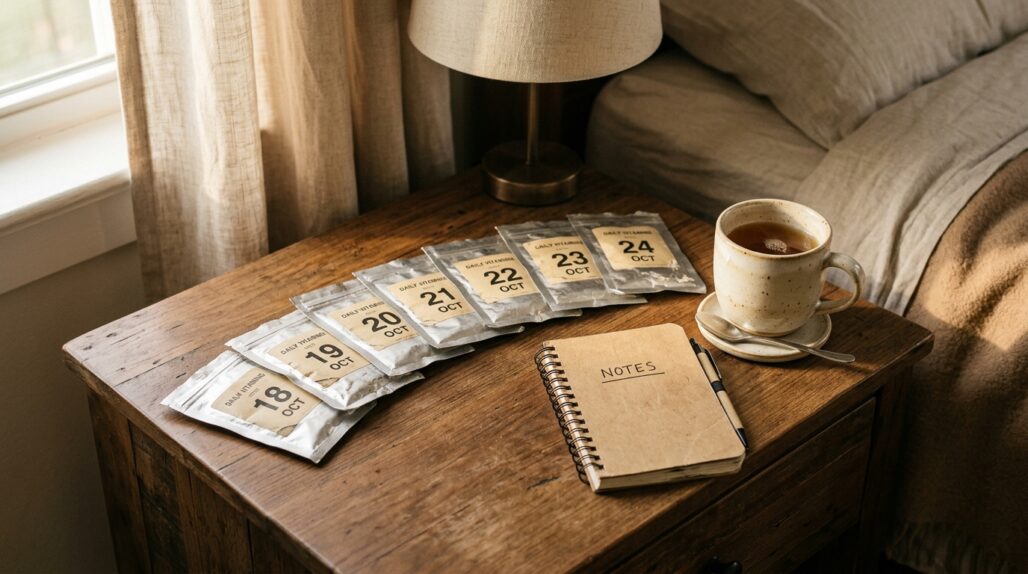
Perelel sells a specific kind of simplicity. Each day you tear open one pouch that already contains your multivitamin, your DHA, and your stage-relevant extras. You never have to assemble a stack or remember to add a separate omega-3.
That convenience is real, and for a lot of people it is the difference between taking a prenatal every day and forgetting it. But convenience is also exactly what you are paying the premium for, so it is worth knowing where the formula is strong and where it is just average.
If you are weighing this against the other direct-to-consumer favorites, our Needed vs Perelel breakdown goes head to head on the formulas alone.
What Perelel actually is
Perelel is a direct-to-consumer prenatal line co-founded by a board-certified OB/GYN, Dr. Banafsheh Bayati, which is a genuine point in its favor and not just marketing dressing. The brand's core idea is that your nutrient needs shift across pregnancy, so the product should too.
Instead of one bottle for nine months, you get stage-specific daily packs: a 1st Trimester Pack, 2nd Trimester Pack, 3rd Trimester Pack, plus conception, postpartum, and other lifecycle versions. Each pack is a single pouch you take once a day.
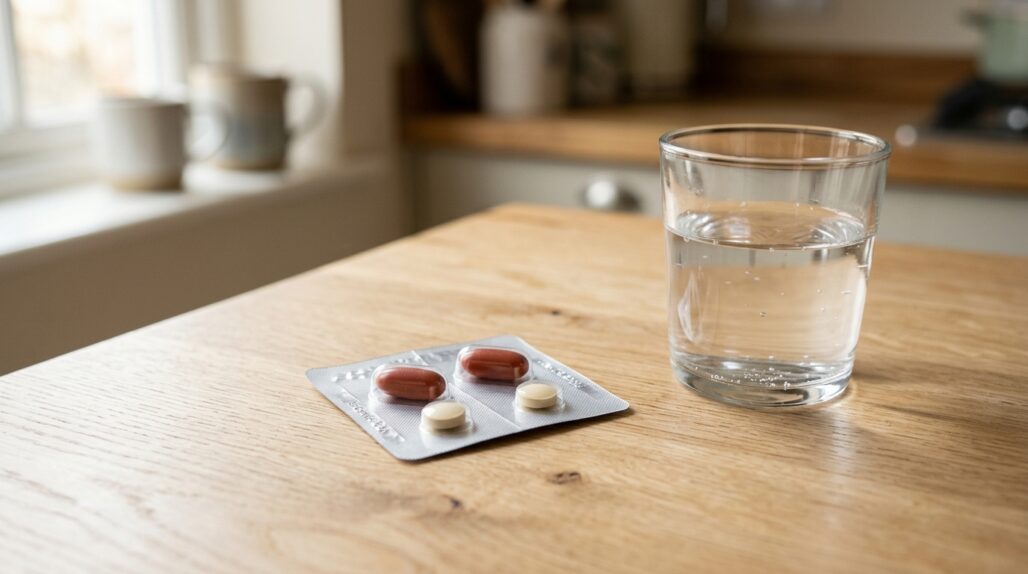
According to the brand's 1st Trimester Prenatal Pack page, that daily pouch holds 4 pills: two core prenatal capsules, one omega softgel, and one folate-plus-ginger capsule aimed at early-pregnancy nausea. The ginger add-on in the first-trimester pack is a smart, stage-aware touch you do not see in a one-size bottle.
So the pitch is coherent. You are buying a system, not a single product. Whether that system earns its keep comes down to two things: what is inside, and what it costs per day.
What is inside each pack
Here is where Perelel is solid but not the leader. The formula covers the nutrients that matter and uses good forms, but a couple of the headline doses are modest.
The folate is methylfolate (L-5-methyltetrahydrofolate), the active form, which is the right call and matters for the meaningful share of people who convert folic acid poorly. Across the two folate-containing capsules in the 1st trimester pack, the total runs high, comfortably above the 600 mcg DFE pregnancy target.
The first-trimester pack also includes:
- Iron at 16 mg as Ferrochel (a gentle chelated form, less likely to constipate than ferrous sulfate)
- DHA 250 mg plus EPA 100 mg built in, so you do not buy a separate fish oil
- Iodine 150 mcg, the standard prenatal amount
- Vitamin D at 2,000 IU, a reasonable mid-range dose
- Vitamin B12 as methylcobalamin, the active form
The weak spot is choline, at just 120 mg in the daily pack. That is the number to watch. The Adequate Intake during pregnancy is 450 mg/day, and a clinical review in Nutrients notes that the large majority of pregnant women fall short of the choline AI, with typical intakes near 320 mg.
So Perelel's 120 mg helps, but it does not close the gap on its own. Practitioner-tier prenatals like FullWell (300 mg) and Needed's Pro multi (400 mg) deliver far more. If choline is your priority, Perelel will leave you topping up from food or a separate capsule.
Third-party testing and quality
This is a real strength, and it is fair to give Perelel full credit here.
The brand states its products are third-party tested for purity and potency and made in FDA-registered, cGMP-certified facilities. More notably, Perelel says its line has earned the Clean Label Project Purity Award, which screens for heavy metals and contaminants that matter a lot in pregnancy supplements.
That puts Perelel in the upper tier on quality assurance. It is not NSF or USP verified, which are the two marks we treat as the gold standard, so the testing is brand-commissioned rather than carrying an independent certification seal you can look up. Still, the Clean Label Project award is a meaningful, verifiable third-party signal.
Healthline's dietitian review of Perelel reaches a similar read on formulation – clean and well-formulated – though it notes Perelel does not disclose the specific lab or facility behind its third-party testing, the same transparency gap we flag above. On safety and quality, Perelel earns its reputation.
The pack format – convenience vs cost
Now the part the premium-focused write-ups skip: the math.
The single-pouch format is the product's best feature. Everything is pre-portioned, DHA is already inside, and the pack changes as your pregnancy progresses without you having to think about it. For anyone who struggles with adherence, that is worth something concrete.
But you can replicate the same nutrients more cheaply if you are willing to handle two products instead of one. The premium is the pouch, not the nutrition. Here is how the daily reality compares.
| Prenatal | Pills per day | Choline | Folate form | DHA included | Approx. cost/month |
|---|---|---|---|---|---|
| Perelel (trimester pack) | 4 (one pouch) | 120 mg | Methylfolate | Yes | ~$49.95 sub |
| Needed Multi Essentials | 3 | 200 mg | Methylfolate | No (sold separately) | ~$38.69 sub |
| Needed Multi Pro | 8 | 400 mg | Methylfolate | No (sold separately) | ~$60-plus sub |
| Drugstore one-a-day | 1 | 0-55 mg | Often folic acid | Usually no | ~$10-15 |
All prices are approximate and as of writing – check the current price before you buy, since DTC subscription rates and intro discounts move around.
Read the table the right way. Perelel costs more than Needed's base multi yet delivers less choline, with its main edge being the built-in DHA and the all-in-one pouch. If you do not value those, the value case weakens.
Cost per day, and who it is really for
At about $49.95 a month on subscription, Perelel works out to roughly $1.65 a day. The one-time price near $58 pushes that toward $1.95 a day. Either way it sits at the premium end.
For context, a basic drugstore prenatal runs closer to $0.30-$0.50 a day. The trimester system costs three to five times more, and most of that gap buys convenience, the OB/GYN brand story, and the included omega-3, not a dramatically superior nutrient panel.
So who should actually buy it?
- Buy Perelel if you want one daily pouch with DHA and iron already inside, you like that the formula evolves by trimester, and the simplicity is what keeps you consistent.
- Buy Needed instead if you want more choline per dollar or prefer to dose your own omega-3 and iron – see our full Needed prenatal review.
- Step up to FullWell if choline is your top priority and you do not mind a separate fish oil; the Needed vs FullWell comparison covers that tier.
- Go drugstore if budget is tight and your OB has not flagged any specific gap; a methylfolate-forward basic prenatal still covers the essentials.
One more practical note: Perelel ships subscription-first. You can do a one-time order, but it costs more and the brand nudges hard toward the recurring plan. Plan to manage the subscription actively so you are not paying for boxes you have not used.
A note on iron and choosing without it
Perelel's standard packs include iron, which suits most pregnancies. If your bloodwork shows you do not need extra iron, or it upsets your stomach, the trimester format does not let you remove it. In that case an iron-free build makes more sense, and our guide to the best prenatal without iron walks through the options.
Where it lands on value
If you have decided convenience is worth paying for, Perelel is one of the better-executed pouch prenatals on the market. If you are price-sensitive or choline-focused, there are stronger picks. Here is the short list we would actually shop.


As an Amazon Associate, UsefulVitamins.com earns from qualifying purchases at no extra cost to you.
UsefulVitamins is reader-supported. If you buy through links on this page we may earn a small commission, at no extra cost to you. It never changes our verdicts.
FAQ
Is Perelel worth the price? It is worth it if you value the all-in-one daily pouch with built-in DHA and trimester-specific tweaks, and that simplicity keeps you consistent. If you mainly want maximum nutrients per dollar, Needed or FullWell give you more choline for similar or less money.
How much choline does Perelel have? The 1st Trimester Pack contains about 120 mg of choline per day. That helps, but it is well under the 450 mg pregnancy Adequate Intake, so you will still want choline-rich foods like eggs or a top-up if you are aiming for the full target.
Does Perelel use methylfolate or folic acid? Methylfolate, the active form, and the total daily folate runs comfortably above the pregnancy target. That is the better choice for people who convert folic acid poorly.
Is Perelel third-party tested? Yes. The brand says its products are third-party tested for purity and potency, made in cGMP-certified facilities, and have earned the Clean Label Project Purity Award. It is not NSF or USP certified, so the testing is brand-commissioned rather than carrying an independent lookup seal.
How is Perelel different from Needed? Perelel bundles DHA and iron into one daily pouch that changes by trimester, while Needed sells a capsule multi and lets you add DHA and iron separately. Needed’s base multi is cheaper with slightly more choline; Needed’s Pro version has much more choline but eight capsules.
Can I buy Perelel without a subscription? Yes, a one-time order is available at a higher price, around $58 versus about $50 on subscription as of writing. The brand pushes the subscription, so manage it actively to avoid unwanted shipments.
The verdict
Perelel is a genuinely good prenatal with a smart, stage-aware format and strong quality testing, founded by an OB/GYN who clearly knows the category. None of that is hype.
But the honest call is this: at around $50 a month you are paying a real premium for the pouch and the convenience, not for a class-leading formula. The 120 mg of choline is the giveaway – it is fine, not generous, and it trails the practitioner brands at a similar price.
So buy Perelel if the single daily pouch with DHA inside is what makes you take a prenatal every day. That adherence is worth more than a few extra milligrams of anything. If you are choline-focused or watching the budget, start with our Needed prenatal review and decide from there.
This article is for general information and is not medical advice. Prenatal needs vary, and some nutrients can interact with medications or conditions – talk with your OB/GYN or midwife before starting or changing a supplement during pregnancy.
Reviewed by the UsefulVitamins Editorial Team.
