
Affiliate disclosure: this article contains affiliate links. As an Amazon Associate, UsefulVitamins.com earns from qualifying purchases at no extra cost to you.
Before you buy
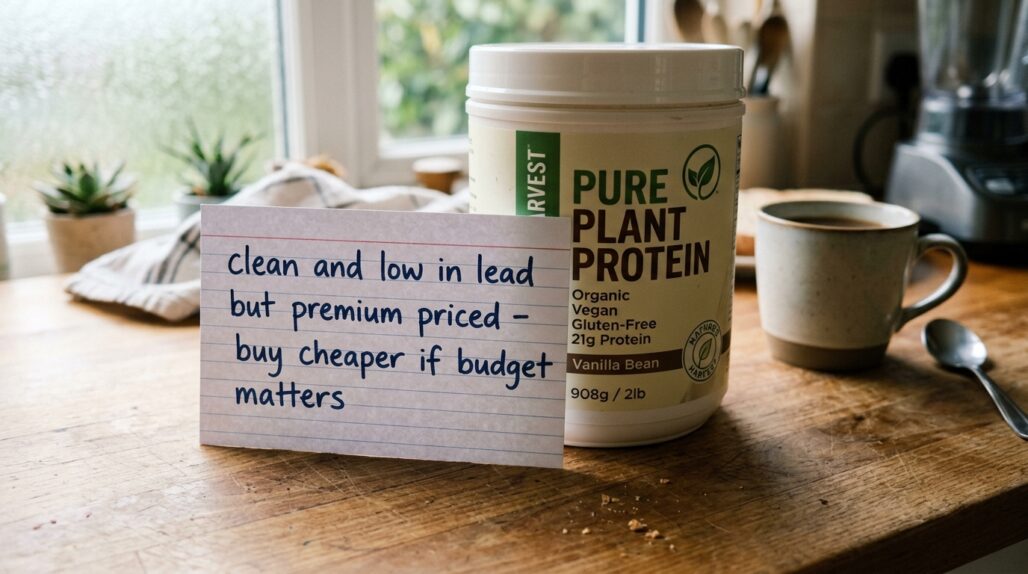
The real question with Truvani is not whether it works. It is protein, and any 20g scoop of it will help you hit your daily target. The question is whether the clean-label story and the testing are worth paying two to three times what a plain pea isolate costs.
Truvani built its audience through the Food Babe (Vani Hari) and a "no nasty ingredients" message. That marketing pulls in shoppers who are nervous about additives, gums, and heavy metals in protein powder. Those concerns are not silly, and we will look at the actual evidence below.
But "clean" and "expensive" tend to travel together, and a higher price does not automatically mean a safer or more effective product. So this review answers three things: what is actually in the tub, whether the heavy-metals testing holds up, and whether the cost per gram of protein makes sense versus cheaper options.
What Truvani protein actually is
Truvani's flagship is an organic plant-based protein powder built mostly on pea protein, with 20g of protein per scoop and around 120 to 140 calories depending on flavor.
The selling point is the short ingredient list. Truvani advertises 3 to 11 ingredients depending on the flavor, sweetened with organic monk fruit rather than stevia, sucralose, or added sugar. There are no artificial flavors, no gums like guar, and no sugar alcohols like erythritol in the standard formulas.
Some flavors are not pea-only. The chocolate and a few others blend in organic pumpkin seed and chia seed protein concentrate alongside the pea base, which slightly rounds out the amino profile. The unflavored option is the most stripped-down of the lineup.
On certifications, the product carries USDA Organic, Non-GMO, vegan, and gluten/dairy/soy-free labeling per the brand's official Truvani plant-based protein page. Those are real, verifiable claims on the label, not vague wellness language.
Flavors and texture
Truvani sells a wide range now, including vanilla, chocolate, peanut butter, vanilla chai, matcha, and several seasonal options. Reviews consistently call the texture less gritty than typical pea protein, which is a fair point – pea protein is notoriously chalky, and the monk fruit plus cocoa or vanilla helps.
If you have had pea protein before and hated the taste, Truvani is one of the more palatable versions. That is part of what you are paying for.
Protein per scoop and amino completeness
Twenty grams per scoop is a solid but not standout dose. Whey powders often deliver 24 to 30g, and a few pea isolates push 25g or more. So if you are chasing maximum protein per scoop, Truvani is mid-pack.
The bigger nuance is amino acid quality. Pea protein contains all nine essential amino acids, so calling it "incomplete" is technically wrong. But it runs low in methionine, which caps how efficiently your body can use the rest.
That shows up in the scores. Pea protein typically lands around a PDCAAS of 0.82 to 0.91, slightly below the 1.0 ceiling that whey, egg, and soy hit. A study of pea protein amino acid quality and digestibility identifies methionine, along with cysteine, as the limiting amino acid.
What this means in practice:
- For most people eating a varied diet, the methionine gap is a non-issue. You get methionine from other foods across the day.
- For strict vegans relying heavily on one protein source, a pea-plus-rice blend or the flavors that add pumpkin and chia are a marginally smarter choice.
- If protein quality is your top concern and you tolerate dairy, whey simply scores higher and usually costs less.
Truvani is fine on this front. Just do not expect a pea-based powder to match whey gram-for-gram on usable amino acids.
The heavy-metals question, honestly
This is the reason most people search for a Truvani review, so let us be precise.
Heavy metals in plant protein are a real, documented problem, not marketing fear. A widely cited Consumer Reports investigation tested 23 powders and found that plant-based products averaged roughly nine times more lead per serving than dairy-based ones. Two products were flagged as so high that the testers advised against using them at all.
Pea protein is part of why. Plants pull lead and cadmium from soil, and peas concentrate it more than dairy does. So skepticism toward any pea protein is justified.
Here is where Truvani comes out reasonably well. Truvani was not in the original 23, but Consumer Reports later ran a follow-up on five reader-requested powders, including Truvani, and reported that all five had low levels of lead. Independent third-party lab checks have also put Truvani's lead around a low fraction of the strict California Prop 65 daily threshold.
Two honest caveats:
- Truvani's own test-results page describes lot-by-lot testing and "hundreds of tests," but does not publish the actual numbers for lead, arsenic, cadmium, and mercury. You are partly trusting their process, not reading the data.
- We could not confirm a Clean Label Project certification for Truvani. The brand tests internally and has independent results from outside parties, which is meaningful, but it is not the same as a published third-party seal.
For context on why this matters, the FDA's guidance on lead in food and supplements treats lead as something to minimize at every level, since there is no known safe amount. Truvani's minimalist formula helps here – fewer ingredients means fewer chances to pick up contamination, and a chocolate flavor with six organic ingredients has fewer potential sources of lead than a 25-ingredient blend.
If you want the most thoroughly vetted options on this dimension, our roundup of the lowest heavy-metal protein powders on Amazon is the better starting point than any single brand's claims.
Cost per 20g of protein: where it gets expensive
This is where the "worth it" math gets hard. Truvani runs roughly $45 to $50 for about 20 servings as of writing (check current price, since promotions and tub sizes shift). At 20g per scoop, that is around $2.25 to $2.50 per 20g of protein.
Compare that to the cheaper plant options:
| Powder | Protein/scoop | Approx cost/20g protein | Notes |
|---|---|---|---|
| Truvani Organic | 20g | ~$2.25-2.50 | USDA Organic, monk fruit, 3-11 ingredients |
| Orgain Organic | 21g | ~$1.80 | Organic, blended, more ingredients/superfoods |
| Naked Pea | 27g | ~$0.55-0.75 | Single-ingredient pea isolate, unflavored, NSF tested |
Prices are approximate and move with promotions and pack size; verify current pricing before you buy.
The gap is stark. Naked Pea delivers more protein per scoop at roughly a third of Truvani's cost per gram, and it is also a single-ingredient powder that is third-party tested. Orgain sits in the middle, organic and cheaper, but with a longer ingredient list and added superfoods you may not want.
So what is the Truvani premium actually buying? Organic certification, monk-fruit sweetening, better-than-average taste, and a reassuring low-lead result on a short formula. Those are real things. Whether they are worth roughly triple the price of a plain pea isolate depends entirely on how much you value them.
Who should buy it, and who should not
Buy Truvani if: you specifically want USDA Organic pea protein with the shortest possible ingredient list, you dislike stevia and gums, taste matters to you, and the heavy-metals reassurance is worth paying for. It is a clean, well-made product and we have no quality objection to it.
Buy something cheaper if: your main goal is just hitting a protein target at the lowest cost. A plain pea isolate like Naked Pea, or a value organic blend, will do the same nutritional job for far less. You are not getting weaker protein, you are getting fewer marketing layers.
Here are the picks worth comparing, including Truvani and the cheaper alternatives we mentioned:


As an Amazon Associate, UsefulVitamins.com earns from qualifying purchases at no extra cost to you.
UsefulVitamins may earn a commission from purchases made through the links above, at no extra cost to you. This never affects our verdicts.
If you are comparing plant proteins broadly, our OWYN vs Orgain plant protein breakdown covers two strong mainstream options, and if you are weighing a full meal-replacement instead of a protein powder, see whether Huel is worth it – though note Huel's Black Edition was one of the products flagged for high lead in the Consumer Reports testing.
One more practical note: if you take medications or have a health condition, protein powders are usually low-risk, but timing and total intake can matter. Our guide to drug and supplement interactions is worth a scan if you are on anything daily.
FAQ
Is Truvani protein actually clean and low in heavy metals? The available evidence is reassuring. Consumer Reports’ follow-up testing put Truvani in the low-lead group, and independent checks have reported lead well under the strict Prop 65 threshold. The catch is that Truvani does not publish its own full test numbers, so you are partly trusting the process.
How much protein is in one scoop? About 20g per scoop, with roughly 120 to 140 calories depending on flavor. That is a solid dose, though some whey and pea isolates deliver 25 to 30g.
Is pea protein a complete protein? Yes, it contains all nine essential amino acids, but it runs low in methionine, which slightly lowers its quality score versus whey or soy. For most people eating varied food this does not matter.
Is Truvani worth the price? It is worth it if clean-label, organic certification, and taste are your priorities. If you only care about cost per gram of protein, a plain pea isolate is roughly a third of the price for the same job.
Is Truvani better than Orgain? Truvani has a shorter ingredient list and monk-fruit sweetening, while Orgain is cheaper and adds superfoods and fiber. Neither is clearly superior; it depends on whether you want minimalism or value.
Does Truvani use stevia or artificial sweeteners? No. The standard formulas are sweetened with organic monk fruit and contain no stevia, sucralose, or added sugar.
The verdict
Truvani is a clean, honest product that does what it claims – organic pea protein, a short ingredient list, monk-fruit sweetening, and heavy-metals results that hold up better than the plant-protein category average. There is nothing wrong with it.
The problem is purely value. At around $2.25 to $2.50 per 20g of protein, you are paying a premium for the clean-label story and the taste. If those things genuinely matter to you, it is worth it. If they do not, a plain pea isolate gives you the same nutrition for roughly a third of the cost.
Your next step: decide which buyer you are. Clean-label priority – buy Truvani. Budget priority – buy a single-ingredient pea isolate and put the savings toward whole-food protein, which the testers at Consumer Reports rightly point out can cover most of your needs anyway.
This article is for general information and is not medical advice. Supplement formulas, prices, and test results change over time; verify current details before buying, and talk to a healthcare professional about your own diet and any medications.
Reviewed by the UsefulVitamins Editorial Team.
