
Affiliate disclosure: this article contains affiliate links. As an Amazon Associate, UsefulVitamins.com earns from qualifying purchases at no extra cost to you.
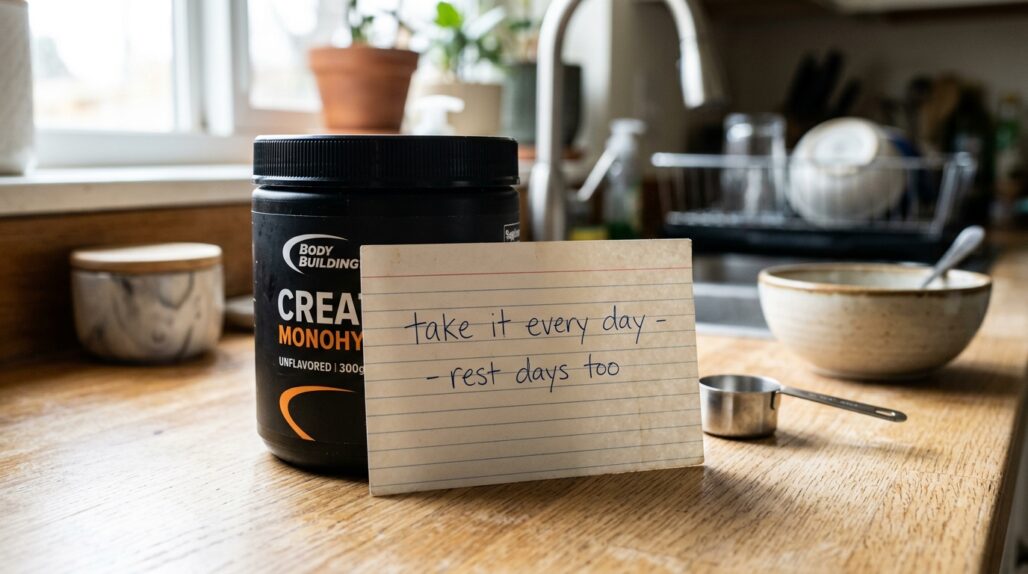
Why rest days still count
Creatine does not work like a pre-workout stimulant. It works by slowly filling a storage pool inside your muscle cells, and a full storage pool is the whole point.
Once those stores are saturated, your muscles hold more phosphocreatine, the molecule that helps regenerate energy during short, hard efforts. That reserve sits there waiting whether you lift today or sit on the couch.
So the question is not "did I work out, so do I need creatine today?" The real question is "are my stores still full?" Keeping them full is a daily maintenance job, and rest days are part of that job.
The International Society of Sports Nutrition position stand on creatine frames it plainly: once stores are saturated, you maintain them with a steady daily intake. Training status on a given day does not change that math.
Saturation is the goal, not timing
Here is the part that trips people up. Your body breaks down a small amount of creatine every single day and turns it into creatinine, which leaves through your urine.
According to the ISSN review, roughly 1 to 2 percent of your stored creatine degrades daily, which works out to about 1 to 3 g you need to replace just to hold steady. That loss happens on Saturday whether or not you touched a barbell.
If you only dosed on training days, you would let your stores drift down on the off days and never quite top them back up. Daily dosing keeps the tank full, which is exactly what the research supports.
A practical maintenance dose is 3 to 5 g of creatine monohydrate per day. Larger or very heavily training athletes may sit at the upper end, with the position stand noting some may need 5 to 10 g per day to maintain optimal stores.

How long it takes and what skipping does
There are two ways to fill your stores, and both end in the same place. You can load fast or fill slowly, but rest-day dosing matters in both.
If you want the loading-versus-no-loading breakdown, that has its own home. Use our creatine timing and loading guide for the full protocol rather than reinventing it here. The short version: loading saturates muscles in about a week, and skipping the load still gets you there in roughly three to four weeks on a steady 3 g per day.
For your exact number based on body weight, run it through our creatine dose calculator instead of guessing.
What about missing a day? Skipping does very little in the short term. Because your body loses only that 1 to 2 percent per day, your stores drift down slowly, not all at once.
| Stage | What is happening | Rest-day dose |
|---|---|---|
| Days 1 to 7 (loading, optional) | Stores fill quickly on a higher split dose | Yes, dose every day |
| Weeks 1 to 4 (no-load approach) | Stores fill gradually on a steady 3 to 5 g | Yes, dose every day |
| Maintenance (ongoing) | Daily intake offsets the 1 to 2 percent lost each day | Yes, dose every day |
| After stopping | Stores drift back toward baseline over several weeks | N/A |
If you stop entirely, studies tracking washout suggest it takes roughly four to six weeks for muscle stores to return toward your natural baseline. One missed rest-day dose is a rounding error against that timeline, so do not panic if you forget. Just take it the next day and move on.
Does workout-day timing actually matter?
This is where the honest answer helps. On training days, timing creatine is a minor edge at best, not a make-or-break decision.
The most cited study here is Antonio and Ciccone's 2013 trial, which gave 19 recreational male bodybuilders 5 g of creatine either right before or right after training over four weeks. The post-workout group came out slightly ahead on fat-free mass and bench press, but the authors labeled the advantage "possibly" to "likely beneficial," not dramatic.
Later work has muddied even that small signal. A 2022 trial in collegiate athletes found no meaningful difference between pre- and post-workout timing over eight weeks once total daily intake was matched.
The takeaway is simple. Total daily intake beats timing. If you want a tiny theoretical lean, take it after you train. If that is inconvenient, ignore it.
On rest days, take it whenever
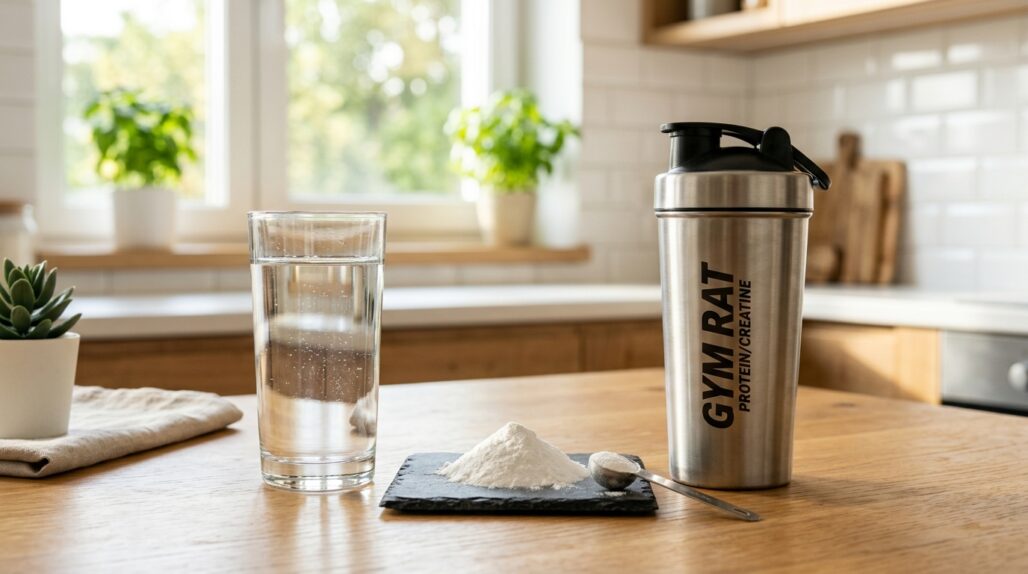
Because there is no workout to anchor it to, rest-day timing does not matter at all. Morning coffee, with lunch, before bed, all fine.
Pick the slot you are least likely to forget. Many people just keep it next to the kettle or the protein tub so it becomes automatic.
Creatine does not need to be cycled on and off, either. The position stand reports daily use of up to 30 g per day for five years was well tolerated in healthy people, so continuous daily dosing is the norm, not something to interrupt.
Which creatine to buy
For this question, the form is easy: plain creatine monohydrate is the answer, and it is also the cheapest. It is the form used in the overwhelming majority of the research, including the studies above.
You do not need the fancy buffered, hydrochloride, or "advanced" versions that cost more. Micronized monohydrate just dissolves a little better in water, which is a nice-to-have, not a requirement. For the full breakdown of forms and quality marks, see our complete guide to creatine.
A few notes that make daily use easier:
- Unflavored powder mixes into water, juice, coffee, or a shake without changing much.
- A Creapure label signals a tested German-made monohydrate if purity matters to you.
- Capsules cost more per gram but travel well and remove the "did I scoop right" guesswork.
Women often see real benefit here too, since baseline creatine stores tend to run lower; a narrative review on creatine for women covers that. If you want picks sized and dosed with that in mind, our roundup of the best creatine for women is a good start.
We may earn a commission from purchases made through the links below, at no extra cost to you. Prices and availability change, so check the current listing.


As an Amazon Associate, UsefulVitamins.com earns from qualifying purchases at no extra cost to you.
Whatever you pick, the protocol is the same: one daily scoop, every day, no cycling.
What to watch for
Creatine monohydrate has one of the longest safety records of any sports supplement, and the NIH Office of Dietary Supplements fact sheet on exercise and athletic performance reflects that. Still, a few situations call for a conversation with a professional first.
- Kidney concerns: if you have kidney disease or reduced kidney function, ask a doctor before starting, since creatine raises creatinine readings on lab tests.
- Pregnancy or breastfeeding: evidence is limited, so route this decision to your doctor.
- Medications that affect the kidneys: a pharmacist can check for any overlap.
The early water-weight bump of a pound or two is normal and is fluid drawn into muscle, not fat. Plenty of water makes the daily dose sit easier, especially during a loading week.
None of this is a reason to skip rest days. It is a reason to make sure creatine is a good fit for you before it becomes a daily habit.
FAQ
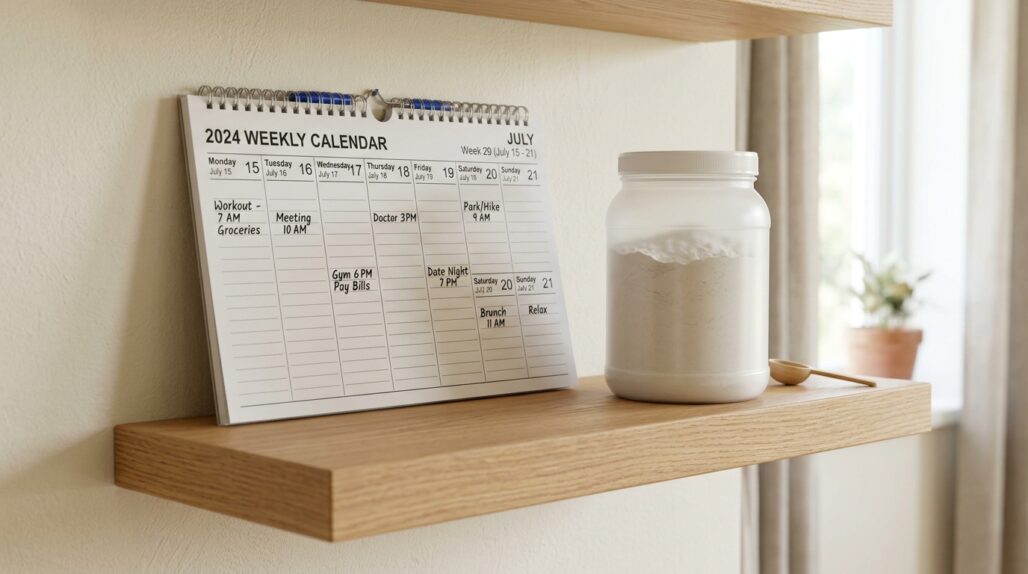
Do I have to take creatine on rest days? Yes, take it daily, including rest days. The goal is keeping muscle stores saturated, and that depends on consistent daily intake rather than whether you trained.
What happens if I skip a day? Very little. Your body loses only about 1 to 2 percent of stored creatine per day, so one or two missed doses barely move your saturation. Just resume the next day.
When should I take creatine on a rest day? Any time you will remember. With no workout to anchor it to, rest-day timing has no measurable effect, so morning, with a meal, or evening are all fine.
Is taking it after a workout actually better? Only marginally, if at all. One small trial favored post-workout dosing, but later research found total daily intake matters far more than timing.
How much should I take per day? Most people maintain stores on 3 to 5 g of creatine monohydrate daily. Use our creatine dose calculator for a number based on your body weight.
Do I need to cycle off creatine? No. Research supports continuous daily use, and cycling is not required to keep stores elevated or to maintain safety in healthy people.
The bottom line
Take creatine on your rest days. Saturation, not timing, is what makes creatine work, and stores only stay full if you top them up every day.
A steady 3 to 5 g of plain creatine monohydrate, taken whenever you will remember, is the entire protocol. Loading is optional, cycling is unnecessary, and the exact minute you swallow it barely registers.
For the loading details, use our creatine timing and loading guide, and for your personal gram target, run our creatine dose calculator. Then keep it simple: one scoop, every day.
This article is general education, not medical advice. It does not replace guidance from your own doctor or pharmacist, and you should not start, stop, or change any supplement or prescription based on it without speaking to a qualified professional.
Reviewed by the UsefulVitamins Editorial Team.
