
Affiliate disclosure: this article contains affiliate links. As an Amazon Associate, UsefulVitamins.com earns from qualifying purchases at no extra cost to you.
What "every night" really means for melatonin
Melatonin is a hormone your own brain makes after dark to tell your body it is night. A supplement is a copy of that signal, not a sedative that knocks you out.
That distinction shapes the whole safety question. Because you are nudging a natural timing cue rather than forcing sedation, short-term nightly use at a low dose is generally well tolerated. The NIH's National Center for Complementary and Integrative Health puts it plainly: short-term melatonin use appears safe for most people, while long-term safety information is lacking.
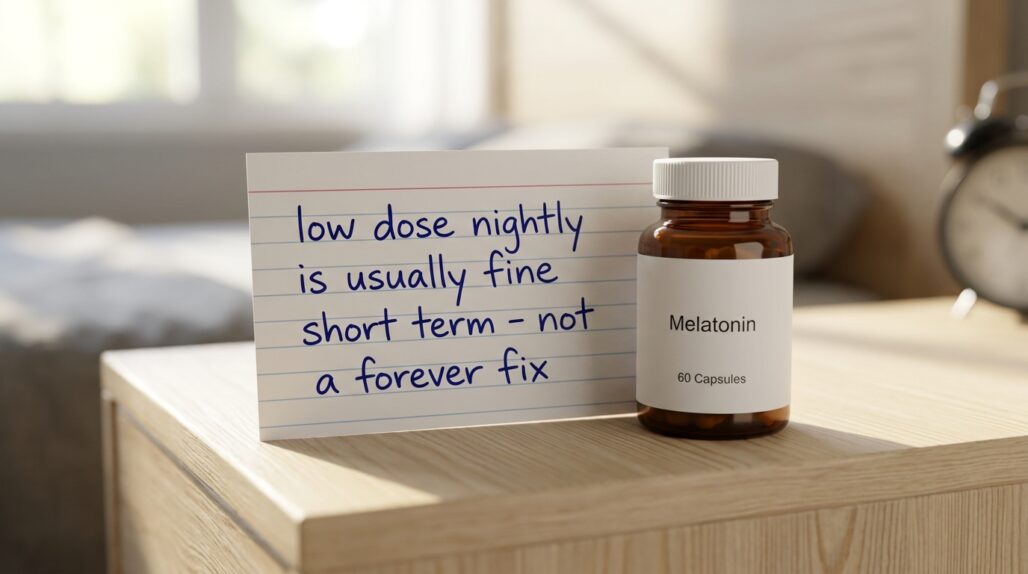
So "is it safe every night" splits into two answers. For a stretch of weeks or a couple of months, the evidence is reassuring. For years on end, nobody can promise you much, because the long studies have not been done.
The other honest point: melatonin works best for a timing problem, like jet lag or a shifted body clock, and less well as a general nightly sleeping pill. Knowing which problem you have changes whether nightly use even makes sense.
Is it addictive or habit-forming?
This is the fear that drives most of the worry, and the short version is reassuring. Melatonin is not addictive in the classic sense. It is not a controlled substance, and reviews consistently report a low risk of the dependence, tolerance, and withdrawal seen with prescription sleep drugs.
There is also no strong evidence that supplementing shuts down your own melatonin production. When you stop, your natural rhythm is still there.
The realistic risk is not chemical, it is behavioral. Reaching for a pill every single night can become a psychological crutch that lets you avoid the real reason you are not sleeping, whether that is screens at midnight, stress, caffeine, or an undiagnosed sleep disorder. That is the trap worth naming, and it is the reason long-term nightly reliance is a prompt to look deeper, not a verdict that melatonin is dangerous.

How long is "too long" without a real reason?
There is no official cutoff, but the way the experts frame it is useful. The American Academy of Sleep Medicine gives only a weak recommendation against using melatonin for chronic insomnia, mainly because the quality evidence for ongoing insomnia is weak, not because it is unsafe.
In other words, for a temporary, timing-related sleep problem, nightly use makes sense. For stubborn insomnia that drags on for months, melatonin is probably the wrong tool, and a doctor can help you find the right one.
A simple way to think about it:
| Time on nightly melatonin | What it usually means | Sensible next step |
|---|---|---|
| A few nights to 2 weeks | Jet lag, a shifted schedule, or a rough patch | Use the lowest dose, then taper off as sleep settles |
| 2 weeks to about 3 months | A longer reset, like a new shift or ongoing travel | Keep the dose low and reassess every few weeks |
| Months to years, every night | An underlying sleep issue you have not solved | See a doctor about the cause, not just the symptom |
Most of the longer human studies run for weeks to a few months, not years, which is exactly why the multi-year column is honest about its limits. The review on chronic melatonin administration concludes that low-to-moderate doses appear safe but that long-term effects remain insufficiently studied.
The dose that matters more than how often
Here is the part most people get wrong. More melatonin is not better, and the big-box 5 mg and 10 mg pills are often overkill.
Your body makes only tens of micrograms of melatonin a night, on the order of 0.01 to 0.05 mg. A classic MIT study found that a tiny 0.3 mg dose restored melatonin to normal night-time levels and helped people fall asleep, with no morning hangover. The 1 mg dose in the same study was no clear improvement.
So the smart nightly approach is a physiologic dose, roughly 0.3 to 1 mg, taken 30 to 60 minutes before bed.
- Start at 0.5 mg or less and only go up if a low dose genuinely does nothing after a week.
- Timing beats quantity. For a shifted body clock, a small dose a few hours before your target bedtime moves your rhythm; a huge dose at lights-out mostly just sedates.
- Skip the 10 mg habit. If you want the full picture on high doses, our explainer on whether 10 mg of melatonin is too much walks through why bigger so often backfires.
If you want a tailored number rather than a rule of thumb, compare your options first. Our guide to magnesium versus melatonin for sleep is the better starting point if you are not even sure melatonin is the right pick, because for some people a mineral at night does more than a hormone.
When melatonin is the wrong fix entirely
Melatonin shines for circadian problems, where the issue is when you sleep, not whether you can. Jet lag, shift work, and the night-owl pattern of delayed sleep all respond to it.
If your problem is anxiety-driven wakefulness, pain, or waking at 3 a.m. and staring at the ceiling, melatonin often disappoints, and a clinician-guided approach works better. Honest framing here saves you months of nightly pills that were never going to solve the real thing.
Side effects and the signs to lower or move your dose
Most side effects are mild and dose-related. The NIH lists headache, dizziness, nausea, and daytime sleepiness as the usual suspects. Two specific ones tell you to adjust.
- Groggy mornings. This is the classic sign your dose is too high or taken too late. Drop the dose, or take it earlier in the evening.
- Vivid or strange dreams. Common and harmless, but if they bother you, a smaller dose usually settles them.
Neither is dangerous, but both are your cue that the dose or timing is off, not that you need to abandon melatonin.
One quality problem is worth flagging: a JAMA analysis of melatonin gummies found 22 of 25 products were inaccurately labeled, with actual content ranging from 74% to 347% of the label. You may be taking far more than you think, which is another reason to favor low, clearly dosed, third-party-tested products.
Which melatonin to buy for nightly use
If you have decided low-dose nightly melatonin fits your situation, the form and dose matter more than the brand name. The goal is to land near a physiologic dose without guessing.
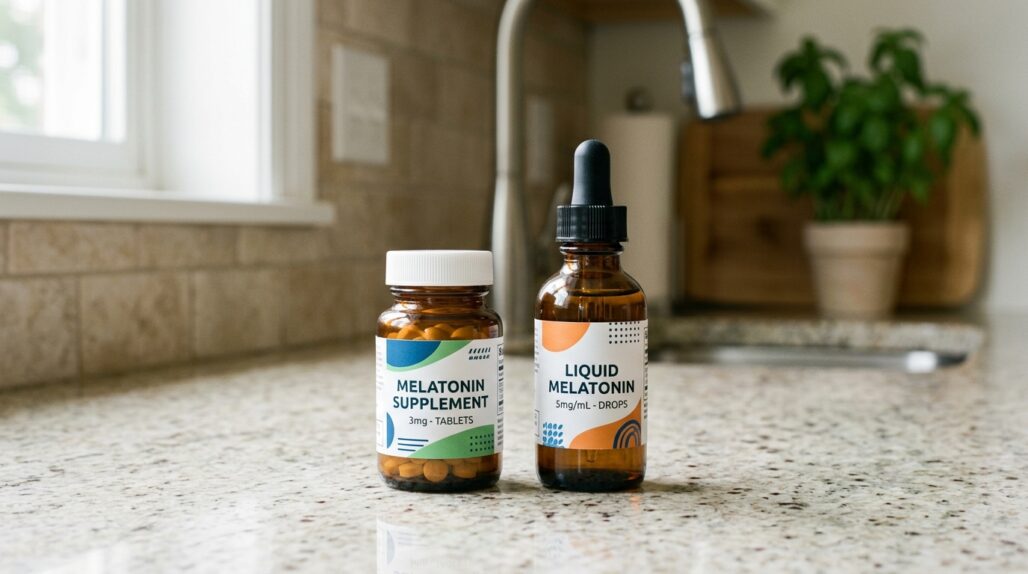
- A 0.5 mg tablet is the simplest place to start for most adults.
- A 1 mg option suits people who genuinely need a touch more after testing the lower dose.
- A liquid dropper lets you micro-dose below 0.5 mg, which is hard to do with a pressed tablet, and is useful if mornings feel groggy.
Look for third-party testing (USP, NSF, or an equivalent seal) so the dose on the label is closer to what is in the bottle. If you would rather compare specific picks, our roundup of the best melatonin supplements breaks down dose, form, and testing.
We may earn a commission from links on this page, at no extra cost to you. This does not change which products we recommend.


As an Amazon Associate, UsefulVitamins.com earns from qualifying purchases at no extra cost to you.

Who should check with a clinician first
Some people should not start nightly melatonin on their own, and some combinations need a pharmacist's eyes.
- Pregnant or breastfeeding. The NIH notes a lack of safety research in pregnancy, so route this to your doctor.
- Children. Pediatric use should be a clinician's call, not a default, given dosing and labeling concerns.
- On sedatives or sleep meds. Melatonin can stack with sedatives, and there is no safe DIY way to layer it onto a prescription sleep aid. Our piece on melatonin and Ambien covers why this combination needs professional input.
- On blood thinners or with epilepsy. Pharmacist review reports meaningful interactions with anticoagulants and seizure thresholds, so do not combine without medical supervision.
None of this means melatonin is risky for the average healthy adult. It means the edge cases are real, and a two-minute pharmacist conversation settles them.
FAQ
Can melatonin stop working if I take it every night? True chemical tolerance is not well documented, but if a dose that once worked stops helping, that often points to an underlying sleep problem rather than melatonin wearing off. Lowering the dose and checking your sleep habits is more useful than steadily increasing it.
Will nightly melatonin stop my body from making its own? There is no strong evidence that supplementing suppresses your natural melatonin production. When you stop, your own rhythm is still intact, though your sleep schedule itself may need a few nights to resettle.
What is the best dose for nightly use? The lowest that works, usually 0.3 to 1 mg taken 30 to 60 minutes before bed. Higher doses are not reliably more effective and are more likely to cause grogginess the next morning.
Is it safe to take melatonin for years? Honestly, nobody can promise that, because multi-year human safety studies are limited. Most evidence covers weeks to a few months, so years of nightly use is a reason to see a doctor about the underlying cause.
Why do I have vivid dreams on melatonin? Vivid dreams are a common and harmless effect, often linked to higher doses. If they bother you, a smaller dose usually reduces them without giving up the sleep benefit.
Can I take melatonin with my sleeping pill or sedative? Not without asking a pharmacist or doctor first. Melatonin can add to the sedating effect of sleep medications and sedatives, which can leave you over-sedated.
The bottom line
For a healthy adult, a low dose of melatonin every night for a few weeks to a few months is generally considered safe, and it is not addictive the way prescription sleep drugs can be. The real limits are that long-term data is thin and that melatonin fixes when you sleep far better than why you cannot.
So keep the dose small, lean on timing over quantity, and treat a months-long nightly habit as a nudge to find the cause. If you are pregnant, dosing a child, or mixing it with other medications, ask a pharmacist or doctor before you start.
This article is general education, not medical advice. It is not a substitute for guidance from your own doctor or pharmacist, who can account for your health history and medications. Do not start, stop, or change any prescription based on what you read here.
Reviewed by the UsefulVitamins Editorial Team.
