
Affiliate disclosure: this article contains affiliate links. As an Amazon Associate, UsefulVitamins.com earns from qualifying purchases at no extra cost to you.
Shilajit went from a niche Ayurvedic paste to a men's-health obsession in about two years, mostly on the back of fitness influencers calling it "the destroyer of weakness" and a natural testosterone booster. The jars are dark, sticky, expensive, and sold with a lot of confidence.
So is it real, or is it dressed-up dirt? The honest answer sits in between, and the part the ads skip is the one that can actually hurt you.
Where the shilajit hype came from
Shilajit is a tar-like resin that seeps out of rock cracks in high-altitude ranges like the Himalayas, Altai, and Caucasus. It forms slowly from compressed, microbially broken-down plant matter, which is why it is rich in humic substances – mostly fulvic acid, humic acid, and a long list of trace minerals.
Ayurvedic medicine has used it for centuries, which gives the marketing its "ancient wisdom" angle. The modern surge is newer and more specific.
The pitch usually lands on three promises:
- It raises testosterone and male vitality.
- It boosts energy and fights fatigue at the cellular level.
- It is an all-purpose mineral tonic for immunity, brain, libido, and longevity.
The first two have a thread of real human evidence. The third is where the story runs well past the data.
Fulvic acid is the hero molecule in most of these claims. It is small, water-soluble, and acts as a carrier that helps shuttle compounds across cell membranes. That carrier property is genuinely interesting. It is also, as you will see, the exact reason a contaminated jar is more dangerous than a contaminated multivitamin.
What the human evidence actually shows
Here is the part the brand blogs gloss over: the human shilajit research is small, short, and thin on numbers. There is a real signal, but nobody has run the large, independent, long-term trials that would settle the big claims.
Let me grade what exists.
Testosterone. The most-cited study is Pandit and colleagues, published in Andrologia in 2016. It was a randomized, double-blind, placebo-controlled trial – the good design – in 96 healthy men aged 45 to 55, using 250 mg of a purified shilajit extract twice daily for 90 days. Total testosterone, free testosterone, and DHEAS rose significantly versus placebo, roughly a 20% bump in total testosterone. That is a real, well-run trial. The catch worth saying out loud: it was funded by the company that makes the branded extract, it used one specific purified product (not random resin off a jar), and it has not been replicated by an independent group at scale.
Fatigue and strength. A separate randomized, placebo-controlled trial in 63 young, recreationally active men tested 250 mg or 500 mg per day for eight weeks. The high-dose group held onto more maximal muscle strength after a fatiguing workout – an 8.9% drop versus around 16-17% in the lower-dose and placebo groups. Promising, but it was young healthy men only, the effect showed up mainly in the stronger half of the group, and it is one study.
Everything else – immunity, cognition, longevity, broad "vitality" – rests on animal studies, test-tube antioxidant work, and tradition. That is not nothing. It is also not proof, and it should not be sold as if it were.
So the grading, plainly:
| The marketing claim | What the human evidence says | Evidence grade |
|---|---|---|
| Raises testosterone in men | One RCT in men 45-55 showed a ~20% rise, but it was industry-funded and unreplicated | Weak-to-moderate human |
| Fights fatigue, preserves strength | One small RCT in young men showed less strength loss at 500 mg/day | Weak human |
| Boosts immunity and brain function | Mostly animal and lab data, no solid human outcomes | Animal / in-vitro |
| Anti-aging “elixir of life” | Tradition and mechanism theory, no longevity trials | Anecdote / tradition |
If a brand cites all four rows with the same confidence, that is your first scam tell. The evidence is not the same strength, and honest sourcing says so.
One more honest caveat on dose. The two human trials used 250 to 500 mg of a standardized, purified extract, not an unmeasured smear of raw resin on a spoon. When you scoop a "pea-sized amount" of an unstandardized jar, you genuinely do not know how much active material you are taking or whether it matches what the studies used. That uncertainty cuts both ways: you might be underdosing the thing that worked in the trial, or overdosing the contaminants that did not get measured.
The real scam is not the claims – it is the contamination
Here is what should actually keep you up at night. Because shilajit is a raw geological material scraped off rocks, it can carry whatever the rock and the environment carried: lead, arsenic, cadmium, mercury, aluminum, and even thallium.
A 2025 analysis published in BMC Chemistry measured thallium – a metal more toxic than mercury, cadmium, or lead – across commercial shilajit supplements. In some products the thallium was higher than in the crude raw resin, which suggests sloppy processing rather than purification. None of the jars listed heavy-metal content on the label.
Now remember the fulvic-acid carrier trick. The same molecule that supposedly shuttles nutrients into your cells will happily shuttle in lead and arsenic too. A contaminated shilajit is arguably worse than other contaminated supplements, because the contamination may be more readily absorbed.
It is not all doom. When ConsumerLab independently tested shilajit products in 2024, the lead, arsenic, cadmium, and mercury in the products they checked came in below levels of concern at a single daily dose. So clean, tested resin exists. The point is not "all shilajit is poison." The point is that the gap between a tested jar and a random one is a heavy-metal gap, and you cannot see it, taste it, or smell it.
Watch the same dynamic in any "detox" category. We dug into the wider pattern in whether detox supplements actually work, and "natural" almost never means "tested."
How to spot fake or unsafe resin
Authentic resin has a few behaviors that powders and counterfeits often fail:
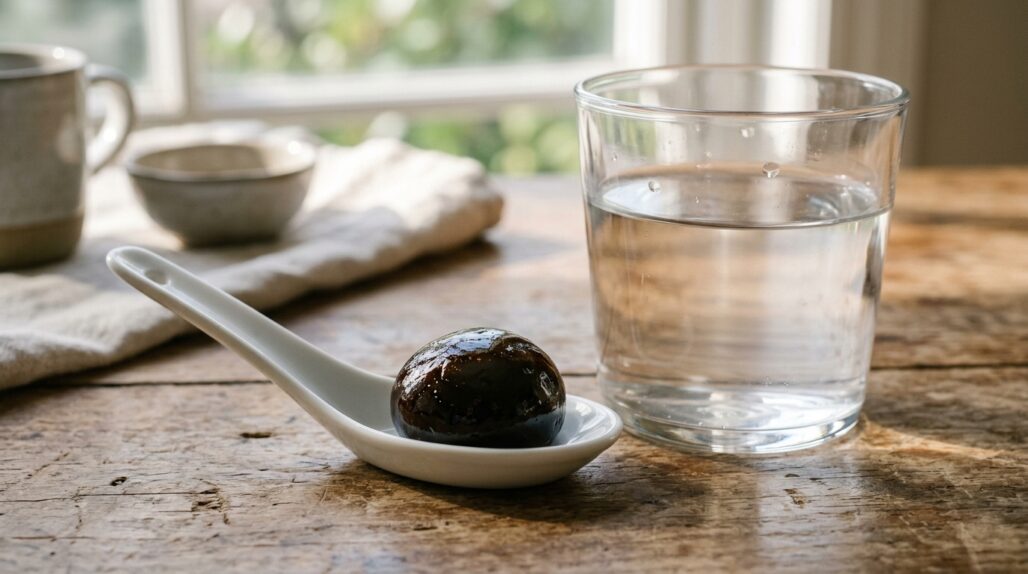
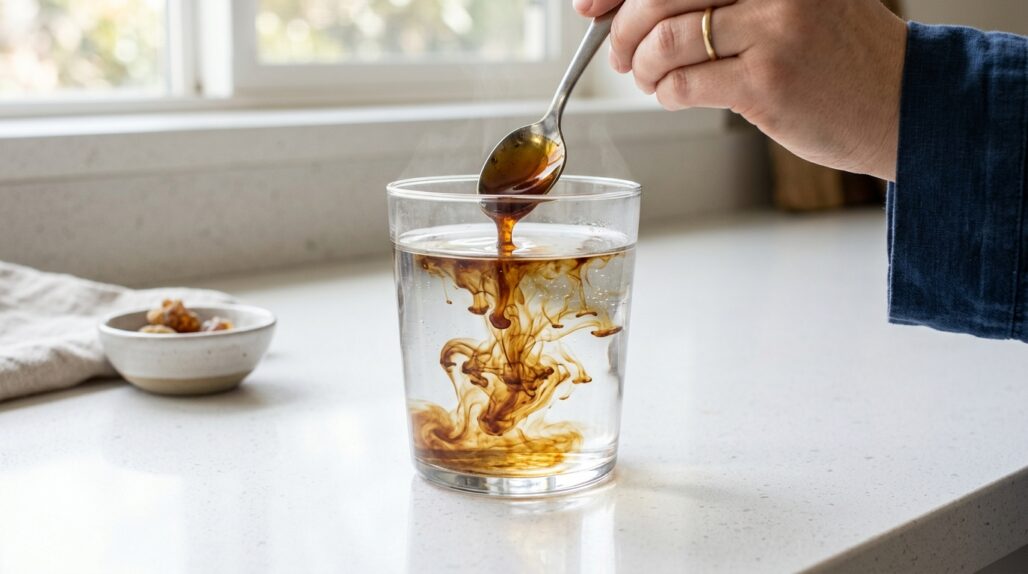
- It dissolves. Real resin fully dissolves in warm water into a brown, opaque liquid with no grit or oily film. Fakes leave residue, sand, or refuse to dissolve.
- It changes with temperature. Genuine resin softens and gets tacky in your warm hand and hardens when cold. A piece that stays rock-hard or rubbery in all conditions is suspect.
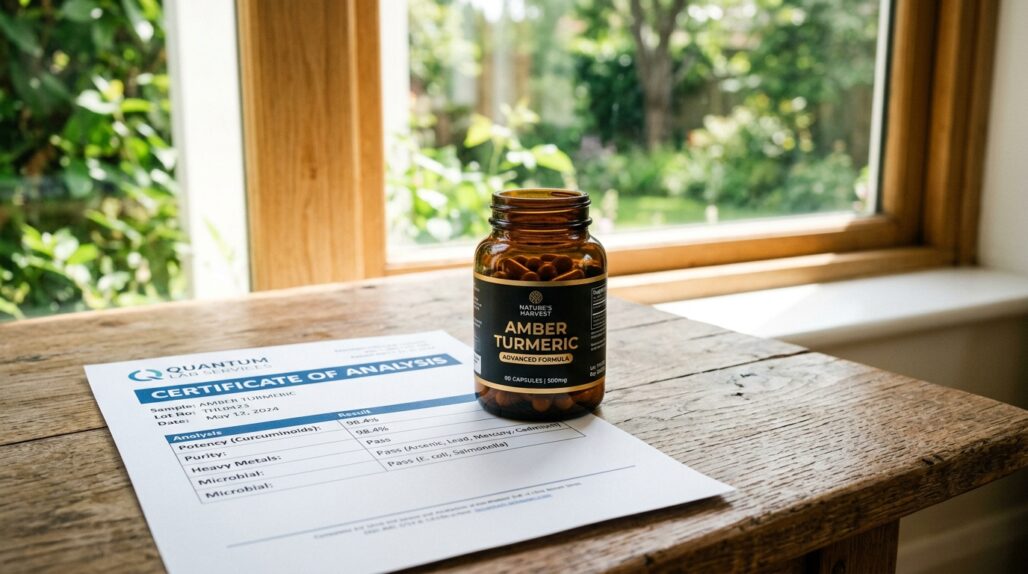
- It has a recent third-party heavy-metal test. Not "lab tested" on the label – an actual certificate of analysis, dated, from a named lab, listing lead, arsenic, cadmium, mercury, and ideally thallium.
- It names a real source region and a real company. Vague "Himalayan" with no batch testing is a flag.
A dissolve test screens for obvious junk, but it does not detect heavy metals. Only a lab does that. If a seller cannot show you the certificate, treat the price as a coincidence and walk.
Who might actually try it, and who should skip
This is not a multivitamin you take "just in case." If you are reaching for shilajit to fix something specific, you are probably reaching past better options.
It might be worth a fair trial if you are a generally healthy adult, curious about the mild energy or testosterone signal, willing to buy a tested resin, and clear-eyed that the effect (if any) is modest. Treat it like an experiment, not a cure.
Skip it if any of these apply:
- You are pregnant or breastfeeding – heavy-metal risk alone makes this an easy no.
- You have iron-overload conditions like hemochromatosis (shilajit can be iron-rich).
- You are trying to treat diagnosed low testosterone, chronic fatigue, or any medical condition. That is a doctor's job, not a jar's.
- You are tempted by a cheap, untested product. The downside is not a wasted $12 – it is metal you cannot un-swallow.
If your real issue is energy, the better-evidenced move is to find the actual cause. Persistent fatigue can mean low iron, thyroid issues, poor sleep, or low B12, and a clinician can test for those. For a baseline nutrient floor, an honest comparison of where shilajit fits sits in our look at whether multivitamins are a waste of money. And if the goal is long-game health rather than a quick hit, the trade-offs are laid out in our guide to longevity supplements.
Cost versus value, and what to get
Real purified resin runs roughly $30 to $60 for a one-to-two-month supply as of writing – check current price – and a daily dose is small, about a pea-sized or rice-grain amount. The cheap jars under $15 are exactly where adulteration and dilution cluster, so the bargain is usually the trap.
Capsules sit in a strange spot. They are tidier and easier to dose, but they hide what is inside, and the testing question matters just as much. A capsule from a brand with no published heavy-metal panel is no safer than a resin from one – it is just easier to swallow without thinking about it. Whatever the format, the certificate is the product. The capsule pick here uses a single standardized extract (the same purified material studied in the trials) with a published heavy-metal panel, not a 19-in-1 blend where the actual shilajit dose is anyone's guess. If you are weighing shilajit against the rest of your stack, our broader take on which supplements earn their keep is in the multivitamin breakdown linked above, and the spend-versus-payoff math is the same here: pay for testing, not for a story.
The honest framing: if you want to try it, buy a tested one or do not bother. The cards below route to a third-party-tested resin (the only version worth your money) and, for anyone who only cares about the energy claim, to CoQ10, which has cleaner human evidence for cellular energy support and none of the heavy-metal baggage.


As an Amazon Associate, UsefulVitamins.com earns from qualifying purchases at no extra cost to you.
We may earn a commission if you buy through these links, at no cost to you. It does not change the verdict above – we route you to the tested resin or the better-evidenced alternative, not the highest payout. For the full shortlist with testing notes, see our roundup of the best shilajit supplements.
FAQ
Is shilajit a scam or does it actually work? It is not a scam in the sense of being inert. Two small human trials suggest a modest testosterone and anti-fatigue effect. The scam risk is products sold with cure-all claims the evidence does not support, or cheap resin contaminated with heavy metals.
Does shilajit really raise testosterone? One randomized, placebo-controlled trial in men aged 45 to 55 found about a 20% rise over 90 days using a purified extract. It was funded by the ingredient maker and has not been independently replicated, so treat it as a real but limited signal, not a settled fact.
How do I know if my shilajit is fake? Real resin dissolves cleanly in warm water, softens in a warm hand, hardens when cold, and comes with a dated third-party certificate listing heavy metals. No certificate of analysis means you cannot verify safety, full stop.
Can shilajit be dangerous? Untested resin can contain lead, arsenic, mercury, cadmium, and thallium, and its fulvic acid may help your body absorb those metals. Pregnant people and anyone with iron-overload conditions should avoid it. This is why testing is non-negotiable.
Is shilajit safe to take with medications? There is little human data on interactions, and it can affect iron and blood sugar. Do not start it alongside prescriptions without asking your doctor or pharmacist first, and never stop a prescribed medication to try it.
What works better than shilajit for energy? If energy is the goal, get the cause checked – iron, thyroid, B12, and sleep are common culprits. For cellular-energy support with cleaner evidence and no contamination risk, CoQ10 (ubiquinol) is a more reliable pick.
The bottom line
Shilajit is a real substance with a thin but genuine layer of human evidence for testosterone and fatigue, wrapped in marketing that promises far more than the data delivers. The big cure-all claims are unsupported. The narrow ones have a pulse.
The thing that actually decides whether shilajit is smart or stupid is not the claim – it is the jar. A tested resin from a company that shows its heavy-metal numbers is a reasonable experiment for a healthy, curious adult. An untested bargain jar is a coin flip with lead. If you want to try it, get a tested one. If you only care about energy, CoQ10 is the cleaner bet, and a real medical workup beats both.
This article is for general information and is not medical advice. Supplements are not reviewed by the FDA for safety or effectiveness before sale, and persistent fatigue or low testosterone should be evaluated by a clinician. Talk to your doctor before starting any new supplement, especially if you are pregnant, nursing, or taking medication.
Reviewed by the UsefulVitamins Editorial Team.
