
Affiliate disclosure: this article contains affiliate links. As an Amazon Associate, UsefulVitamins.com earns from qualifying purchases at no extra cost to you.
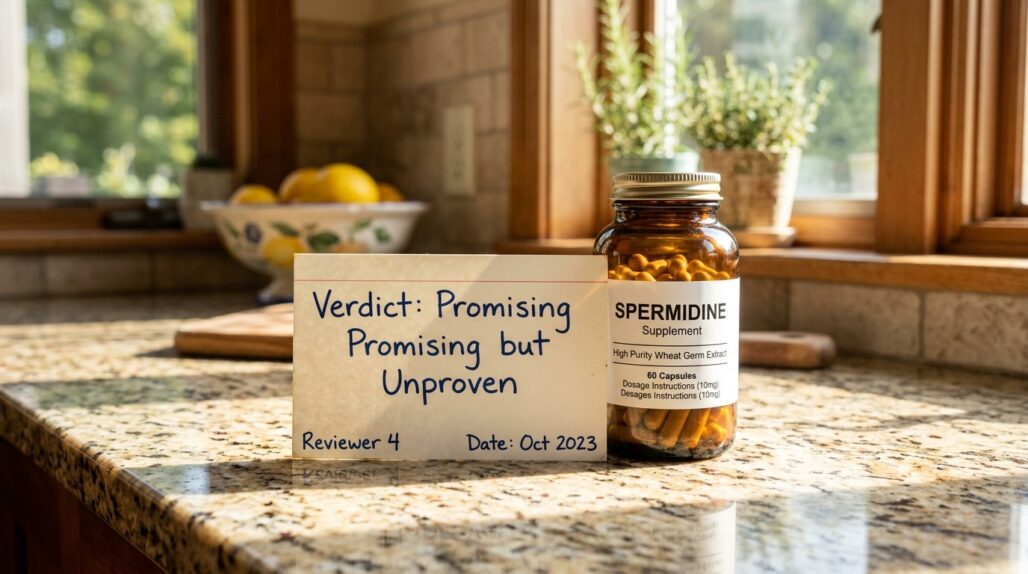
Spermidine is the longevity supplement that sounds the most like science fiction and has some of the most genuinely interesting biology behind it. It is also wildly oversold. This page sorts the real mechanism from the marketing, grades the human evidence the way a skeptic should, and tells you whether to bother – or just eat more wheat germ.
Where the spermidine longevity claim started
The hype traces back to a clean, compelling story about autophagy – your cells' recycling system that clears out damaged parts. As you age, autophagy slows down, and a lot of age-related decline tracks with that slowdown.
Spermidine is a small molecule found in every cell. In lab studies it switches autophagy back on. That single mechanism is the entire foundation of the longevity pitch.
Then came the headline finding biohackers latched onto: in mice, oral spermidine extended lifespan by roughly 10 percent and protected aging hearts. Pair "turns on cellular cleanup" with "mice lived longer," and you have a viral supplement.
Brands ran with it. The marketing now promises a longer healthspan, sharper memory, better hearts, and slower aging – usually with a wheat-germ-extract capsule and a price tag that does not match the evidence.
Here is the gap nobody selling it wants to highlight: mechanism in a dish is not the same as benefit in a person. Almost every supplement that flopped in humans had a beautiful mechanism first.
What spermidine actually is
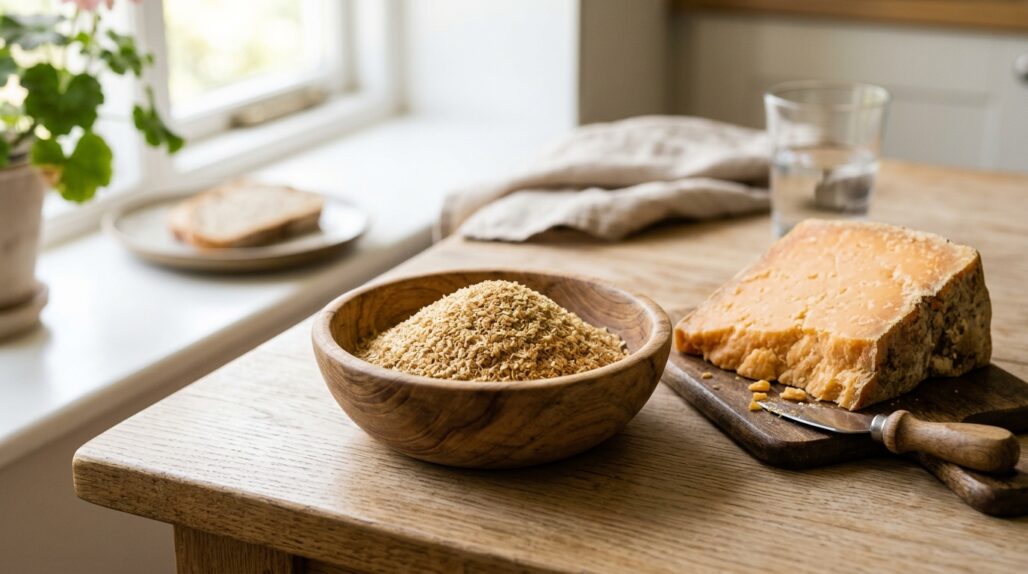
Spermidine is a polyamine, a naturally occurring compound your body makes and that you also eat. It is not exotic. It is in wheat germ, aged cheese, fermented soy like natto, mushrooms, and legumes.
Your own gut bacteria produce some too. So this is not a foreign drug – it is a normal part of a varied diet, which is part of why the safety profile looks reassuring.
The proposed payoff chain goes like this:
- Spermidine triggers a modification (hypusination of a protein called eIF5A) that favors making pro-autophagy proteins.
- More autophagy means cleaner cells.
- Cleaner cells, the theory goes, mean slower aging.
Every link in that chain is supported in cells and animals. The question this page answers is how much of it has actually been shown in people, and the honest answer is: less than the price suggests.
The human evidence, graded honestly
This is where a skeptic earns their keep. Evidence is not one thing. A mouse study and a human randomized trial are not the same currency, and most spermidine marketing quietly mixes them. Here is the real picture, separated by grade.
| Evidence type | What it shows | How much weight it carries |
|---|---|---|
| Cell and animal data | Spermidine reliably switches on autophagy; mice on oral spermidine lived about 10% longer with healthier hearts | Strong for mechanism, weak for predicting human outcomes |
| Observational human (diet) | In a cohort of 829 adults, those eating more spermidine had lower all-cause mortality (about 25% lower risk per standard deviation of intake) | Suggestive only; high-spermidine eaters also tend to eat better overall (confounding) |
| Small human pilot RCT | A 3-month trial in 30 older adults at dementia risk hinted at a small memory benefit | Encouraging but tiny and short; the kind of result that often does not replicate |
| Larger human RCT (SmartAge) | 12 months, 100 older adults: spermidine did not beat placebo on the main memory measure | The most decision-relevant human evidence we have, and it was negative on its primary endpoint |
| Human longevity RCT | Does it make people live longer? No such trial has been completed | The claim that sells it has zero direct human trial support |
Read that table top to bottom and the pattern is obvious. The further you move from a petri dish toward an actual long human trial, the weaker the effect gets.
The single most important data point is the SmartAge trial published in JAMA Network Open. It was the best-designed human spermidine study to date: a year long, placebo controlled, double blind. On its primary memory outcome, spermidine and placebo were statistically a tie. The authors did flag possible signals on verbal memory and inflammation worth chasing at higher doses, but the headline result was null.
The earlier 3-month pilot in 30 people looked more promising, which is exactly why the bigger, longer trial mattered. In supplement science, the small early study that excites everyone is routinely deflated by the larger one. That happened here.
The brightest human number comes from diet, not pills: the prospective cohort reported in the American Journal of Clinical Nutrition found people with higher spermidine intake died less over 20 years. Genuinely interesting – but observational. People who eat more wheat germ, legumes, and aged cheese tend to have healthier diets and lifestyles overall, and that alone can produce the result. Association is not proof a capsule will do the same thing.
The dose problem, and the wheat germ shortcut
Here is a detail that quietly undercuts a lot of premium spermidine marketing. The SmartAge trial that everyone cites delivered only about 0.9 mg of supplemental spermidine per day from wheat germ extract. That is a small amount, close to what a decent diet provides.
Food beats most capsules on cost per milligram. Rough spermidine content of common foods:
- Wheat germ: roughly 24 to 35 mg per 100 g, the richest everyday source
- Aged cheese: up to around 20 mg per 100 g
- Natto and soybeans: up to about 18 to 20 mg per 100 g
- Mushrooms: up to around 16 mg per 100 g
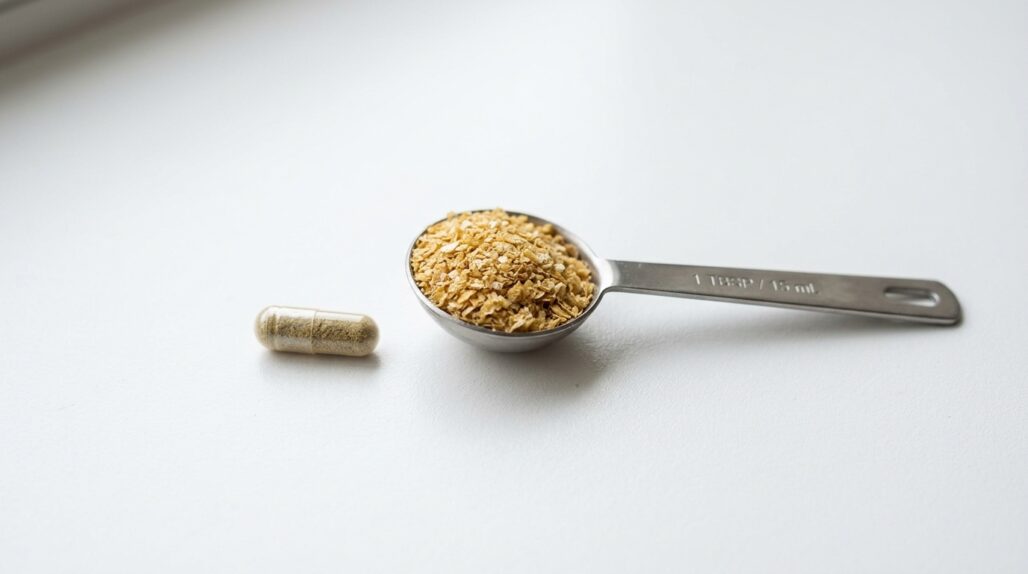
A few spoonfuls of wheat germ on yogurt or oats can match or beat a capsule for pennies. If you want to see how a specific product's dose stacks up against food, run the numbers through our spermidine dose calculator before you pay supplement prices.
This is the awkward truth for the category: the cheapest version of the intervention with the best human safety record is a breakfast topping.
How to spot an overhyped or underdosed product
If you still want a capsule for convenience or a higher dose, the same scam patterns that plague the whole longevity aisle apply here. Spermidine supplements are not reviewed by the FDA for effectiveness before sale, so the label is only as honest as the company.
Watch for these:
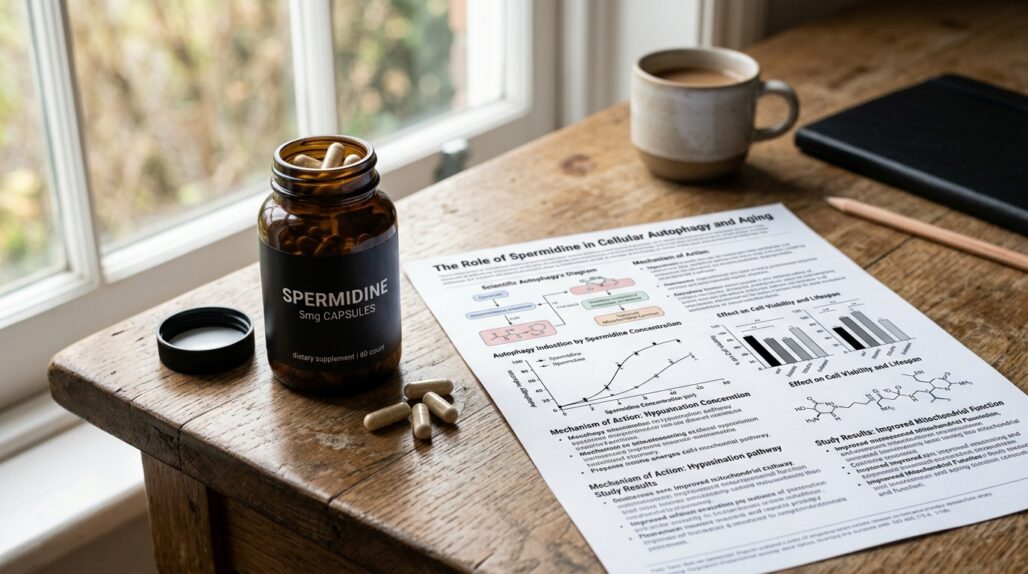
- No actual spermidine number. Many list "wheat germ extract 800 mg" but bury or omit how much spermidine that contains. The extract weight is not the dose that matters.
- No third-party testing. Look for NSF, USP, or Informed Sport, or at minimum a published certificate of analysis. Without it you are trusting marketing copy.
- Cure-all claims. Anything promising it reverses aging, fixes memory, or extends lifespan is overstating what human trials show. The honest framing is "may support cellular renewal," not "lives longer guaranteed."
- Premium price for a tiny dose. Some clinically styled products run roughly $60 to $80 a month (as of writing; check current price). That is a lot for a compound you can eat.
A reasonable supplement here is one that names its spermidine content, proves purity with testing, and does not promise the moon. Our vetted shortlist lives in the best spermidine supplements roundup if you want products already screened on those criteria.
So is it worth your money
Depends entirely on your expectations.
A defensible buy if: you treat it as a cheap, low-risk longevity hedge, you keep the dose modest, and you are fine never feeling a thing. The safety record in tolerability studies is reassuring – side effects have been mild and mostly digestive.
A waste of money if: you expect a noticeable anti-aging effect, sharper memory you can measure, or anything resembling what the ads imply. The strongest human trial says do not count on the memory benefit, and no trial has tested the lifespan claim at all.
If you want to weigh spermidine against the rest of the longevity aisle, our complete guide to longevity supplements ranks where the human evidence is strongest, and our best supplements for longevity in 2026 shows where spermidine sits in the pecking order. It is far from the worst bet in that aisle, but it is not the standout either.
If you still want to try a tested one
If you have realistic expectations and want a capsule with a verified dose, get one that is third-party tested rather than the cheapest unverified jar. If you would rather take the food route, wheat germ does the same job for less.


As an Amazon Associate, UsefulVitamins.com earns from qualifying purchases at no extra cost to you.
Some links above are affiliate links. If you buy through them we may earn a small commission at no extra cost to you, and it never changes our verdict or which products we test.
FAQ
Does spermidine actually extend human lifespan? There is no completed human trial proving it does. The lifespan data is from mice, and the human “lives longer” signal comes from observational diet studies that cannot prove cause and effect. Treat lifespan claims as unproven.
Is wheat germ as good as a supplement? For most people, yes, and cheaper. Wheat germ is the richest common food source of spermidine, and the main human trials used wheat-germ extract delivering modest doses you can roughly match with food.
What is a typical spermidine supplement dose? Products vary widely, from under 1 mg to over 10 mg of spermidine per serving. The well-known SmartAge trial used only about 0.9 mg per day, so a higher number on the label does not mean it is better studied.
Is spermidine safe to take daily? In the human studies done so far it has been well tolerated, with mostly mild digestive effects. Long-term safety data is still limited, so it is reasonable to start low and check with a clinician if you take medications or have a health condition.
Will spermidine improve my memory? The best human evidence says probably not in any reliable way. The largest trial found no significant memory benefit over a year compared with placebo, even though a tiny earlier pilot had hinted at one.
Can spermidine treat or prevent a disease? No. It is a dietary supplement, not a treatment. Do not use it to manage any medical condition, and take real concerns about aging, memory, or heart health to a doctor.
The bottom line
Spermidine has the best mechanism story in the longevity aisle and some of the thinnest human proof. The autophagy science is real, the mouse data is strong, and higher dietary intake tracks with living longer – but the one well-powered human trial missed its mark, and nobody has run a human longevity study. That makes it a reasonable low-risk bet, not a proven anti-aging pill.
If you want it, the smartest moves are cheap and honest: eat more wheat germ, or buy a third-party-tested product with a real spermidine number on the label and modest expectations to match. Skip anything promising to turn back your biological clock.
This article is for general information and is not medical advice. Talk to a qualified clinician before starting any supplement, especially if you are pregnant, managing a health condition, or taking medication.
Reviewed by the UsefulVitamins Editorial Team.
