
Affiliate disclosure: this article contains affiliate links. As an Amazon Associate, UsefulVitamins.com earns from qualifying purchases at no extra cost to you.
If your cheeks, nose, and forehead stay pink long after everyone else has cooled down, you are not imagining it. Persistent central-face redness behaves differently from an ordinary blush, and a few supplements can take the edge off the background inflammation. None of them is a cure. The honest version of this page tells you which picks have real evidence, which lean on guesswork, and what to do that costs nothing.
Why your face stays red when it shouldn't
A normal blush is short. Blood vessels in the cheeks open, you go pink, and minutes later you fade back to baseline. Rosacea-prone skin gets stuck in a different loop.
Three things tend to overlap. The small blood vessels in the central face become twitchy and over-reactive, so they dilate fast and recover slowly. A skin mite called Demodex, which most of us carry harmlessly, can sit in higher numbers on rosacea skin and feed a low-grade immune response. And inflammatory signaling molecules keep the whole area primed, so heat, alcohol, or a spicy meal sets off a bigger flare than it should.
That is why redness here is part vascular, part inflammatory. Supplements cannot retrain a twitchy vessel, but a couple of them can lower the inflammatory baseline so flares start from a calmer place. Skincare and a prescription from a dermatologist do the visible heavy lifting. If you want the broader mineral background, our complete guide to zinc covers dosing and forms in more depth.
The 3 best supplements for facial redness, ranked
Here is the realistic ranking. The grading reflects what human trials actually show, not what a label promises.
| Supplement | Evidence | Typical dose | Best for |
|---|---|---|---|
| High-EPA fish oil | Moderate (RCT for ocular rosacea; skin evidence weaker) | ~1,000mg EPA daily, with food | Redness plus gritty, dry, irritated eyes |
| Zinc picolinate | Mixed (one positive RCT, one null RCT) | 25-30mg elemental, with food | Mild redness with breakout-prone skin |
| Niacinamide (flush-free B3) | Promising for barrier; thin for oral redness | 500mg once or twice daily | Dry, easily irritated, weak-barrier skin |


As an Amazon Associate, UsefulVitamins.com earns from qualifying purchases at no extra cost to you.
Some links below are affiliate links. If you buy through them we may earn a small commission, at no extra cost to you, and it never changes our ranking.
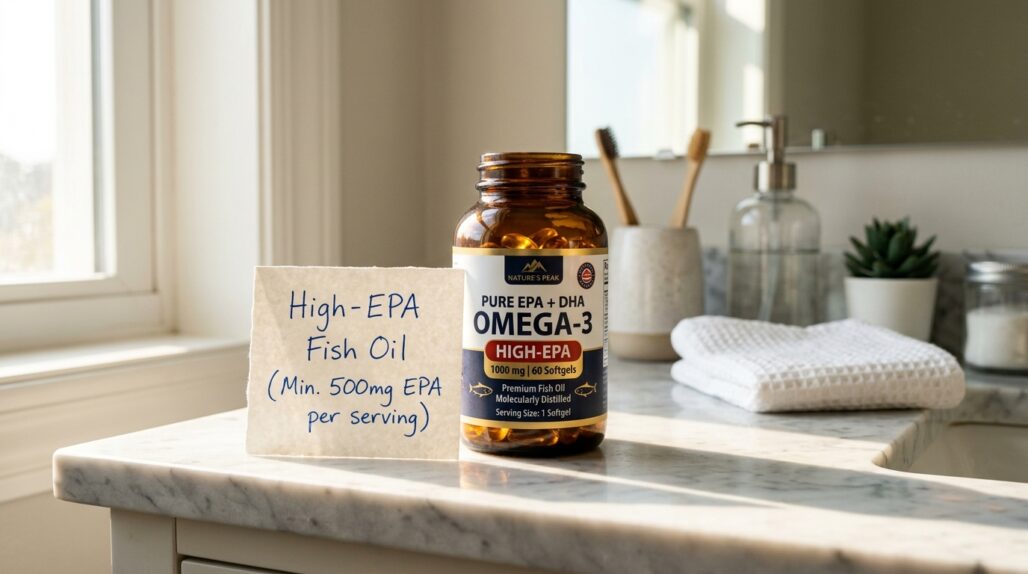
1. High-EPA fish oil – the top pick
EPA is the more anti-inflammatory of the two main omega-3 fats, and it has the most direct human data for rosacea-related symptoms. In a randomized controlled trial of 130 rosacea patients with dry eye, six months of omega-3 capsules taken twice daily beat placebo on dry-eye symptoms, tear quality, and gland function.
Read that result carefully. The strong evidence is for the ocular rosacea side, the burning, gritty, watery eyes that often travel with facial redness. For the skin redness itself, the support is softer and mostly extrapolated from the general anti-inflammatory effect of EPA, so treat it as adjunctive.
Evidence grade: moderate. Solid RCT for the eye symptoms, weaker and indirect for visible cheek redness.
Dose: aim for roughly 1,000mg of EPA per day, not just 1,000mg of total fish oil. Many capsules are mostly filler oil, so read the EPA line on the back, not the front. Take it with a meal that has some fat.
Who it suits: anyone whose redness comes bundled with dry, irritated eyes. If your eyes feel sandy by evening, this is the pick to start with. For mood-focused dosing, our roundup of the best high-EPA fish oil for mood compares the same high-EPA formulas.
Caution: fish oil has a mild blood-thinning effect. If you take warfarin, apixaban, or similar, clear it with your prescriber first, and stop before any planned surgery on their advice.
2. Zinc picolinate – worth a try, honestly mixed
Zinc is involved in immune regulation and wound healing, which is why it keeps coming up for inflammatory skin. The trial record for rosacea is genuinely split.
A 2006 double-blind, placebo-controlled study reported that oral zinc sulfate improved rosacea and was well tolerated. A near-identical 2012 trial of 220mg zinc sulfate twice daily for 90 days found no real difference between zinc and placebo. Both groups improved, which tells you how much placebo and seasonal variation muddy these studies.
So zinc is a reasonable experiment, not a sure thing. Give it eight to twelve weeks and judge the change against your own baseline.
Evidence grade: mixed. One positive RCT, one null RCT of similar size.
Dose: 25-30mg of elemental zinc as picolinate, taken with food to avoid nausea. Note that the trial doses above used zinc sulfate, which delivers far less elemental zinc than the milligram number on the bottle suggests. Long-term zinc can deplete copper, so do not stack high doses for months without a break.
Who it suits: mild redness alongside breakout-prone skin. If acne and redness blur together for you, our supplements for acne guide overlaps usefully here.
Caution: keep total daily zinc under the 40mg adult upper limit unless a clinician directs otherwise, per the NIH safety guidance linked in the sources.
3. Niacinamide (flush-free vitamin B3) – get the form right
This is where most people trip up, so read this twice. Niacinamide, also called nicotinamide, does not cause flushing. Niacin, also sold as nicotinic acid, causes a hot, red, prickling flush on purpose. For a face you are trying to calm, you want niacinamide and you specifically do not want niacin.
Niacinamide supports the skin barrier and damps inflammatory signals like IL-1 and TNF-alpha. The cleanest evidence is topical. A controlled study in 50 rosacea subjects found a niacinamide moisturizer improved barrier function over four weeks. Oral niacinamide has a strong safety track record in dermatology, including large skin-cancer prevention trials at 500mg twice daily, but the direct oral-for-redness data is thin.
Evidence grade: promising for the barrier, thin for oral redness. Best thought of as barrier support, not a redness eraser.
Dose: 500mg once or twice daily of flush-free niacinamide. A topical 4-5 percent niacinamide cream is arguably the better-evidenced route for the skin itself.
Who it suits: dry, tight, easily stung skin where the barrier feels broken. If you want the full breakdown of why niacin burns and niacinamide does not, read how to avoid the niacin flush.
The free fix that beats any pill
This is the part the single-product blogs skip, and it works better than any capsule for most people.
Spend two weeks as a redness detective. Keep a short note on your phone after each flare and write down what came right before it. The usual suspects, backed by NHS rosacea guidance, are heat, sun, alcohol, spicy food, hot drinks, sudden temperature swings, hard exercise, and stress. Most people have two or three personal triggers doing most of the damage, and you cannot manage what you have not named.
Then layer in three no-cost habits.
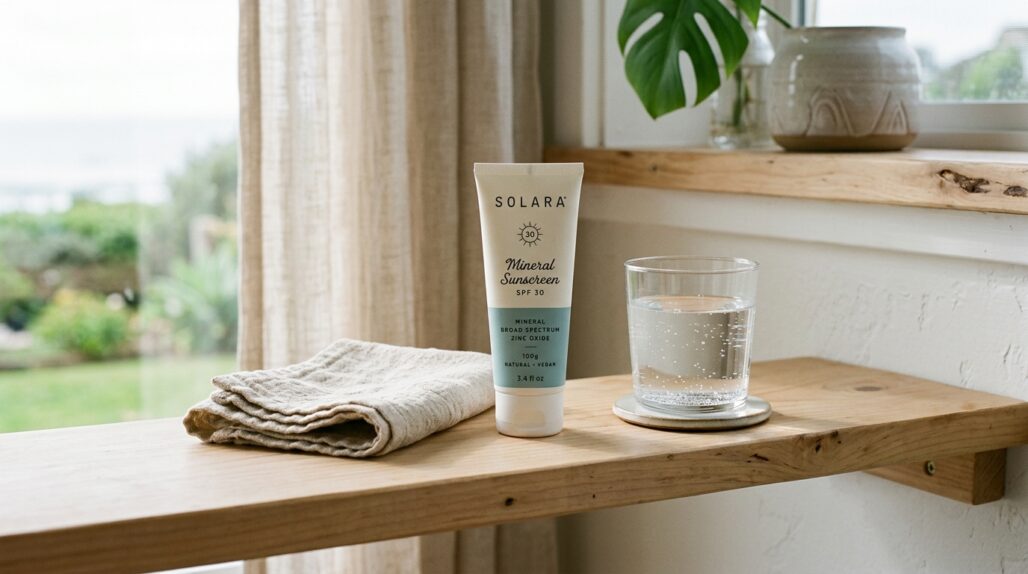
- Wear a mineral sunscreen with zinc oxide or titanium dioxide every morning, all year. Sun is the single most common flare trigger, and mineral filters tend to sting reactive skin less than chemical ones.
- Strip your routine back. Drop scrubs, alcohol toners, menthol, and anything that tingles. A bland gentle cleanser and a plain moisturizer do more for redness than a shelf of actives.
- Cool down deliberately. Sip cold water during hot meals, step outside before a room overheats, and let exercise come down gradually rather than going straight from a sprint to a hot shower.
None of this costs anything past the sunscreen, and it is the foundation every supplement sits on top of.
What does not work, and common mistakes
Niacin (nicotinic acid) is the classic error. People grab a B3 bottle for redness and choose the version that deliberately triggers a flush. Check the label says niacinamide or nicotinamide.
Collagen and biotin get marketed for "glowing skin," but neither targets the vascular or inflammatory drivers of facial redness, so do not expect them to touch it. Mega-dosing also backfires: more zinc is not more benefit, and high long-term zinc can quietly drain copper. Finally, do not stop a prescription rosacea cream because a supplement seems to be helping. Supplements are an add-on, not a swap.
When to see a doctor
Most facial redness is cosmetic and chronic, but flushing can occasionally be a signal rather than a skin issue, so this part matters.
See a dermatologist if your redness is getting worse, spreading, or coming with eye irritation, since that points to rosacea that may need a prescription cream, gel, or course of antibiotics. Book sooner, not later, if you also notice eye pain, blurred vision, or light sensitivity.
Get checked promptly if flushing arrives with diarrhea, wheezing, a racing heart, or episodes that feel like your whole upper body floods with heat. That pattern can mask carcinoid syndrome, mastocytosis, or lupus, and those need a doctor, not a supplement. Never self-treat flushing with capsules if it is behaving unusually.
FAQ
Can supplements cure rosacea or facial redness? No. Rosacea is chronic, and supplements at best lower the inflammatory baseline so flares start calmer. Prescription treatment and trigger control do the real work.
Is it niacin or niacinamide I want for redness? Niacinamide, the flush-free form. Niacin (nicotinic acid) deliberately causes a hot facial flush, which is the opposite of what you want.
How long before I see anything from these? Give each pick eight to twelve weeks and compare against your own baseline, not against a flare-free day. The omega-3 eye-symptom data showed changes over three to six months.
Can I take all three together? Usually yes, with food, but introduce one at a time so you can tell what helps. Mind the blood-thinning effect of fish oil and the 40mg daily zinc ceiling.
Are these safe in pregnancy? Check with your clinician first. Standard food-form omega-3 is generally fine, but doses of zinc and niacinamide should be reviewed in pregnancy rather than assumed safe.
Will fish oil make my redness worse? It should not. The blood-thinning effect is mild at normal doses, and the anti-inflammatory action works in your favor. Flag it before surgery or if you take anticoagulants.
The bottom line
If you only do one thing, start with high-EPA fish oil at around 1,000mg of EPA daily, especially if your eyes feel gritty along with the redness. Zinc is a fair experiment with honestly mixed trials, and flush-free niacinamide earns its place mostly through barrier support. Set realistic expectations: these quiet the background, they do not erase a flush. Pair them with trigger tracking and daily mineral SPF, and see a dermatologist if redness worsens, your eyes hurt, or flushing comes with diarrhea or wheezing.
This article is for general information and is not medical advice. Talk to a qualified clinician before starting any supplement, especially if you are pregnant, take prescription medicine, or use blood thinners.
Reviewed by the UsefulVitamins Editorial Team.
