
Affiliate disclosure: this article contains affiliate links. As an Amazon Associate, UsefulVitamins.com earns from qualifying purchases at no extra cost to you.
Why warfarin makes the supplement question about your INR, not a missing nutrient
If you are on warfarin (sold as Coumadin or Jantoven) or another vitamin-K-antagonist blood thinner, the supplement aisle is a different place than it is for everyone else. Most "best supplements for a drug" articles are about a nutrient the drug uses up. Warfarin is not really that story. Its main risk runs the other way: a lot of common supplements can either raise your bleeding risk or shift your INR, the blood test that tells your clinic whether your dose is right.
So this page has a job. It tells you the handful of supplements that are genuinely safe to add, the ones that move your INR or your bleeding risk and need a conversation first, and how to keep your own diet steady so your dose stays predictable. None of this is a reason to change your warfarin. Your dose was set against your INR by the people monitoring you, and that stays exactly as prescribed.
Worth saying plainly. Warfarin does not deplete vitamin B12, magnesium, or vitamin D in any meaningful way. A 114-patient study found no B12 change over six months. Folate is a partial exception: that same six-month study found a measurable drop in red-cell folate, so a low-dose folate or B-complex is reasonable if your intake is poor – clear it with your clinic. The real biology is its anti-clotting effect plus a quieter off-target one, which we will get to. Keep that in mind every time you see a supplement marketed as "what your blood thinner is stealing." For warfarin, that pitch is mostly wrong.
What warfarin actually does to vitamin K and your bones
Warfarin blocks an enzyme called vitamin K epoxide reductase, written as VKORC1. That enzyme normally recycles vitamin K so your body can keep activating clotting factors II, VII, IX, and X. With the enzyme blocked, those factors stay underactive and your blood clots more slowly. That is the intended, FDA-acknowledged mechanism, described in the warfarin prescribing information and in the StatPearls warfarin monograph. It is why a target INR usually sits around 2 to 3, higher for some mechanical heart valves.
Here is the part people miss. Vitamin K does not only activate clotting factors. It also switches on two other proteins: Matrix Gla Protein, which normally keeps calcium out of your artery walls, and osteocalcin, which helps build bone. Warfarin blunts those too. The evidence here is well-documented rather than FDA-labeled: long-term warfarin use is associated with markers of impaired bone metabolism (notably higher undercarboxylated osteocalcin) and with arterial calcification, and may be linked to lower bone density, as reviewed in research on long-term warfarin, osteoporosis, and atherosclerosis. This is the reason some clinicians ask warfarin patients to mind their calcium and vitamin D. It is an association, not a proven cause-and-effect you can fix with a pill, but it is real enough to shape what is worth adding.
What warfarin does NOT do is drain a single headline nutrient the way metformin lowers B12. So the safe-add list below is built around bone health and general gaps, and it stays neutral toward your INR.

The supplements worth adding, and how to take each
A short list, chosen for one reason: at normal doses these do not move your INR and do not stack bleeding risk. The rule that matters more than the choice is the method. Add one at a time, keep the dose steady, and ask your clinic to recheck your INR about one to two weeks after any new supplement, because that is the window where a surprise shows up.


As an Amazon Associate, UsefulVitamins.com earns from qualifying purchases at no extra cost to you.
Some links below are affiliate links. If you buy through them we may earn a small commission, at no extra cost to you. It never changes which supplements we list as safe.
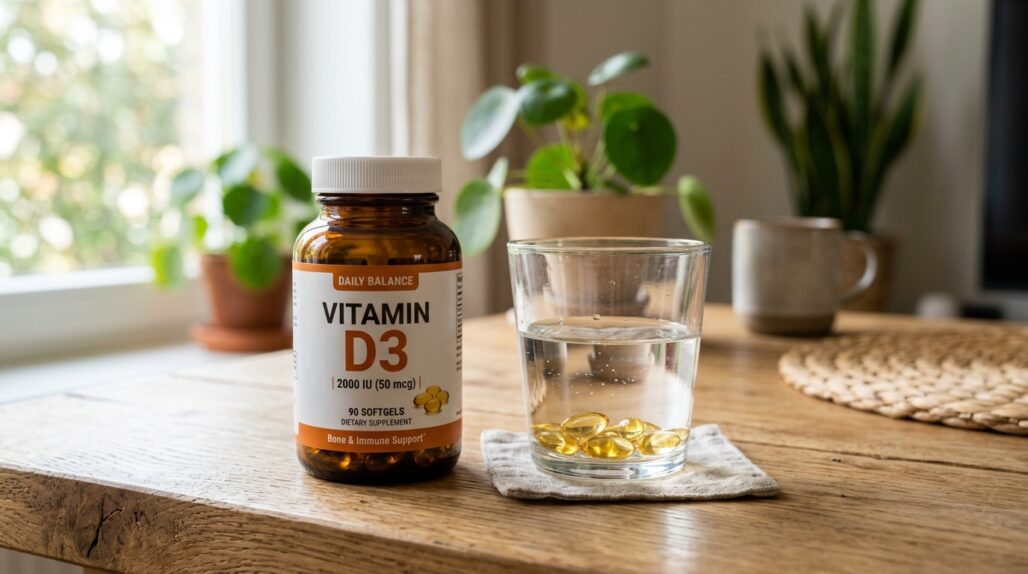
Vitamin D3 is the highest-value add for most warfarin users. It supports the bone density that long-term warfarin can erode, and it has no effect on your INR. Dose it to a blood level rather than guessing; many people land around 1,000 to 2,000 IU a day, but a test settles it. Take it with a meal that has some fat.
Magnesium glycinate is gentle, well-absorbed, and INR-neutral at normal doses. It helps with sleep, cramps, and muscle tightness, and the glycinate form is easier on the gut than oxide. Keep it under about 350 mg of supplemental magnesium unless a clinician says otherwise, and take it in the evening if it helps you wind down.
Methylcobalamin B12 is safe support with no INR effect. Warfarin does not deplete B12, so add it only if you have low intake, low absorption, or a tested deficiency. A sublingual 1,000 mcg is a common form. If you eat little animal protein, it is reasonable insurance.
A note on calcium. Because of the bone story above, your clinic may want you on calcium plus vitamin D. That is a sensible conversation, but get the dose from them rather than self-loading, since very high calcium has its own cautions. Steady is the theme here, not maximal.
| Supplement | What it helps with | How to take it (timing/spacing from your dose) | Caution |
|---|---|---|---|
| Vitamin D3 | Bone density that long-term warfarin can erode; general low-D | With a fatty meal; no spacing needed from warfarin; dose to a blood test | INR-neutral, but recheck INR after any new addition; do not megadose |
| Magnesium glycinate | Sleep, cramps, muscle tension | Evening is fine; no required gap from warfarin; keep supplemental dose under about 350 mg | Loose stools at high doses; check with your clinic if you have kidney disease |
| Methylcobalamin B12 | Low B12 from diet or absorption (not a warfarin depletion) | Any time; sublingual 1,000 mcg is common; no spacing needed | Add only for a real or likely gap; INR-neutral |
What to avoid or space apart – the interaction-safety section
Read this section carefully. With warfarin, the danger is not absorption timing the way it is with thyroid pills. It is two directions of trouble: things that thin your blood further (more bleeding) and things that work against warfarin (clot risk). Nothing here belongs in a "what to add" list.
Vitamin K, K1 or K2 supplements, and big swings in leafy greens. Vitamin K is warfarin's direct opposite. A sudden load drops your INR and raises clot risk; suddenly cutting greens does the reverse. The fix is not avoidance. As the NIH Office of Dietary Supplements vitamin K fact sheet frames it, you keep intake consistent. Never start, stop, or load a vitamin K product without telling your clinic.
Fish oil and high-dose omega-3 (around 2 to 3 g EPA plus DHA a day or more). Omega-3s have a mild antiplatelet effect that can add to warfarin and lengthen bleeding time. Some small studies in atrial fibrillation and DVT patients found no large INR shift, but the bleeding risk still stacks, which is why the NIH ODS omega-3 fact sheet treats high-dose fish oil with anticoagulants as a clear them first situation. A small amount in a daily capsule is different from a high-dose stack.
Vitamin E above about 400 IU a day. Also antiplatelet, also adds bleeding risk on top of warfarin, flagged in the Tan and Lee 2021 systematic review in the British Journal of Clinical Pharmacology.
Ginkgo biloba, garlic, ginger, high-dose turmeric or curcumin, dong quai, danshen, and saw palmetto. These are antiplatelet or warfarin-potentiating and push bleeding risk and INR up. Ginkgo in particular has case reports and cohort data tying it to more bleeding events with warfarin. Culinary amounts of garlic and ginger in food are not the concern; concentrated extracts and high doses are.
CoQ10 (ubiquinone). This one moves the other way. CoQ10 is structurally similar to vitamin K2 and can act procoagulant, which can LOWER your INR and weaken your anticoagulation. The effect looks dose-dependent and the data are mixed, but it is rated a moderate interaction, so do not add it casually and never card it as a safe pick. If you want it, that is a clinic conversation with extra INR checks.
St John's wort. It induces liver enzymes that clear warfarin faster, lowering its level and your protection. Avoid it.
Cranberry juice or concentrate, grapefruit, and alcohol binges. All can raise your INR and bleeding risk; the StatPearls monograph and ODS both note the cranberry, grapefruit, and alcohol effects. A steady, modest amount is more manageable than a sudden change, but tell your clinic if cranberry or grapefruit becomes a regular habit.
Mega-dose vitamin C, high-dose vitamin A, and "greens" or "super greens" powders. Greens blends are the tricky ones: they often hide vitamin K and antiplatelet herbs, so they can swing your INR without you knowing what changed. Treat any new powder as something to check, not a free pass. For a wider look at what these blends do and do not deliver, our review of whether greens powders actually work covers the vitamin K problem alongside the efficacy evidence.
A food-first angle: steady beats strict
The single most useful habit for a warfarin user is not avoiding vegetables. It is eating a steady amount of vitamin K. You do not need to give up kale, spinach, or broccoli. You need to eat roughly the same quantity week to week so your dose has something predictable to work against. A crash diet, a sudden green-smoothie kick, or a week of salads after months without are exactly the swings that send an INR sideways.
The same logic covers the rest of the list. Keep cranberry, grapefruit, and alcohol consistent and modest rather than feast-or-famine. Get your vitamin D and magnesium from food where you can, oily fish (in normal food amounts), eggs, fortified foods, nuts, and seeds, and let supplements fill a tested gap rather than replace the plate. Food first, supplements second, and keep the routine steady.
This is also the natural place to keep one list. You can log both your warfarin and any supplement in StackMyMed (our own free app) so overlaps and interactions get flagged for you to ask your pharmacist about. It does not diagnose anything or tell you what to do; it just surfaces the questions worth raising. If an app is not your thing, the low-tech version works just as well: write out your full list, every prescription and every supplement, and show it to your pharmacist at your next visit. Either way, the decision stays with the people watching your INR.
For the practical numbers behind all of this, the warfarin and vitamin K calculator can help you picture what "steady" looks like across a week, and our deeper write-up on CoQ10 and warfarin covers that specific moderate interaction in more detail. If bone health is your main worry, the best vitamin D supplements and best magnesium supplement overall roundups go through forms and doses.
A specific warning to act on. See a doctor or pharmacist promptly, and seek emergency care for severe or head bleeding, if you notice any unusual or unexplained bleeding or bruising: nosebleeds or gum bleeding that will not stop, pink, red, or brown urine, black or bloody stools, coughing or vomiting blood (or vomit that looks like coffee grounds), heavy or prolonged menstrual bleeding, or a severe headache with dizziness or weakness, which can mean an internal bleed. Call your anticoagulation clinic, not just a friend or a forum.
FAQ
Can I take vitamin D with warfarin? Yes, vitamin D3 does not affect your INR and supports the bone density that long-term warfarin can lower. Dose it to a blood test, keep the dose steady, and still let your clinic recheck your INR after you start anything new.
Do I have to stop eating leafy greens on warfarin? No. Greens contain vitamin K, but the goal is consistency, not avoidance. Eat a steady amount week to week so your dose stays predictable; sudden swings up or down are what move your INR.
Is fish oil safe with warfarin? A small daily amount is usually low-risk, but high-dose omega-3 (around 2 to 3 g EPA plus DHA or more) has an antiplatelet effect that adds to warfarin’s bleeding risk. Clear the dose with your clinic before adding it.
Why is CoQ10 not on the safe-add list? CoQ10 resembles vitamin K2 and can act procoagulant, which may lower your INR and weaken your protection against clots. It is rated a moderate interaction, so it is never a casual add for warfarin users.
Can a supplement replace my warfarin? No. No supplement thins blood the way warfarin does, and none is a “natural alternative.” Missing or self-adjusting your dose risks clots or bleeding. Supplements are additive only, and every change goes through your prescriber.
How soon should I recheck my INR after adding a supplement? Most clinics want a check about one to two weeks after any new supplement or diet change. Tell them what you added so they can interpret the result and adjust if needed.

The bottom line
Warfarin is not a drug that drains a nutrient, so the smart move is not chasing a deficiency. The best safe add for most people is vitamin D3, for the bone density warfarin can chip away at, with magnesium glycinate and B12 as reasonable extras that also leave your INR alone. The rule that protects you is steadiness: keep your vitamin K, greens, cranberry, and alcohol consistent, treat fish oil, vitamin E, ginkgo, and CoQ10 as things to clear first, and recheck your INR after any change. Bring your full list to your anticoagulation clinic or pharmacist before you add anything, and never stop or adjust your dose on your own.
This article is educational and is not medical advice or a prescription change. Talk to your doctor or pharmacist before adding, stopping, or changing any supplement or medication.
Reviewed by the UsefulVitamins Editorial Team.
