
Affiliate disclosure: this article contains affiliate links. As an Amazon Associate, UsefulVitamins.com earns from qualifying purchases at no extra cost to you.
Why folate is the whole story with methotrexate
Methotrexate is a folate antagonist. That is not a side effect, it is how the drug works. It competes with reduced folates for transport into cells and blocks an enzyme called dihydrofolate reductase, which lowers the active folate your cells can use. In rheumatoid arthritis and other autoimmune conditions, that dampening is the point. The trouble is that the same folate block in your gut lining, mouth, and liver is what produces the classic complaints: mouth ulcers, nausea, and rising liver enzymes.
So the supplement question here is unusual. With most drugs you are topping up a nutrient the medicine quietly drains. With methotrexate you are walking a line. Too little folate and side effects climb. Too much, or taken at the wrong time, and you risk blunting the medicine you are taking for a reason. The FDA methotrexate prescribing information spells out both ends of that line: products containing folic acid "may decrease the clinical effectiveness" of methotrexate, while "folate deficiency states may increase methotrexate toxicity." That one sentence covers most of what follows.
This is education, not a change to your prescription. Nothing below is a reason to start, stop, lower, or skip a dose. The aim is to help you add the right thing safely, avoid the combinations that cause harm, and bring the full list to the person who prescribes your methotrexate.
What methotrexate depletes and affects
Functional folate (the core effect, FDA-label-acknowledged). Methotrexate lowers usable folate by design. The downstream cost is that low folate pushes up homocysteine and drives most of the GI, mouth, and liver toxicity, a pattern laid out in the Oxford Rheumatology folate-methotrexate review. This is best described as folate antagonism rather than simple depletion, because the body is not just losing folate, it is being blocked from using it.
Liver enzymes and, over years, fibrosis (well-documented). The NIH LiverTox methotrexate monograph reports mild enzyme elevations in 15 to 50 percent of long-term users, and some degree of hepatic fibrosis in roughly 2 to 20 percent over time. The reassuring bit: modern weekly low-dose regimens taken with folate supplementation make serious liver disease rare. That is exactly why your prescriber put you on folic acid, and exactly why piling extra liver-stressing supplements on top is a bad idea.
A short honesty note. You will see online lists claiming methotrexate "depletes" a long roster of vitamins. The solid, sourced effect is folate antagonism and its knock-on effects. B12 and vitamin D show up below as common deficiencies in people with autoimmune disease, not as things methotrexate itself strips out. That difference matters: it changes what is worth testing and what is just hype.

The supplements worth adding, and how to take each

As an Amazon Associate, UsefulVitamins.com earns from qualifying purchases at no extra cost to you.
We may earn a small commission if you buy through links on this page, at no extra cost to you. It never changes what we recommend or how we grade the evidence.
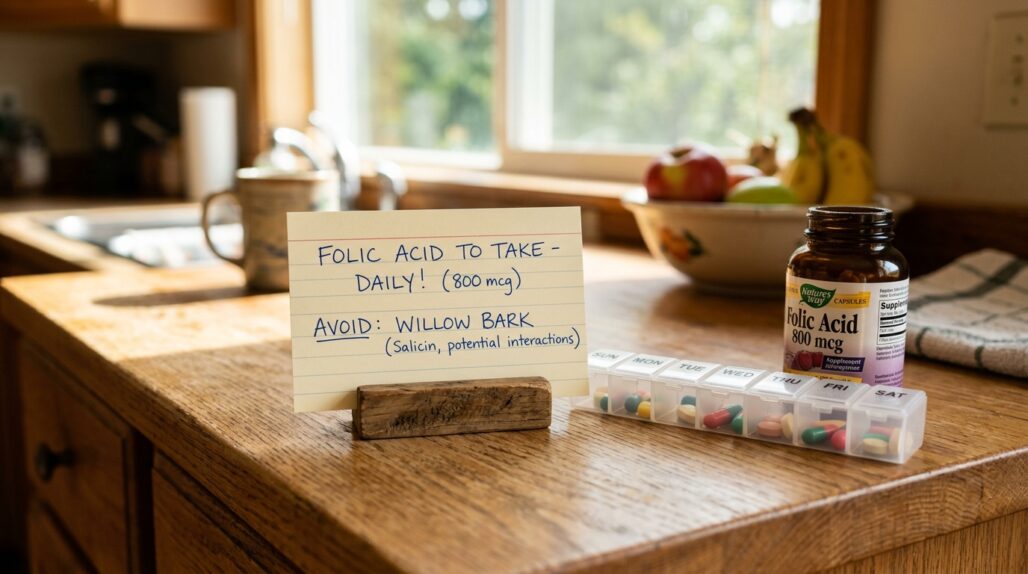
The headline add is the one already on your prescription. Folic acid taken on your doctor's schedule reduces the side effects that make people quit methotrexate. The Cochrane review of folic and folinic acid found supplementation cut gastrointestinal side effects by about a quarter, cut abnormal liver-enzyme rises by roughly three quarters in relative terms, and reduced the number of people who stopped methotrexate for any reason by around 60 percent. That is a real, repeatable benefit. The NHS Specialist Pharmacy Service describes the common regimen as folic acid 5 mg once weekly on a different day from your methotrexate, often taken two to three days after it, and avoided on the methotrexate day itself.
Two more are optional, and only to correct a tested gap, not by default.
The plan below assumes you already take methotrexate exactly as prescribed and you are checking timing with your pharmacist.
| Supplement | What it helps with | How to take it (timing/spacing from your dose) | Caution |
|---|---|---|---|
| Folic acid | Fewer mouth sores, less nausea, fewer liver-enzyme rises; helps people stay on the drug | Only the dose and day your doctor set; commonly 5 mg once weekly on a non-methotrexate day, not on dosing day | Do not add extra on your own or swap to folinic acid; wrong timing or excess can blunt the drug |
| Vitamin B12 (methylcobalamin) | Supports the same homocysteine pathway folate works on; corrects a tested B12 deficiency | Sublingual, any time of day; dose to a blood test rather than guessing | Not a methotrexate depletion as such; supplement only if a test shows you are low |
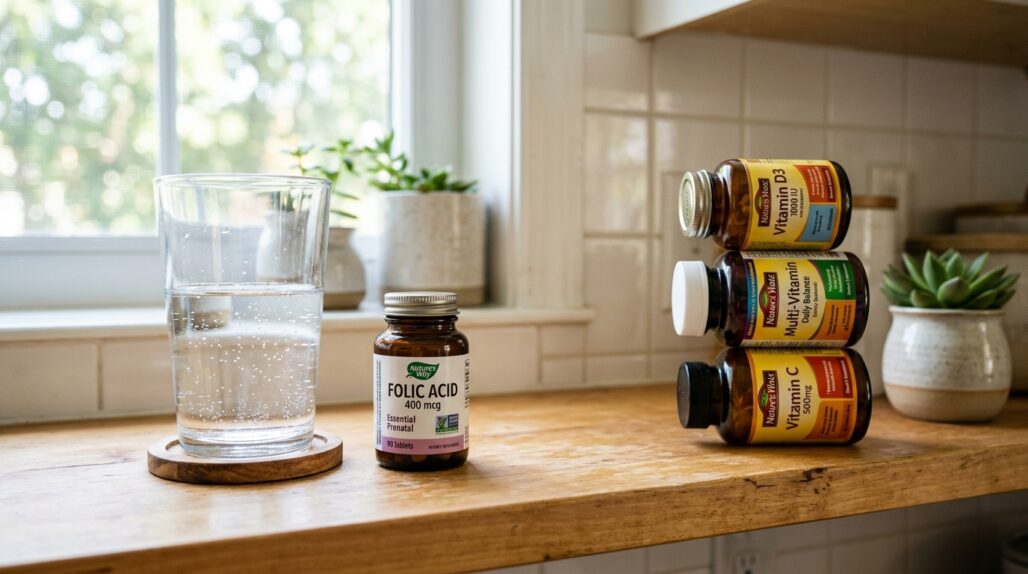
| Vitamin D3 (with K2) | Common shortfall in rheumatoid arthritis and other autoimmune conditions; bone and immune support | With a meal; ideally dosed against a 25(OH)D blood level | Confirm the dose with your prescriber; high doses are not better |
None of these three change how your kidneys clear methotrexate, which is why they are the safe shortlist. If you want help picking a form, our roundups of the best folate supplements and the best vitamin B12 supplements walk through what to look for. For a deeper look at the dosing question, our explainer on how folic acid works with methotrexate covers why the timing matters so much. Just remember that for folate the dose and timing are your doctor's call, not the label on the bottle.
What to avoid or space apart
Read this part twice. Most methotrexate trouble from supplements comes from a handful of predictable mistakes.
Self-directed high-dose folic acid, or any folinic acid (leucovorin / calcium folinate). More folate is not better here. Methotrexate works by antagonizing folate, so adding your own high-dose folic acid, or switching to folinic acid, can reduce how well the drug controls your disease. High-dose folinic acid alongside low-dose methotrexate has been linked to joint-inflammation flares. Take only the folic-acid dose and day your prescriber set. Watch out for hidden folate too: many B-complexes, multivitamins, and greens powders contain extra folic acid or methylfolate. Read the label, and tell your prescriber before adding any of them.
Megadose vitamin C and other heavy urine-acidifiers. Methotrexate is far less soluble in acidic urine, by some measures five to eight times less, which raises the risk of it crystallizing and stressing the kidneys. Acidifying the urine is a recognized risk factor for elevated methotrexate levels. A multivitamin amount or food-level vitamin C is fine. Skip the 1,000 mg-plus ascorbic acid habit while you are on this drug.
Extra liver load. High-dose niacin (including sustained-release), kava, green-tea extract (EGCG), large-dose vitamin A, and alcohol all stress the liver, the same organ methotrexate already taxes. Stacking them invites the enzyme rises folic acid is there to prevent. Keep alcohol to whatever your doctor agreed, and leave the liver-stressing extracts off the list.
OTC painkillers and acid reducers that look harmless. These are drugs, not supplements, but people buy them off the shelf. NSAIDs (ibuprofen, naproxen) and proton pump inhibitors such as omeprazole, esomeprazole, and pantoprazole can cut your kidneys' clearance of methotrexate and raise or prolong its blood levels, a documented methotrexate-PPI interaction and a long-standing NSAID warning on the FDA label. Do not start either on top of methotrexate without your pharmacist signing off.
Willow bark and high-salicylate herbal blends. Salicylate works the same way NSAIDs do here: it displaces methotrexate from protein binding and slows its renal clearance. "Natural anti-inflammatory" willow-bark products are not a safe workaround. Avoid them.
You can keep the whole picture in one place. StackMyMed (our own free app) lets you log your methotrexate and every supplement together so timing overlaps and known interactions get flagged for you to ASK your pharmacist about. It does not give medical advice and it does not diagnose, it just surfaces what to raise. If you would rather skip an app, the low-tech version works just as well: write your full list on paper and show it to your pharmacist at your next visit. Either way, the decision is theirs, not the app's and not this page's.
Can you cover it with food instead?
Partly, and food is a sensible foundation, but not a replacement for the prescribed folic acid. Folate-rich foods such as leafy greens, legumes, and fortified grains support the same pathway. Keep your intake steady and moderate rather than swinging it up or down, and tell your prescriber if you start a folate-heavy regimen, because big diet changes can shift the same balance your tablet is managing. For B12, animal foods and fortified options cover most people. For vitamin D, sensible sun and diet help, though many people with autoimmune disease still test low and need a supplement to correct it.
A spacing tip that applies broadly: if you take minerals like calcium, iron, or magnesium for other reasons, keep them away from medicines they can bind. Our guide on how long to space supplements and medications apart lays out the common gaps. None of those minerals are the issue with methotrexate specifically, but good habits stop one supplement from quietly undoing another medicine.
FAQ
Do I really need folic acid with methotrexate? For most people on weekly methotrexate, yes, and your prescriber has likely already started it. It reduces mouth sores, nausea, and liver-enzyme rises, and helps people stay on the drug. Take it on the dose and schedule your doctor set.
Can I take folic acid on the same day as my methotrexate? The common practice is to avoid folic acid on your methotrexate day and take it a different day, often two to three days later. Do not change the timing your prescriber gave you without asking them first.
Is methylfolate or folinic acid better than plain folic acid? Not for you to decide alone. Folinic acid is a stronger folate that can blunt low-dose methotrexate and has been linked to flares when self-added. Stick to the folic acid your doctor prescribed unless they specifically switch you.
Can I take a regular multivitamin? Often yes, but check the label for added folic acid, methylfolate, high-dose niacin, or large vitamin A, and show it to your pharmacist. Hidden folate in a “daily” or greens powder is the most common accidental overdose.
Is it safe to take ibuprofen for pain while on methotrexate? Ask first. NSAIDs can raise and prolong methotrexate blood levels by slowing kidney clearance. Some people use them under guidance, but starting one yourself, or an OTC acid reducer, is not safe to assume.
Can a supplement replace my methotrexate? No. Methotrexate is a prescription disease-modifying drug. No supplement is a natural alternative to it or a way to lower your dose, and any change to the drug is a decision for your prescriber.

The bottom line
The single most useful add for methotrexate is the one already on your prescription: folic acid, on your doctor's dose and day. It reduces the side effects that make people quit, without stopping the medicine working. The most important thing to avoid is adding your own folate, in any form, or stacking on liver-stressing supplements, megadose vitamin C, OTC NSAIDs and PPIs, or willow bark. Optional B12 and vitamin D help only if a test shows you are low.
Get care promptly if you notice mouth or lip sores, a new or worsening cough or shortness of breath, unusual fatigue with easy bruising, bleeding, or fever, or yellowing skin or eyes with dark urine. These can signal methotrexate toxicity and are not something to wait out. Bring your full supplement and medication list to your rheumatologist or pharmacist at every review, and let them confirm the doses.
This article is educational and is not medical advice, a diagnosis, or a prescription change. Talk to your own doctor or pharmacist before adding, stopping, or changing anything, and never adjust your methotrexate on your own.
Reviewed by the UsefulVitamins Editorial Team.
