
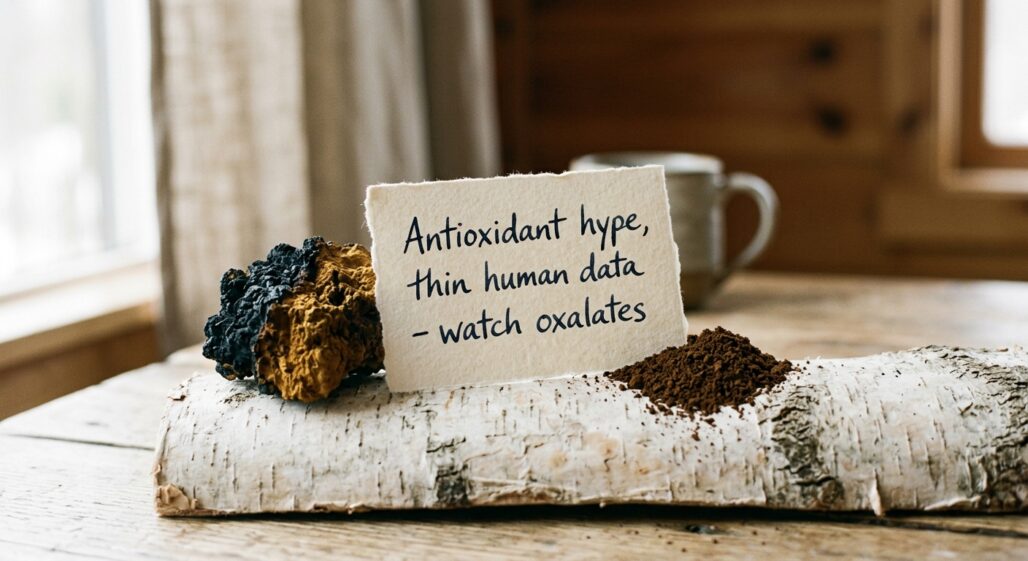
If you are searching for the best chaga supplements, you have probably read that this birch fungus is one of the most antioxidant-dense foods on the planet, and that part is broadly true in a test tube. The honest answer is more careful: chaga has impressive antioxidant and immune activity in the lab, but the human evidence is thin and it carries a real oxalate kidney caution that most roundups skip. Below I walk through what chaga actually is, where the antioxidant and immune claims stand against the real (mostly preclinical) data, the kidney safety signal that deserves top billing, the blood-sugar and blood-thinner interactions, and how to judge wild versus cultivated quality. The picks at the end are the better-made options I would reach for in my own family's cabinet if someone insisted on trying chaga, with the steady caveat that the human evidence simply is not there yet.
Affiliate disclosure: this article contains affiliate links. As an Amazon Associate, UsefulVitamins.com earns from qualifying purchases at no extra cost to you.
Before you decide
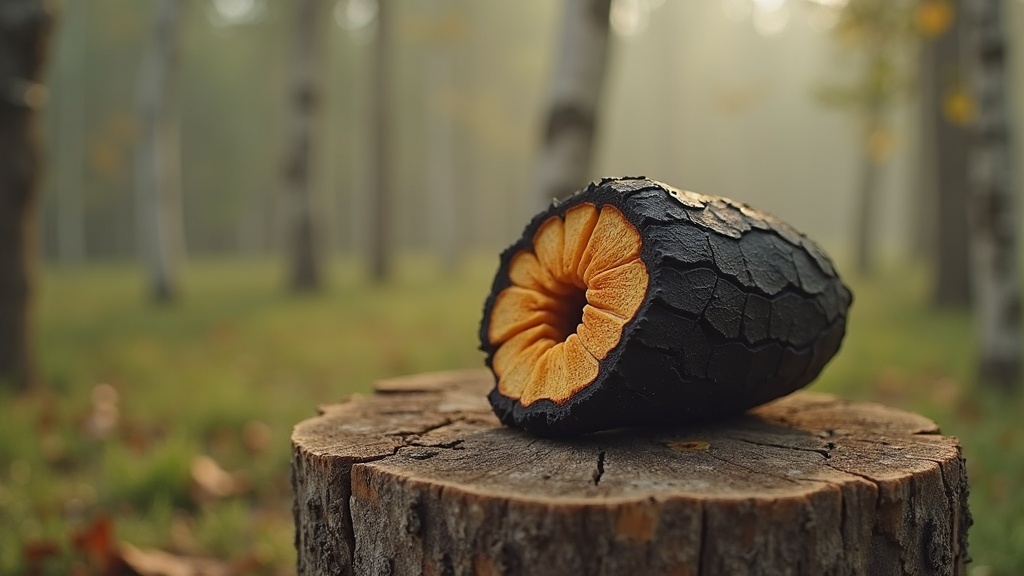
I am putting the safety conversation first on purpose, because the marketing rarely does. Chaga is one of the highest-oxalate foods documented in the clinical literature, and oxalate is the same compound that drives most kidney stones. The single most important fact about chaga is that high intakes have been linked to kidney injury in published case reports.
In a 2022 case report in the journal Medicine, a 69-year-old man who took 10 to 15 grams of chaga powder daily for three months developed acute kidney injury with calcium-oxalate crystals in his kidney tubules; the authors document the diagnosis of chaga-induced oxalate nephropathy presenting as nephrotic syndrome. A separate 2020 report described a man who progressed to end-stage renal disease after long-term chaga ingestion, and the analyzed chaga sample measured a striking 14.2 grams of oxalate per 100 grams.
These are individual case reports, not a frequency estimate, so do not read them as "chaga always harms kidneys." Read them as a clear signal that the dose and your baseline kidney function matter a great deal.
There are two more interaction signals worth naming up front. Chaga has shown blood-sugar-lowering activity, so stacking it with diabetes medication could push glucose too low. It has also inhibited platelet aggregation in lab work, which is why Memorial Sloan Kettering flags possible additive effects with anticoagulants and antiplatelet drugs, summarized in its chaga herb monograph.
Who should simply skip chaga: anyone with kidney disease or a kidney-stone history, anyone on warfarin or other blood thinners, anyone on insulin or oral diabetes drugs without medical supervision, and people who are pregnant or nursing, where safety data are absent. If that is you, the conversation is your clinician first, supplement second.
What chaga actually is
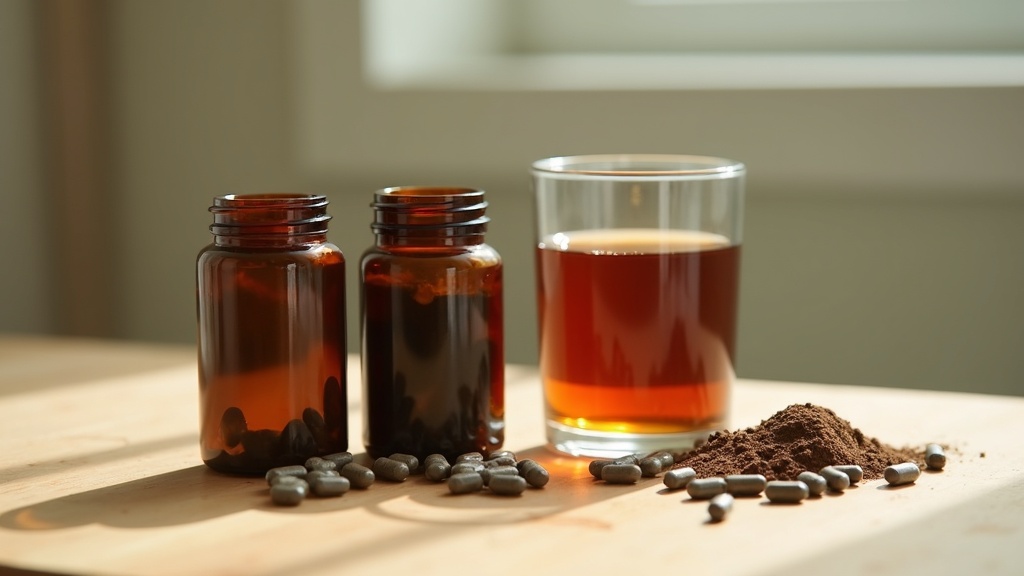
Chaga (Inonotus obliquus) is not a typical capped mushroom. It is a parasitic fungus that grows mostly on birch trees in cold northern forests, forming a hard, charcoal-black mass called a sclerotium or conk on the trunk. The black crust is essentially concentrated fungal melanin, which is a big part of why chaga tests so high for antioxidant activity.
Inside that crust sit the compounds the marketing leans on: polysaccharides (including beta-glucans), polyphenols, and triterpenes such as betulinic acid and inotodiol, which the fungus pulls from the birch itself. A review of Inonotus obliquus polysaccharides catalogs antioxidant, immune-modulating, and blood-sugar-related activity for these fractions.
Traditionally, chaga was a folk remedy across Siberia, Northern Europe, and parts of East Asia, usually brewed as a long-simmered tea. That history is real, and it is interesting. It is also not the same thing as a controlled trial, and I will keep those two categories separate throughout.
The antioxidant and immune claims vs the actual evidence
Here is the tradeoff in one line: the antioxidant story is legitimately strong in vitro, and almost entirely untested in humans. Chaga reliably scavenges free radicals in a dish, but a high score on a lab antioxidant assay does not automatically translate into a measurable health outcome in a person.
A 2024 review of the therapeutic properties of Inonotus obliquus describes chaga polysaccharides scavenging DPPH and hydroxyl radicals in a concentration-dependent way, and triterpenes showing anti-inflammatory and immune-modulating effects. Older work on antimutagenic subfractions of chaga extract points in a similar direction. The catch is that nearly all of this is cell-culture and animal data.
The real question is not whether chaga has antioxidant molecules, it clearly does, but whether swallowing it changes anything you would feel or measure. On that question the cupboard is close to bare. There are no large human randomized controlled trials establishing that chaga supplements reduce inflammation, boost immunity, or extend healthspan in people.
Mechanistically, chaga beta-glucans engage pattern-recognition receptors such as Dectin-1 on immune cells, the same pathway studied for other medicinal mushrooms. Whether that receptor signaling produces a clinically meaningful immune effect at the doses people actually swallow is a separate, still-open question.
Actionable takeaway: treat chaga as a promising lab candidate, not a proven remedy, and set your expectations accordingly. For the broader category, my complete guide to medicinal mushrooms lays out which fungi have stronger human data, and turkey tail supplements are a useful comparison because turkey tail at least has oncology trial history that chaga lacks.
The oxalate and kidney safety issue, in plain terms
This is the section the hype roundups omit, and it is the reason I would not casually recommend chaga to most people. Chaga is extraordinarily high in oxalates, and oxalate is the raw material your body turns into the most common type of kidney stone.
Think of oxalate like fine sand moving through plumbing. At low volumes it flushes through. Load the system heavily, especially if you are dehydrated or your kidneys are already strained, and crystals can form and lodge where they do damage. That is exactly the picture in the published kidney cases: calcium-oxalate crystals deposited in the kidney tubules.
The danger climbs with three things: high daily doses, long duration, and combining chaga with high-dose vitamin C, which the body partly converts to oxalate. In the oxalate nephropathy case report, the patient was taking both chaga powder and 500 mg of vitamin C daily. That combination is worth avoiding.
If you choose to use chaga anyway, the harm-reduction basics are simple and worth following: keep the serving modest rather than spoonfuls of raw powder, drink plenty of water, do not pair it with high-dose vitamin C, and stop entirely if you have any history of kidney problems. When in doubt about your kidneys, get baseline labs from your clinician before starting, not after a problem appears.
The blood-sugar signal and what it means
Several preclinical models show chaga lowering blood glucose, with triterpene and polysaccharide fractions inhibiting carbohydrate-digesting enzymes. The 2024 therapeutic properties review even notes one polysaccharide fraction outperforming a standard glucose-lowering drug in a lab assay.
For a healthy person this is a footnote. For someone on insulin or sulfonylureas, it is a real interaction worth respecting. If chaga nudges your blood sugar down and your medication is already doing that job, the stack can overshoot into hypoglycemia. This is a coordinate-with-your-prescriber situation, not a do-it-yourself one.
For anyone exploring botanicals for metabolic or inflammatory goals, I would point you toward options with human data first; our roundup of supplements for inflammation covers several with actual trial support, which chaga does not yet have.
Quality, wild vs cultivated, and what to look for when buying
Chaga quality is genuinely variable, and the source matters more than with most supplements. Wild birch chaga and lab-grown mycelium-on-grain are not the same product, and the label often blurs the difference.
Wild conk harvested from living birch trees concentrates the melanin-rich crust and birch-derived triterpenes like betulinic acid. Cultivated mycelium grown on grain is cheaper and more sustainable but tends to be lower in those signature compounds and can carry leftover grain starch that inflates "polysaccharide" numbers without delivering much beta-glucan. Ask for a stated beta-glucan figure, not a vague polysaccharide percentage.
Extraction method matters too. The beta-glucans need hot-water extraction, while the triterpenes need alcohol, so a dual-extracted product captures both. Raw ground conk that you simply swallow is poorly bioavailable and, frankly, the riskiest format for oxalate load.
Because chaga is a wild-harvested fungus that bioaccumulates from its environment, third-party testing for heavy metals is not optional. Look for a current certificate of analysis, a named extraction method, and a brand that discloses wild versus cultivated sourcing.
| What to check | Green flag | Red flag |
|---|---|---|
| Source | Wild birch conk, country of harvest stated | “Mushroom” with no wild vs mycelium disclosure |
| Extraction | Dual-extracted, hot water plus alcohol | Raw ground powder only |
| Active content | Stated beta-glucan percentage | Only “polysaccharides,” no beta-glucan number |
| Purity | Third-party heavy-metal testing, recent COA | No testing claims, no COA available |
The picks below are the better-made options on these criteria. They do not change the underlying evidence verdict; they are simply the cleaner ways to try chaga if you have decided to, ideally after the kidney conversation above.
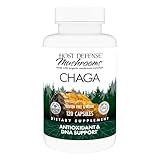

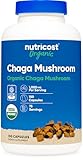
As an Amazon Associate, UsefulVitamins.com earns from qualifying purchases at no extra cost to you. We only recommend products supported by published research or third-party testing.
Who should skip chaga entirely
Some readers should not experiment here, and I would rather be direct than vague. If your kidneys are compromised or your bleeding or blood-sugar risk is already managed by medication, chaga's downside outweighs its unproven upside.
Skip chaga if you have chronic kidney disease, reduced kidney function, or a personal history of calcium-oxalate kidney stones. Skip it if you take warfarin or other anticoagulant or antiplatelet drugs, given the platelet-aggregation signal that Memorial Sloan Kettering describes. Skip it if you manage diabetes with insulin or oral medication and your prescriber has not cleared it.
Pregnant and nursing people should also pass, simply because there are no safety data to lean on. This is the clear refer-out line: if any of those apply to you, the responsible move is to talk with a physician or pharmacist before, not after, you buy anything.
FAQ
Is chaga safe to take every day?
For a healthy person, occasional modest use is likely low risk, but daily high-dose use is where the oxalate kidney signal appears in the case reports. If you use it daily, keep the dose small, stay well hydrated, and do not combine it with high-dose vitamin C.
Does chaga really have the most antioxidants of any food?
Chaga scores extremely high on laboratory antioxidant assays, largely from its melanin and polyphenols. A high lab score is not the same as a proven health benefit in people, and human outcome data are lacking.
Wild chaga or cultivated, which is better?
Wild birch conk is generally richer in the signature triterpenes and beta-glucans. Cultivated mycelium is cheaper and more sustainable but often lower in actives, so check for a stated beta-glucan figure rather than a generic polysaccharide number.
Can chaga interact with my medications?
Yes. The most relevant signals are with blood thinners (possible added bleeding risk) and diabetes medications (possible added blood-sugar lowering). Both come mostly from preclinical data, but both warrant a conversation with your prescriber.
Conclusion: the bottom line on the best chaga supplements
Chaga is a fascinating fungus with genuinely strong antioxidant and immune activity in the lab, real traditional history, and almost no human trial evidence to back the bigger health claims. What separates this article from the typical roundup is that I am leading with the published oxalate-nephropathy kidney signal and an honest "mostly preclinical" verdict, rather than burying the caution beneath the antioxidant hype. If you still want to try it, choose a dual-extracted, third-party-tested wild chaga at a modest dose, stay hydrated, and protect your kidneys.
Next steps:
- If you have any kidney, bleeding, or blood-sugar risk, talk with your clinician before buying anything.
- If you want fungi with stronger human data, start with the complete guide to medicinal mushrooms.
- See how we review supplements and my approach on the Jonathan Reynolds author page.
As an Amazon Associate, I earn from qualifying purchases. Product recommendations are based on real reviews and independent research.
This article is for informational purposes and not medical advice. Chaga can interact with medications and health conditions, including blood thinners and diabetes drugs, and high intakes have been linked to kidney injury. Consult a licensed physician before starting any supplement, particularly if you are pregnant, nursing, taking prescription medications, or managing a chronic condition, especially kidney disease.
Reviewed by Jonathan Reynolds, ND, focused on botanical and naturopathic protocols.
