

Affiliate disclosure: this article contains affiliate links. As an Amazon Associate, UsefulVitamins.com earns from qualifying purchases at no extra cost to you.
Before you buy
The real question with OmegaVia is not whether it is a good fish oil. It is. The question is whether its two selling points – a high EPA load and an enteric burpless coating – are worth paying nearly double the per-gram price of a perfectly good cheaper oil.
If you are taking omega-3 for general heart and maintenance reasons, the answer is usually no, you do not need to spend this much. If you specifically want EPA-forward dosing in as few pills as possible, OmegaVia starts to make sense.
So before you add it to cart, get clear on one thing: do you actually need high EPA, or do you just want "a good fish oil"? Those are different shoppers, and only one of them should pay OmegaVia's price.
This review breaks down what is in each softgel, whether the burpless claim holds up, what the third-party testing actually means, and the cost-per-gram math against a cheaper pick.
What OmegaVia actually is
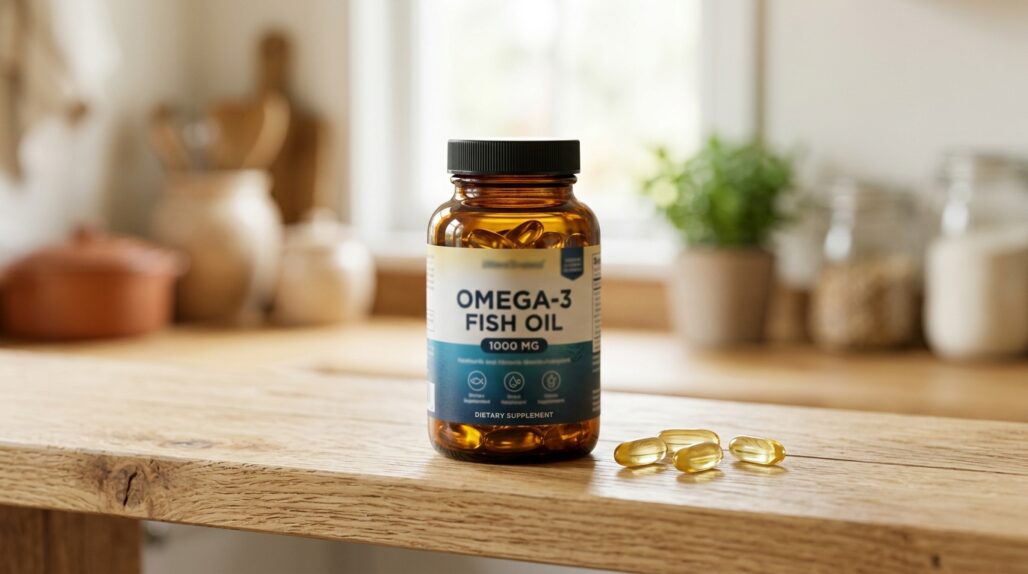
OmegaVia's flagship is the Ultra Concentrated Omega-3, a single-softgel-per-day fish oil concentrated to about 90% omega-3 by weight. That concentration is the whole point – it lets the brand pack a lot of EPA into one pill.
Per softgel, the label lists 780 mg EPA, 260 mg DHA, and 40 mg DPA, for about 1,135 mg of total omega-3s, according to the official OmegaVia product page. That EPA-heavy split is unusual; most drugstore fish oils run closer to even, or DHA-forward.
The oil is in the re-esterified triglyceride (rTG) form, which the brand reformulated to from the older ethyl-ester version. rTG generally absorbs a little better than ethyl ester, and it is the form most premium oils now use.
A few practical notes worth knowing:
- It is one softgel per day, which is genuinely convenient for a high dose.
- The bottle holds 60 softgels, so one bottle is a two-month supply.
- The flagship does not contain vitamin D – that is a separate OmegaVia product, so do not assume you are getting it here.
- The fish are sardine, anchovy, pollock, and mackerel, purified by a heat-free CO2 process.
OmegaVia also sells an EPA 500 (500 mg EPA, near-zero DHA) for people who want EPA almost exclusively, and a DHA 600 aimed at pregnancy. This review focuses on the flagship Ultra Concentrated, since that is what most "is OmegaVia worth it" searches mean.
The high-EPA angle, and whether you need it
OmegaVia's marketing leans hard on EPA, and there is real science behind why someone might want an EPA-forward oil. The mood and inflammation research that gets cited tends to use high-EPA formulas, not standard balanced fish oil.
A 2019 meta-analysis in Translational Psychiatry found omega-3 supplements with a higher proportion of EPA had a measurable benefit in major depressive disorder, especially as an add-on to standard treatment. The signal is real but modest, and the results across trials are mixed.
Here is the honest framing: omega-3 is not a treatment for depression, and you should not stop or skip any prescribed medication on the strength of a fish oil. If mood is the reason you are shopping, talk to a clinician. We dig into that evidence and the EPA:DHA ratio that matters in our guide to the best high-EPA fish oil for mood.
For the average person taking fish oil for general health, the NIH Office of Dietary Supplements omega-3 fact sheet does not single out a high-EPA ratio as necessary. Total EPA+DHA matters more than the exact split for most maintenance goals. So if you are not chasing the EPA-specific use cases, the high-EPA premium is not buying you much.
If you do want EPA-forward dosing, OmegaVia is a clean way to get it. Just know what you are paying for. The difference between triglyceride, ethyl ester, and krill is worth understanding too, which we cover in omega-3 TG vs EE vs krill bioavailability.
The burpless claim, examined
This is the part OmegaVia gets right, and it is worth saying plainly: the enteric coating works. The softgel is built to pass the stomach before dissolving, so you get far fewer fishy repeats.
The coating is described as plant-derived (alginate and stearic acid). In practice, reviewers consistently report no fishy burps, which is the single most common complaint about cheaper fish oil.
That said, two caveats keep this from being a slam dunk:
- Freshness matters more than coating. A burp-free pill that is oxidized still does you little good. The thing protecting you here is the testing, covered below, not the coating alone.
- Cheaper oils have caught up. Several budget brands now use lemon flavoring or their own coatings and report low burp rates. The burpless feature is no longer exclusive to premium oils, so it is worth comparing rather than assuming you must pay up. See our roundup of the best burpless fish oil with no fishy aftertaste for cheaper options that hold up.
If burps are the dealbreaker that has stopped you from taking fish oil at all, OmegaVia solving that is worth real money to you. For everyone else, it is a nice-to-have.
Third-party testing and the IFOS rating
OmegaVia tests well, and this is where some of the premium is actually justified. The brand states the oil is IFOS 5-star certified, with testing also referenced from Eurofins and ConsumerLab.
What does that 5-star mark mean? The IFOS program run by Nutrasource tests each batch for omega-3 content versus the label claim, contaminants (mercury, PCBs, dioxins, heavy metals), and oxidation/freshness. A 5-star rating means the product cleared the program's top tier on those measures.
That batch-level testing is genuinely useful, because fish oil quality varies and oxidized oil is a real problem in this category. An IFOS 5-star oil is one you can trust on purity and potency.
The catch: OmegaVia is not the only IFOS 5-star oil. Several cheaper products carry the same rating. So while the testing is a point in OmegaVia's favor, it is not a reason to pay double, because the testing is available at a lower price elsewhere.
Cost per gram of EPA+DHA
Here is the math that decides this purchase. OmegaVia runs around $39.99 for 60 softgels as of writing, so check the current price before you buy.
Each softgel gives about 1,040 mg of EPA+DHA (780 EPA + 260 DHA). That puts OmegaVia at roughly $0.64 per gram of EPA+DHA.
Now compare a cheaper IFOS-tested option. Sports Research Triple Strength delivers about 950 mg EPA+DHA per softgel and typically sells for a good bit less per softgel, landing near $0.29 per gram depending on the size you buy and current pricing.
| Product | EPA+DHA per softgel | Form & coating | Approx. price | Cost per g EPA+DHA |
|---|---|---|---|---|
| OmegaVia Ultra Concentrated | ~1,040 mg (780 EPA / 260 DHA) | rTG, enteric-coated | ~$39.99 / 60 ct | ~$0.64 |
| OmegaVia EPA 500 | ~500 mg (EPA-only) | rTG, enteric-coated | ~$39.99-44.99 / 120 ct | ~$0.67-0.75 |
| Sports Research Triple Strength | ~950 mg (690 EPA / 260 DHA) | rTG, lemon, IFOS 5-star | varies, often well under OmegaVia per gram | ~$0.29 |
Prices shift constantly, so treat these as ballpark figures and verify before buying. But the gap is wide enough that it holds up across normal price swings: OmegaVia costs roughly double per gram of omega-3 versus a cheaper IFOS-tested oil. You are paying for the high EPA ratio, the one-pill convenience, and the burpless coating – not for more omega-3.

Who should buy it, and who should buy cheaper
Buy OmegaVia if you want a specifically EPA-forward oil, prefer one pill a day over two or three, and want a burpless softgel without thinking about it. For that shopper, the premium buys real convenience.
Most people should buy cheaper. If you are taking fish oil for general health and just want trustworthy EPA+DHA, a cheaper IFOS-tested oil gets you there for less. We made that case in our Sports Research Omega-3 review.


As an Amazon Associate, UsefulVitamins.com earns from qualifying purchases at no extra cost to you.
UsefulVitamins may earn a commission from purchases made through the links below, at no extra cost to you. This never affects our verdicts.
FAQ
How much EPA is in OmegaVia? The Ultra Concentrated flagship lists about 780 mg of EPA per softgel, alongside 260 mg DHA and 40 mg DPA. The separate EPA 500 product delivers 500 mg of EPA with almost no DHA.
Is OmegaVia really burpless? In practice, yes. The enteric coating delays the softgel from dissolving until it has passed the stomach, and most users report no fishy repeats. Several cheaper oils now manage low burp rates too, so it is not a unique feature anymore.
Is OmegaVia third-party tested? Yes. The brand states it is IFOS 5-star certified, with additional testing referenced from Eurofins and ConsumerLab. That covers omega-3 content, contaminants, and freshness, though it is not the only oil with that rating.
Does OmegaVia contain vitamin D? The flagship Ultra Concentrated does not. OmegaVia sells separate products that include vitamin D, so do not assume the standard fish oil covers it.
Is OmegaVia worth the price? For high-EPA seekers who want one pill a day and no burps, it can be. For general daily use, you can get similar EPA+DHA from a cheaper IFOS-tested oil for roughly half the cost per gram.
Can OmegaVia treat depression? No. Some research on high-EPA omega-3 shows a modest benefit as an add-on in major depression, but it is not a treatment and should not replace any prescribed care. Talk to a clinician before using it for mood.
The verdict
OmegaVia is a high-quality, high-EPA fish oil that does exactly what it claims: it delivers a strong EPA dose in one tested, burpless pill. The IFOS 5-star testing is real, the triglyceride form is the right one, and the coating genuinely works.
But the value question is straightforward. At roughly $0.64 per gram of EPA+DHA, OmegaVia costs about double a cheaper IFOS-tested oil that delivers comparable omega-3. You are paying for the EPA ratio, the one-pill format, and the no-burp coating – not for more or better omega-3.
So the honest call: buy OmegaVia if the high-EPA ratio or the burpless convenience specifically matters to you. If you just want a trustworthy daily fish oil, buy a cheaper IFOS-tested option and pocket the difference.
Next step: decide which shopper you are. If it is general health, start with a budget IFOS oil. If it is EPA-forward dosing or mood support, talk to your clinician first, then compare OmegaVia against the other high-EPA picks before you commit.
This article is for general information and is not medical advice. Supplements can interact with medications and conditions; talk to a doctor or pharmacist before starting any new supplement, and do not stop any prescribed medication on your own.
Reviewed by the UsefulVitamins Editorial Team.
